A word from Denise
You are not imagining it, and your house is not dirty. Something small is going on in one spot, so grab a glass of water and a flashlight and go find it.
Every tip here is checked against the sources listed at the bottom.
 By Denise. Checked on November 7, 2026 against the sources at the bottom of this page.

What works Name the smell, follow your nose, and check the usual suspects: dry drains, slimy drains, the fridge, the dishwasher filter, the washer and damp rooms. Fix the source instead of covering it with spray.
Natural gas is given a smell on purpose so a leak smells like rotten eggs, Black Hills Energy explains. If you smell that, do not hunt for it. These steps come from its safety page.
One more: carbon monoxide has no smell at all, the CDC says. Your nose cannot find it, so keep battery or battery backup CO detectors near every sleeping area.
Stand where it is strongest and describe it. If a room smells moldy and you cannot see why, the EPA says to suspect hidden mold. A sewer or rotten egg smell right at a drain often comes from the drain, says the City of Phoenix, but rule out gas first. Spoiled food points to the fridge.
Walk slowly through each room, opening closets and cabinets and getting down low near floor drains and under sinks. Note the spots where it is strongest.
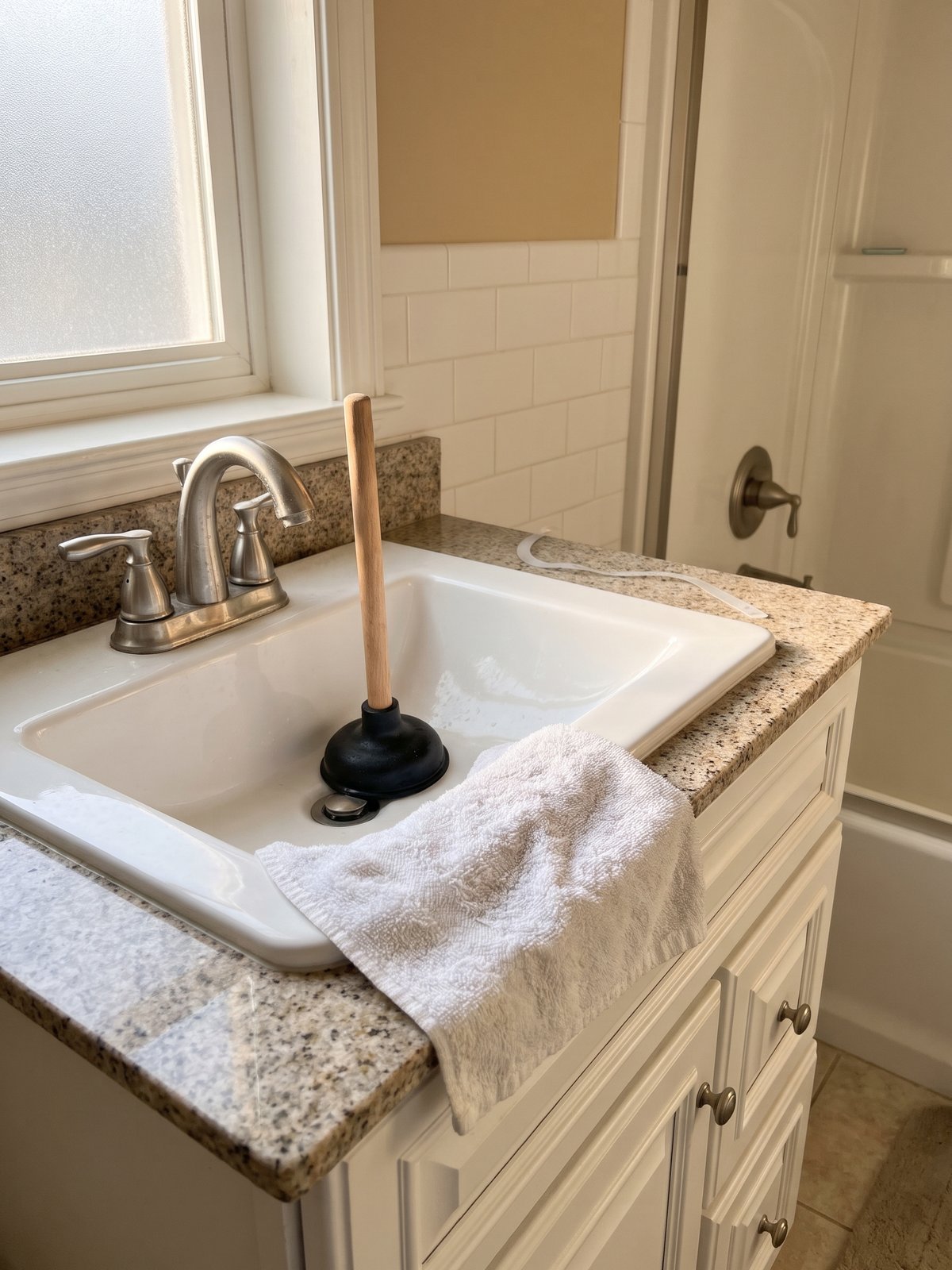
Pour about a quart of water into every drain that does not get used much: a guest tub, a spare sink, a basement floor drain. The City of Phoenix explains that the water sitting in the curved pipe under each drain blocks sewer gas, and it can dry up when the drain sits unused. A quart is enough to refill it.
Fill a glass with cold water from the smelly sink, carry it to another room and sniff it. The City of Phoenix says if the water in the glass has no smell, the problem is the drain, not the water.
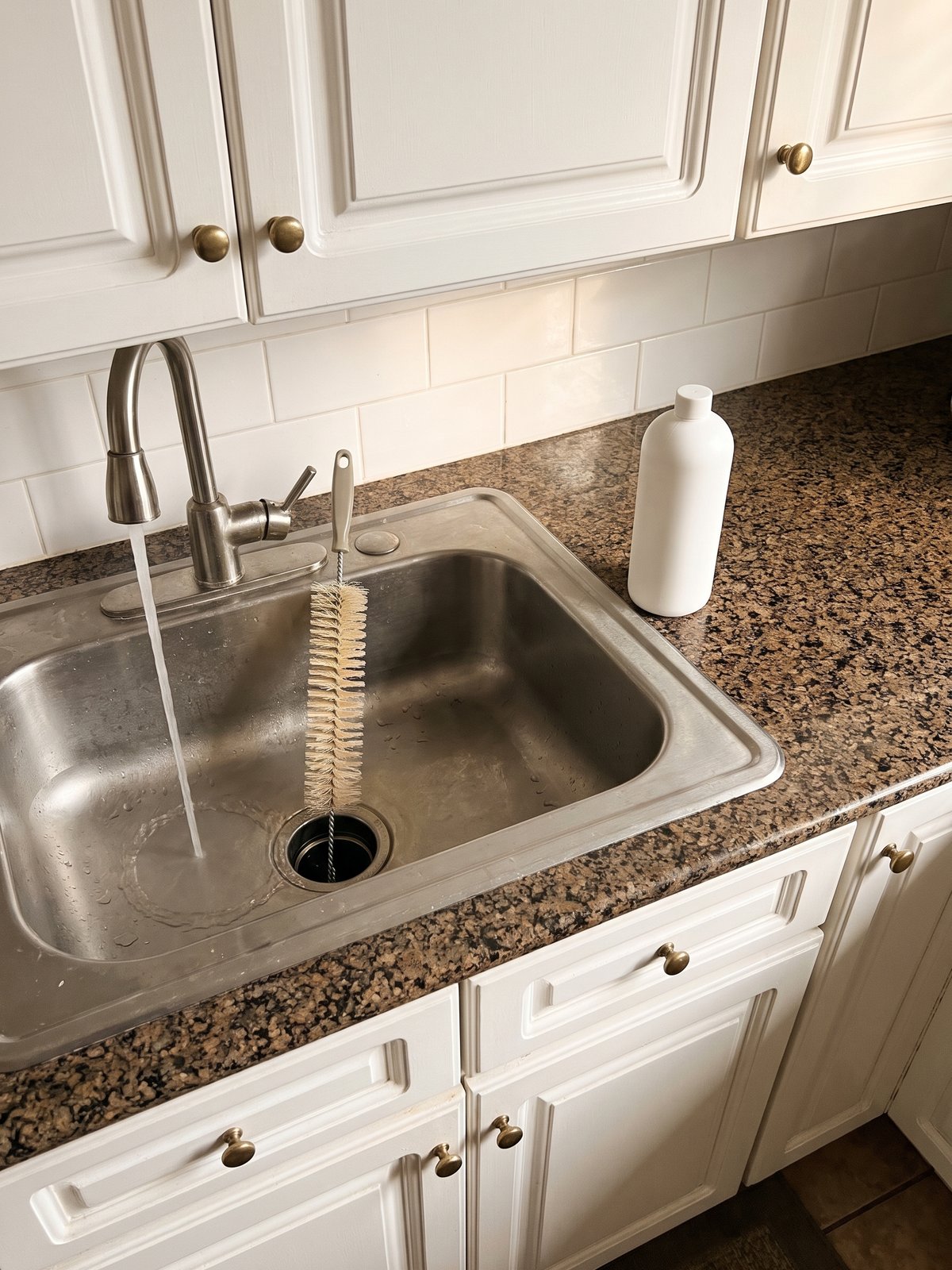
The City of Phoenix says hair, dirt and grime build a layer of slime in drains that gives off a rotten egg, sulfur smell. Pull the stopper, wipe off the gunk, and run a plastic hair snake down to pull up what is below. Our drain page shows how.
What it looks like: a layer of slime on the stopper and on the snake.
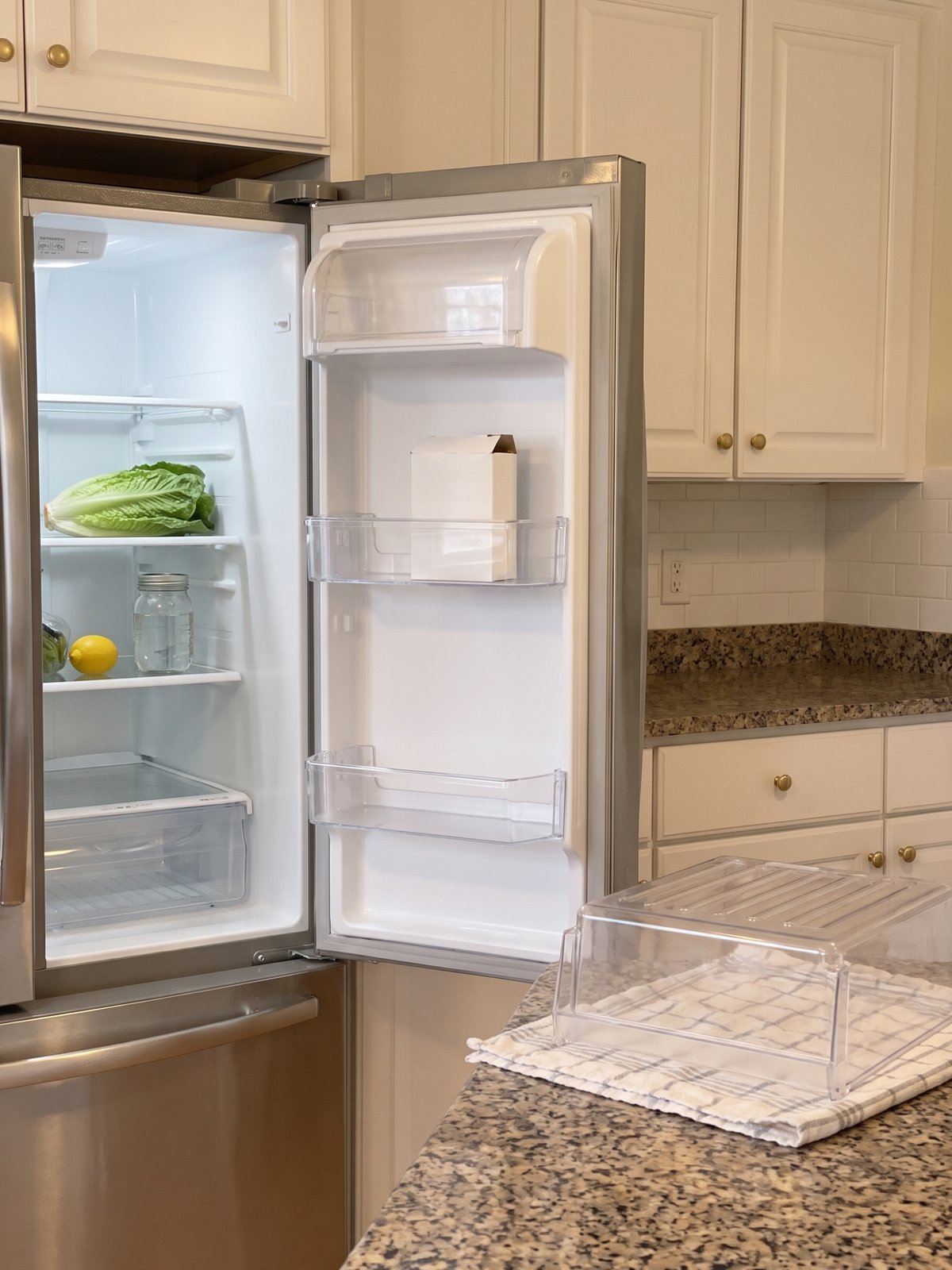
Open the fridge, toss anything spoiled and wipe up spills, as Whirlpool advises, and clean under the fridge too. Then pull out the dishwasher filter and rinse it, since Whirlpool lists unpleasant odors as a sign it needs cleaning. Last, check the garbage disposal (our disposal page has the steps).
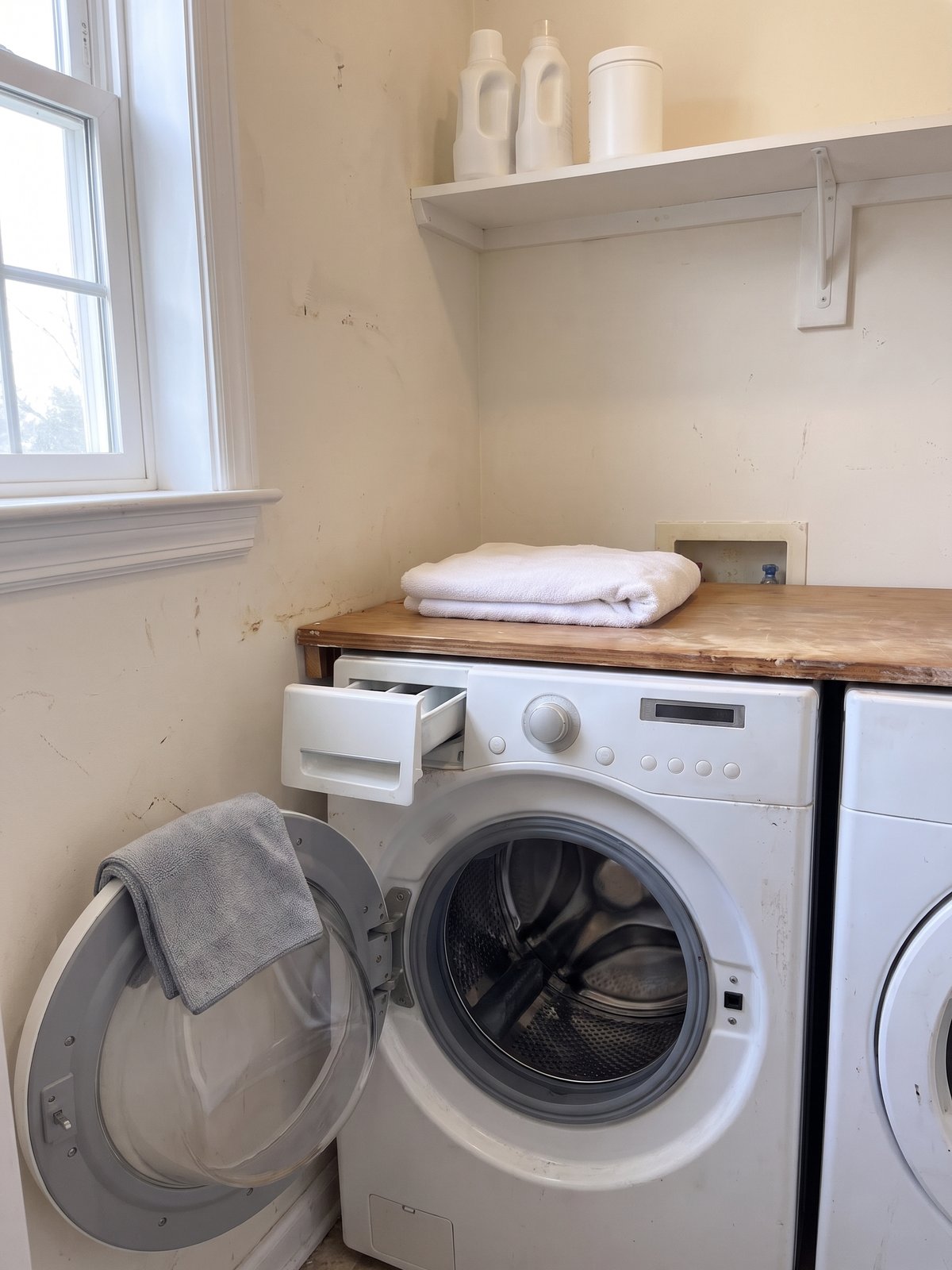
Smell the washer drum and the door seal. Whirlpool says to run a clean cycle at least once a month or every 30 cycles, and to leave the door or lid open between uses. It also says too much detergent builds up residue that can smell.
If the smell is musty, set a humidity meter in that room for a day. The EPA says to keep indoor humidity below 60 percent, and ideally between 30 and 50 percent. It also says hidden mold can grow on the back side of drywall, wallpaper or paneling.
What it looks like: a reading over 60 percent means the room is damper than the EPA’s limit.
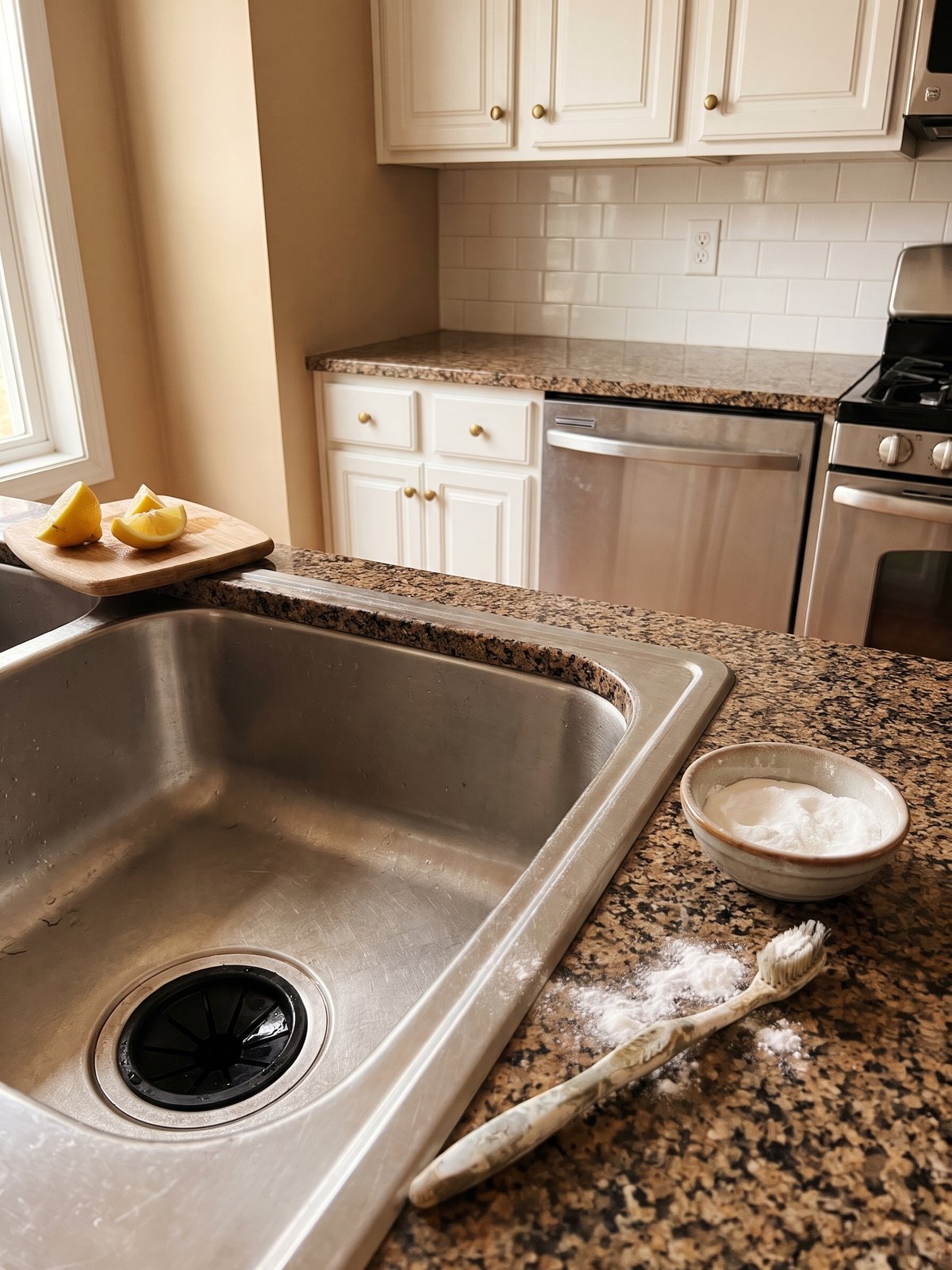
Once you find the source, fix that and air out the house. For a fridge smell that hangs on, Whirlpool suggests two open boxes of baking soda, one in the fridge and one in the freezer. Save the air freshener for after the cause is gone.
Some smells are a job for a pro.
We may earn a small fee from these links. It never changes the picks or your price.
For a fridge smell that hangs on. Good & Gather baking soda was $0.99 for 16 ounces at Target.com on 11/7/2026.
For drains and under sinks. An Eveready 2 pack LED flashlight was $6.99 at Target.com on 11/7/2026.
For musty rooms. The TempPro TP50W digital hygrometer was $9.99 at Target.com on 11/7/2026.
More picks: Cleaning products you should never mix
The free Kitchen and Laundry Rescue Guide has the never-mix chart and the Poison Help number in big print, ready to tape inside your cabinet door.

Most of the smells on this page come from one of three things: water that dried up, water that never dries, or food that went bad.
The dried up kind is the drain trap. The water in that curved pipe works like a cork that keeps the sewer smell down in the sewer. When nobody uses the drain, the cork slowly evaporates, and the smell comes right up.
The never dries kind is damp. Mold needs moisture, which is why the EPA says the fix for mold is fixing the water problem. Bring the damp down and the mold has nothing to grow on.
You walk in after a long day, and there it is again, that smell you cannot place. You light a candle, and by tomorrow it is back.
A word from Denise
You are not imagining it, and your house is not dirty. Something small is going on in one spot, so grab a glass of water and a flashlight and go find it.
It can mean a natural gas leak, so leave first and call 911 and the gas company from a safe distance. Drain slime can smell like rotten eggs too, but never assume that first.
Often it is damp. The EPA says a moldy smell with no mold in sight can mean hidden mold, and indoor humidity should stay below 60 percent. A humidity meter will tell you.
Often it is a dry drain trap. The City of Phoenix says to pour a quart of water into drains that do not get used much, since the trap water blocks sewer gas.
I’m Denise, and I explain home fixes the way a friend would at your kitchen table. Every tip I share is written from the sources listed on its page and checked against them before it goes up.
Sources opened and checked on November 7, 2026.
Every claim on this page, the source behind it and what the check found. Kept open for anyone who wants to look under the hood.
| Claim | Source | What the check found |
|---|---|---|
| Natural gas is odorized to smell like rotten eggs | Source 1 (opened November 7) | Matches the source (gas utility). |
| Leave and alert others; no windows; no light switches; no smoking or electronics, phones, garage door openers; no engines | Source 1 (opened November 7) | Matches the source (gas utility). |
| About 300 feet or more, then call 911 and the gas company | Source 1 (opened November 7) | Matches the source (gas utility). |
| Stay away until the gas company or responders say it is safe; never fix gas lines yourself | Source 1 (opened November 7) | Matches the source (gas utility). |
| CO has no smell; battery or battery backup detectors near every sleeping area | Source 2 (rechecked November 7) | Matches the source (official). |
| CO detector beeping: leave right away and call 911 | Source 3 (opened November 7) | Matches the source (official). |
| Moldy smell with no visible source suggests hidden mold; back of drywall, wallpaper, paneling | Source 5 (rechecked November 7) | Matches the source (official). |
| A quart of water refills unused drain traps; trap water blocks sewer gas; evaporates | Source 4 (rechecked November 7) | Matches the source (official). |
| Glass of water test | Source 4 (rechecked November 7) | Matches the source (official). |
| Drain slime gives a rotten egg sulfur smell | Source 4 (rechecked November 7) | Matches the source (official). |
| Plumber smoke test for vent leaks | Source 4 (rechecked November 7) | Matches the source (official). |
| Fridge: toss spoiled food, wipe spills, clean under it routinely; two open boxes of baking soda, fridge and freezer | Source 7 (rechecked November 7) | Matches the source (maker). |
| Dishwasher filter: unpleasant odors are a sign | Source 8 (rechecked November 7) | Matches the source (maker). |
| Washer clean cycle monthly or every 30 cycles; door open; excess detergent residue | Source 9 (rechecked November 7) | Matches the source (maker). |
| Humidity below 60, ideally 30 to 50 | Source 5 (rechecked November 7) | Matches the source (official). |
| About 10 square feet; experienced contractor; hidden mold, experienced professional; contaminated water; health concerns; no HVAC if mold suspected; fix the water problem | Sources 5 and 6 (rechecked November 7) | Matches the source (official). |
| Never mix bleach with vinegar, ammonia or drain cleaners | Source 10 | Matches the source (official). |
| Poison Help line, 1-800-222-1222; free and confidential, 24 hours a day, 7 days a week | Source 11 | Matches the source (HRSA Calling Poison Help page; one wording site-wide, November 7). |
| Prices: baking soda $0.99; Eveready 2pk flashlight $6.99; TempPro TP50W $9.99 | Source 12, read November 7, 2026 | Matches the source (dated, Target.com online). |
| Left out: a time estimate for tracking a smell; a smell to cause chart beyond what the sources say; “leave the door open”; the burning plastic smell advice; fridge drip pans; enzyme cleaners and dehumidifiers | No official, utility or maker page found to back them | Left out on purpose |