How to Clean a Garbage Disposal and Stop the Smell (Without Putting a Hand Inside)

Every tip here is checked against the sources listed at the bottom.

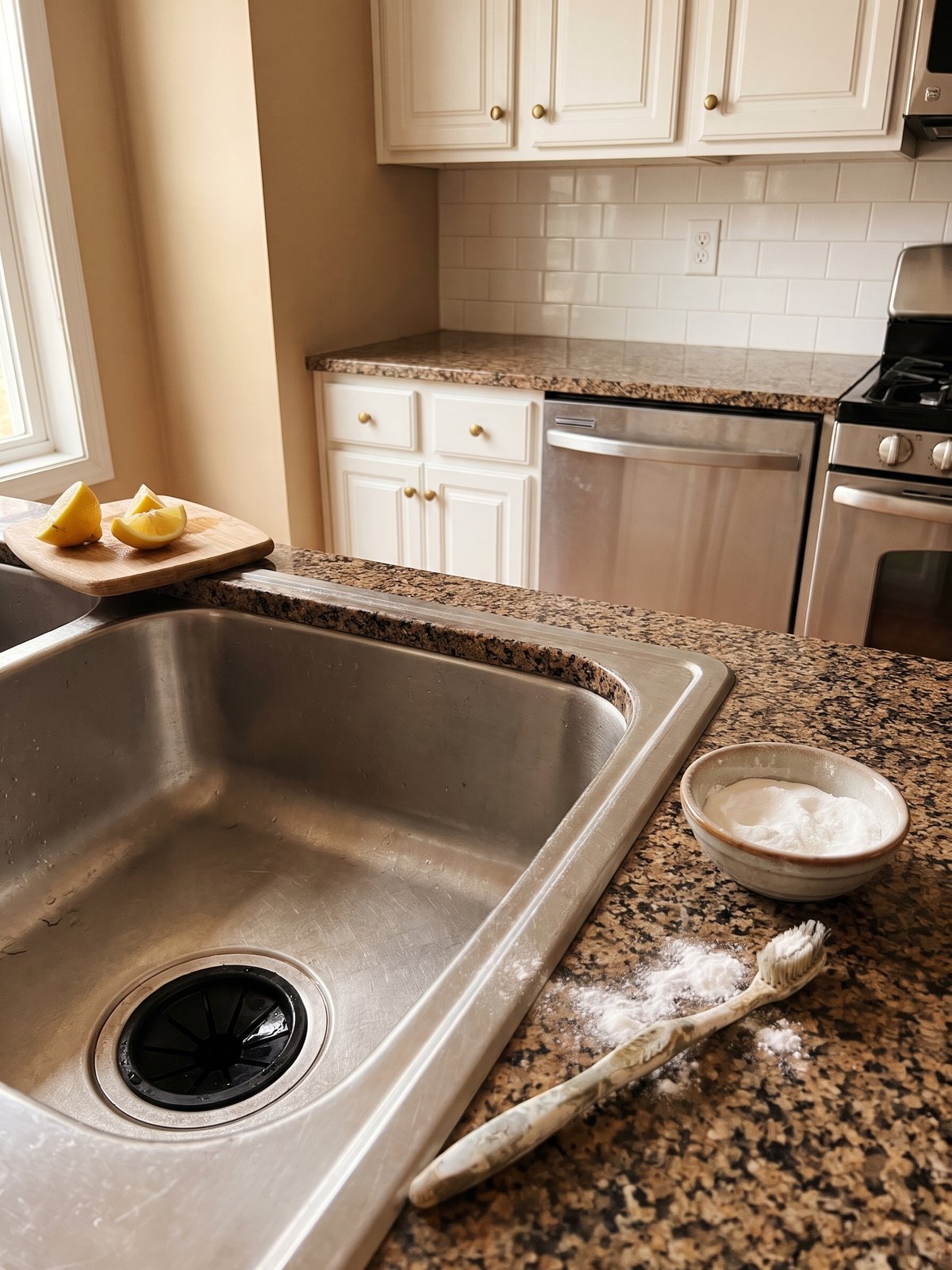
A kitchen sink with the rubber splash guard lifted out and resting on the counter beside a dish brush, a small bowl of baking soda and lemon wedges

The short answer

What works Cut the power, then scrub the underside of the rubber splash guard with baking soda and warm water, because that is where the smell usually hides. Then do InSinkErator’s baking soda flush and grind a few citrus wedges. After every use, keep cold water running at least 15 seconds.

How long
The maker’s steps have no soaking or waiting time, so it goes as fast as you scrub. After that, it is 15 seconds of cold water after every grind.
What it costs
Pennies. A 16 oz box of Good & Gather baking soda was $0.99 at Target.com on November 7, 2026, and the flush uses a quarter cup.
What you need
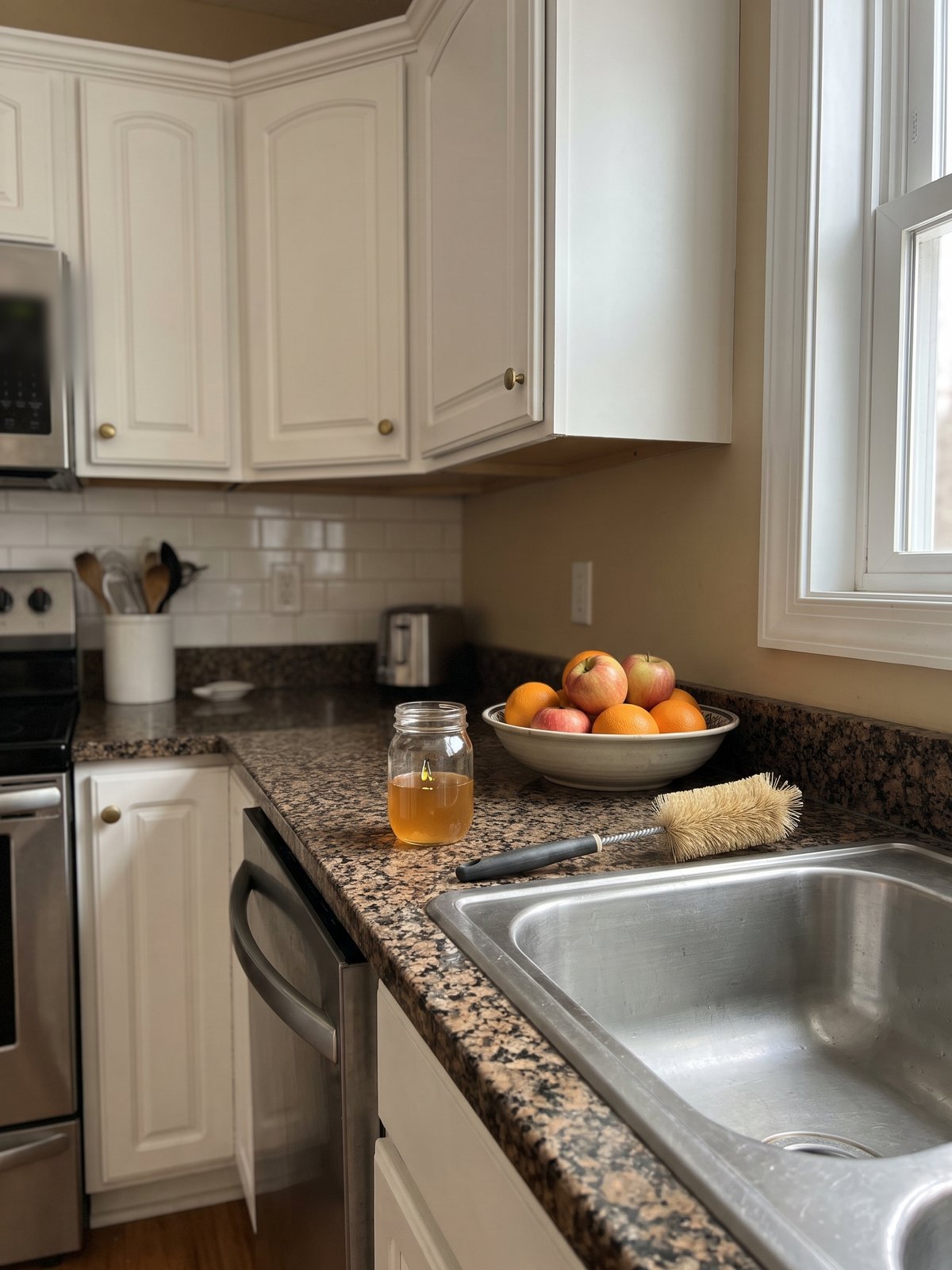
Baking soda, a dish brush, a lemon or orange, a few ice cubes, and long tongs or needle nose pliers in case something fell in.
Jump to the steps
From your cabinet
  • Baking soda

Before you start: two rules that never bend

  1. The power goes off first. Moen, a disposal maker, says to unplug the disposal, or if it is wired in, to turn the power off at the electrical box.
  2. Your hand never goes inside. Both Moen and InSinkErator say never to put your hands or fingers in a disposal. If something fell in, cut the power and fish it out with tongs or needle nose pliers, as Moen says.

Step by step

  1. Cut the power

    Look under the sink. If the disposal has a plug, pull it out of the outlet. If you do not see a plug, it is wired in, so turn its power off at the electrical box.

  2. Take out the splash guard

    The splash guard is the rubber ring of flaps that sits in the drain opening. InSinkErator says the baffle on its models lifts out for cleaning. If yours does not come out, scrub it where it sits in the next step.

    What it looks like: any buildup on the underside of the flaps is the usual source of the smell. InSinkErator’s manual calls an odor “a sign of grease and food buildup.”

  3. Scrub the splash guard with baking soda

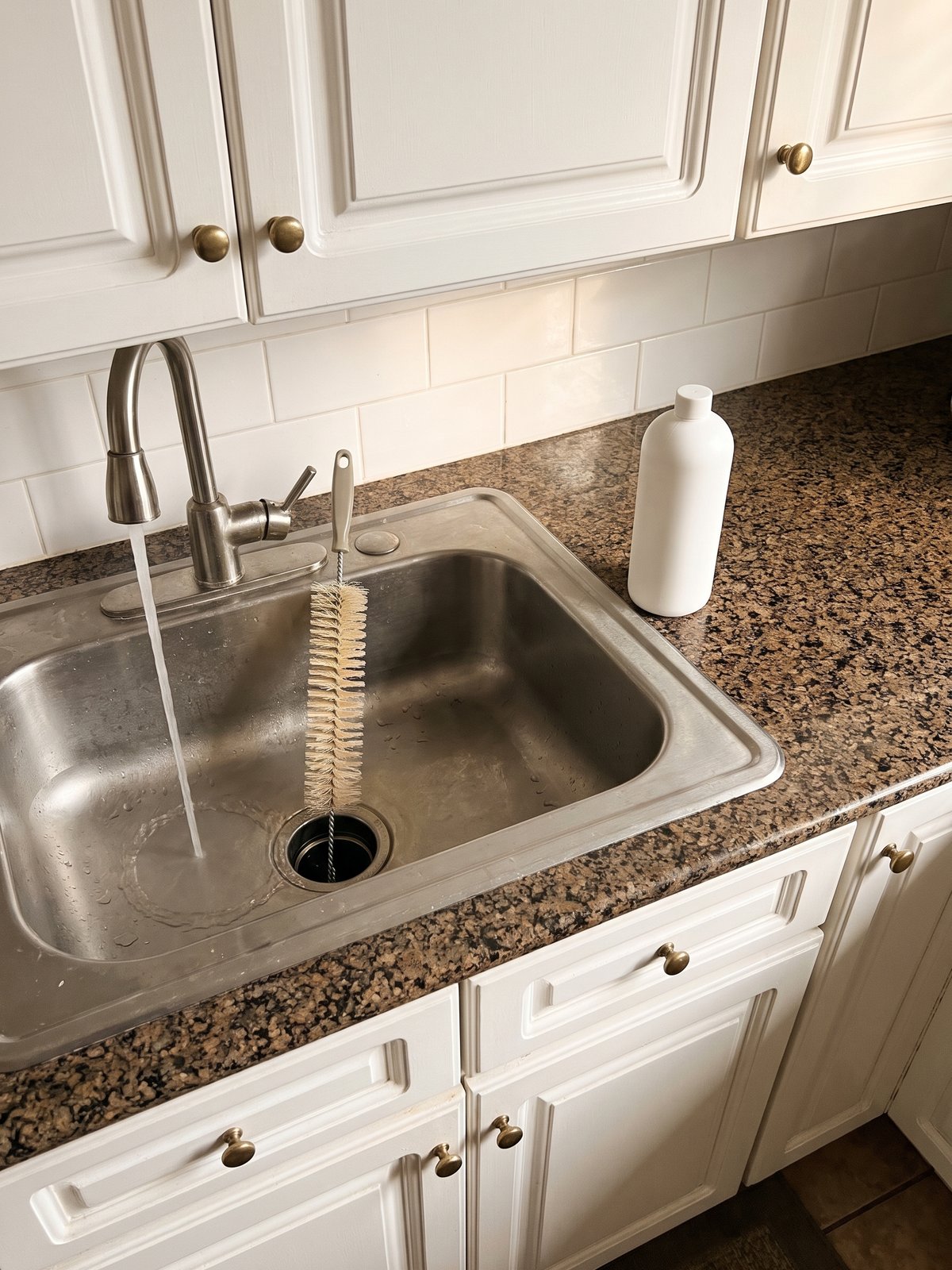
    Wet a dish brush, sprinkle baking soda on it, and scrub the underside of every flap with warm water. Then brush the inside upper lip of the drain opening, which the manual also says to clean. The brush does the reaching, so your fingers stay above the sink.

    Rinse the guard and the brush with warm water. Moen notes that its own splash guard is dishwasher safe.

  4. Put it back and turn the power on

    Press the splash guard back into the opening until it sits flat. Then plug the disposal back in, or switch its power back on.

  1. Do the baking soda flush

    Put the stopper in the drain and fill the sink about halfway with warm water. Stir in 1/4 cup of baking soda. Then turn the disposal on and pull the stopper out at the same moment. That is the cleaning method in InSinkErator’s own care manual.

    What it looks like: the water rushes down through the running disposal and carries loose bits out with it.

  2. Grind citrus wedges with cool water

    Cut a lemon or an orange into wedges. Turn on a steady stream of cool water, turn the disposal on, and drop the wedges in one at a time. That is how InSinkErator’s cleaning page says to do it, and the maker says citrus helps clear away odors.

  3. Finish with ice and a long cold rinse

    With the cold water still running, grind a few ice cubes. Ice knocks loose bits off the grinding parts, though InSinkErator says it usually melts before it cleans the whole chamber. When the grinding stops, let the cold water run at least 15 more seconds to flush the drain line.

Habits that keep the smell away

Once it is clean, a few small habits keep it from souring again.

  1. Cold water, every time. Run a strong stream of cold water while you grind and for at least 15 seconds after. The manual says not to use hot water while grinding.
  2. No grease down the drain. InSinkErator says fats, oils and grease should never go in a disposal or any sink drain. Let grease cool in a can and throw it in the trash.
  3. Feed it a little at a time. Coffee grounds and eggshells will not hurt it, the maker says, but add them slowly, because older pipes can clog if a lot goes down at once.
  4. Keep stringy food out. The manual says very fibrous scraps like corn husks and artichokes can plug the drain.

When it will not work, and what to do instead

Sometimes the smell hangs on after a good cleaning. Here is what to check.

  • The sink drains slowly or water sits in it. Moen says a clogged or slow disposal can start to smell on its own, so the clog has to go first. InSinkErator’s manual says never to put drain cleaner in it. Call a plumber if water will not go down.
  • The splash guard is torn or worn out. Replacement guards are sold for many disposals. Moen, for one, sells a splash guard and stopper set for its models.
  • Tiny flies hover over the sink. Garbage disposals are on the University of Kentucky’s list of places fruit flies breed. Clean the disposal as above, then see Why fruit flies keep coming back.
  • You were told hot water melts the grease away. It makes sense that heat would help, since hot water does melt grease. But InSinkErator says cool water keeps fat solid as it passes through the disposal and your pipes, and grease that collects inside pipes is behind many plumbing problems.

Be safe

  • Power off before cleaning. Unplug the disposal or turn it off at the electrical box, as Moen says, before anything goes near the opening.
  • Never put a hand or fingers inside. Use tongs or needle nose pliers, with the power off, to pull anything out.
  • No drain cleaners, bleach or other chemicals in the disposal. InSinkErator lists drain cleaner and household cleaners and chemicals among the things never to put in it, and says to avoid bleach.
  • Never stack drain products. If someone already poured a drain cleaner in, do not add bleach or a second drain cleaner on top. New Jersey’s health department says bleach and drain cleaner can make toxic chlorine gas, and different drain cleaners can react with each other. See the full never-mix chart.
  • Keep cleaners away from kids and pets. If someone swallows or breathes in a cleaner, call the Poison Help line, 1-800-222-1222. It is free and confidential, 24 hours a day, 7 days a week.

What to buy

We may earn a small fee from these links. It never changes the picks or your price.

  • Good & Gather Baking Soda, 16 oz

    For the splash guard scrub and the flush. $0.99 at Target.com on 11/7/2026 (Arm & Hammer 1 lb was $1.79).

  • up&up Bristled Dish Brush

    It reaches under the flaps and around the lip so your fingers stay out. $3.19 at Target.com on 11/7/2026.

  • 12 inch locking tongs

    For pulling out a dropped spoon or cap with the power off. GoodCook 12 inch Locking Tongs were $6.99 at Target.com on 11/7/2026.

Why it works

InSinkErator says its disposals have no blades at all. Parts called impellers push the food against a grinding ring that shreds it, a little like a cheese grater.

That grinding leaves grease and food behind on parts you never see. The maker’s manual says an odor is usually a sign of exactly that buildup, so the fix is to scrub it off, not cover it up.

Cold water matters for the same reason. Think of bacon grease in a pan: warm, it pours, and cold, it turns white and solid. Cold water keeps grease in solid bits that wash on through.

A word from Denise

That smell always seems to show up on the day company is coming. It is not a sign you keep a dirty kitchen. It is a sign the rubber flaps need a scrub, and 15 seconds of cold water after every grind does more than any cleaner you could buy.

Questions people ask

Does putting ice in a garbage disposal sharpen the blades?

No, because there are no blades to sharpen. InSinkErator says its disposals shred food with impellers and a grinding ring. Ice can knock some bits loose, but it usually melts before it cleans the whole chamber.

Should I run hot or cold water with a garbage disposal?

Cold. InSinkErator recommends a steady stream of cool or cold water while it runs, so any fat stays solid and gets carried through.

Can I use drain cleaner in a garbage disposal?

No. InSinkErator’s manual lists drain cleaner, along with household cleaners and chemicals, among the things never to put in a disposal. If the drain is clogged, call a plumber.

More help like this

Next tipHow to get rid of ants in the kitchen
Denise laughing in her kitchen

About Denise

I’m Denise, and I explain home fixes the way a friend would at your kitchen table. Every tip I share is written from the sources listed on its page and checked against them before it goes up.

How my tips are checked

Sources

Sources opened and checked on November 7, 2026.

  1. InSinkErator, Food Waste Disposer Installation, Care and Use Manual, Operating Instructions page (cold water, 15 seconds, no hot water while grinding, no drain cleaner or household chemicals, no hands or fingers, odor means grease and food buildup, baffle and lip cleaning, 1/4 cup baking soda flush, fibrous foods), ManualsLib copy manualslib.com
  2. InSinkErator, How to Clean Garbage Disposal 3 Ways (no blades, impellers and grind ring, ice melts first, citrus wedges with cool water, removable baffle) insinkerator.com
  3. InSinkErator, Using Cold Water When Running a Garbage Disposal (cool water keeps fat solid; avoid fats, oils and grease) insinkerator.com
  4. InSinkErator, What Not to Put in a Garbage Disposal (no fats, oils or grease in a disposal or sink drain; grease collects in pipes; not too much at once; coffee grounds and eggshells) insinkerator.com
  5. InSinkErator (India), Things to keep in mind when using a Food Waste Disposer (no bleach or drain cleaners; a few ice cubes; citrus can eliminate odors) insinkerator.com
  6. Moen, How do I Eliminate Odors in a Garbage Disposal (slow drains cause odor, unplug or power off at the box, never hands, tongs or needle nose pliers, baking soda and warm water on the splash guard, dishwasher safe, replacement splash guard) solutions.moen.com
  7. University of Kentucky Entomology, ENTFACT-621 Fruit Flies (garbage disposals among breeding sites) entomology.mgcafe.uky.edu
  8. New Jersey Department of Health, Hazard Alert: Mixing bleach with other cleaning products can be deadly (bleach plus drain cleaner can create toxic chlorine gas; different brands of drain cleaners react) (PDF) nj.gov
  9. HRSA Poison Help, Calling Poison Help (1-800-222-1222; free and confidential help 24 hours a day, 7 days a week) poisonhelp.hrsa.gov
  10. Target.com search results (prices, checked 11/7/2026) target.com target.com target.com
Fact log: how each claim on this page was checked (23 claims)

Every claim on this page, the source behind it and what the check found. Kept open for anyone who wants to look under the hood.

ClaimSourceWhat the check found
Unplug, or if hardwired turn power off at the electrical boxSource 6 (rechecked November 7)Matches the source (maker).
Never put hands in a disposal; use tongs or needle nose pliersSources 1 and 6 (rechecked November 7)Matches the source (makers).
Odor is usually a sign of grease and food buildupSource 1 (quoted, rechecked November 7)Matches the source (maker manual, mirror copy).
Clean the underside of the splash baffle and inside upper lipSource 1 (manual names a scouring pad; the page uses a brush so fingers stay out)Matches the source.
Scrub the splash guard underside with baking soda and warm water; Moen’s guard is dishwasher safeSource 6Matches the source (maker).
Baffle lifts out for cleaningSource 2 (rechecked November 7)Matches the source.
Flush: stopper in, sink half full of warm water, 1/4 cup baking soda, turn on and pull stopper togetherSource 1 (rechecked November 7)Matches the source (maker manual).
Citrus wedges one at a time with steady cool water; citrus helps with odorsSources 2 and 5 (rechecked November 7)Matches the source.
Ice helps but usually melts before cleaning the chamber completelySources 2 and 5 (rechecked November 7)Matches the source.
No blades; impellers push waste against a grind ringSource 2 (rechecked November 7)Matches the source (InSinkErator models).
Run water at least 15 seconds after grinding; cold water while grinding; no hot water while grindingSources 1 and 3 (rechecked November 7)Matches the source.
Cool water keeps fat solid through the disposal and pipesSource 3 (rechecked November 7)Matches the source.
Never put fats, oils, grease in a disposal or sink drain; grease collects inside pipesSource 4 (rechecked November 7)Matches the source.
Do not fill with too much food at once; coffee grounds and eggshells not harmful, add graduallySource 4 (rechecked November 7)Matches the source.
Fibrous materials like corn husks and artichokes plug the drainSource 1 (rechecked November 7)Matches the source.
Drain cleaner, household cleaners and chemicals never in the disposal; avoid bleachSources 1 and 5 (rechecked November 7)Matches the source.
Slow or clogged disposals can develop an odorSource 6Matches the source.
Replacement splash guard and stopper sold (Moen)Source 6Matches the source.
Garbage disposals are a fruit fly breeding siteSource 7 (rechecked November 7)Matches the source.
Bleach plus drain cleaner can create toxic chlorine gas; different drain cleaners reactSource 8 (rechecked November 7)Matches the source (official).
Poison Help line, 1-800-222-1222; free and confidential, 24 hours a day, 7 days a weekSource 9Matches the source (HRSA Calling Poison Help page; one wording site-wide, November 7).
Prices: Good & Gather baking soda 16 oz $0.99; Arm & Hammer 1 lb $1.79; up&up Bristled Dish Brush $3.19; GoodCook 12 in Locking Tong $6.99Source 10, opened November 7, 2026Matches the source (dated, Target.com online; Walmart links carry no price).
Dropped: “ice sharpens blades” (myth, corrected in FAQ); vinegar and enzyme cleaners in the disposal; a set baking soda amount for the brush, a total time estimate and the visual cues that no source gives (11/7)ScopeLeft out on purpose