A word from Denise
So know what your shower is made of, give the right cleaner time to sit, and keep a squeegee on a hook.
Every tip here is checked against the sources listed at the bottom.
 By Denise. Checked on November 7, 2026 against the sources at the bottom of this page.
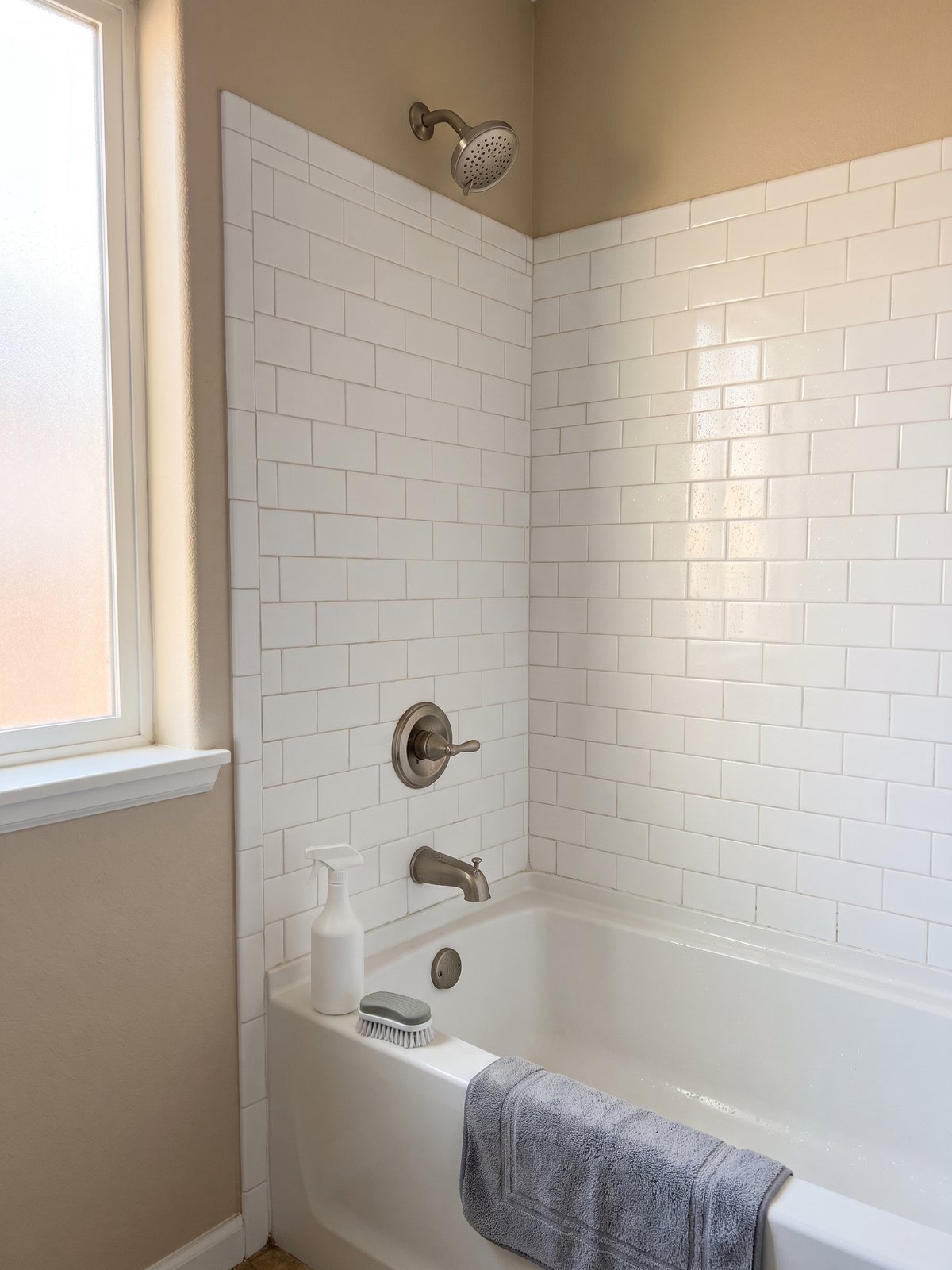
What works Find out what your shower is made of, because stone, acrylic and fiberglass each have cleaners they cannot take. Then take everything out, put on a bathroom cleaner made for your surface and let it sit. Scrub with a non-scratch brush, rinse well and buff it dry.
Every shower cleaner is safe on some surfaces and harmful on others. Check yours first.
Move the bottles, razors, sponges and caddy out of the shower. Clorox says to remove everything from the shower and tub first.
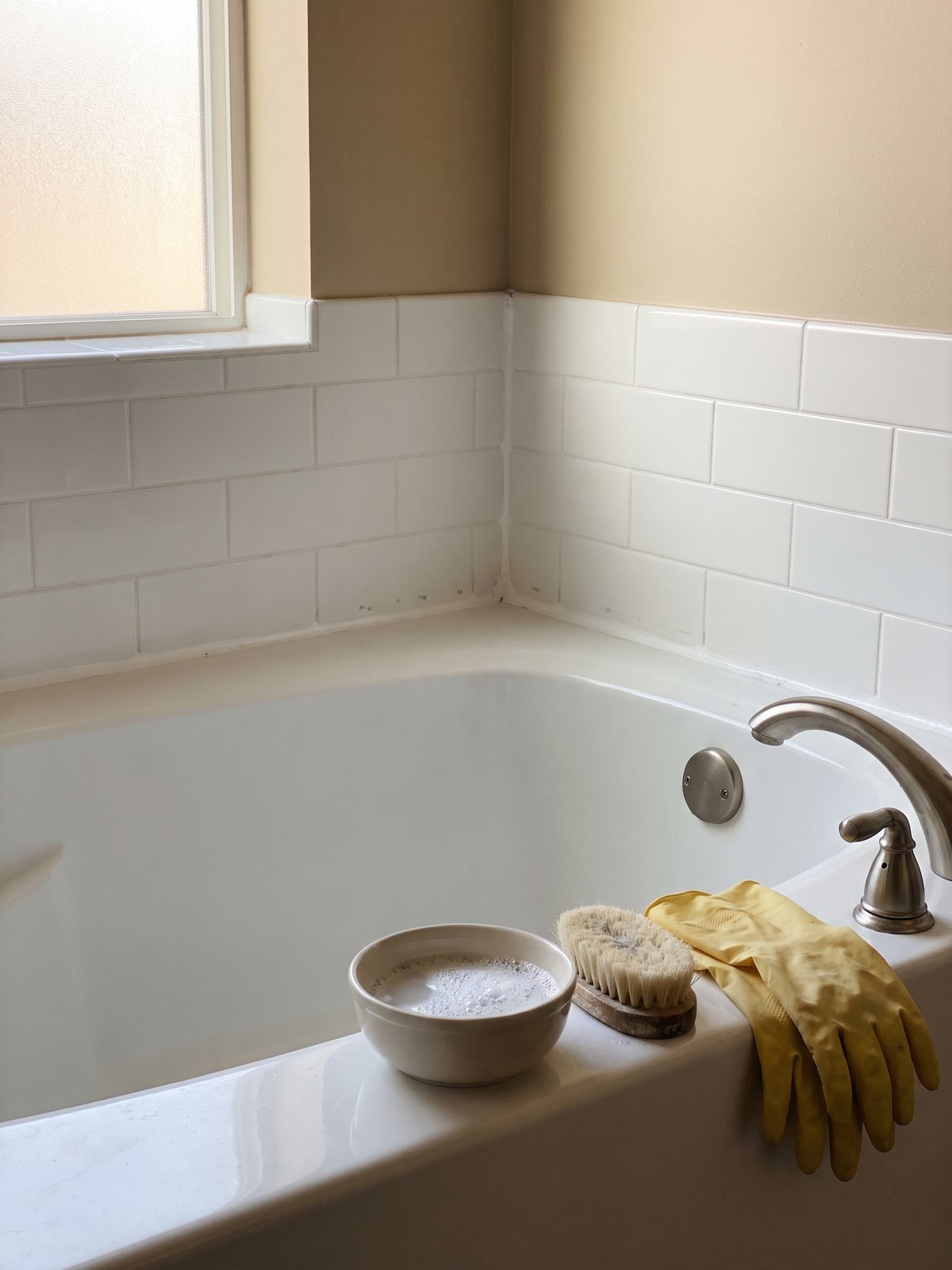
Turn on the bathroom fan or open a window, and leave it on the whole time. Put on rubber gloves. Clorox says to wear gloves and keep good air flowing when you clean with bleach.
Take down the liner. If it is machine washable, Clorox says to wash it in warm water with a mild detergent. It can run in the washer while you clean the shower.
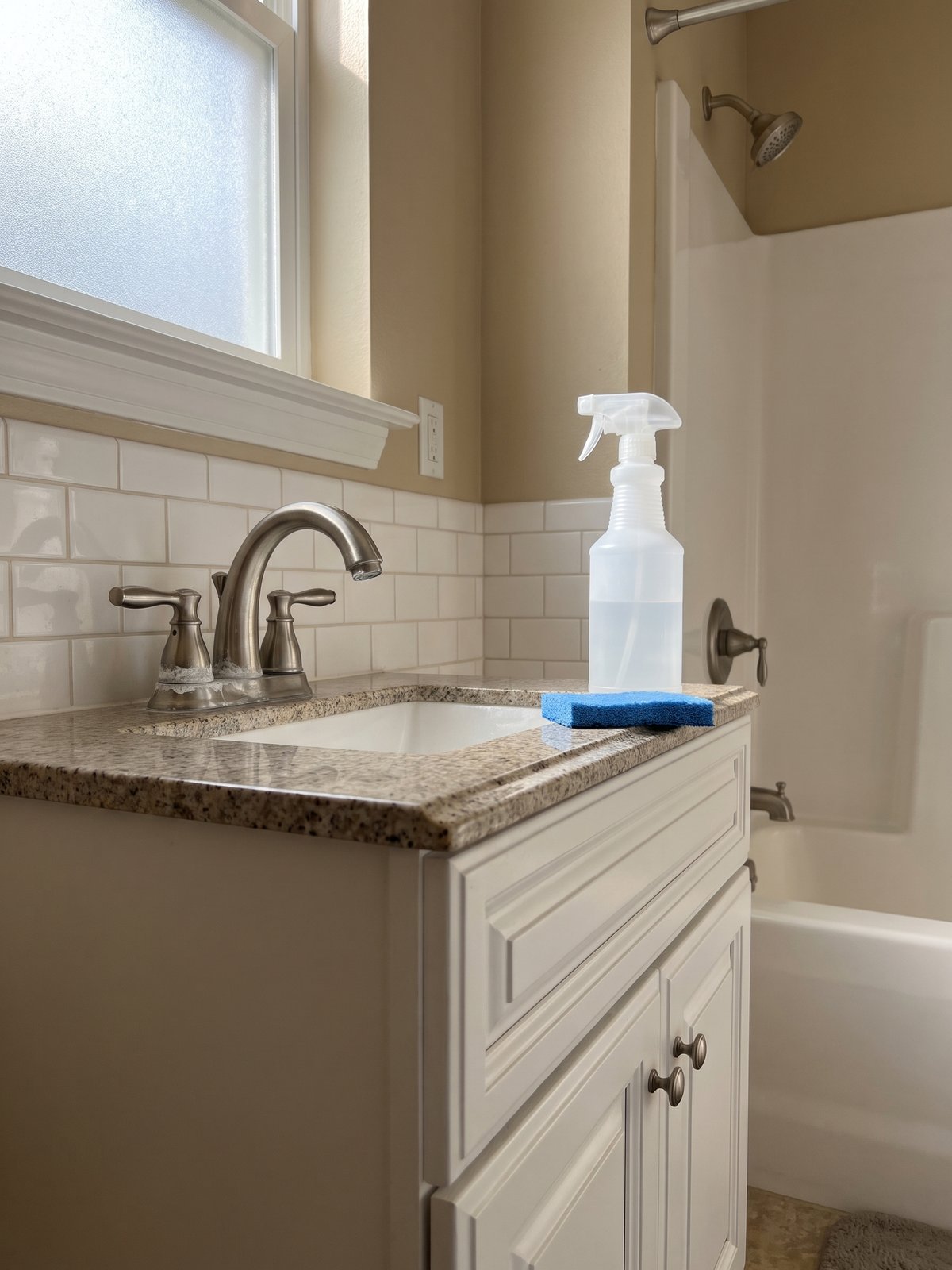
Spray your surface-safe cleaner over the walls, the tub or shower floor, and the shelves. For Scrubbing Bubbles Bathroom Grime Fighter, the label says to spray from 6 to 8 inches away and let the foam soak in. On heavy grime, the American Cleaning Institute says to let a cleaner sit at least 30 seconds to loosen the dirt.
On natural stone, wash with warm water and a mild dish soap instead, or a cleaner made for stone.
Scrub the walls and tub with a non-scratch brush or sponge, using small circles. Then use a soft-bristle brush on the grout lines, which the American Cleaning Institute recommends.
Rinse every surface with plenty of clean water, using the hand shower or a cup, until no foam is left. The Scrubbing Bubbles label says to rinse chrome with water, and the American Cleaning Institute says to rinse tile thoroughly.
If dark spots stay on glazed tile grout, the American Cleaning Institute says a bleach solution or a mildew stain remover can be brushed on and then rinsed. Clorox says to mix 1/3 cup of its bleach into 1 gallon of water and keep the spot wet for 10 minutes. Then rinse well.
Do this only after the first cleaner is rinsed away, and never on marble. Dark spots in the caulk need How to get mold stains off shower caulk.
Dry the walls, tub and fixtures with a clean, dry towel. The American Cleaning Institute says buffing with a dry cloth keeps water spots from forming.
Hang the clean liner back up, put back only the bottles you use, and leave the shower door or curtain open. The American Cleaning Institute says to keep shower doors ajar so air can move and mildew has a harder time growing.
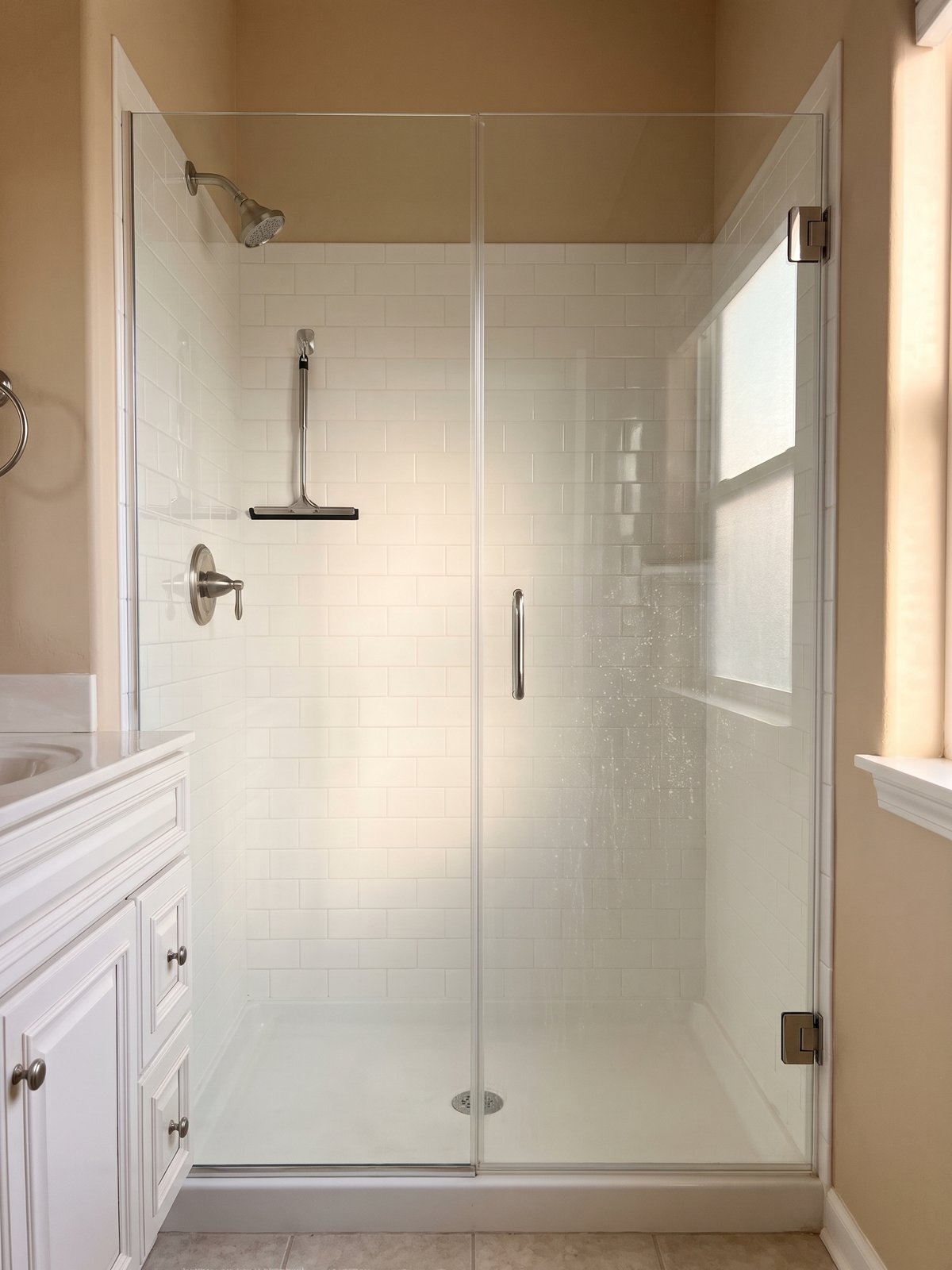
Keep it clean between deep cleans: dry the walls after every shower. The American Cleaning Institute says a towel after each use keeps soap scum and hard water from building up on tile. For stone, the Natural Stone Institute names a squeegee.
A deep clean fixes most showers, but not every problem. Here is what to do when it falls short.
We may earn a small fee from these links. It never changes the picks or your price.
Narrow bristles for grout lines and corners. up&up Tile and Grout Scrub Brush was $2.69 at Target.com on 11/7/2026.
Scrubbing Bubbles Bathroom Grime Fighter aerosol, 20 oz, was $3.79 (regular $3.99) at Target.com on 11/7/2026. Its label says it is not recommended for acrylic, so use it only on surfaces its label names.
For the quick wipe after each shower that keeps buildup down. up&up Squeegee with Hanging Hook was $5.49 at Target.com on 11/7/2026.
The free Kitchen and Laundry Rescue Guide has the never-mix chart and ten checked kitchen and laundry fixes, ready to print and tape inside a cabinet door.

The U.S. Geological Survey explains that the minerals in hard water react with soap and make a scum that clings to shower walls. A cleaner that sits for a bit gives that film time to loosen, so you can wipe it off instead of grinding at it.
The waiting is the part people skip. It is a lot like soaking a dirty casserole dish before you wash it: the soak does the hard part, and the brush only finishes the job.
Maybe you scrubbed for an hour and still saw a cloudy film when the light hit the wall. Most likely the cleaner was not given time to work, or it was the wrong one for that surface.
A word from Denise
So know what your shower is made of, give the right cleaner time to sit, and keep a squeegee on a hook.
Not on natural stone. It makes sense to try, since vinegar is an acid and acids can help with mineral spots. But the Natural Stone Institute says vinegar and other acids may dull or etch marble, travertine and limestone. On fiberglass, the American Cleaning Institute says an acid-based cleaner may help with hard water deposits.
Skip scouring powders and scrub pads, which the American Cleaning Institute says can scratch them. Read every cleaner’s label too, because some foaming cleaners say they are not for acrylic.
Clorox says regular weekly cleaning helps remove the soap scum and moisture that mold feeds on. A daily shower spray or a squeegee after each shower helps in between.
I’m Denise, and I explain home fixes the way a friend would at your kitchen table. Every tip I share is written from the sources listed on its page and checked against them before it goes up.
Sources opened and checked on November 7, 2026.
Every claim on this page, the source behind it and what the check found. Kept open for anyone who wants to look under the hood.
| Claim | Source | What the check found |
|---|---|---|
| Tile: nonabrasive tub and tile cleaner; avoid powdered abrasives | Source 1 (rechecked November 7) | Matches the source. |
| Fiberglass: tub and tile cleaner or baking soda; no abrasive cleansers or pads | Source 1 (rechecked November 7) | Matches the source. |
| Acrylic: cleaner made for acrylic or warm water, dry with a soft cloth, avoid scratching; Grime Fighter not recommended for acrylic | Sources 1 and 3 (rechecked November 7) | Matches the source. |
| Stone: acids may dull or etch; scouring powders may scratch; mild dish detergent and warm water, stone soap or non-acidic soap scum remover | Source 2 (rechecked November 7) | Matches the source. |
| Remove all items from the shower and tub first | Source 4 (rechecked November 7) | Matches the source. |
| Gloves and good ventilation | Sources 4 and 5 (rechecked November 7) | Matches the source. |
| Machine-washable liner: warm water with mild detergent | Source 4 (rechecked November 7) | Matches the source. |
| Spray 6 to 8 inches, let foam penetrate | Source 3 (rechecked November 7) | Matches the source. |
| Let a cleaner sit at least 30 seconds on heavy soil to loosen dirt | Source 1 (stated for plastic surfaces; the cleaner’s own label time wins) | Matches the source. |
| Soft-bristle brush for grout | Source 1 | Matches the source. |
| Rinse tile thoroughly; rinse chrome with water | Sources 1 and 3 | Matches the source. |
| Grout: bleach solution or mildew stain remover brushed on then rinsed | Source 1 (ACI gives its own dilution; the page uses the Clorox one so a single mix appears site-wide) | Matches the source. |
| 1/3 cup bleach in 1 gallon water, wet 10 minutes, rinse; not on marble | Source 5 (rechecked November 7) | Matches the source. |
| Buff with a dry cloth to prevent water spots | Source 1 | Matches the source. |
| Keep shower doors ajar so air circulates and mildew is reduced | Source 1 | Matches the source. |
| Towel after each use (tile) and squeegee after each use (stone) keep soap scum and hard water down | Sources 1 and 2 (rechecked November 7) | Matches the source. |
| Acid-based cleaner may help with hard water on fiberglass | Source 1 | Matches the source. |
| Call a professional stone restorer for etched areas | Source 2 | Matches the source. |
| Many rust removers and toilet bowl cleaners contain trace hydrofluoric acid, which attacks all stone | Source 2 | Matches the source. |
| Never mix bleach with ammonia, vinegar or any other cleaner | Sources 2 and 5 | Matches the source. |
| Moderate eye irritation; rinse eyes 15 to 20 minutes; under pressure, may burst above 130 degrees F; out of reach of children | Source 3 (rechecked November 7) | Matches the source (label as listed by a retailer). |
| Weekly cleaning; daily shower spray or squeegee | Source 5 (rechecked November 7) | Matches the source. |
| Hard water minerals react with soap to make soap scum that clings to shower walls | Source 6 (opened November 7) | Matches the source. |
| Prices: brush $2.69; Grime Fighter 20 oz $3.79 (reg $3.99); squeegee $5.49 | Source 8, opened November 7, 2026 | Matches the source (dated, Target.com; Walmart links carry no price). |
| Poison Help line, 1-800-222-1222; free and confidential, 24 hours a day, 7 days a week | Source 7 | Matches the source (HRSA Calling Poison Help page; one wording site-wide, November 7). |
| Dropped: “work top to bottom”; the Grime Fighter’s disinfect directions and claims; NSI’s ammonia solution for soap scum (so no reader has ammonia and bleach out on the same day); and, at the 11/7 check, where soap scum builds most, a monthly deep clean, a total time estimate, the visual cues no source gives, and “never use bleach on any stone” (NSI allows a weak bleach mix on some stone; Clorox rules out marble) | No source we opened backs them, or the sources disagree | Left out on purpose |