How to Remove Hard Water Stains and Limescale (Without Hurting Your Surfaces)

Every tip here is checked against the sources listed at the bottom.

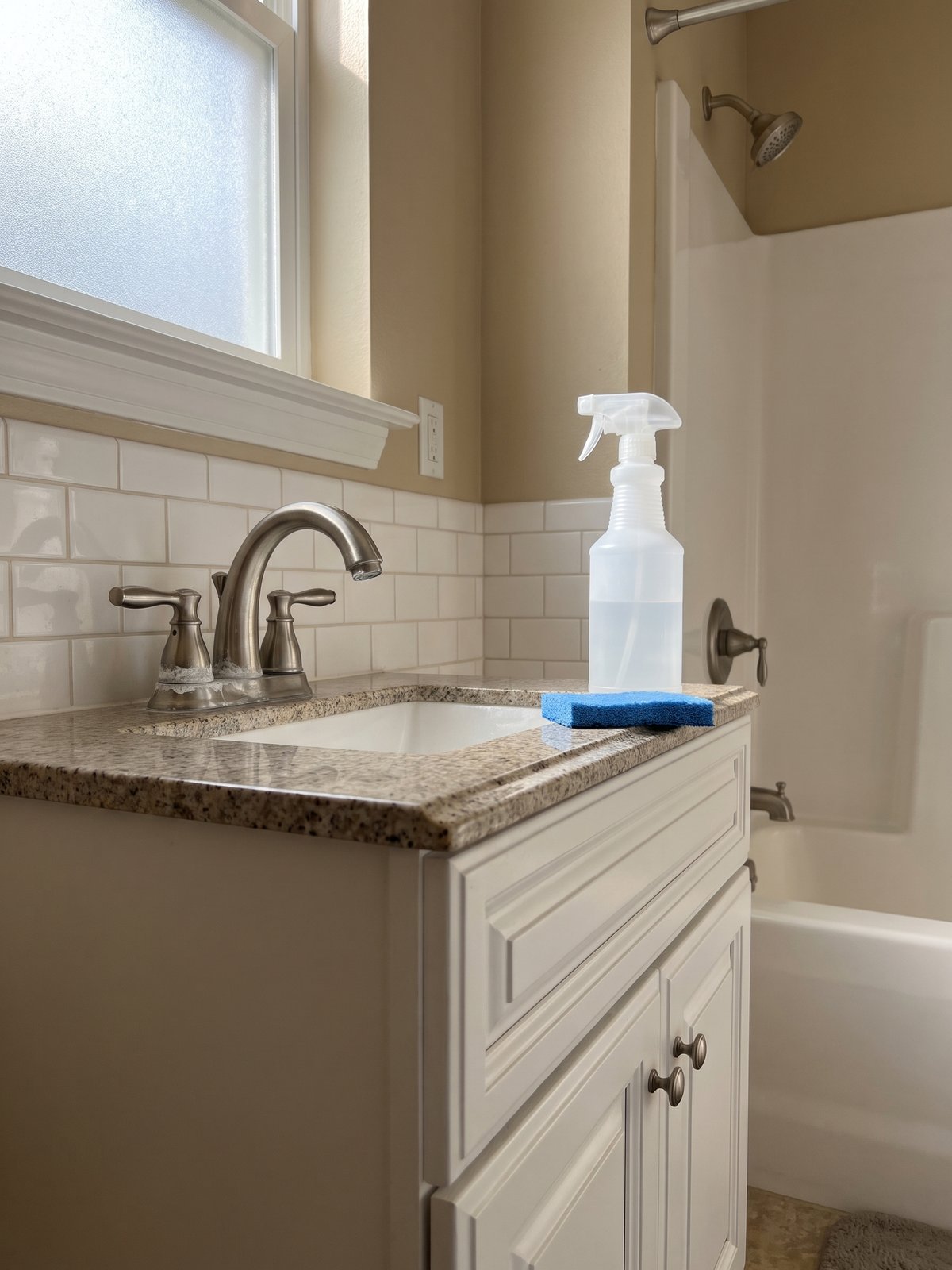
A chrome bathroom faucet with a white crusty ring at its base, a spray bottle and a folded microfiber cloth beside it

The short answer

What works That white crust is minerals left when hard water dries, and a mild acid dissolves them. Spray on equal parts vinegar and water, let it soften, scrub with a non-scratch sponge, then rinse and dry. For thick crust on a tub or sink, CLR works too where its label allows. Keep acids off natural stone.

How long
CLR needs 2 minutes, per its label. Vinegar has no set time, so watch the crust instead of the clock and repeat short rounds.
What it costs
At Target.com on November 7, 2026, a 64 oz bottle of Good & Gather distilled white vinegar was $3.39. A 28 oz bottle of CLR Calcium Lime & Rust Remover was $5.79.
What you need
White vinegar, a spray bottle, a non-scratch sponge, a microfiber cloth and rubber gloves. CLR is optional, for heavy buildup.
Jump to the steps
From your cabinet
  • White vinegar

Before you start: check the surface

Acid is what makes this work, and acid is also what can hurt the wrong surface. Take ten seconds to check what you are cleaning.

  1. Marble, limestone, travertine or other natural stone: no vinegar, no CLR. The CLR label rules out natural stone and marble, and Custom Building Products, a tile and grout maker, warns that acids can etch marble, limestone and travertine. Ask a stone pro what is safe for yours.
  2. Faucets and shower fixtures: vinegar only, and only briefly. Moen’s care guide allows half vinegar, half water on its faucet finishes “for a limited amount of time,” then a thorough rinse and dry. The same guide says to avoid lime scale removers on several finishes, so keep CLR off faucets. Other brands may differ, so check yours.
  3. Places CLR must never go: its label also rules out colored grout, painted, coated or sealed surfaces, plastics, laminates, refinished bathtubs, wood, and brass, copper or aluminum. Shower glass with a factory coating counts as coated.

Step by step

  1. Mix the spray

    Put on your gloves. Pour 1 cup of white vinegar and 1 cup of water into a clean spray bottle and shake it. Equal parts is the strength Moen gives for water spots on its faucets.

  2. Wet the crust and let it work

    Spray the white spots until they are good and wet. On faucets and other metal fixtures, keep it short, because Moen allows its vinegar mix only for a limited time. On a tub, a sink or tile, let it sit until the crust starts to soften, and spray again if it dries.

    What it looks like when it is working: on thick crust you may see tiny bubbles. That is the acid reacting with the minerals and letting off carbon dioxide gas.

  3. Scrub gently

    Rub the spot with the soft side of a non-scratch sponge, using small circles. Do not reach for a scouring pad. Moen warns against abrasive sponges and steel wool on several of its finishes, and DreamLine, a shower door maker, says abrasive sponges may scratch glass.

    What it looks like: if the spot still feels rough when you run a fingertip over it, wet it again and scrub again.

  1. Rinse right away

    Rinse the area well with plain water. Moen says to rinse any cleaner off thoroughly right after use, and that matters most on metal finishes.

  2. Dry it completely

    Wipe everything dry with a microfiber cloth. This is the step people skip, and it is the one that keeps the stain from coming back, because every drop you leave behind dries into a little new spot.

    What it looks like when it worked: smooth, shiny metal or clear glass, with no chalky ring when it dries.

  3. For thick crust, use CLR the way the label says

    Use it only where the label allows, such as tubs, sinks and porcelain. Test a hidden spot first, because the label says it may etch older sinks, tubs and tiles.

    1. Open a window or turn on the fan, and keep your gloves on.
    2. For light buildup, mix equal parts CLR and water. For stubborn buildup, use it full strength.
    3. Apply it, wait 2 minutes, then rinse promptly and thoroughly with cold, clean water.
    4. Repeat if you still see crust.

When it will not work, and what to do instead

Some white marks do not budge, and a few are not stains at all. Here is how to tell what you are looking at.

  • You left vinegar on overnight and the faucet looks dull. It makes sense that a longer soak would work better. But Moen limits vinegar on its finishes to a short time and wants it rinsed off right away. Use short rounds and repeat them instead.
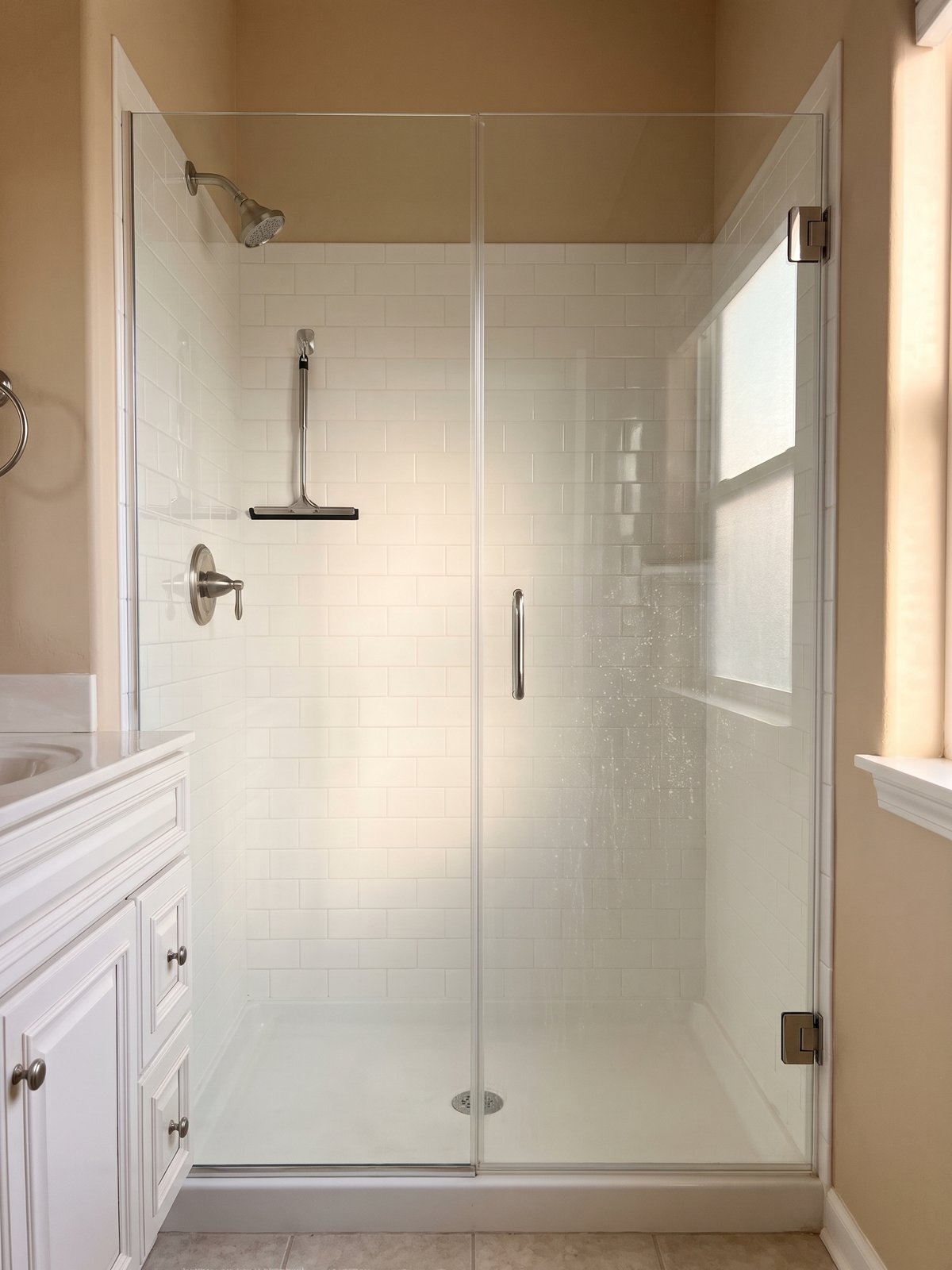
  • The glass stays cloudy no matter what. DreamLine says hard water can etch the surface of the glass over time if it is left to dry. That is a change in the glass itself, so cleaning may not bring it back, but drying the glass after every shower keeps it from getting worse.
  • The stains come right back. That is your water, not your cleaning, and drying fixtures after use is the cheapest fix. Virginia Tech’s extension program says softening all the water coming into the house is one option.
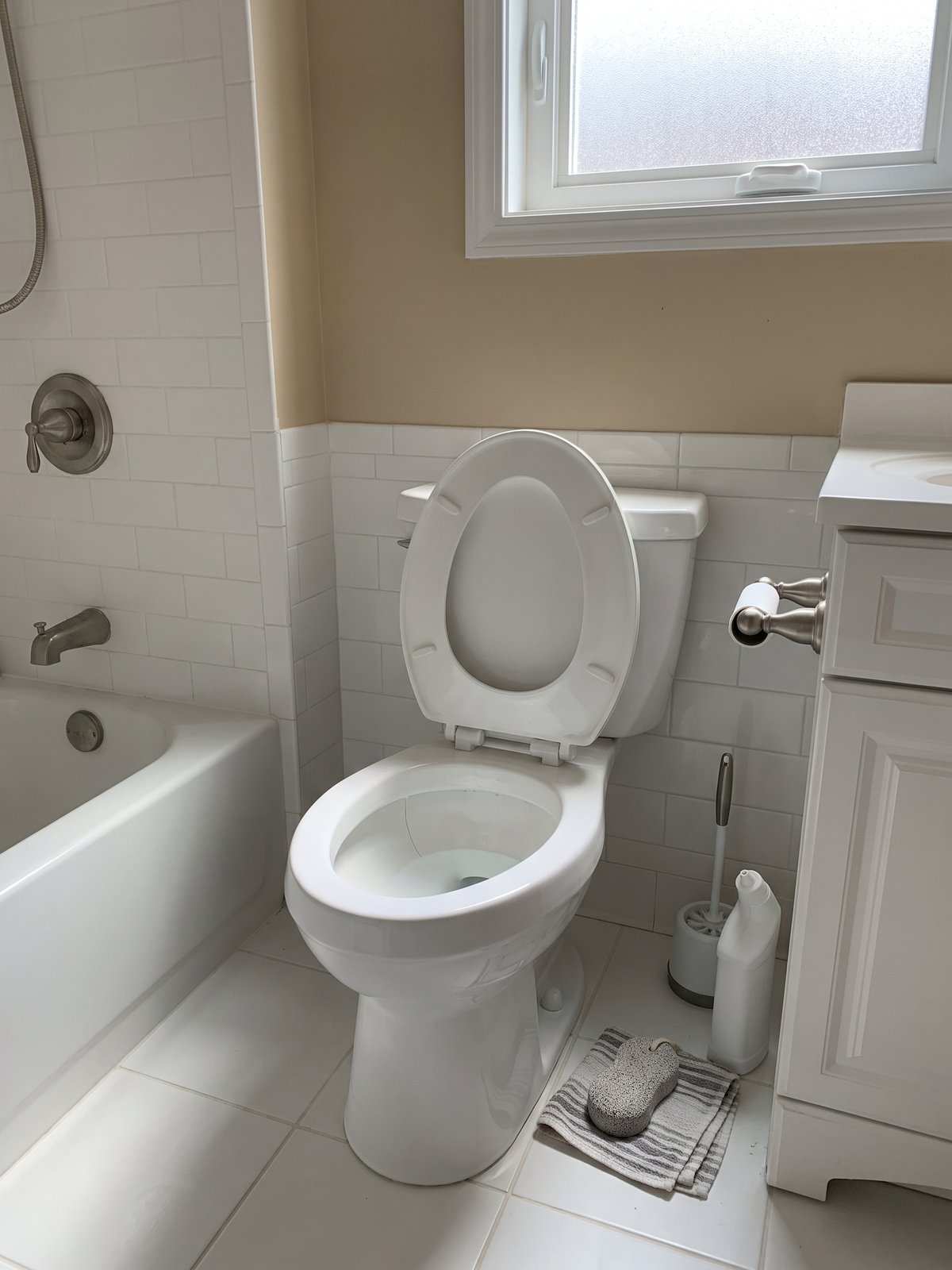
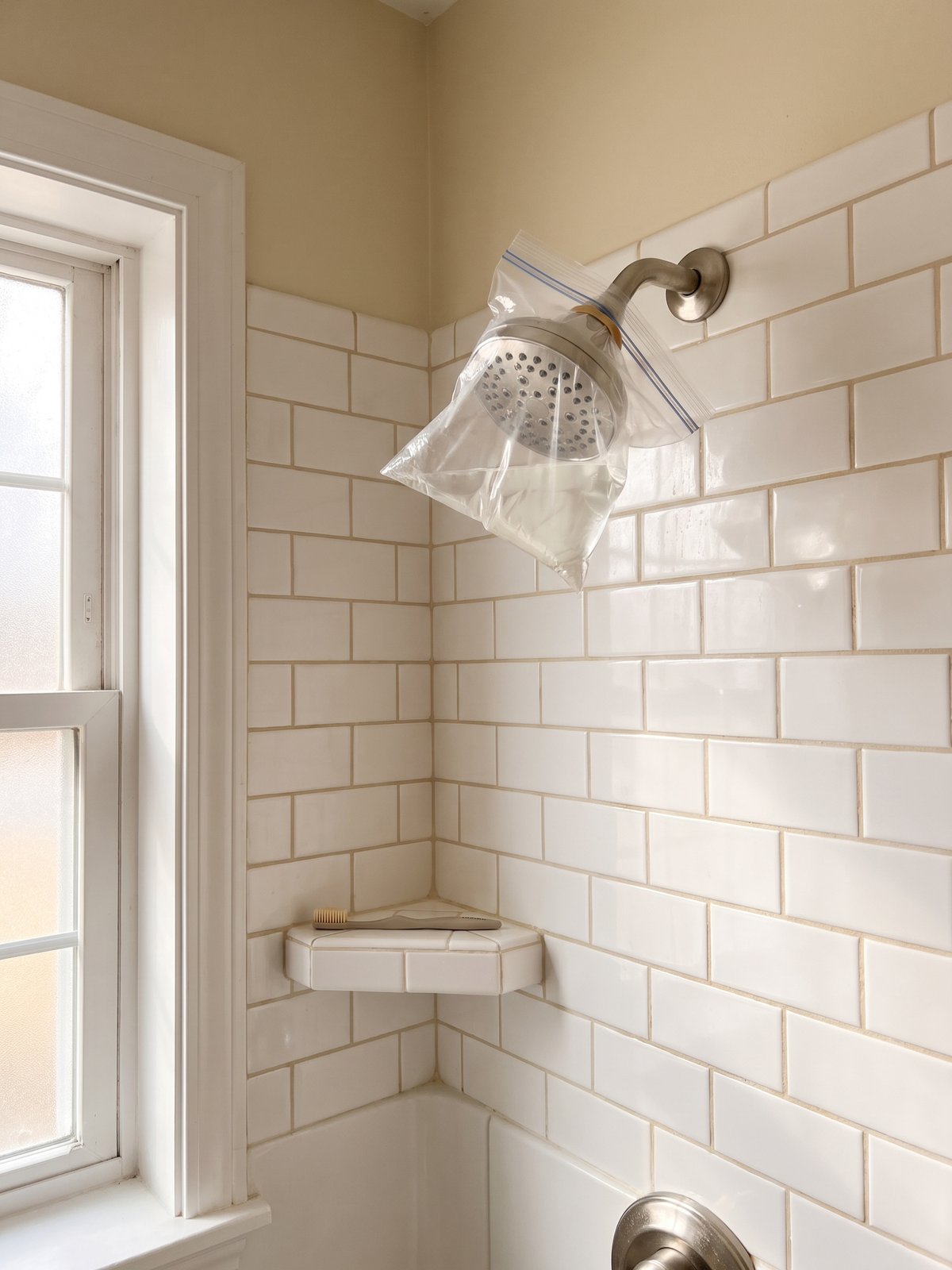
  • The crust is in the toilet bowl or on the shower head. Those have their own pages: How to remove a toilet bowl ring and How to clean a shower head without taking it off.
  • It is on marble or other stone. Stop here. Acid can etch the stone, so this is a job for a stone care pro.

Be safe

  • Never mix vinegar or CLR with bleach. Poison Control says vinegar and chlorine bleach release chlorine gas that is very irritating to the airways, eyes, nose and throat. The CLR label says not to mix it with other household cleaners, including bleach. Use one product at a time. See the full never-mix chart.
  • Gloves on, eyes protected. The CLR label says it is an eye and skin irritant and to wear household rubber gloves. If it gets in your eyes or on your skin, rinse with water for at least 15 minutes.
  • Air the room out. The CLR label says to use it in a well-ventilated area.
  • Keep acids off stone and the surfaces on the CLR label. That includes marble and other natural stone, colored grout, coated or sealed surfaces, plastics, refinished tubs, and brass, copper or aluminum.
  • Poison Help line, 1-800-222-1222. It is free and confidential, 24 hours a day, 7 days a week.

What to buy

We may earn a small fee from these links. It never changes the picks or your price.

  • Good & Gather Distilled White Vinegar, 64 oz

    This does most of the job, mixed half and half with water. $3.39 at Target.com on 11/7/2026.

  • up&up Non-Scratch Scrub Sponges

    They lift the softened crust without the scratching a scouring pad can cause. $3.39 to $5.59 depending on pack at Target.com on 11/7/2026.

  • CLR Calcium Lime & Rust Remover, 28 oz

    For thick crust on surfaces the label allows. $5.79 at Target.com on 11/7/2026.

Why it works

Hard water is water carrying a lot of dissolved calcium and magnesium. The U.S. Geological Survey calls water hard once it carries more than 120 milligrams of those minerals per liter.

When a drop of that water dries on your faucet, the water leaves and the minerals stay. Drop after drop, they build into the white crust called scale or limescale.

The USGS says hard water can leave solid calcium carbonate deposits, the same mineral an eggshell is made of. The University of Illinois explains that an eggshell in vinegar reacts and gives off carbon dioxide bubbles. Your faucet crust does the same thing in a thinner layer.

A word from Denise

You scrub that faucet until it shines, and two days later the white ring is creeping back like it never left. That is not you doing a poor job. So keep a cloth by the sink and give the wet spots a quick wipe, because minerals cannot leave a ring if the water never dries there.

Questions people ask

What dissolves hard water stains?

A mild acid. White vinegar dissolves limescale, and for thick buildup, a lime scale remover such as CLR works on the surfaces its label allows.

Is vinegar safe on faucets?

Moen’s care guide allows half vinegar, half water on its faucet finishes for a limited time, followed by a thorough rinse and drying. Do not leave it soaking overnight, and check your own faucet maker’s care guide.

Is hard water bad for you?

Virginia Tech’s extension program says hard water is considered safe for drinking, cooking and other household uses. The trouble is the scale and soap film it leaves behind.

More help like this

Denise laughing in her kitchen

About Denise

I’m Denise, and I explain home fixes the way a friend would at your kitchen table. Every tip I share is written from the sources listed on its page and checked against them before it goes up.

How my tips are checked

Sources

Sources opened and checked on November 7, 2026.

  1. U.S. Geological Survey, Hardness of Water (calcium and magnesium; 121 to 180 mg/L hard, over 180 very hard; soap scum; heated hard water forms solid calcium carbonate deposits; spots and film on glassware) usgs.gov
  2. Virginia Cooperative Extension (Virginia Tech), Hardness in Household Water, Publication 442-664, hosted by University of Maryland Extension (scale on fixtures, soap scum, considered safe for drinking, cooking and other household uses; softening all the water entering the house) extension.umd.edu
  3. Moen, Faucet Finish Care and Cleaning (50/50 vinegar and water for water spots for a limited amount of time; rinse thoroughly right after; dry with a soft cloth; avoid lime scale removers, abrasive sponges and steel wool on several finishes) solutions.moen.com
  4. CLR Multi-Use Calcium Lime & Rust Remover, 28 oz, label text (tubs, sinks, porcelain, chrome; 50/50 for light buildup, full strength for stubborn; after 2 minutes rinse promptly and thoroughly with cold clean water; do-not-use list; spot test; may etch older sinks, tubs and tiles; warnings), Giant Food Stores product listing giantfoodstores.com
  5. Custom Building Products, Aqua Mix Cement Grout Haze Remover, TDS-313 (acids may etch marble, limestone, travertine) (PDF) custombuildingproducts.com
  6. DreamLine, Harmony Shower and Tub Door Installation Instructions, Product Maintenance (abrasive sponges may scratch glass; hard water can etch glass if left to dry; ClearMax coating) (PDF, hosted by Lowe’s) pdf.lowes.com
  7. Nathan Kilah, University of Tasmania, Vinegar and baking soda: a cleaning hack or just a bunch of fizz? The Conversation (vinegar dissolves mineral deposits like limescale) theconversation.com
  8. University of Illinois Physics Van, Eggshells in Vinegar (calcium carbonate in eggshell reacts with vinegar to form carbon dioxide bubbles) van.physics.illinois.edu
  9. Poison Control, National Capital Poison Center, Vinegar (do not mix with chlorine bleach; chlorine gas very irritating to airways, eyes, nose and throat) poison.org
  10. HRSA Poison Help, Calling Poison Help (1-800-222-1222; free and confidential help 24 hours a day, 7 days a week) poisonhelp.hrsa.gov
  11. Washington State Department of Health, Bleach mixing dangers (vinegar and other acids never with bleach) doh.wa.gov
  12. Target.com search results (prices, checked 11/7/2026) target.com target.com target.com
Fact log: how each claim on this page was checked (18 claims)

Every claim on this page, the source behind it and what the check found. Kept open for anyone who wants to look under the hood.

ClaimSourceWhat the check found
Hard water carries dissolved calcium and magnesiumSources 1, 2 (rechecked November 7)Matches the source.
USGS: hard is 121 to 180 mg/L, very hard over 180 (so “more than 120”)Source 1 (rechecked November 7)Matches the source.
Hard water leaves scale on fixtures and soap scumSources 1, 2 (rechecked November 7)Matches the source.
Hard water can leave solid calcium carbonate deposits; eggshell is calcium carbonate and gives off carbon dioxide bubbles in vinegarSources 1, 8 (rechecked November 7)Matches the source.
Vinegar dissolves limescaleSource 7 (rechecked November 7)Matches the source.
Moen: 50/50 vinegar and water for water spots “for a limited amount of time,” rinse thoroughly right after, drySource 3 (rechecked November 7)Matches the source (Moen finishes only).
Moen: avoid lime scale removers, abrasive sponges and steel wool on several finishesSource 3 (rechecked November 7)Matches the source (powder coat and PVD/electroplated wording; PVD allows 0000 steel wool, so the page says “several”).
CLR label: tubs, sinks, porcelain; 50/50 for light, full strength for stubborn; after 2 minutes rinse promptly with cold water; repeatSource 4 (rechecked November 7)Matches the source. Label does not list glass or glazed tile as uses, so the page no longer says so
CLR do-not-use list: natural stone/marble, colored grout, painted/coated/sealed, laminates/plastics, brass/copper/aluminum, refinished bathtubs, woodSource 4 (rechecked November 7)Matches the source.
CLR: spot test; may etch older sinks, tubs and tilesSource 4 (rechecked November 7)Matches the source.
CLR: eye and skin irritant; rinse at least 15 minutes; rubber gloves; well-ventilated area; do not mix including bleachSource 4 (rechecked November 7)Matches the source.
Acids may etch marble, limestone, travertineSource 5 (rechecked November 7)Matches the source.
Factory-coated shower glass counts as “coated” under the CLR labelSource 4 wording plus Source 6 (DreamLine calls ClearMax a coating)Matches the source. By direct reading
Abrasive sponges may scratch glass; hard water can etch glass over time if left to drySource 6 (rechecked November 7)Matches the source.
Virginia Tech: hard water considered safe to drink; softening all water entering the house is an option for scale or soapy filmSource 2 (rechecked November 7)Matches the source.
Vinegar plus chlorine bleach releases chlorine gasSources 9, 11 (Source 9 rechecked November 7)Matches the source.
Poison Help line, 1-800-222-1222; free and confidential, 24 hours a day, 7 days a weekSource 10Matches the source (HRSA Calling Poison Help page; one wording site-wide, November 7).
Prices: vinegar 64 oz $3.39; up&up non-scratch sponges $3.39 to $5.59; CLR 28 oz $5.79Source 12, read November 7, 2026Matches the source (dated, Target.com online).