A word from Denise
Maybe you scrub that same corner every Saturday and still see a dark line. You are probably doing it right, and the caulk has simply had its day. Give it one good clean, and if the line stays dark, put in fresh caulk.
Every tip here is checked against the sources listed at the bottom.
 By Denise. Checked on November 7, 2026 against the sources at the bottom of this page.
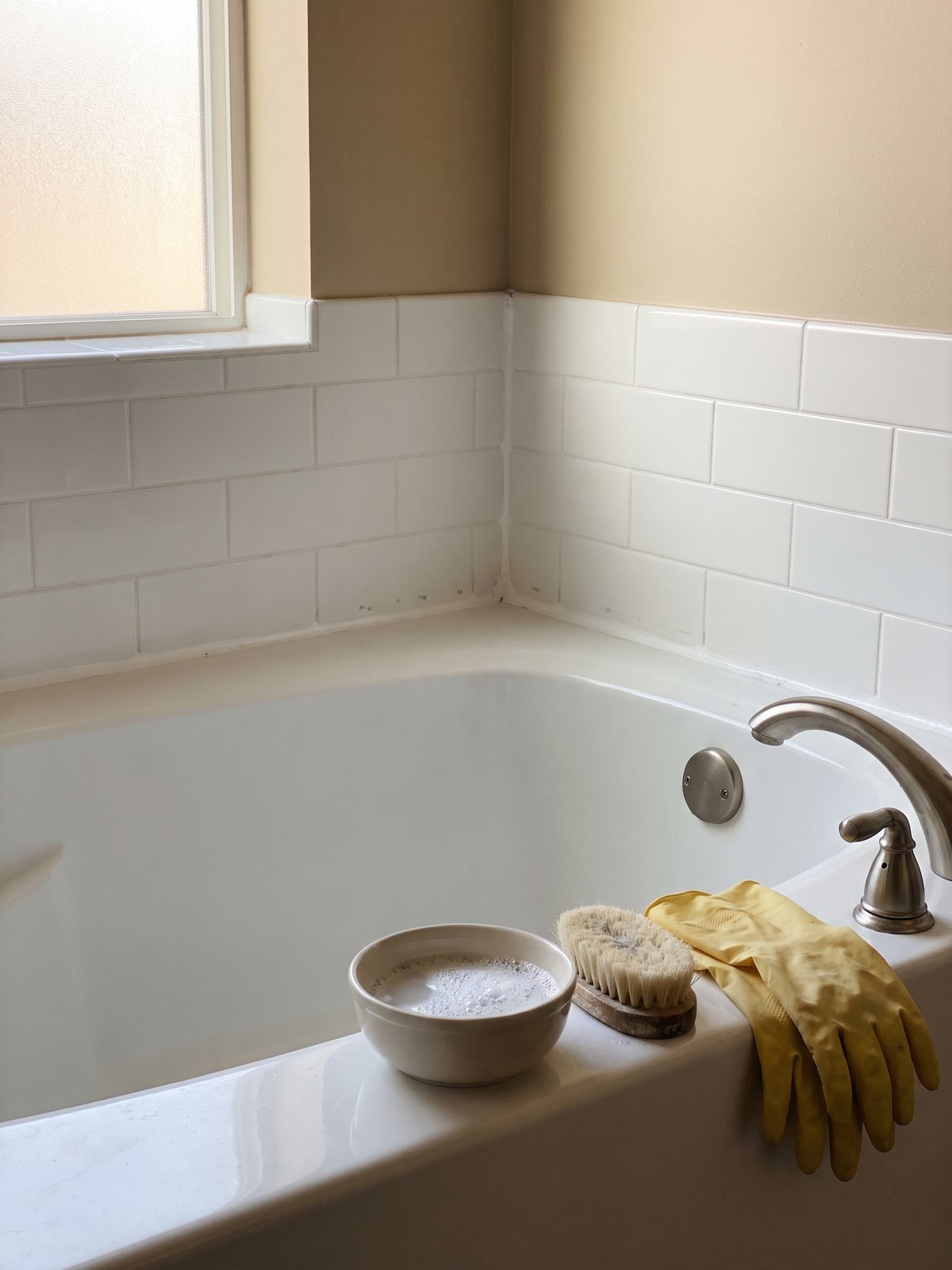
What works With the fan on and gloves on, scrub the caulk with dish soap and water, then rinse and dry it. For dark spots that stay, use 1/3 cup bleach in 1 gallon of water for 10 minutes, then rinse. If the black is still there, it is inside or behind the caulk, and the fix is new caulk.
The EPA says you can usually handle a moldy patch yourself if it covers less than about 10 square feet. That is about a 3 foot by 3 foot square, and a caulk line almost always fits.
Call a professional if the mold covers more than that, or if there has been a lot of water damage. The EPA also says that if you have health concerns, talk with a health professional before you start cleaning mold.
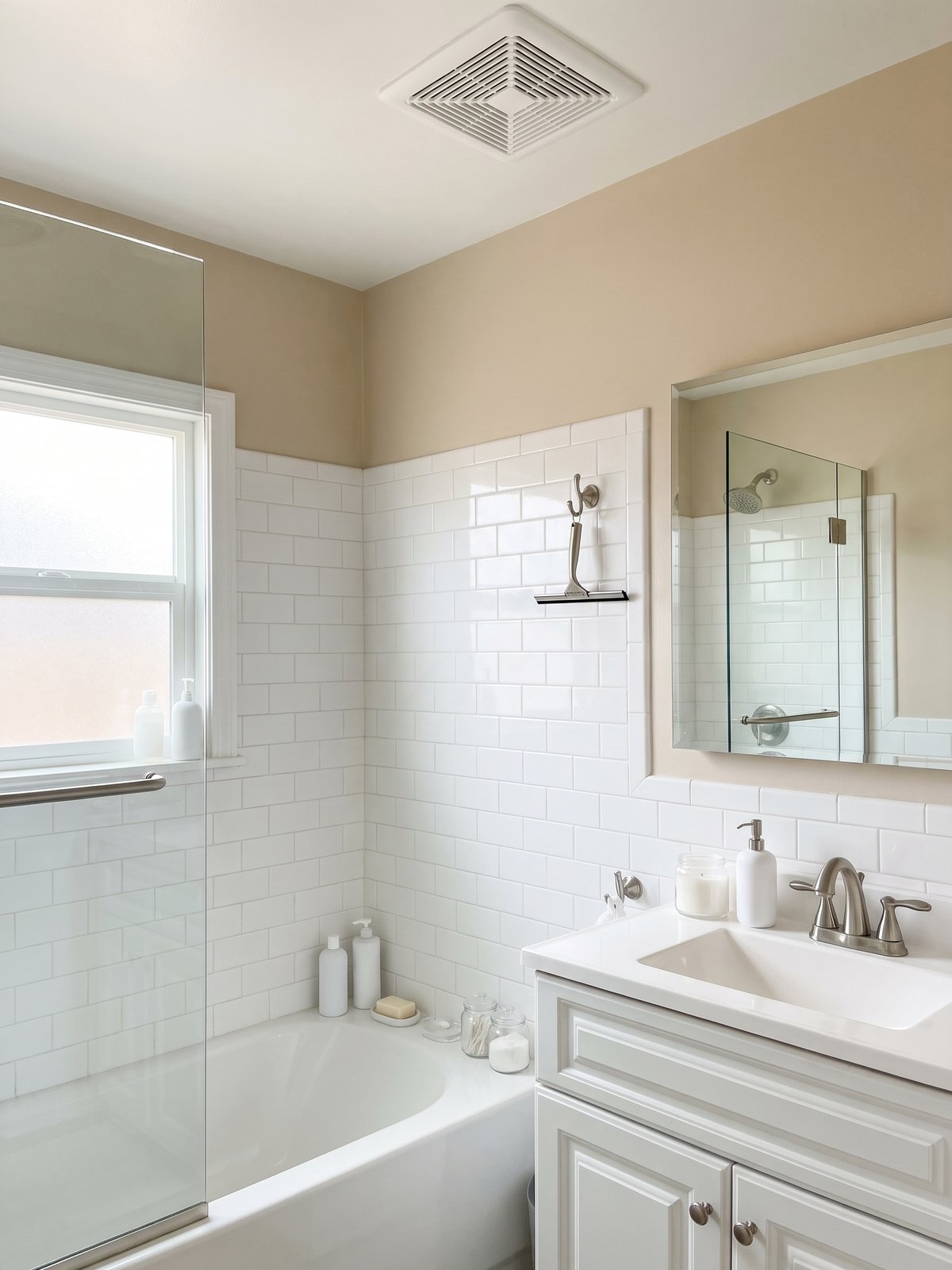
Open the window or turn on the bathroom fan, and leave it running the whole time. Put on rubber gloves and goggles. For mold cleanup, the EPA suggests goggles without vent holes and an N-95 respirator, so you do not breathe in or splash what you scrub loose.
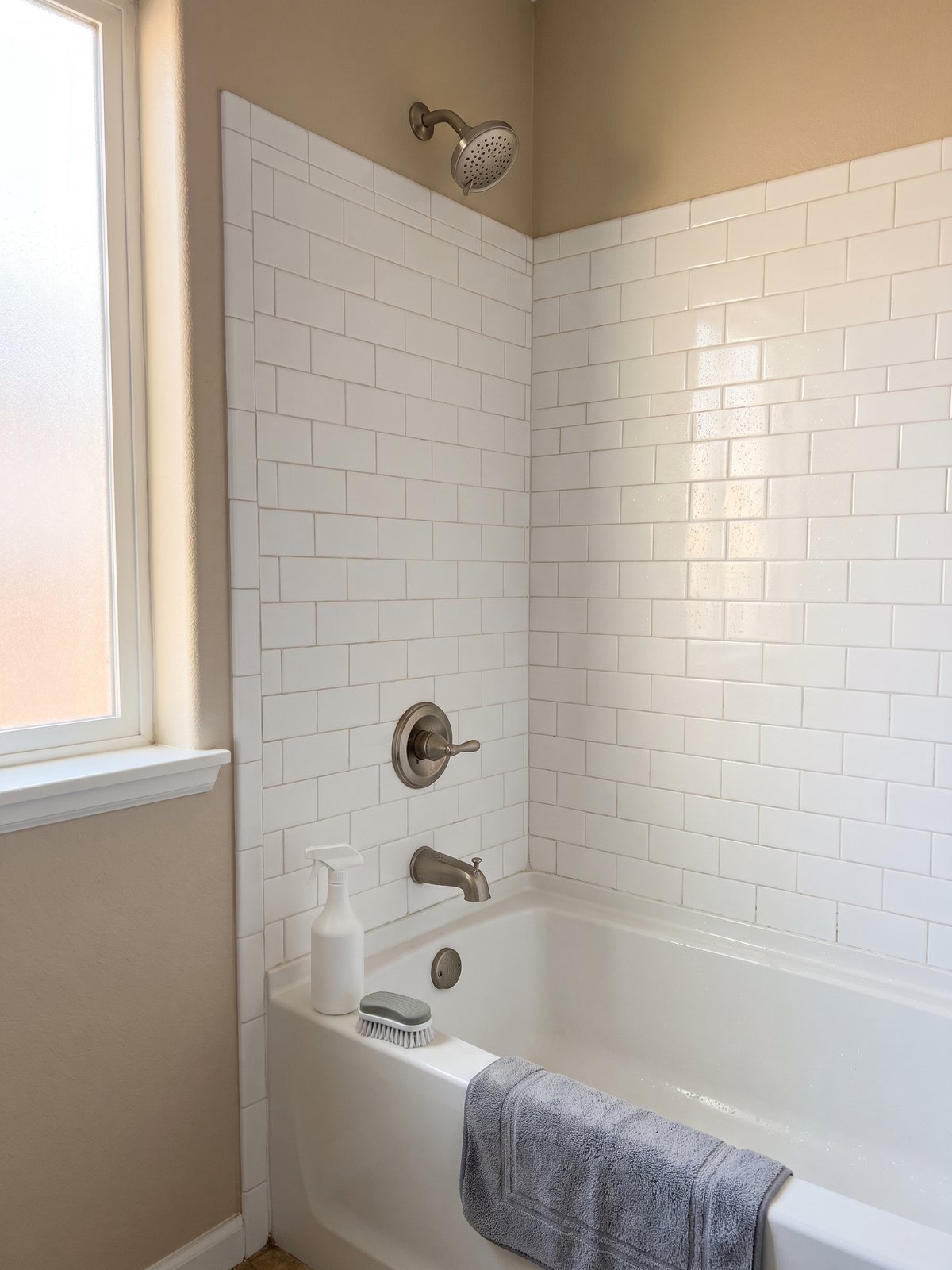
Mix a little dish soap into a small bowl of warm water. Dip a tile and grout brush in it and scrub along the caulk line with short strokes. The EPA says to scrub mold off hard surfaces with detergent and water. GE Sealants, a caulk maker, says soap scum gives mold food, so you want it gone.
Rinse the caulk with clean water until no suds are left, then wipe it dry. Rinsing matters, because you never want soap or any other cleaner still sitting there when bleach goes on in the next step.
What it looks like: if the caulk is clean now, you are done. Skip to the habits under “It keeps coming back” below.
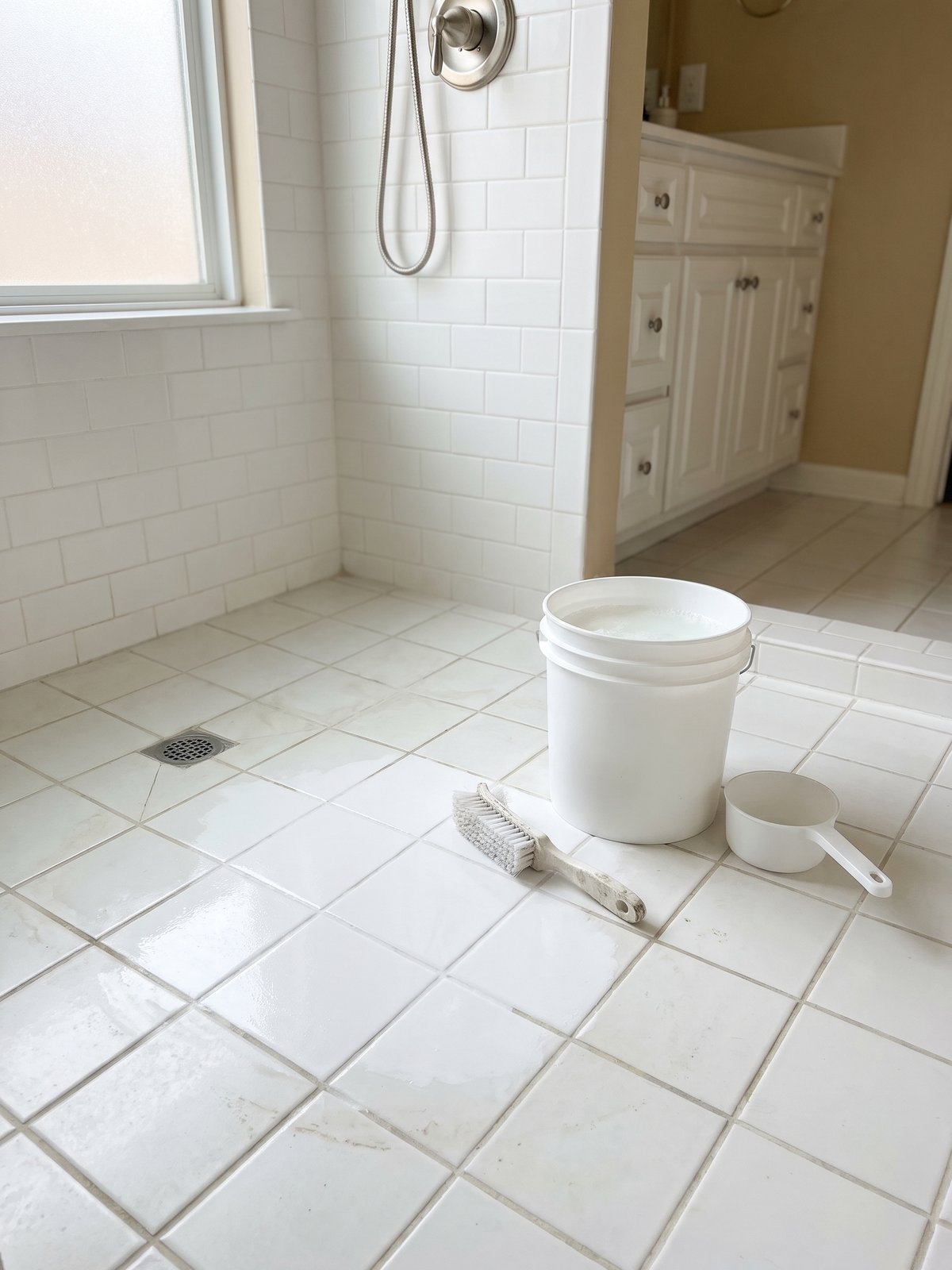
Clorox says to mix 1/3 cup of its bleach into 1 gallon of water. Stir it in a bucket, then dab or brush it onto the dark spots. Keep the caulk wet with it for 10 minutes, adding a little more if it dries out. Test a small hidden spot first.
Do not make it stronger, because Clorox says a stronger mix is not recommended. Never use it on marble, and never let it meet another cleaner.
Rinse the caulk and the tile around it with warm water, then wipe everything dry. Do not save the leftover mix, because Clorox says to use a freshly mixed one each time.
What it looks like: look closely. If dark spots still show in the caulk, the maker of Clorox Plus Tilex says mildew that gets behind caulk is hard for a cleaner to reach. Go on to Step 6.
Lift off any loose caulk with a flexible putty knife. Then score along the edge of the caulk with a utility knife held flat to the tile, and scrape the strip out with the putty knife.
DAP, a caulk maker, says a caulk remover can soften stubborn caulk if you let it sit for 5 to 20 minutes first.
Wipe the joint with a rag and rubbing alcohol to take off the last film of old caulk, as DAP says. If you see mildew in the bare joint, wash it with the bleach mix from Step 4, rinse, and wipe it dry.
Then let it dry all the way. DAP says the area must be clean and dry before new caulk goes on.
Run one smooth, steady bead of 100% silicone caulk along the joint, then smooth it with a damp finger. GE Sealants says to use silicone rather than latex caulk in a shower. Wait as long as the tube says before water touches it. One DAP silicone says 12 hours, and a faster one says 30 minutes.
Sometimes the black line wins the first round. Here is what to do then.
We may earn a small fee from these links. It never changes the picks or your price.
Firm, narrow bristles fit the caulk line. up&up Tile and Grout Scrub Brush was $2.69 at Target.com on 11/7/2026.
Clorox Unscented “Disinfecting Bleach,” 43 oz, was $3.99 at Target.com on 11/7/2026. Check that the label gives a dilution for hard surfaces.
DAP Kitchen and Bath 100% Silicone, 2.8 oz squeeze tube, was $4.99 to $5.29 at Target.com on 11/7/2026. Check the tube for its water-ready time.
The free Kitchen and Laundry Rescue Guide has the never-mix chart and ten checked kitchen and laundry fixes, ready to print and tape inside a cabinet door.

A shower gives mold what it likes. GE Sealants says caulk is porous enough to trap moisture, and soap scum gives mold food. That is why the caulk line is such an easy place for spots to start.
Scrubbing and a weak bleach mix deal with what sits on the surface. But caulk works a little like a sponge. Once mildew has worked its way in, or water has slipped behind a broken seal, you cannot clean it from the outside. You replace it.
A word from Denise
Maybe you scrub that same corner every Saturday and still see a dark line. You are probably doing it right, and the caulk has simply had its day. Give it one good clean, and if the line stays dark, put in fresh caulk.
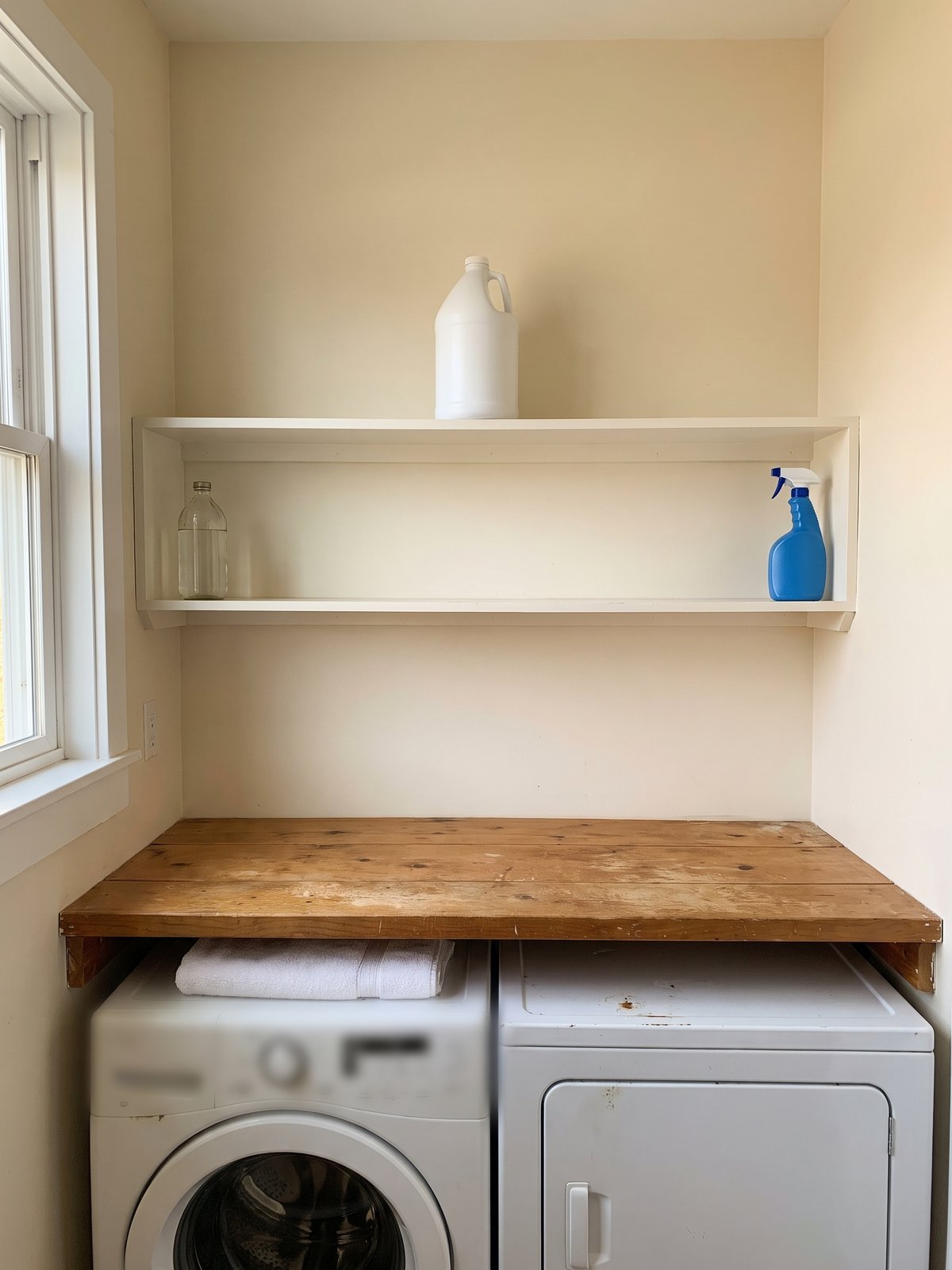
Never use vinegar and bleach on the same spot, because Clorox says never to mix bleach with vinegar. The steps here use soap and water first, then a weak bleach mix only for stains that stay.
Check the tube. One DAP 100% silicone says 12 hours before water, and DAP Silicone Max says 30 minutes. Go by the label on the one you bought.
I’m Denise, and I explain home fixes the way a friend would at your kitchen table. Every tip I share is written from the sources listed on its page and checked against them before it goes up.
Sources opened and checked on November 7, 2026.
Every claim on this page, the source behind it and what the check found. Kept open for anyone who wants to look under the hood.
| Claim | Source | What the check found |
|---|---|---|
| Do it yourself under about 10 square feet; professional for larger areas or a lot of water damage | Source 1 (rechecked November 7) | Matches the source. |
| Health concerns: consult a health professional before cleanup | Source 1 (rechecked November 7) | Matches the source. |
| N-95 respirator, gloves, goggles without vent holes | Source 1 (rechecked November 7) | Matches the source. |
| Scrub hard surfaces with detergent and water | Source 1 (rechecked November 7) | Matches the source. |
| Soap scum feeds mold; caulk is porous and traps moisture | Source 5 (rechecked November 7) | Matches the source. |
| 1/3 cup bleach in 1 gallon water, keep wet 10 minutes, rinse with warm water, wipe dry | Source 3 (rechecked November 7) | Matches the source. |
| Bleach is safe on silicone; not on marble, aluminum, non-stainless steel, chipped porcelain, porous tile; test first | Source 3 (rechecked November 7) | Matches the source. |
| Stronger solution not recommended | Source 3 (rechecked November 7) | Matches the source. |
| Never mix bleach with vinegar, ammonia or any other cleaner | Sources 3, 1, 2 (rechecked November 7) | Matches the source. |
| Use freshly mixed bleach solutions | Source 11 (rechecked November 7) | Matches the source. Disposal method left out (no source) |
| Mildew can grow behind caulk once its seal breaks; hard for a cleaner to reach | Source 4 (rechecked November 7) | Matches the source. |
| Bleach not recommended as a routine practice; dead mold may still cause allergic reactions | Source 2 (rechecked November 7) | Matches the source. |
| Do not paint or caulk moldy surfaces | Source 1 (rechecked November 7) | Matches the source. |
| Humidity under 60 percent, ideally 30 to 50 | Source 1 (rechecked November 7) | Matches the source. |
| Loose caulk with a flexible putty knife, score with a utility knife, caulk remover 5 to 20 minutes, scrape, rubbing alcohol, clean mildew, let dry | Source 6 (rechecked November 7) | Matches the source (DAP gives 1 part bleach to 10 parts water for mildew; the page uses the Clorox mix from Step 4 so one dilution appears). |
| Area must be clean and dry before new caulk | Source 8 (rechecked November 7) | Matches the source. |
| Use silicone rather than latex in showers; fan during and after showers; wipe down | Source 5 (rechecked November 7) | Matches the source. |
| Water-ready times: 12 hours (DAP 100% Silicone), 30 minutes (DAP Silicone Max) | Sources 7 and 8 (rechecked November 7) | Matches the source. |
| Prices: brush $2.69; Clorox Unscented Disinfecting Bleach 43 oz $3.99; DAP 100% Silicone 2.8 oz $4.99 to $5.29 | Source 10, opened November 7, 2026 | Matches the source (dated, Target.com; Walmart links carry no price). |
| Poison Help line, 1-800-222-1222; free and confidential, 24 hours a day, 7 days a week | Source 9 | Matches the source (HRSA Calling Poison Help page; one wording site-wide, November 7). |
| Dropped: “bleach kills mold”, “vinegar kills mold”, hydrogen peroxide or tea tree oil recipes; and, at the 11/7 check, a soft or bulging wall as a pro sign, “dry overnight”, “do not leave it longer”, time estimates, the visual cues no source gives, and the Tilex surfaces FAQ (cut for length) | No “kills mold” claims unless a label says so (site rule); no source for the rest | Left out on purpose |