How to Clean Glass Shower Doors (Soap Scum and Hard Water Spots)
Every tip here is checked against the sources listed at the bottom.
By Denise. Checked on November 7, 2026 against the sources at the bottom of this page.
The short answer
What works Cloudy shower glass is usually two things at once: soap scum and hard water spots. Wash the soap scum off first with dish soap on a non-scratch sponge. Then spray equal parts white vinegar and water on the white spots, keep it off the metal frame, rinse and squeegee dry. Never scour the glass.
How long
One cleaning session, then a quick squeegee pass after each shower to keep it clear.
What it costs
A 64 oz jug of Good & Gather white vinegar was $3.39 and an up&up squeegee was $5.49 at Target.com on November 7, 2026. You likely have dish soap already.
What you need
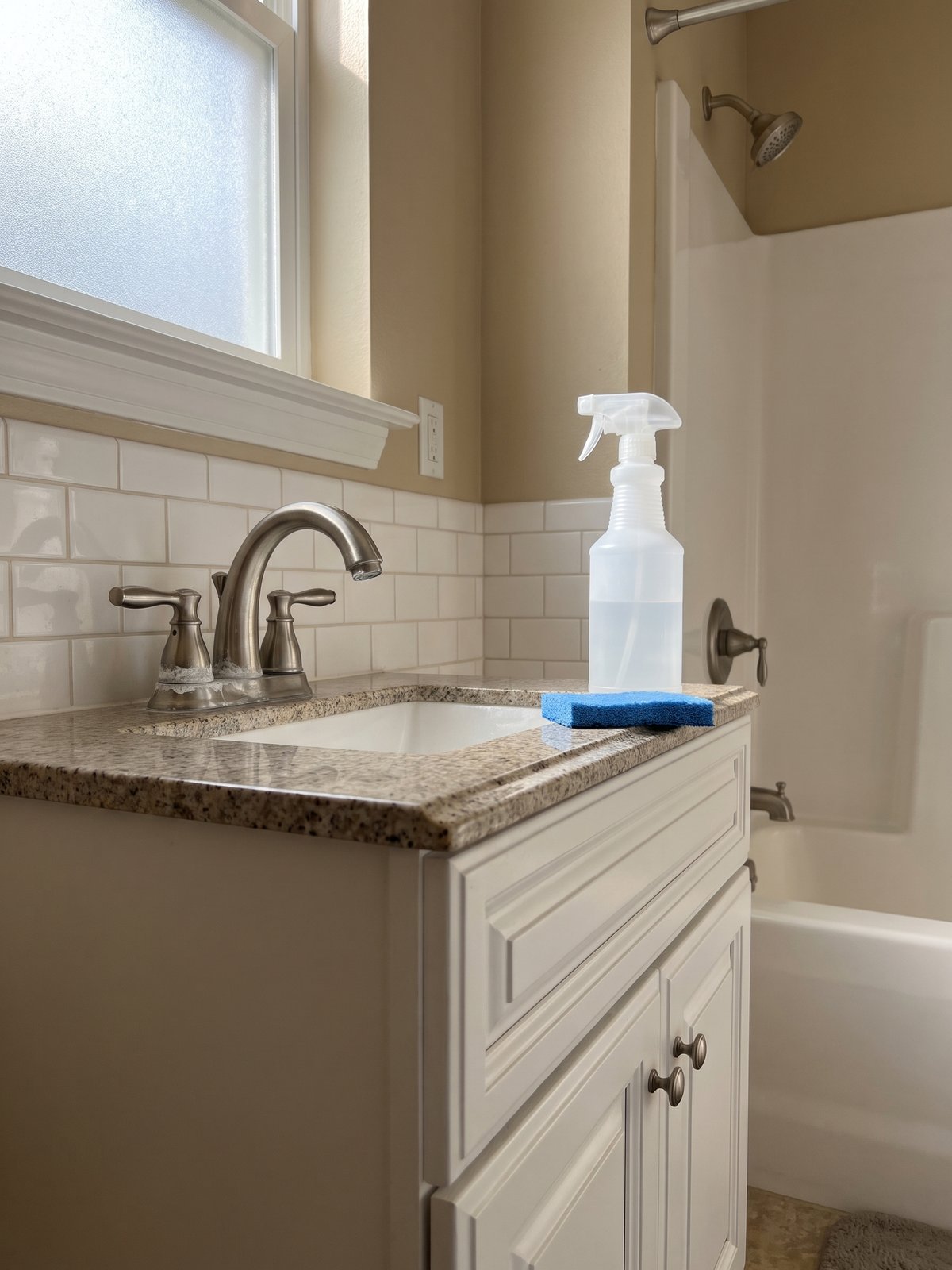
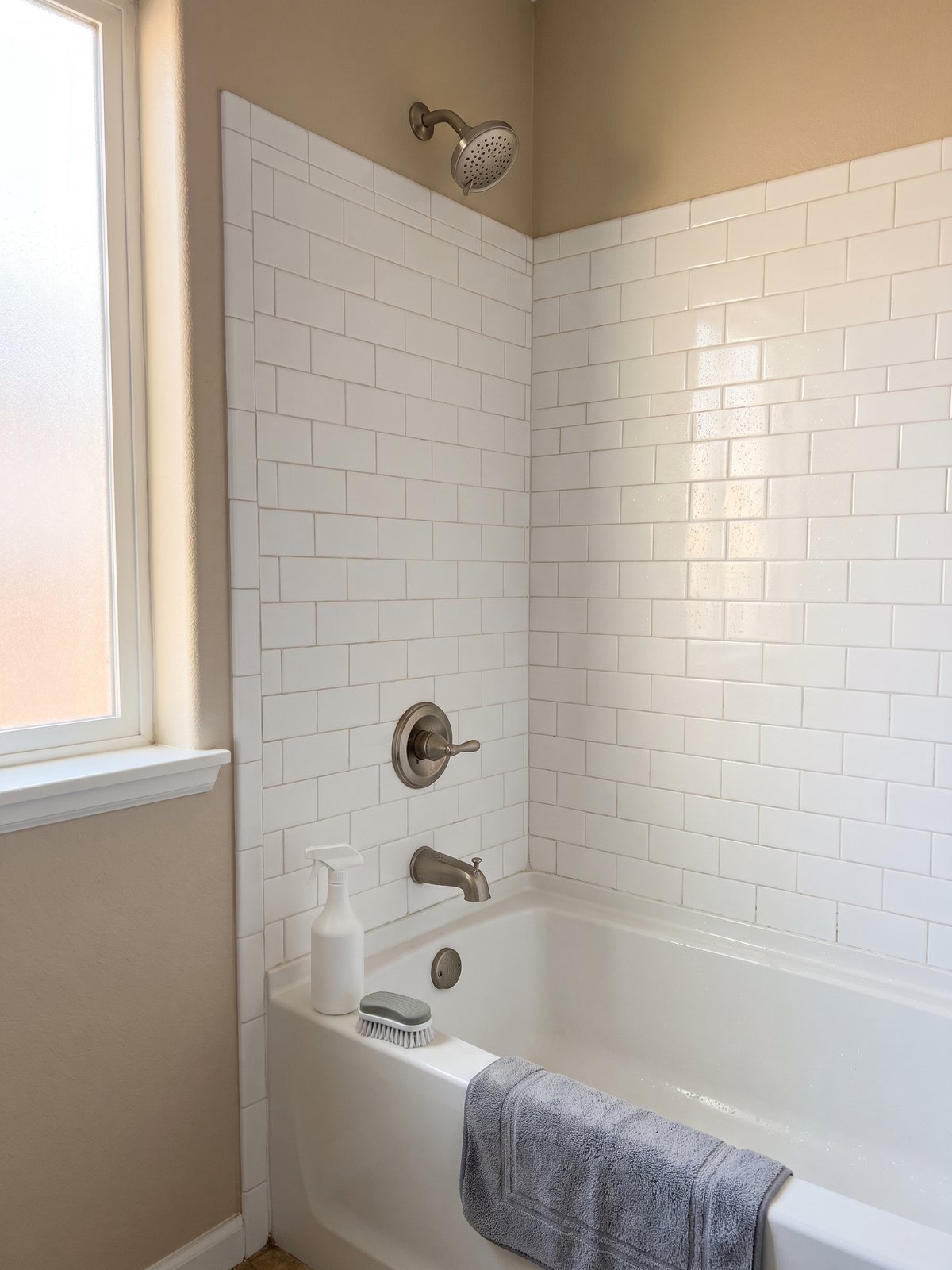
Dish soap, white vinegar, a spray bottle, a non-scratch sponge, a microfiber cloth, a squeegee and rubber gloves.
Is your glass coated? Some doors come with a factory coating. DreamLine, a shower door maker, calls its coating ClearMax and has the side with the ClearMax label face the inside of the shower. Check your door’s manual for what it allows, and keep harsh products off coated glass.
What is the frame made of? DreamLine says not to use cleaners with ammonia, bleach or acid on the door hardware. Vinegar is an acid, so it stays on the glass only. Keep a dry towel handy to catch drips on the frame.
Step by step
1
Rinse the glass with warm water
Rinse the whole door, inside and out, with warm water from the shower head or a cup. That washes off loose grit before you start to scrub.
2
Wash off the soap scum
Squeeze a few drops of dish soap onto a wet non-scratch sponge, and wash the glass from top to bottom with gentle circles. DreamLine says never to use abrasive cleaners, scouring agents, bristle brushes or abrasive sponges on its glass, because they may scratch it.
What it looks like when it is working: the greasy, smeary film loosens and the sponge glides more easily. Some white spots may still be there, and that is fine.
3
Rinse and look again
Rinse the soap off with warm water, then look closely at what is left. If the glass looks clear, skip to Step 6.
What it looks like: any cloudiness left behind is usually chalky white spots that soap did not touch. That is the hard water layer.
4
Spray vinegar on the white spots
Mix equal parts white vinegar and water in a spray bottle, which is the mix Moen gives for water spots on its faucets. Spray the spotted glass only, and wipe any drips off the frame or handle right away.
Let it sit until the spots start to soften, then wipe with the sponge. Spray again if they need a second round.
What it looks like when it is working: the chalky spots soften and wipe away, and the glass turns clear under the sponge.
5
Rinse well
Rinse the door well with plain water, inside and out, so no vinegar is left on the glass or frame. Then wipe the frame and handle dry with a cloth. DreamLine says if a harsh product touches the hardware by accident, rinse it as soon as possible to help prevent peeling or corrosion.
6
Squeegee it dry
Pull a squeegee from top to bottom in overlapping strokes, and wipe the blade on a towel after each pass. Finish the edges and corners with a dry microfiber cloth.
What it looks like when it worked: clear glass with no streaks and no white haze, even when the light hits it from the side.
Keep it clear: one habit after every shower
DreamLine’s own care advice is to rinse and wipe the glass with a soft cloth or a squeegee after each use. It says that prevents soap buildup and water spots.
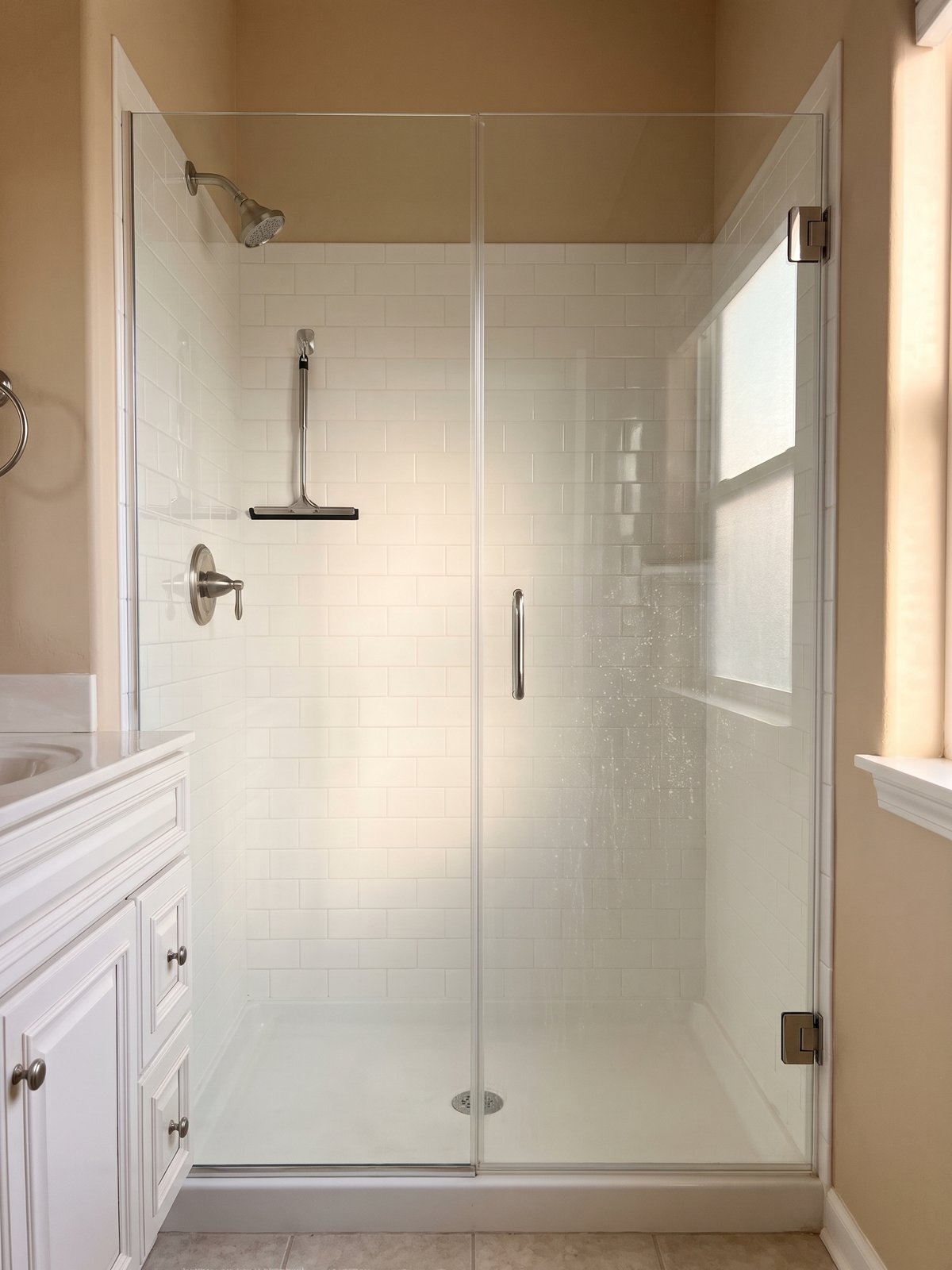
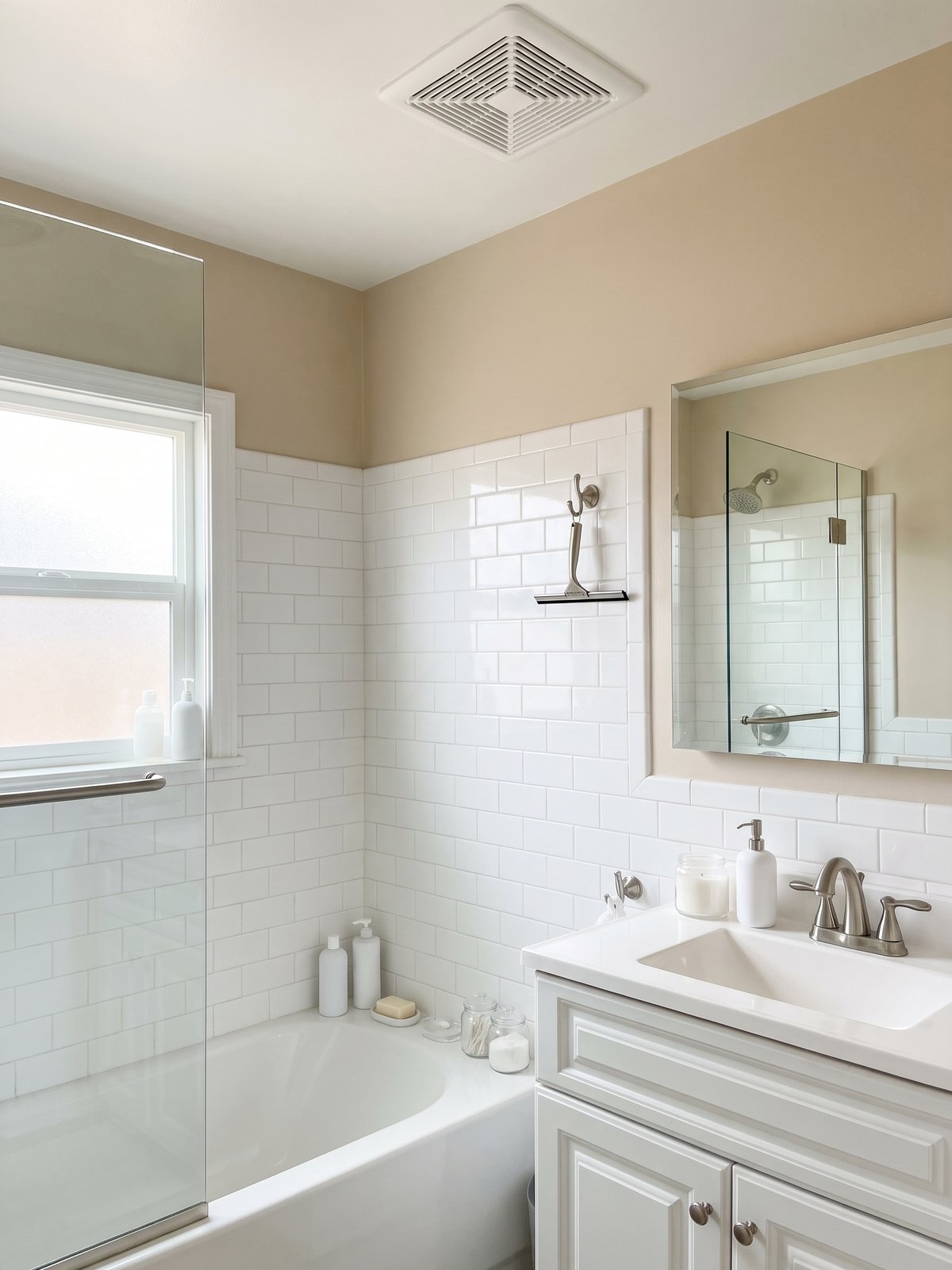
Hang a squeegee on a hook inside the shower, so it is right there when you turn the water off.
When it will not work, and what to do instead
Sometimes the glass stays cloudy no matter what you do. Here is how to tell why.
You heard a scouring pad scrubs better. It is easy to believe, since harder scrubbing seems like it should work faster. But DreamLine warns that bristle brushes and abrasive sponges may scratch the glass. A soft sponge and a second round of vinegar is the safer way.
The haze is still there after vinegar. The glass may be etched. DreamLine says hard water can etch the surface of the glass over time if it is left to dry. Etching is a change in the glass itself, so cleaning may not bring it back. Drying the glass after each shower keeps it from getting worse.
The tracks and the bottom seal have dark spots. Those are the wet spots that never dry, and the EPA says no mold grows without moisture. If mold covers more than about 10 square feet, the EPA points you to professional cleanup guidance. See Why shower mold keeps coming back.
Be safe
Never mix vinegar with bleach. Poison Control says mixing vinegar with chlorine bleach releases chlorine gas, which is very irritating to the airways, eyes, nose and throat. Do not use a bleach spray on the door the same day you use vinegar. See the full never-mix chart.
Keep vinegar and other acids off the frame and handle. DreamLine says not to use acid, ammonia or bleach products on its hardware.
Wear gloves, and keep vinegar out of your eyes. Poison Control says vinegar in the eyes commonly causes irritation and redness. If any splashes in, rinse right away with plenty of room-temperature water.
Open a window or run the fan while you clean.
Poison Help line, 1-800-222-1222. It is free and confidential, 24 hours a day, 7 days a week.
What to buy
We may earn a small fee from these links. It never changes the picks or your price.
Good & Gather Distilled White Vinegar, 64 oz
For the white spots, mixed half and half with water. $3.39 at Target.com on 11/7/2026.
The free Kitchen and Laundry Rescue Guide includes the never-mix chart as a one-page printable. It keeps vinegar and bleach off the same door on the same day.
Why it works
Cloudy shower glass is two problems stacked on top of each other. The U.S. Geological Survey explains that the calcium in hard water reacts with soap to make soap scum. It also says the spots and film hard water leaves on dishes and glassware are hard water residue, and the same thing dries on your door.
Dish soap handles the first layer. The American Cleaning Institute explains that its cleaning molecules have one end that grabs water and one end that grabs oil, so they lift the greasy film and rinse it away.
Vinegar handles the second layer. It is a mild acid, and a chemist writing in The Conversation explains that it dissolves mineral deposits like limescale on shower glass.
That is why the order matters. Think of washing a muddy car: you hose off the mud before you polish, or you just push the dirt around.
A word from Denise
You scrub that door until your arm aches, it looks clear while it is wet, and then it dries cloudy again. That is not you failing. It is two different messes that each need their own cleaner, so soap first, vinegar second, and a squeegee pass every time the water goes off.
Questions people ask
What is the white film on my shower door?
It is usually soap scum plus hard water minerals. The calcium in hard water reacts with soap to make the scum, and hard water that dries on glass leaves chalky spots behind.
Does vinegar clean shower glass?
It does a good job on the hard water spots, because vinegar dissolves limescale. Wash off the soap scum with dish soap first, then use half vinegar and half water on the spots, and rinse well.
Can I use a scouring pad on shower glass?
It is safer not to. DreamLine warns against scouring agents, bristle brushes and abrasive sponges on its glass because they may scratch it. Check your own door’s manual before using anything rough.
Why is my shower glass still cloudy after cleaning?
It may be etched. DreamLine says hard water left to dry can etch glass over time, and that is a change in the glass, not dirt on top. Squeegee after each shower to keep it from getting worse.
I’m Denise, and I explain home fixes the way a friend would at your kitchen table. Every tip I share is written from the sources listed on its page and checked against them before it goes up.