The Under-$30 Cleaning Kit: 8 Basics That Replace a Cabinet of Sprays

Every tip here is checked against the sources listed at the bottom.

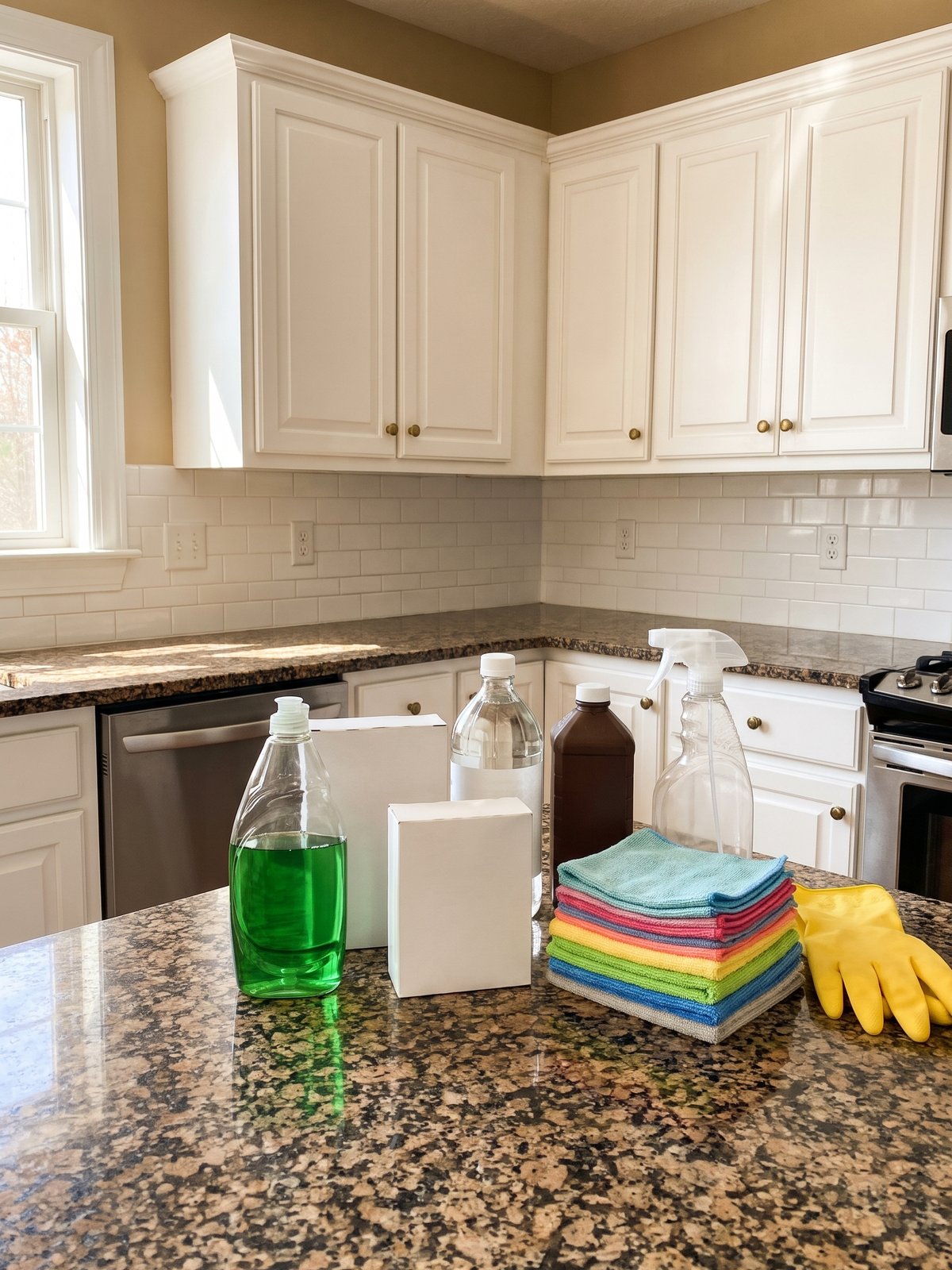
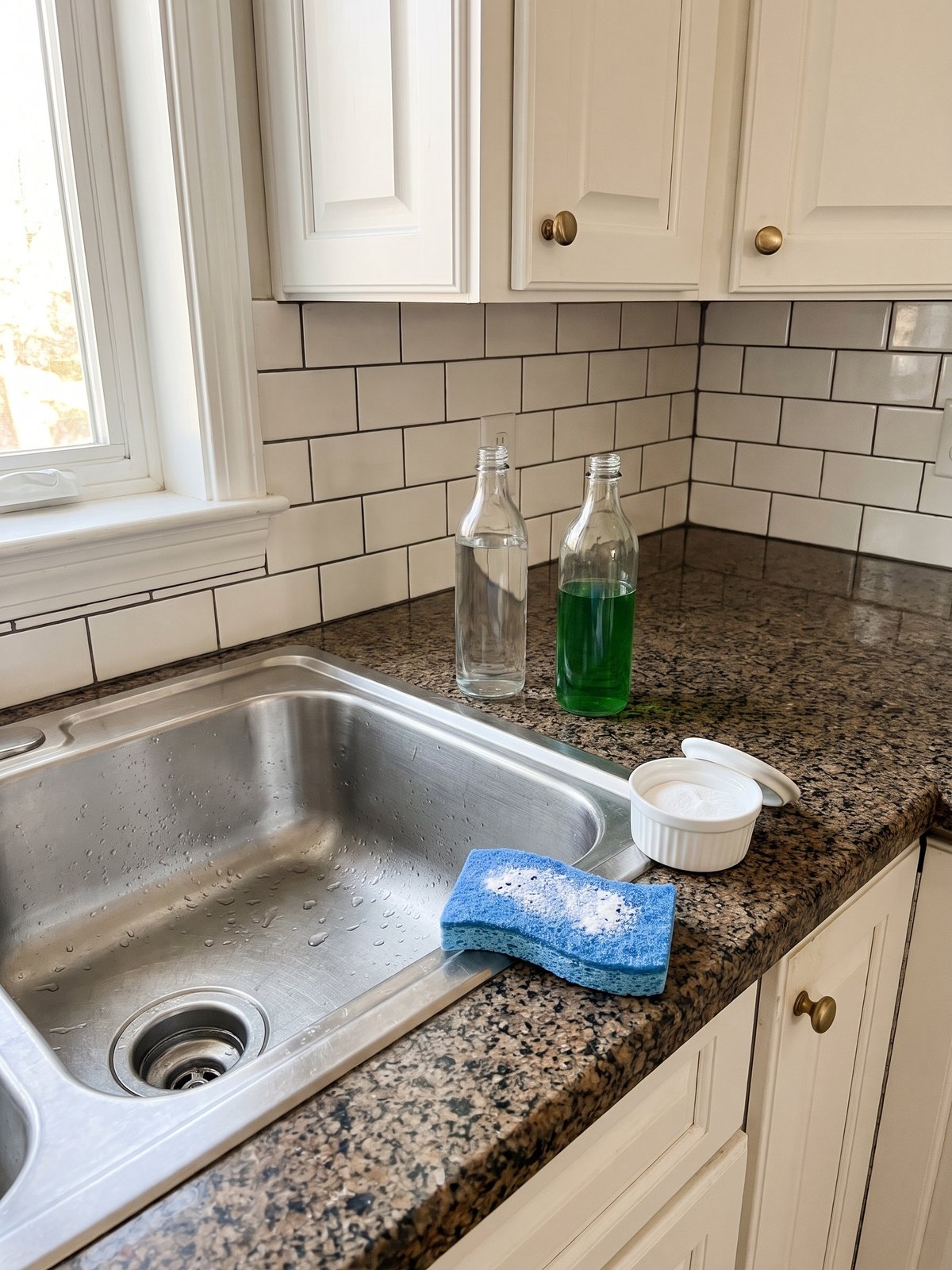
A cabinet shelf with eight items lined up: dish soap, a box of washing soda, a box of baking soda, a bottle of white vinegar, a brown bottle of hydrogen peroxide, folded microfiber cloths, a labeled spray bottle and a pair of rubber gloves

The short answer

What works Eight basics cover most everyday cleaning: dish soap, washing soda, baking soda, white vinegar, 3% hydrogen peroxide, microfiber cloths, a spray bottle and rubber gloves. Each one does one job well. Use them one at a time, and keep a store disinfectant for the times you truly need one.

How long
A few minutes to label and mix one spray bottle, plus the time it takes to sort your cabinet.
What it costs
$24.42 for all eight at Target.com on November 7, 2026, using store brands where Target had one.
What you need
The eight items below, a marker, a measuring cup and a tablespoon.
Jump to the steps
From your cabinet
  • Dish soap
  • Washing soda
  • Baking soda
  • White vinegar
  • Hydrogen peroxide

Before you start: the 8 basics and what each one does

Here is the whole kit, with the price we found and the one job each item does best. Every price is from Target.com on November 7, 2026.

  1. Dish soap ($2.59, up&up, 28 oz). Your everyday grease cutter for dishes, counters and stovetops. Utah State University Extension calls dish soaps necessary for cutting grease.
  2. Washing soda ($5.49, Arm & Hammer, 55 oz). The heavy hitter for baked-on grease and a laundry booster. The American Cleaning Institute calls it a fairly strong alkaline salt. It needs gloves, and it never goes on aluminum.
  3. Baking soda ($0.99, Good & Gather, 16 oz). A gentle scrub for sinks and tubs, and it helps with odors. Utah State calls it a gentle cleanser.
  4. White vinegar ($0.99, Good & Gather, 16 oz). For hard water spots and mineral buildup. Utah State says acids like vinegar neutralize hard water scale.
  5. 3% hydrogen peroxide ($0.99, up&up, 32 oz). A gentle bleach for stains on white fabric. The American Cleaning Institute notes it is sold as a liquid non-chlorine bleach.
  6. Microfiber cloths ($6.99, up&up, 3 pack). For wiping and drying. A fact sheet from the University of California, San Francisco says the tiny fibers pick up more dirt and food residue than most cloths.
  7. A spray bottle ($2.99, up&up, 32 oz). For a washing soda spray you mix yourself, straight from the box label.
  8. Rubber gloves ($3.39, up&up latex). For anything with washing soda. If latex bothers your skin, the latex free pair was $3.89.

Step by step

  1. Clear out the old bottles, one at a time

    Go through your cabinet and set aside anything empty, crusty or unlabeled. Throw each one away in its own container, following its label. Never pour old cleaners together to save space.

  2. Label the new spray bottle

    Write “Washing soda spray. Gloves on. Not for aluminum.” and today’s date on the bottle. University of Georgia Extension says to label homemade mixes with what is in them and the date.

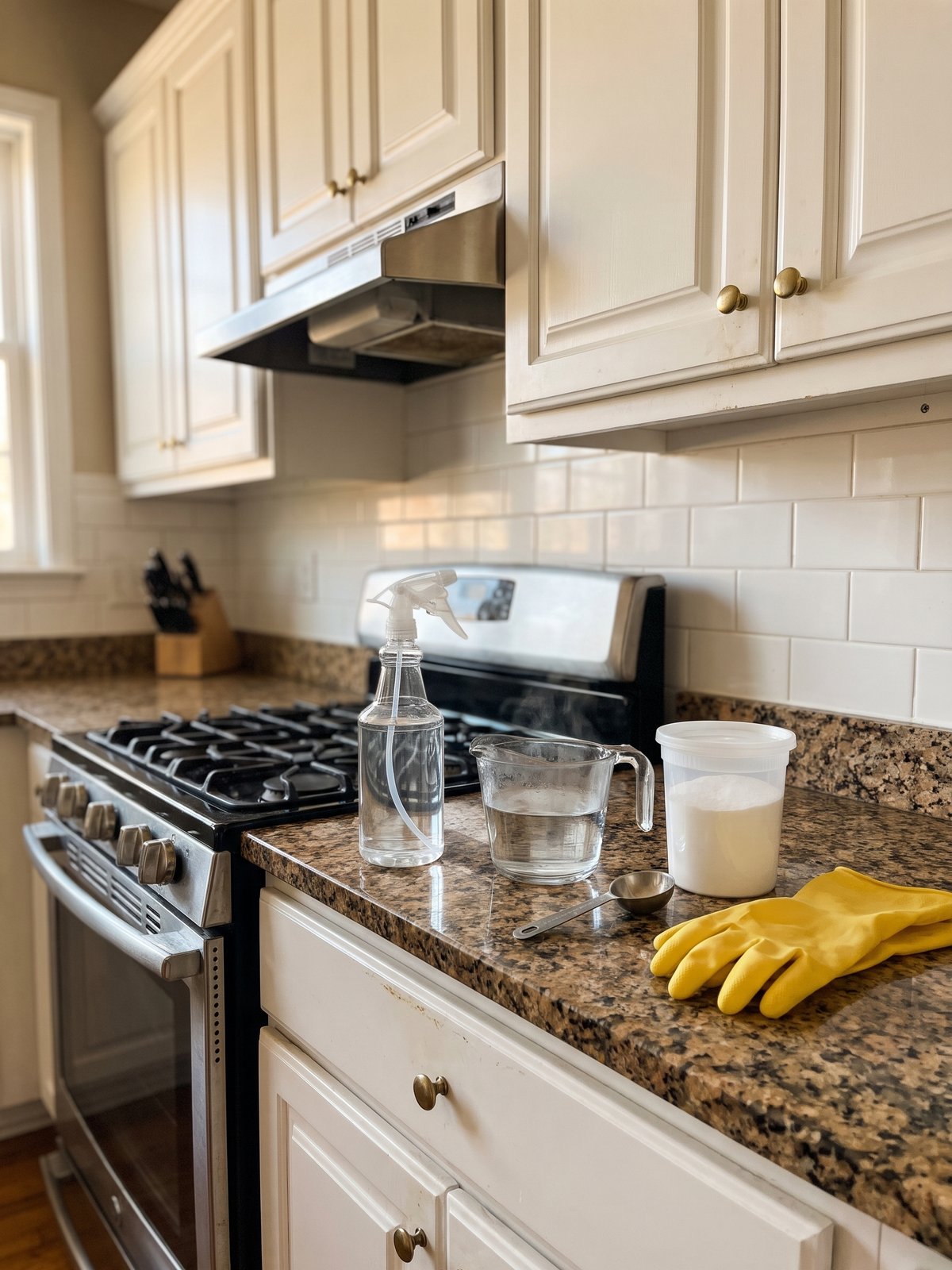
  3. Gloves on, then mix the washing soda spray

    Put on your gloves. Pour 2 cups of warm water into the bottle, add 1 tablespoon of washing soda, and swirl until no powder is left at the bottom. That is the box label’s strength of half a cup per gallon of warm water, scaled down.

  1. Use it on greasy kitchen surfaces, then rinse

    Spray it on a greasy stovetop or counter, wipe, and then rinse the surface with plain water. The label says to wash the surface and rinse thoroughly while wearing rubber gloves.

  2. Put everything away in its own spot

    Keep the powders and liquids in their original containers, with the lids on tight. Leave the peroxide in its brown bottle, because its label says to keep it tightly closed and in a dark place. Store the whole kit up high or behind a latch, away from kids and pets.

  3. Tape the never-mix chart inside the cabinet door

    Print the never-mix chart and tape it where you will see it every time you reach for a bottle. That way the rules are right there in the moment you need them.

When it will not work, and what to do instead

This kit handles everyday dirt, grease, stains and odors. A few jobs still need something from the store.

  • Someone in the house is sick, or raw meat juice got on the counter. None of these eight is sold as a sanitizer or disinfectant. The CDC says to sanitize spots raw meat or poultry touched with a homemade bleach solution or sanitizing products. Full tip: Clean, sanitize or disinfect
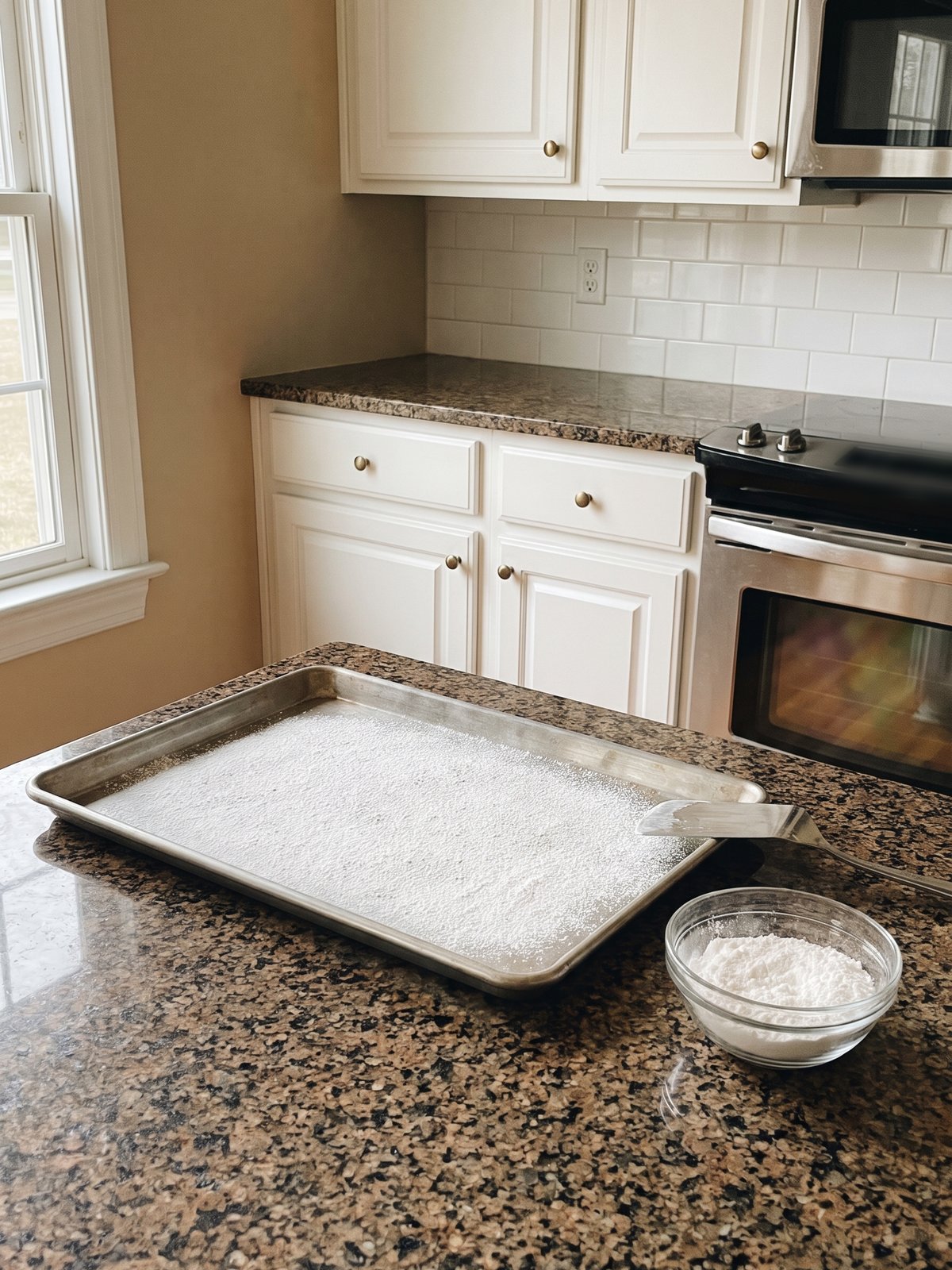
  • The grease is baked on hard. The spray is not strong enough. Use a washing soda paste and give it time: How to clean baked-on grease with washing soda
  • The pan or sink is aluminum, or the tub is fiberglass. Keep washing soda off it, because its maker says not to use it on aluminum or fiberglass. Use dish soap or baking soda instead.
  • The microfiber stops picking things up. The New Jersey health department says to wash microfiber after every use, by itself, with no bleach and no fabric softener, because softener clogs the fibers.

Be safe

  • One product at a time, and rinse in between. New Jersey’s health department says to keep products in their original labeled containers and never mix them. See the full never-mix chart.
  • Never mix vinegar with bleach. Poison Control says the combination creates highly irritating chlorine gas.
  • Never mix hydrogen peroxide and vinegar in one bottle. New Jersey’s health department says they form peracetic acid, which can irritate the eyes, skin and lungs.
  • Gloves for washing soda. Its label says it is an eye irritant and harmful if swallowed, and to wear gloves. If it gets in your eyes, rinse with water for 15 minutes.
  • Peroxide is a bleach. Keep it to white fabric and test a hidden seam first.
  • Use a new bottle only. University of Georgia Extension says never to reuse containers that held food, drinks or other chemicals, and to mix no more than a month’s supply.
  • Keep the kit away from kids and pets. If someone swallows a cleaner, call the Poison Help line, 1-800-222-1222. It is free and confidential, 24 hours a day, 7 days a week.

What to buy

We may earn a small fee from these links. It never changes the picks or your price.

The other five items and their prices are in the list above.

Why it works

Most cleaning jobs come down to a few kinds of mess. Grease needs soap. Mineral spots need an acid. Stuck-on bits need a gentle scrub, and stains on whites need a mild bleach.

This kit gives you one of each, labeled and ready. Think of it like a basic spice rack. You do not need a separate jar for every recipe when salt, pepper and a few good basics cover most of your cooking.

The two that matter most are the soaps. The American Cleaning Institute explains that the cleaning agents in soap have two ends. One end wants to be in water and the other does not, so they grab oily dirt and let the rinse carry it away. It also calls washing soda a builder, which helps those agents keep working.

A word from Denise

It is easy to open the cabinet and find three half-used sprays that all do about the same thing. You do not have to throw them out today. Just use up what you have, and the next time one runs out, ask which of these eight basics already does that job before you buy another bottle.

Questions people ask

What cleaning supplies do I actually need?

For most homes, eight basics cover everyday cleaning: dish soap, washing soda, baking soda, white vinegar, 3% hydrogen peroxide, microfiber cloths, a spray bottle and rubber gloves. Add a store disinfectant for times when someone is sick.

How much does a basic cleaning kit cost?

The eight items came to $24.42 at Target.com on November 7, 2026, using store brands. Prices change, so check the date on any list you use.

Does this kit disinfect?

No. None of these eight is sold as a disinfectant. A disinfectant has an EPA registration number on its label and tells you how long the surface must stay wet.

Can I mix these together to make one all-purpose cleaner?

No. Vinegar cancels out baking soda and washing soda, and vinegar with hydrogen peroxide makes peracetic acid. Use one product at a time and rinse in between.

More help like this

Next tipClean, sanitize or disinfect: what the label really means
Denise laughing in her kitchen

About Denise

I’m Denise, and I explain home fixes the way a friend would at your kitchen table. Every tip I share is written from the sources listed on its page and checked against them before it goes up.

How my tips are checked

Sources

Sources opened and checked on November 7, 2026.

  1. Utah State University Extension, Home Cleaning Chemistry (dish soaps necessary for cutting grease; baking soda a gentle, non-abrasive cleanser that adsorbs odors; acids neutralize hard water scale), opened 11/7/2026 extension.usu.edu
  2. American Cleaning Institute, Glossary of Cleaning Product Terminology (sodium carbonate a fairly strong alkaline salt; builder; hydrogen peroxide solution marketed as a liquid non-chlorine bleach), opened 11/7/2026 cleaninginstitute.org
  3. American Cleaning Institute, The Chemistry of Cleaning (surfactant ends: one wants to be in water, one does not), opened 11/7/2026 cleaninginstitute.org
  4. Arm & Hammer, How to Use Super Washing Soda (not on aluminum cookware or fiberglass; gloves), opened 11/7/2026 armandhammer.com
  5. Arm & Hammer Super Washing Soda, 55 oz, label text (kitchen and bathroom surfaces and appliances: 1/2 cup in a gallon of warm water, wash, rinse thoroughly with rubber gloves; eye irritant; harmful if swallowed; eyes 15 minutes; not on aluminum), Giant Food Stores product listing, opened 11/7/2026 giantfoodstores.com
  6. DailyMed, 3% hydrogen peroxide topical solution label (“Keep tightly closed and in dark place at room temperature”), opened 11/7/2026 dailymed.nlm.nih.gov
  7. Western States Pediatric Environmental Health Specialty Unit (UCSF), Microfiber fact sheet (“The tiny fibers pick up more dirt and food residue than most cloths.”) (PDF), opened 11/7/2026 wspehsu.ucsf.edu
  8. New Jersey Department of Health, Microfiber cloths fact sheet (clean after every use; wash separately; no bleach; no fabric softener, which clogs the fibers) (PDF), opened 11/7/2026 nj.gov
  9. University of Georgia Extension, Cleaning Healthy, Cleaning Green (C1114) (new containers; never containers that held food, beverages or chemicals; label with ingredients and date; no more than a month’s supply; out of reach of children), opened 11/7/2026 fieldreport.caes.uga.edu
  10. New Jersey Department of Health, Hazard Alert: Mixing Bleach with Other Cleaning Products Can Be Deadly (keep chemicals in original, labeled containers; hydrogen peroxide and vinegar form peracetic acid) (PDF), opened 11/7/2026 nj.gov
  11. Poison Control, National Capital Poison Center, Vinegar (“The combination creates highly irritating chlorine gas.”), opened 11/7/2026 poison.org
  12. Centers for Disease Control and Prevention, When and How to Clean and Disinfect Your Home (sanitize surfaces touched by raw meat, poultry or their juices with a homemade bleach solution or sanitizing products), opened 11/7/2026 cdc.gov
  13. U.S. Environmental Protection Agency, 6 Steps for Safe and Effective Disinfectant Use (find the EPA registration number; contact time; surface should remain wet the whole time) (PDF), opened 11/7/2026 epa.gov
  14. HRSA Poison Help, Calling Poison Help (1-800-222-1222; free and confidential help 24 hours a day, 7 days a week) poisonhelp.hrsa.gov
  15. Target.com search results (prices, checked 11/7/2026) target.com target.com target.com target.com target.com target.com target.com target.com
Fact log: how each claim on this page was checked (20 claims)

Every claim on this page, the source behind it and what the check found. Kept open for anyone who wants to look under the hood.

ClaimSourceWhat the check found
Prices: up&up dish soap 28 oz $2.59; Arm & Hammer washing soda 55 oz $5.49; Good & Gather baking soda 16 oz $0.99; Good & Gather white vinegar 16 oz $0.99; up&up 3% peroxide 32 oz $0.99; up&up microfiber 3 pack $6.99; up&up spray bottle 32 oz $2.99; up&up latex gloves $3.39 (latex free $3.89)Source 15, read November 7, 2026Matches the source. Dated, Target.com online. Walmart links kept with no price
Kit total $24.42 (one spray bottle)Arithmetic onMatches the source (math).
Dish soaps necessary for cutting greaseSource 1Matches the source (university extension).
Washing soda a fairly strong alkaline salt; a builder helps surfactants keep workingSource 2Matches the source.
Washing soda: gloves; not on aluminum or fiberglass; eye irritant; harmful if swallowed; eyes 15 minSources 4 and 5Matches the source (maker and label).
Baking soda a gentle cleanser; helps with odorsSource 1Matches the source.
Vinegar and other acids neutralize hard water scaleSource 1Matches the source.
Hydrogen peroxide sold as a liquid non-chlorine bleach; white fabric only, test a seamSource 2; How to get a grease stain out of a shirtMatches the source.
Peroxide label: keep tightly closed and in a dark placeSource 6Matches the source (label).
Microfiber picks up more dirt and food residue than most clothsSource 7Matches the source (university fact sheet, quoted).
Microfiber: wash after every use, separately, no bleach, no fabric softener (clogs fibers)Source 8Matches the source (state health department).
Washing soda spray: 2 cups warm water + 1 Tbsp washing soda, scaled from the label’s 1/2 cup per gallon (8 Tbsp per 16 cups); wash, rinse thoroughly, glovesSource 5; arithmeticMatches the source (label ratio, scaled). No other mix amounts on the page
Label mixes with contents and date; new containers only; no more than a month’s supplySource 9Matches the source.
Keep products in original labeled containers; never mixSource 10Matches the source.
Vinegar plus bleach: highly irritating chlorine gasSource 11Matches the source.
Peroxide plus vinegar: peracetic acid, irritates eyes, skin, lungsSource 10Matches the source.
Sanitize after raw meat or poultry with a homemade bleach solution or sanitizing productsSource 12Matches the source (official).
A disinfectant label carries an EPA registration number and a contact timeSource 13Matches the source (official).
Surfactant ends: one wants water, one does notSource 3Matches the source.
Poison Help line, 1-800-222-1222; free and confidential, 24 hours a day, 7 days a weekSource 14Matches the source (HRSA Calling Poison Help page; one wording site-wide, November 7).