A word from Denise
So give it a minute in the light, and let it air dry if you are not sure. Only then let the dryer have it. That one habit, checking before the dryer, saves more shirts than any product on the shelf.
Every tip here is checked against the sources listed at the bottom.
 By Denise. Checked on November 6, 2026 against the sources at the bottom of this page.
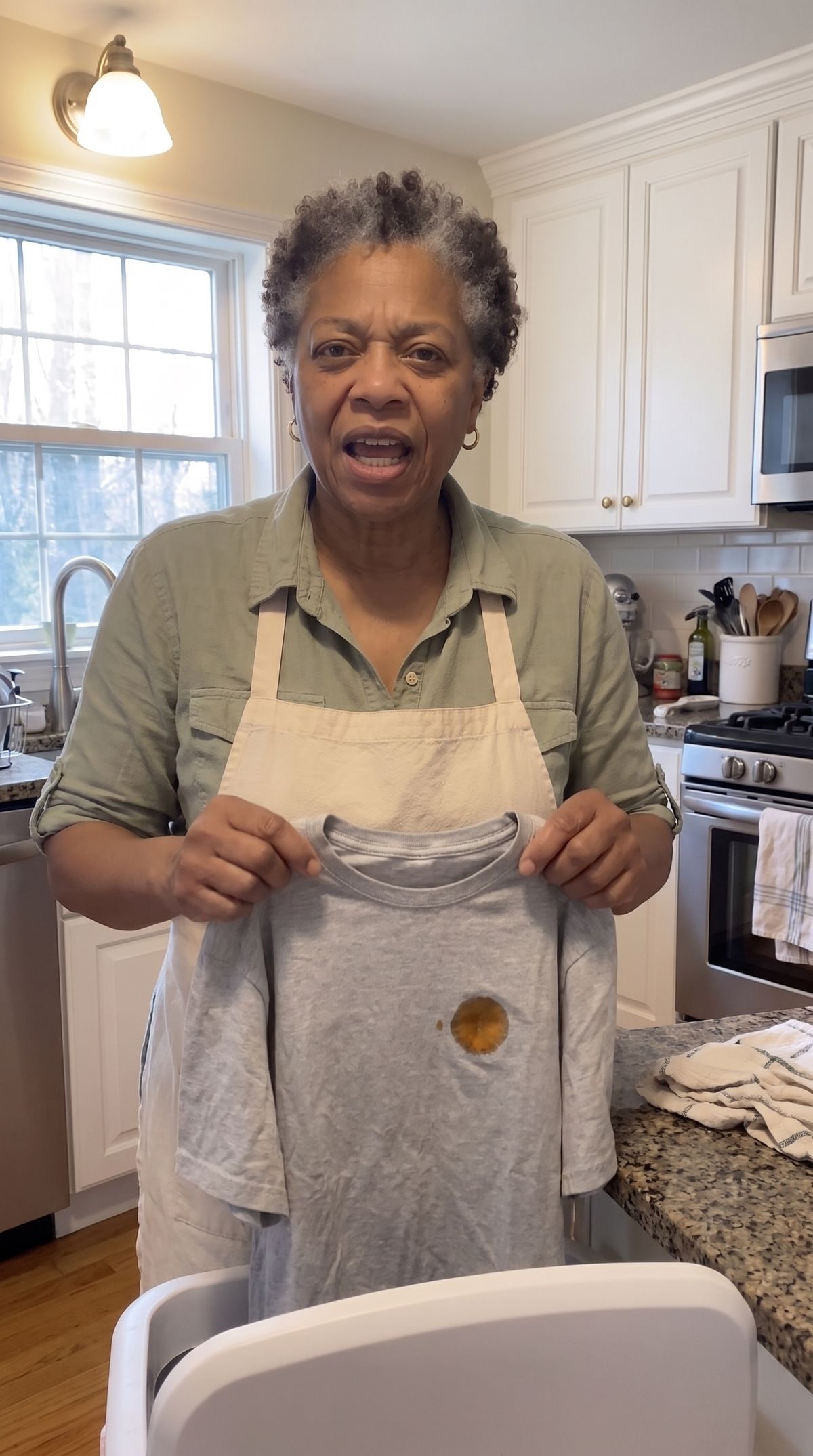
What works Blot off the loose grease, then work in a paste of washing soda, a drop of dish soap and either 3% hydrogen peroxide (whites) or plain water (colors). Let it sit 15 to 30 minutes, wash in the hottest water the care label allows, and check the shirt before it goes anywhere near the dryer.
Lay the shirt flat and press a paper towel onto the spot to soak up any grease still sitting on top. Press and lift. Do not scrub raw grease, because rubbing it around only spreads it over more fabric.
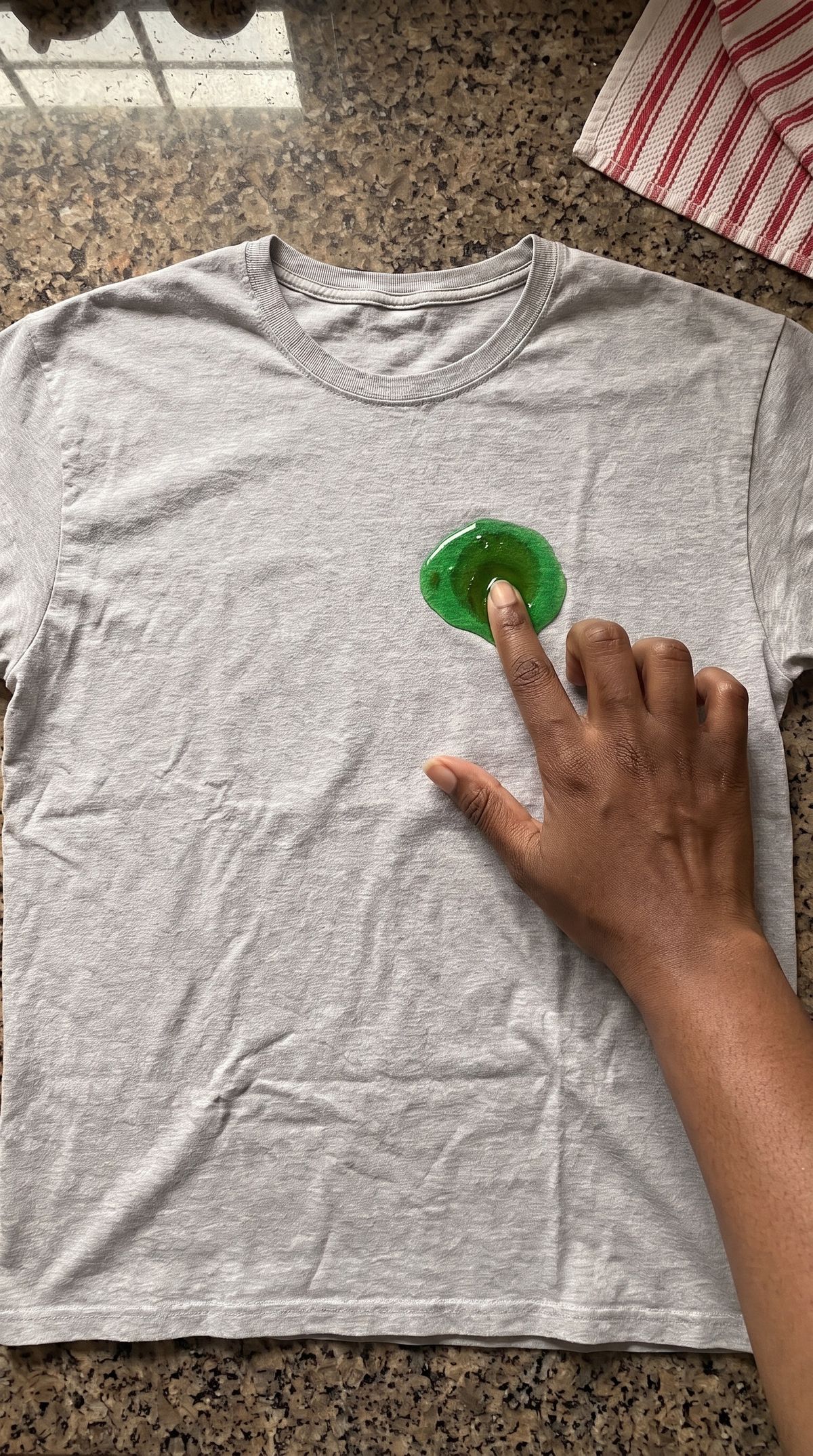
What it looks like: the paper towel picks up a shiny, see-through mark. Keep switching to a clean part of the towel until it comes away almost dry.
Run a little warm water over the spot so the fabric is damp, not dripping. This sets you up for the paste, because the maker’s directions call for working it into a dampened stain.
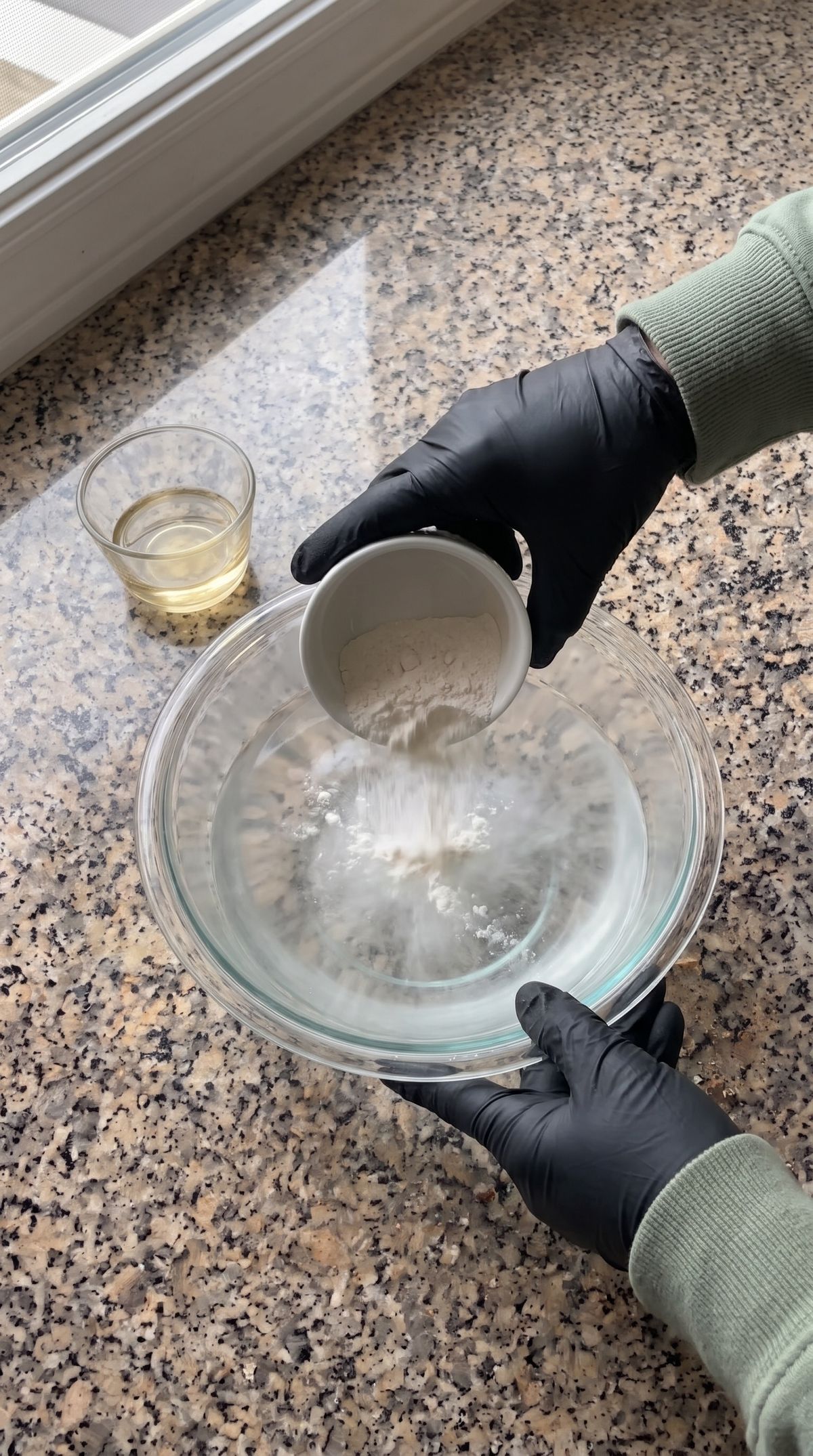
Put on your gloves. In a small glass or plastic bowl (never aluminum, because the label says washing soda is not for aluminum), stir together:
For a big stain, double it. Equal parts powder and liquid matches the ratio in Arm & Hammer’s own pretreat paste (4 tablespoons to a quarter cup of water).
What it looks like: a thick, wet paste that holds on a spoon, a little like runny frosting. If it is dry and crumbly, add liquid a teaspoon at a time.
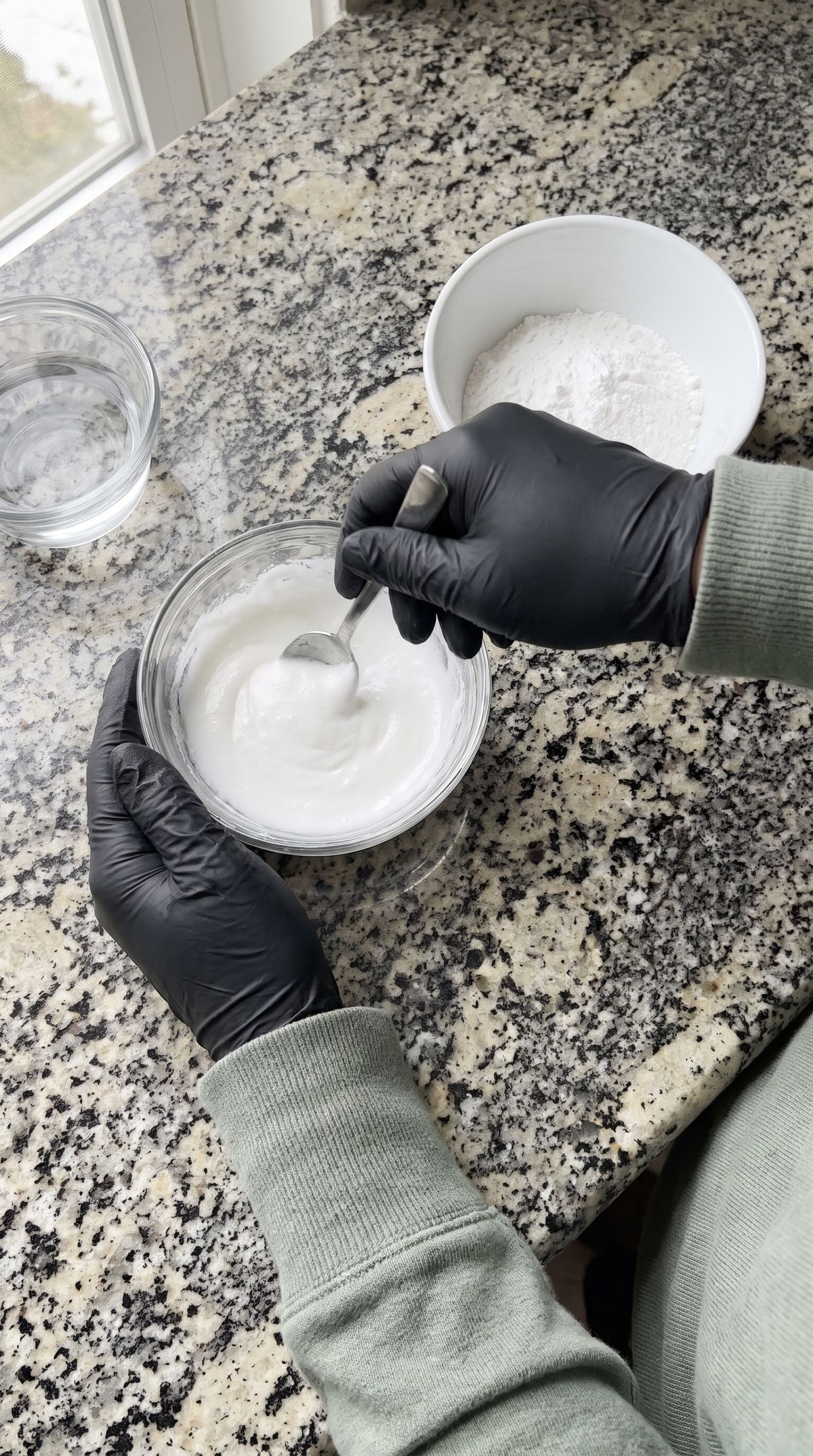
With your gloved fingertips, gently rub the paste into the stain on the front, then turn the shirt over and do the back of the spot too. Leave it for at least 15 minutes and up to 30. Do not let it dry out on the fabric. If it starts to look chalky, dab on a little more water.
Put the shirt in the washer with your usual detergent and wash it in the hottest water the care label allows. For extra help on a greasy load, add half a cup of washing soda to the wash along with your detergent, which Arm & Hammer says you can do.
On colors, stick to the label’s temperature and go no hotter, because water that is too hot can fade colored fabric.
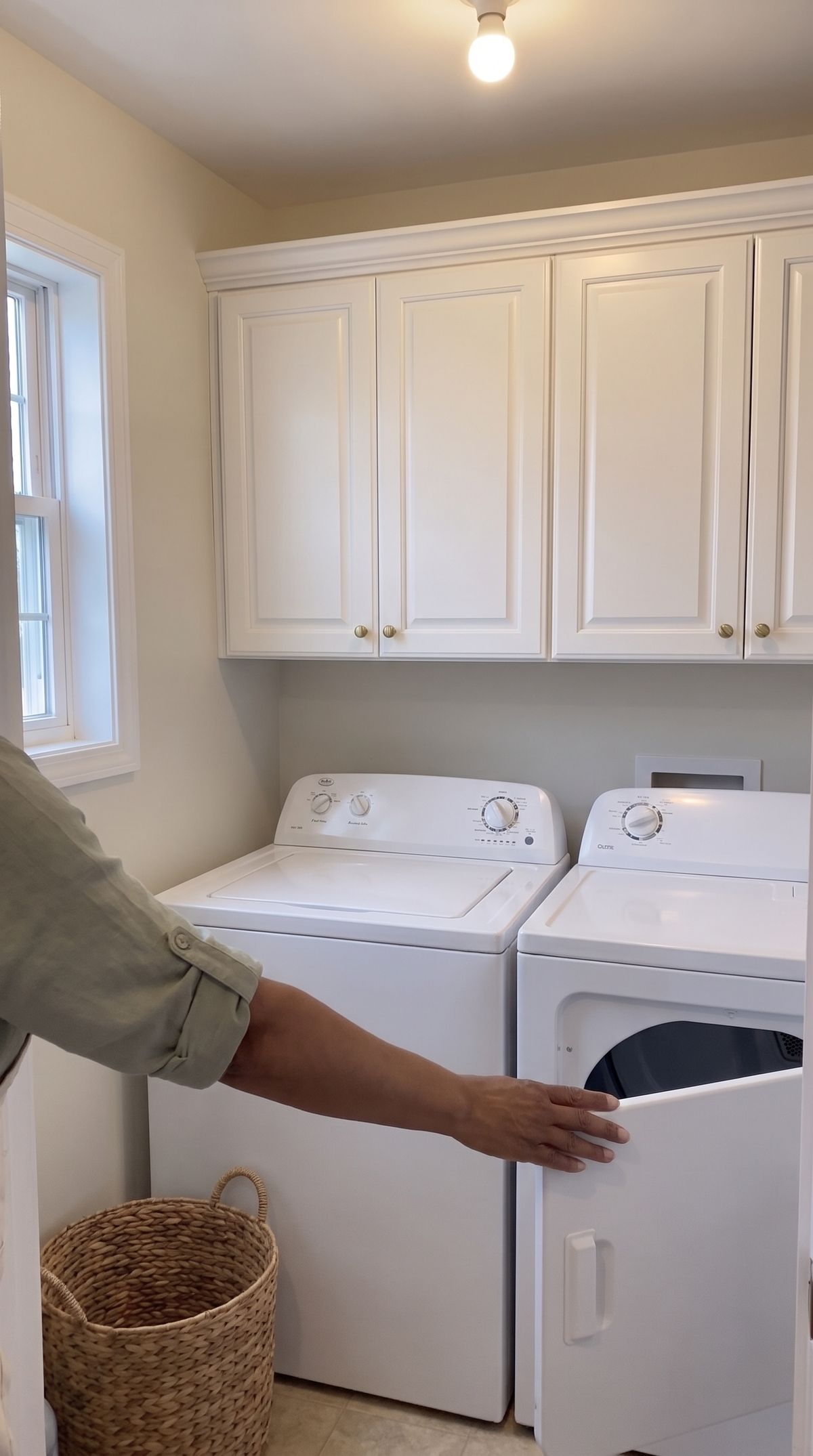
Pull the shirt out wet and look at the spot in good light, then let it air dry. A grease spot that is still there shows up dry as a darker, slightly see-through patch. If you can still see it, repeat Steps 2 to 5. Only use the dryer once the spot is gone.
What it looks like when it worked: dry fabric that looks the same color and thickness all over, with no shadow when you hold it up to a window.
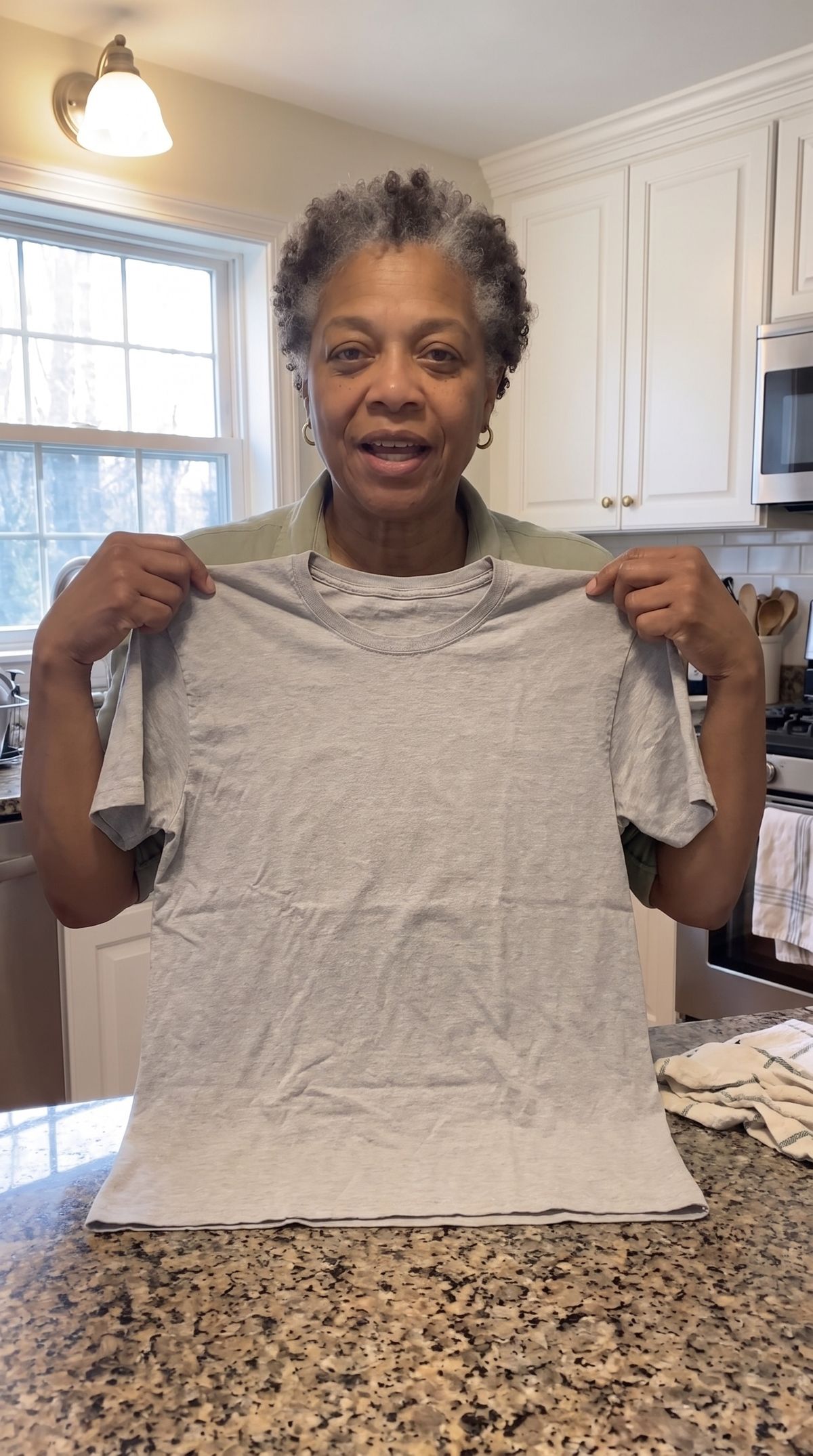
Grease does not always come out on the first try. Here is what to do when it does not.
For a bigger set stain on a washable white or colorfast shirt, your next step is a soak in oxygen bleach powder. Fill the scoop to line 3 per gallon of water, soak 1 to 6 hours, then wash. That is what the OxiClean Versatile tub’s label says to do.
We may earn a small fee from these links. It never changes the picks or your price.
The base of the paste, and it also boosts a greasy wash. $5.49 at Target.com on 11/6/2026.
For white fabric only. $0.99 at Target.com on 11/6/2026.
The label says to wear gloves. up&up Reusable Heavy Duty Latex Gloves were $3.39 at Target.com on 11/6/2026 (latex free pairs were $3.89).
More picks: Best cheap stain removers for clothes
The free Kitchen and Laundry Rescue Guide has this grease paste, the care-label water guide and the never-mix chart, ready to print.

Grease is oil, and oil does not want anything to do with water. That is why rinsing alone just slides right over it.
Dish soap is built for exactly this job. One end of each soap molecule holds onto oil and the other end holds onto water, so the grease gets carried off into the wash.
Washing soda is a fairly strong alkali (the opposite of an acid, like vinegar). A strong alkali can turn some fat into soap right there in the fabric, and that gives your dish soap a head start. On white shirts, the peroxide is a gentle bleach that brightens the yellowish shadow grease likes to leave behind.
And the dryer is the enemy, because heat can set what the wash missed. The trouble is that a wet shirt hides grease, because everything looks dark when it is wet.
Every one of us has pulled a favorite shirt out warm and folded it, only to find that little dark spot right where the bacon popped. It is not that you did anything wrong.
A word from Denise
So give it a minute in the light, and let it air dry if you are not sure. Only then let the dryer have it. That one habit, checking before the dryer, saves more shirts than any product on the shelf.
Often, yes, but it takes more patience. Use the paste for the full 30 minutes, wash, air dry and look again. Plan on two or three rounds, or a 1 to 6 hour oxygen bleach soak on washable whites and colorfast fabric.
It helps a lot, because dish soap is made to lift oil. The American Cleaning Institute’s own advice for greasy spots is to pretreat with a stain remover or a liquid laundry detergent. Adding washing soda gives the soap a stronger push on older grease.
For grease, use the hottest water the care label allows. On a care label, “hot” means 112°F to 145°F. Colors that could fade should stay at their label’s temperature.
Not always. Hydrogen peroxide is a bleach and can lighten some dyes, so this page saves it for whites. On colors, use the water version and test a hidden seam first.
Yes, on washable, colorfast fabric. Follow the tub’s label. The 48 oz OxiClean Versatile tub says to soak with the scoop filled to line 3 per gallon for 1 to 6 hours, and not to use it on wool, silk, leather or dry clean only.
I’m Denise, and I explain home fixes the way a friend would at your kitchen table. Every tip I share is written from the sources listed on its page and checked against them before it goes up.
Sources opened and checked on November 6, 2026.
Every claim on this page, the source behind it and what the check found. Kept open for anyone who wants to look under the hood.
| Claim | Source | What the check found |
|---|---|---|
| Washing soda label: not for leather, silk, wool or dry clean only | Source 2 (retailer copy of the label, opened) | Matches the source (label via retailer). |
| Label: eye irritant, harmful if swallowed, avoid prolonged skin contact (wear gloves); eyes rinse 15 minutes, call a physician | Source 2 | Matches the source (label). |
| Label and maker: do not use on aluminum | Sources 1 and 2 | Matches the source. |
| Maker paste is 4 Tbsp washing soda to 1/4 cup warm water (1 to 1 by volume); gently rub into dampened stain with gloves | Source 1 | Matches the source (maker). |
| Whites: equal parts washing soda and 3% peroxide plus a drop of dish soap | Source 1 ratio | Matches the source after a wording fix: no official source publishes this exact mix; each part is standard. |
| 1 drop of dish soap, 1 Tbsp each | Recipe choice scaled from the original video and the maker ratio | Recipe amount, not a sourced fact |
| Wait at least 15 and up to 30 minutes | Source 1 (maker soaks run 30 minutes) | Matches the source after a wording fix: 15 is a minimum, not a published number. |
| Do not let the paste dry on fabric | Arm & Hammer around-the-home page, carpet directions: “Do not allow solution to dry on fabrics” armandhammer.com (opened) | Matches the source. By analogy (stated for carpets) |
| Wash in the hottest water the label allows | Sources 2 and 4 (“Wash in hottest water safe for fabric”); Source 7 | Matches the source. |
| Add 1/2 cup washing soda with usual detergent | Source 1 | Matches the source (maker). |
| Water too hot for colors causes color loss; neon, bright reds and greens most likely to lose color | Source 4 | Matches the source. |
| Drying can permanently set stains; check wet clothes for stains | Source 3 | Matches the source. |
| A dry grease spot shows as a darker, slightly see-through patch; a wet shirt hides it | General observation, no source | Practical cue, unsourced |
| Do not scrub raw grease, it spreads | Source 1 says “gently rub” | Matches the source after a wording fix. The page keeps only “spreads it over more fabric”, not the stronger “pushes it deeper” |
| Set stains may need 2 or 3 rounds | Source 3 | Matches the source. As guidance; the number 2 or 3 is an estimate |
| OxiClean 48 oz label: line 3 per gallon, soak 1 to 6 hours; not for wool, silk, leather, dry clean only; washable colorfast only | Source 9 (label via retailer) | Matches the source (label). Note: OxiClean’s own grease web page says line 4 and 6 hours; the page follows the tub label |
| Surfactants: one end holds oil, one end water, soil lifted into the wash | Source 5 | Matches the source. |
| Washing soda is a fairly strong alkaline salt; alkali turns fat into soap (saponification) | Source 6 | Matches the source. “some fat” keeps the caution that washing soda only does part of this |
| Hydrogen peroxide is sold as a liquid non-chlorine bleach | Source 6 | Matches the source. |
| Peroxide brightens yellowing, can lighten some dyes | Source 6 (it is a bleach); Source 1 (test colorfastness) | Matches the source after a wording fix: “brightens”, not “pulls all the yellows”. |
| ACI greasy spots advice: pretreat with stain remover or liquid detergent | Source 4 | Matches the source. |
| Short answer: no washing soda, pretreat with liquid laundry detergent; dish soap is made to lift oil | Source 4 (greasy spots); Source 5 (surfactants hold oil and water) | Matches the source. |
| Care label “hot” = 112 to 145°F | Source 8 | Matches the source (official). |
| Bleach reacts with hydrogen peroxide | Source 10 | Matches the source (official). |
| Peroxide plus vinegar makes peracetic acid, irritates eyes, skin, lungs | Source 11 | Matches the source (official). |
| Never store the peroxide mix sealed (pressure) | Source 12 (percarbonate, which is sodium carbonate plus hydrogen peroxide: pressure burst if confined in an unvented container); Source 9 (do not mix or store solutions sealed) | Matches the source. By close analogy (Source 12 is about the powder form) |
| Poison Help line, 1-800-222-1222; free and confidential, 24 hours a day, 7 days a week | Source 13 | Matches the source (HRSA Calling Poison Help page; one wording site-wide, November 7). |
| Prices: washing soda 55 oz $5.49; up&up 3% peroxide 32 oz $0.99; up&up latex gloves $3.39, latex-free $3.89 | Source 14, opened November 6, 2026 | Dated, Target.com online. Walmart links kept with no price |
| “A few cents a treatment” | 1 Tbsp of a 55 oz box plus 1 Tbsp of a 32 oz bottle | Estimate from box size, not weighed |
| Motor oil and color stains need other fixes | Scope note, no claim | No source needed |