A word from Denise
So give each one its own turn, and rinse in between. One product at a time is cheaper and safer, and it actually gets the job done.
Every tip here is checked against the sources listed at the bottom.
 By Denise. Checked on November 7, 2026 against the sources at the bottom of this page.
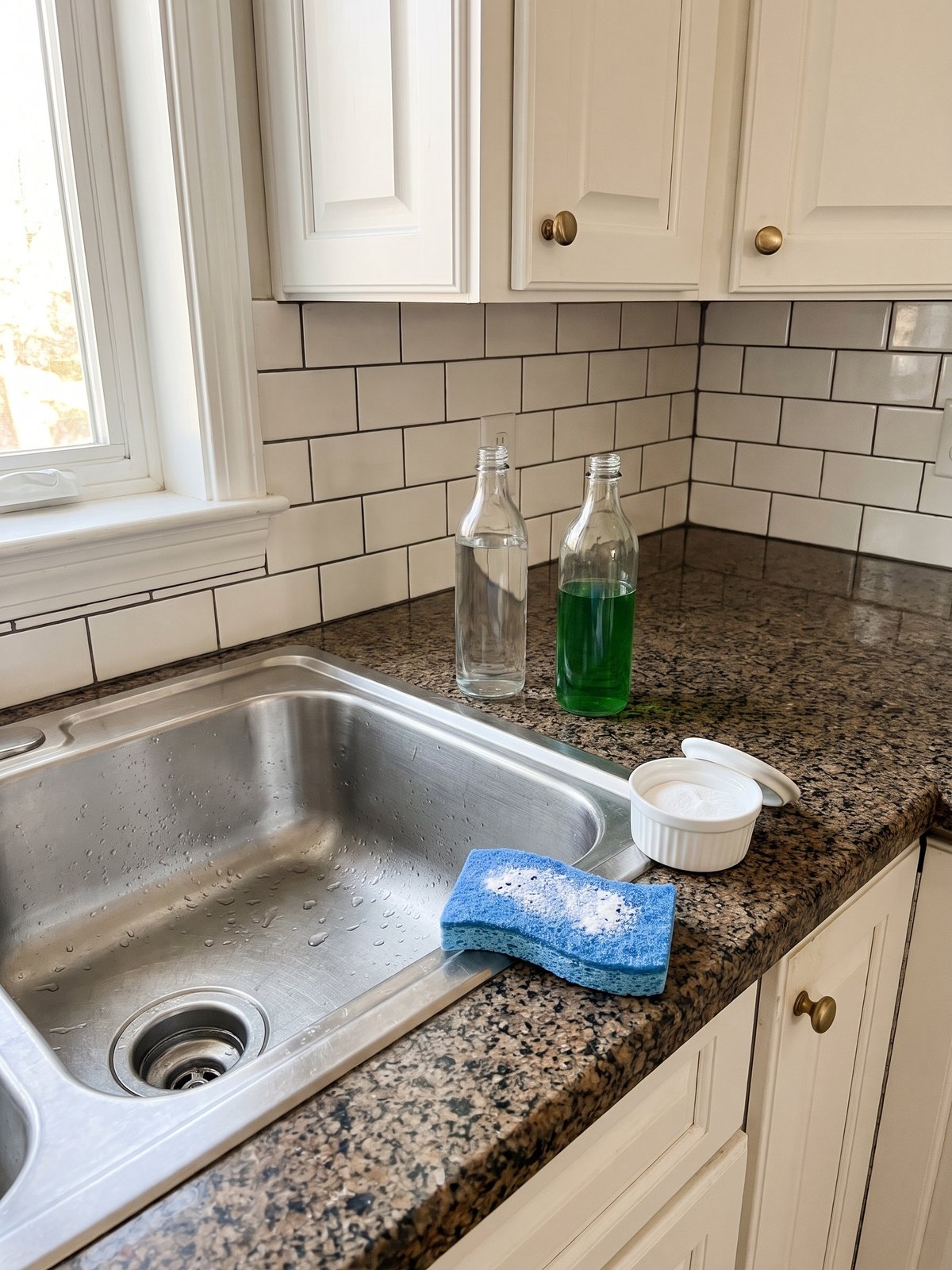
What works Not the two together. Vinegar is an acid and baking soda is a mild base, so they use each other up. The fizz is carbon dioxide gas, and it leaves water and a little salt behind. Use them one at a time: baking soda to scrub, vinegar for hard water spots, and dish soap for grease.
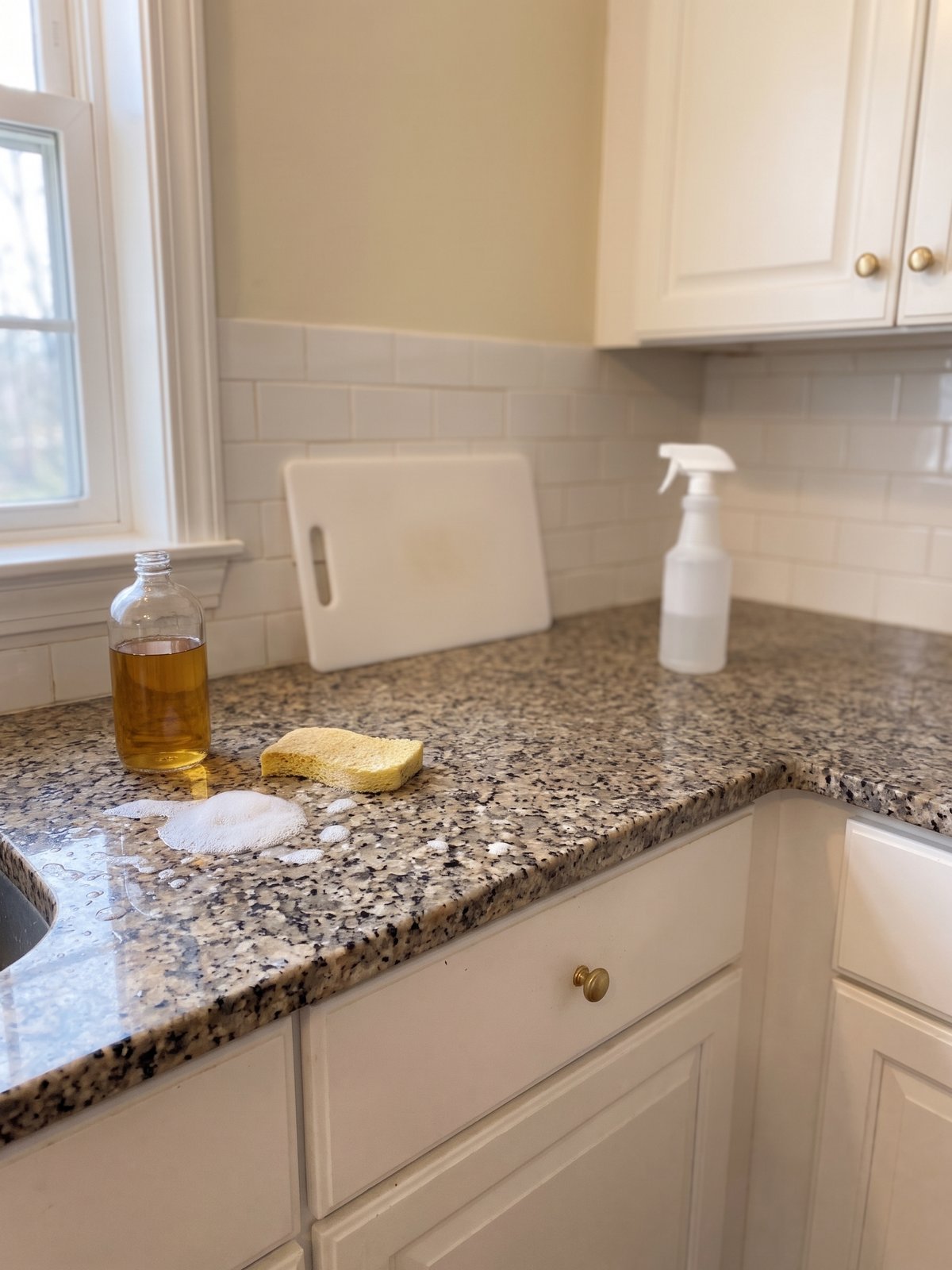
Each of these is good at one kind of job. Match the cleaner to the mess, and you will never need the fizz.
This routine uses three cleaners on one sink without ever letting two of them meet. The rinse between them is the whole trick.
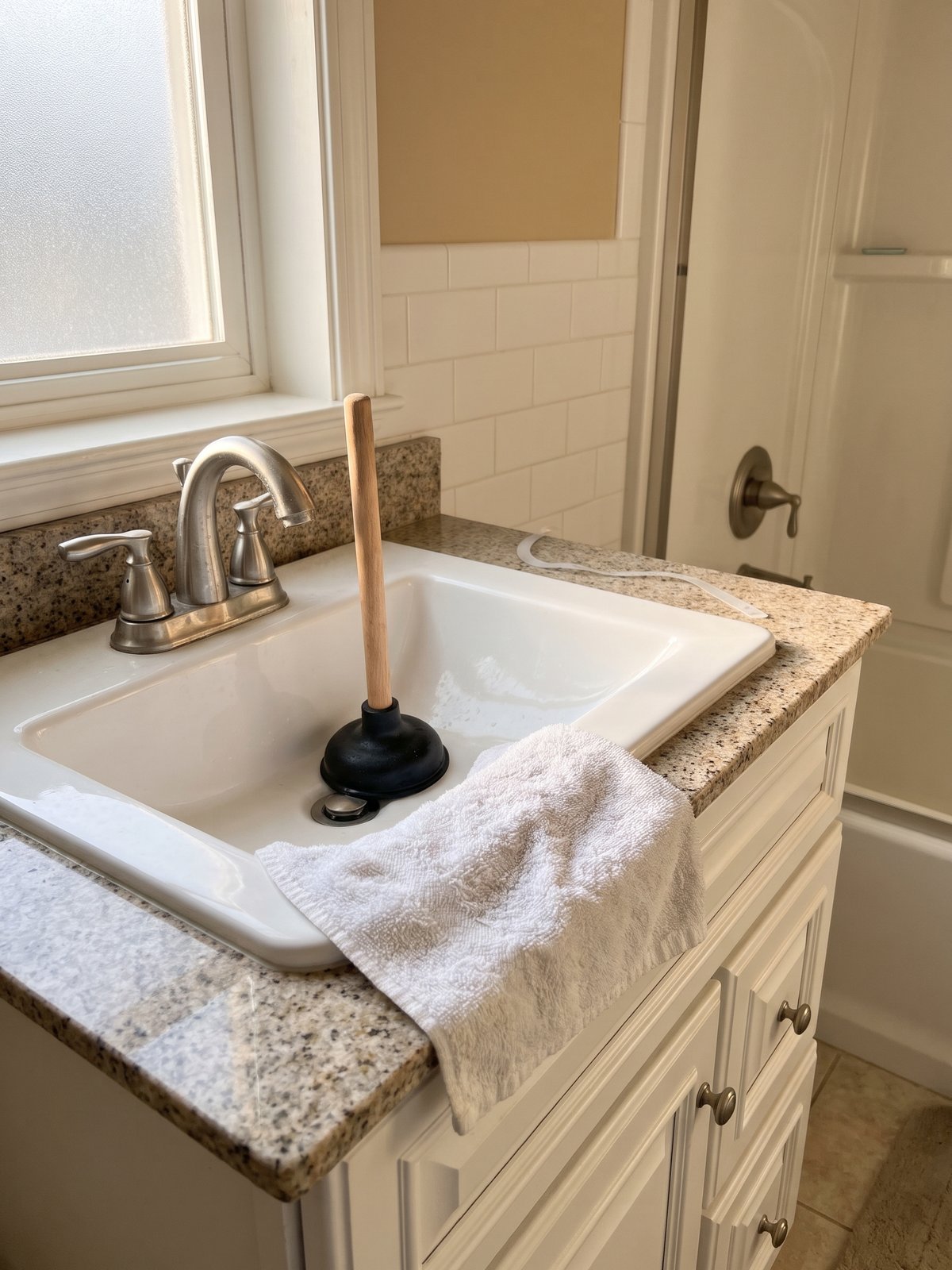
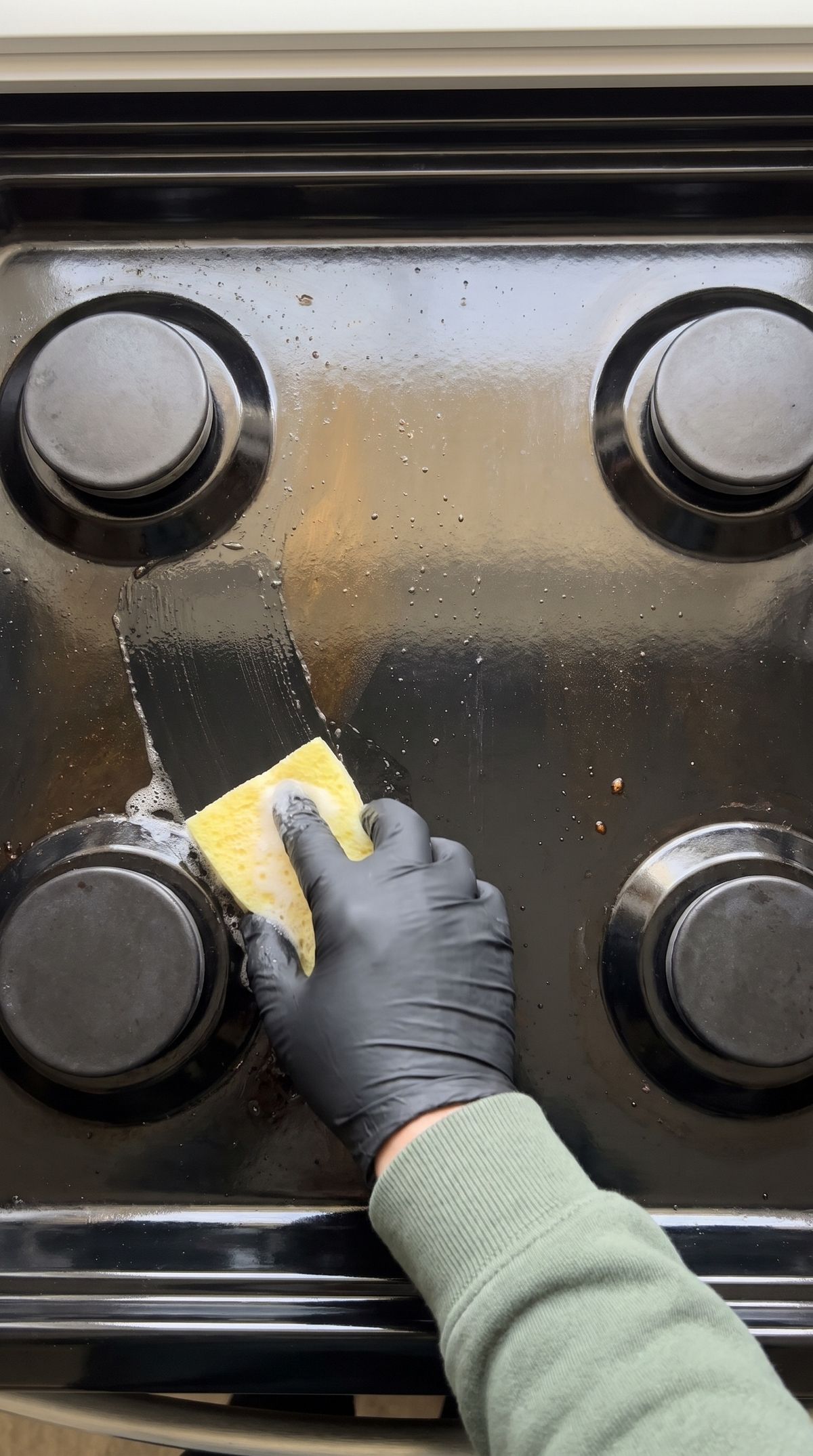
Squeeze a few drops of dish soap onto a wet non-scratch sponge. Wash the sink basin and the faucet with warm water, paying attention to greasy spots near the drain.
Run warm water over the basin and the faucet until no suds are left.
Sprinkle baking soda on your damp sponge and scrub the basin. That is the way Utah State University Extension describes using it as a gentle, non-abrasive cleanser for sinks.
Rinse the basin well, and run your fingers over it. When it feels smooth and not gritty, the baking soda is gone. This matters, because leftover baking soda would cancel out the vinegar in the next step.
Dampen a microfiber cloth with plain white vinegar and wipe the white, chalky spots on the faucet and around the drain. Keep it off cast iron, because Arm & Hammer says acids like vinegar can create rust and destroy a pan’s seasoning.
Rinse the faucet with water, then buff it dry with a clean, dry microfiber cloth. That is how Arm & Hammer finishes its own faucet cleaning method.
Sometimes the job really is bigger than baking soda or vinegar. Here is what to reach for then.
We may earn a small fee from these links. It never changes the picks or your price.
For gentle scrubbing and odors. $0.99 at Target.com on 11/7/2026 (Arm & Hammer 1 lb was $1.79).
For hard water spots. $0.99 at Target.com on 11/7/2026. The 128 oz jug was $4.59 if you go through a lot.
For the grease, which neither of the other two handles well. $2.59 at Target.com on 11/7/2026.
The free Kitchen and Laundry Rescue Guide has the never-mix chart and a one-page cabinet card showing what baking soda, washing soda and three other basics are good for, ready to print.

Here is what is happening in that foaming bowl. Vinegar is an acid, and baking soda is a mild base. When they meet, they react and use each other up.
What comes out is water, a salt called sodium acetate, and carbon dioxide, which is the fizz. Nathan Kilah, a chemistry lecturer at the University of Tasmania, explains that sodium acetate is an even weaker base than baking soda. So the mix ends up weaker than the baking soda you started with.
Think of pouring hot coffee into iced coffee. You do not get both at once. You get something lukewarm in the middle.
And with the amounts people usually pour, one of the two is way out ahead. Kilah worked out that with typical home ratios, over 99% of the baking soda can be left over after the fizzing stops. Whatever cleaning happens comes from that leftover powder and your scrubbing.
You have probably watched a video where someone pours vinegar onto baking soda and the whole sink foams up. It sure looks like hard work is being done, but the bubbles are the two cleaners canceling each other out.
A word from Denise
So give each one its own turn, and rinse in between. One product at a time is cheaper and safer, and it actually gets the job done.
In an open sink or bowl, the reaction makes water, a salt and carbon dioxide. Never put the mix in a closed bottle or jar, because the gas can build up pressure.
Vinegar is an acid, so it is good at hard water spots and mineral buildup. The Conversation’s chemist calls it an excellent cleaner for showers and kettles. Keep it off cast iron, and never mix it with bleach.
Not well. Dish soap is made for grease, and washing soda is the stronger choice for baked-on grease on stainless and enamel.
Neither one is sold as a disinfectant. A disinfectant label carries an EPA registration number and tells you how long the surface must stay wet.
I’m Denise, and I explain home fixes the way a friend would at your kitchen table. Every tip I share is written from the sources listed on its page and checked against them before it goes up.
Sources opened and checked on November 7, 2026.
Every claim on this page, the source behind it and what the check found. Kept open for anyone who wants to look under the hood.
| Claim | Source | What the check found |
|---|---|---|
| Vinegar (acid) and baking soda (weak base) react and use each other up; products are water, sodium acetate and CO2 | Source 1 | Matches the source. |
| Sodium acetate is an even weaker base than baking soda; the mix does not make a stronger cleaner | Source 1 | Matches the source (university chemist). |
| Over 99% of the baking soda can remain with typical home ratios | Source 1 | Matches the source. |
| One tablespoon of baking soda can release over five liters of gas with enough acid | Source 1 | Matches the source. |
| Never cap the mix (gas builds pressure) | Follows from; matches the never-mix page | Matches the source. By reasoning from the source |
| The bubbling may help only as a mechanical effect, as in a blocked drain | Source 1 | Matches the source. |
| Dish soaps necessary for cutting grease; acids neutralize hard water scale; baking soda on a damp sponge is a gentle cleanser for counters, sinks, bathtubs, ovens, fiberglass; takes up odors from the air | Source 2 | Matches the source (university extension). |
| Vinegar an excellent cleaner for showers and kettles | Source 1 | Matches the source. |
| Buff fixtures dry with a fresh microfiber cloth | Source 3 | Matches the source (maker). |
| Leftover baking soda would cancel the vinegar (so rinse between) | Source 1 (acid plus base use each other up) | Matches the source. By chemistry |
| Cast iron: keep vinegar or lemon away, rust and seasoning damage; baking soda paste, stiff brush, dry and oil | Source 4 | Matches the source (maker). |
| EPA regulates cleaning products only if they sanitize or disinfect; a disinfectant label carries a registration number and contact time | Source 7 | Matches the source. |
| Vinegar plus bleach makes highly irritating chlorine gas; vinegar can injure eyes; rinse right away | Source 5 | Matches the source (official). |
| Peroxide plus vinegar forms peracetic acid, irritates eyes, skin, lungs | Source 6 | Matches the source (official). |
| Washing soda: eye irritant, gloves | Source 8 | Matches the source (label). |
| Prices: Good & Gather baking soda 16 oz $0.99; Arm & Hammer 1 lb $1.79; Good & Gather vinegar 16 oz $0.99, 128 oz $4.59; up&up dish soap 28 oz $2.59 | Source 10, read November 7, 2026 | Matches the source. Dated, Target.com online. Walmart links kept with no price |
| Hot coffee and iced coffee comparison | Everyday picture, no claim | No source needed |
| Poison Help line, 1-800-222-1222; free and confidential, 24 hours a day, 7 days a week | Source 9 | Matches the source (HRSA Calling Poison Help page; one wording site-wide, November 7). |