A word from Denise
The pan makers’ own directions start with nothing fancier than baking soda and a boil. So skip the steel wool, let the pan cool and let the boil do the work.
Every tip here is checked against the sources listed at the bottom.
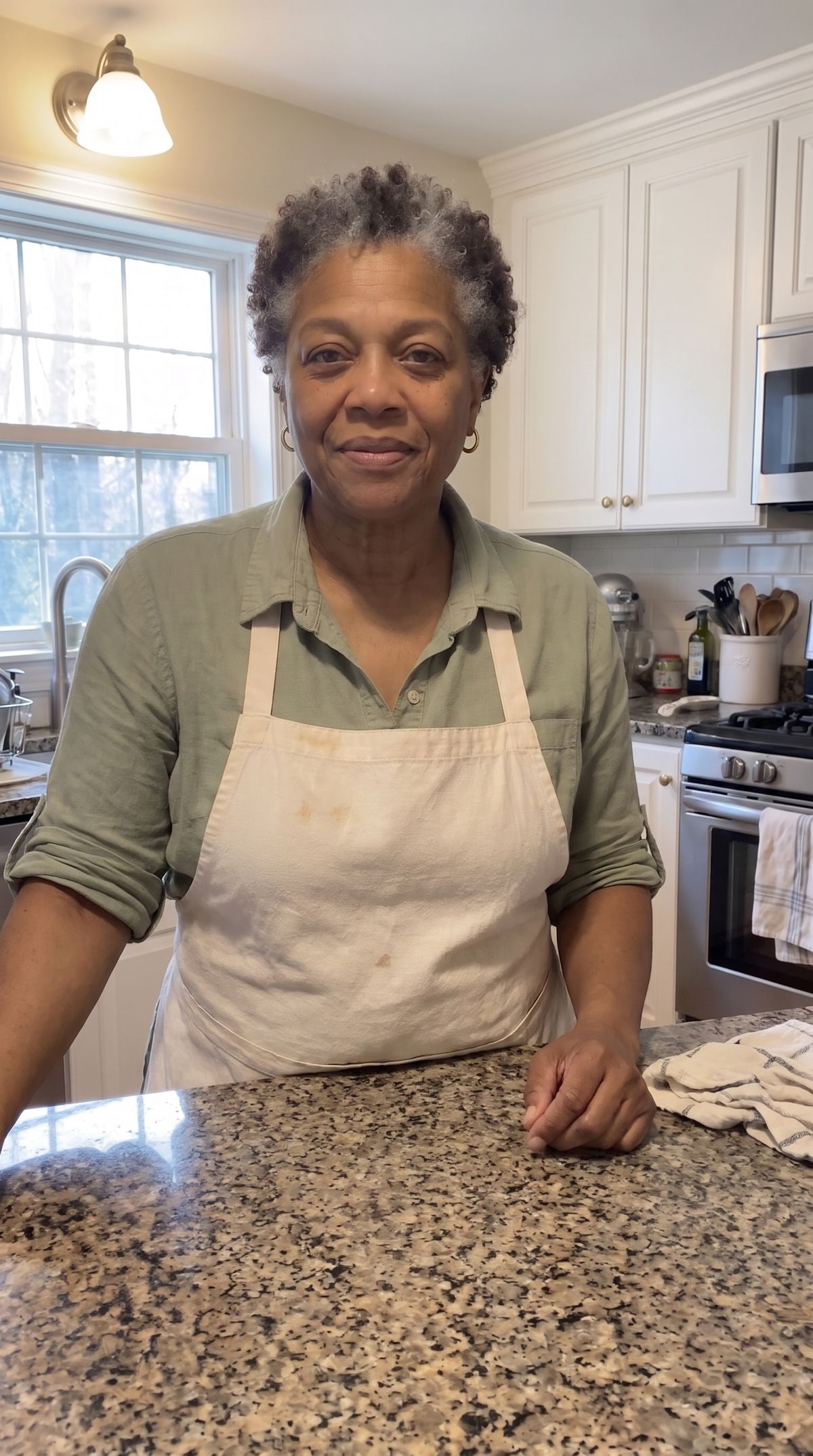 By Denise. Checked on November 7, 2026 against the sources at the bottom of this page.
What works Let the pan cool, cover the burnt spots with a generous layer of baking soda, add water and bring it to a boil. Loosen the burnt bits with a wooden spoon, then wash with a nylon scrub pad. If marks are left, boil equal parts white vinegar and water, or rub on a little Bar Keepers Friend for no more than a minute.
Once the pan is cool, use a wooden spoon to push out any food that lifts easily. Dump it in the trash, not the sink. Do not scrub yet, because the boil in the next steps does the hard part for you.
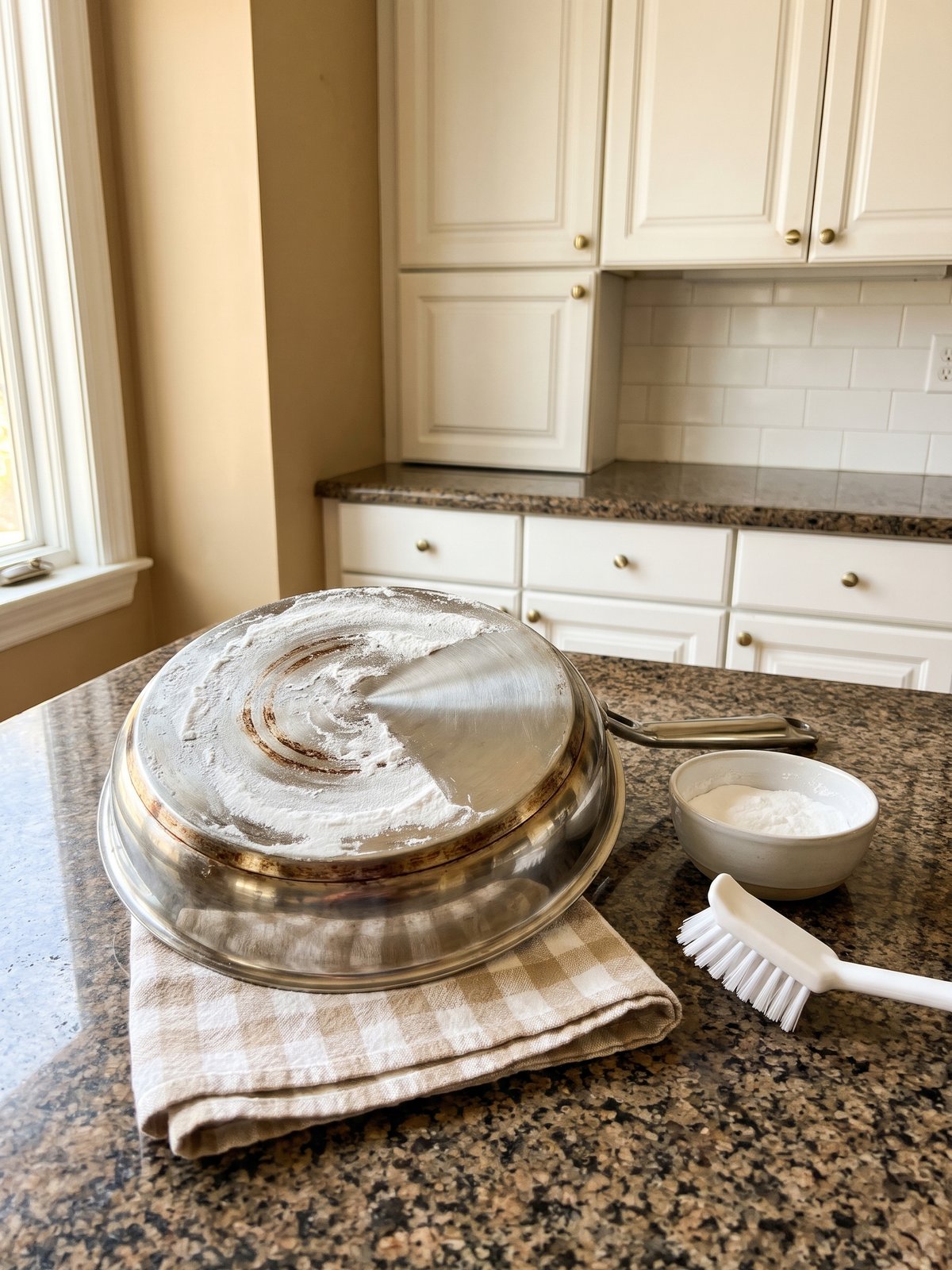
Sprinkle baking soda over the burnt area in a thick, even layer, so you cannot see the black underneath. All-Clad’s own directions say to sprinkle it “generously,” and that is the right word here.
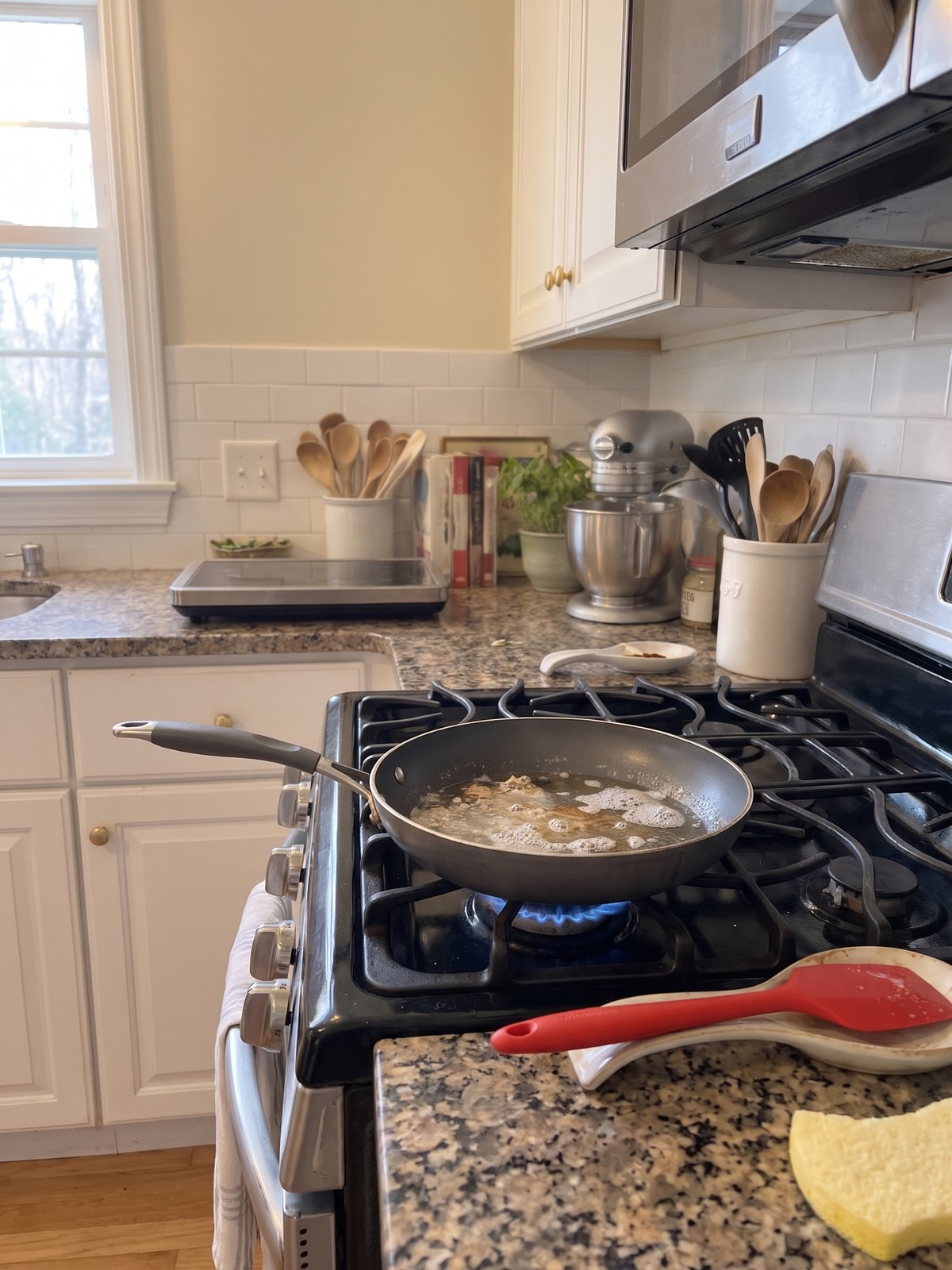
Pour in enough water to cover the burnt area. Set the pan on the burner and bring it to a boil. This is the first half of All-Clad’s method for burnt food.
Work a wooden spoon across the burnt spots to loosen them from the steel. That is how All-Clad finishes its baking soda boil. Made In calls a wooden spoon a non-abrasive tool, so it will not scratch the pan the way a metal spatula can.
Turn off the heat and let the pan cool until you can hold it comfortably. Pour the water out, then wash the pan with warm water, dish soap and a nylon or non-scratch scrub pad.
Rinse with warm water and dry the pan with a towel right away. All-Clad says drying right after rinsing prevents spotting. If marks are still there, go to “When it will not work” below.
Some burns are stubborn, and some marks are not burns at all. Here is how to tell them apart and what to do.
We may earn a small fee from these links. It never changes the picks or your price.
The base of the pan maker’s boil. Good & Gather Baking Soda was $0.99 at Target.com on 11/6/2026.
For brown marks the boil leaves behind. The unscented all-purpose powder was $2.69 at Target.com on 11/6/2026.
All-Clad says nylon pads, never steel. Scotch-Brite Zero Scratch Scour Pads, 4 count, were $3.99 at Target.com on 11/6/2026. Check that the package says non-scratch.
The free Kitchen and Laundry Rescue Guide has this baking soda boil, the never-mix chart and the cleaners that are safe on each kind of pan, ready to print.
Here is what is going on in that pan. Burnt food and fat are stuck tight to the steel, and they need help letting go.
Baking soda is a mild alkali (the opposite of an acid, like vinegar). The American Cleaning Institute explains that an alkali is what turns fat into soap. The boil keeps hot, alkaline water right on the burnt spots, a little like soaking a dried-on oatmeal bowl, only hotter.
The wooden spoon matters as much as the baking soda. It is firm enough to push the loosened layer off, and soft enough that it will not scratch the steel underneath.
Every one of us has walked away from a pot for one minute and come back to that smell. Your first thought is that the pan is ruined, and it almost never is.
A word from Denise
The pan makers’ own directions start with nothing fancier than baking soda and a boil. So skip the steel wool, let the pan cool and let the boil do the work.
Usually not. Burnt food comes off with a baking soda boil, and heat colors wipe off with vinegar. The pan makers warn about other things instead: steel wool, bleach, and a hot pan under cold water, which can warp it.
Made In describes sprinkling baking soda and adding vinegar so it foams up. It makes a fun fizz, but the two cancel each other out, so this page uses them one at a time: the baking soda boil first, then a vinegar boil if needed.
Yes. All-Clad names it as a cleanser for its stainless pans. Wet the pan, use a small amount, leave it on no longer than one minute and rinse thoroughly.
Made In says they are calcium deposits from hard tap water. Boil equal parts distilled white vinegar and water in the pan, then rinse and dry it right away.

I’m Denise, and I explain home fixes the way a friend would at your kitchen table. Every tip I share is written from the sources listed on its page and checked against them before it goes up.
Sources opened and checked on November 7, 2026.
Every claim on this page, the source behind it and what the check found. Kept open for anyone who wants to look under the hood.
| Claim | Source | What the check found |
|---|---|---|
| Burnt food: sprinkle baking soda generously, add water, bring to a boil, loosen with a wooden spoon | Source 1 (rechecked November 7) | Matches the source (maker). |
| Never put a hot pan under cold water (warping) | Sources 1 and 3 (rechecked November 7) | Matches the source. |
| No steel wool or steel scouring pads; nylon pads are fine | Sources 1 and 3 (rechecked November 7) | Matches the source. |
| Rinse and dry right away to prevent spotting | Source 1 | Matches the source. |
| Stubborn mess: start over with 1 to 1 vinegar and water, boil, scrape with a wooden spoon or other non-abrasive tool | Source 3 (rechecked November 7) | Matches the source (maker). |
| Bar Keepers Friend: wet surface, small amount, no longer than one minute, rinse thoroughly; gloves for prolonged use or sensitive skin; never mix with bleach or ammonia | Source 5 (rechecked November 7) | Matches the source (maker FAQ). |
| All-Clad names Bar Keepers Friend as a cleanser for burnt fat and charred food | Source 1 (rechecked November 7) | Matches the source. |
| Chromium in stainless reacts to (thickens with) high heat, giving the rainbow look | Source 3 (rechecked November 7) | Matches the source. |
| Color change will not affect performance; wipe discoloration with white vinegar and a soft cloth | Source 1 (rechecked November 7) | Matches the source. |
| White spots are calcium from hard tap water; 1 to 1 vinegar boil; distilled white vinegar only, flavored vinegars have sugar that can burn | Sources 1 and 4 (rechecked November 7) | Matches the source. |
| Add salt after boiling or once food cooks; pitting does not interfere with cooking | Source 1 (rechecked November 7) | Matches the source. |
| Bleach damages stainless’s chromium oxide layer; no detergents with bleach or peroxide | Sources 1 and 3 (rechecked November 7) | Matches the source. |
| Bleach plus an acid like vinegar gives off chlorine gas | Source 7 (rechecked November 7) | Matches the source (official). |
| Baking soda is a mild alkali; an alkali turns fat into soap | Source 6 (rechecked November 7) | Matches the source. |
| Made In’s baking soda plus vinegar foam method; the two cancel each other | Source 2 (rechecked November 7); Source 8 via the never-mix chart | Matches the source. |
| Poison Help line, 1-800-222-1222; free and confidential, 24 hours a day, 7 days a week | Source 9 | Matches the source (HRSA Calling Poison Help page; one wording site-wide, November 7). |
| Prices: Good & Gather baking soda 16 oz $0.99; Bar Keepers Friend unscented powder 21 oz $2.69; Scotch-Brite Zero Scratch Scour Pads 4 ct $3.99 | Source 10, read November 6, 2026 | Matches the source (dated, Target.com online). Walmart prices not read, so none shown |
| Peroxide paste left out; All-Clad warns against peroxide detergents | Source 1 | Matches the source. |