How to Clean Burnt Sheet Pans (and When to Skip It on Aluminum)

Every tip here is checked against the sources listed at the bottom.

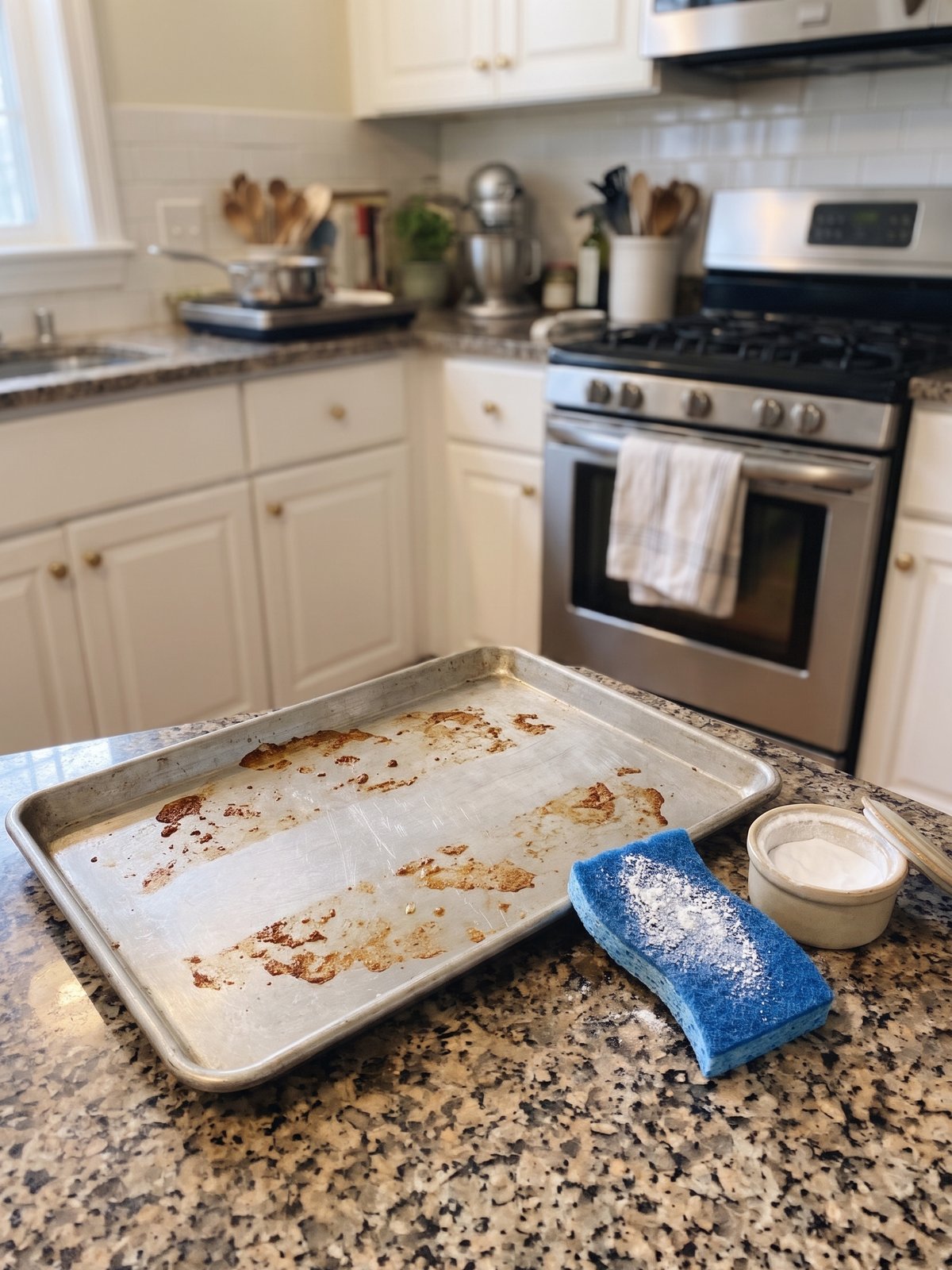
Two sheet pans side by side on a counter, one with a brown baked-on crust in the corners, a refrigerator magnet resting on the rim of one, a box of washing soda and a non-scratch sponge nearby

The short answer

What works First find out what your pan is made of. Stainless steel: spread a paste of 2 parts washing soda to 1 part water on the brown crust, wait 30 minutes, then scrub with a non-scratch sponge and rinse well. Aluminum: never use washing soda. Soak it overnight in warm, soapy water, then scrub with baking soda on a non-scratch sponge.

How long
For stainless, 30 minutes of waiting plus a few minutes to mix, scrub and rinse. Old buildup may need 2 rounds. The aluminum soak is overnight.
What it costs
A 55 oz box of Arm & Hammer Super Washing Soda was $5.49 at Target.com on November 7, 2026, and a 16 oz box of Good & Gather baking soda was $0.99 on November 6. One pan uses a few tablespoons.
What you need
A magnet, washing soda (stainless only) or baking soda (aluminum), rubber gloves, a small glass or plastic bowl, a spoon and a non-scratch sponge.
Jump to the steps
From your cabinet

Before you start: what is your pan made of?

This one question decides the whole job, because Arm & Hammer, the maker of washing soda, says in capital letters not to use it on aluminum cookware.

  1. Look for a stamp or label. Check the bottom and the rim, or the box the pan came in.
  2. Try a magnet. Aluminum is not magnetic, so if a fridge magnet sticks, the pan is not aluminum. If it does not stick, the pan could still be stainless, because some kinds of stainless steel are not magnetic either. In that case, go by the stamp or the box.
  3. Still not sure? Treat it as aluminum and use the gentle method. That is the safe bet.
  4. Nonstick or coated pans: skip both methods here. We could not find a maker who says washing soda is safe on a nonstick coating.

Stainless steel sheet pans

  1. Put on gloves and scrape off the loose bits

    Put on rubber gloves. The washing soda label says it is an eye irritant and to avoid long skin contact by wearing gloves. Then wipe or scrape off any crumbs and loose food so the paste can reach the brown crust.

  2. Mix the paste fresh

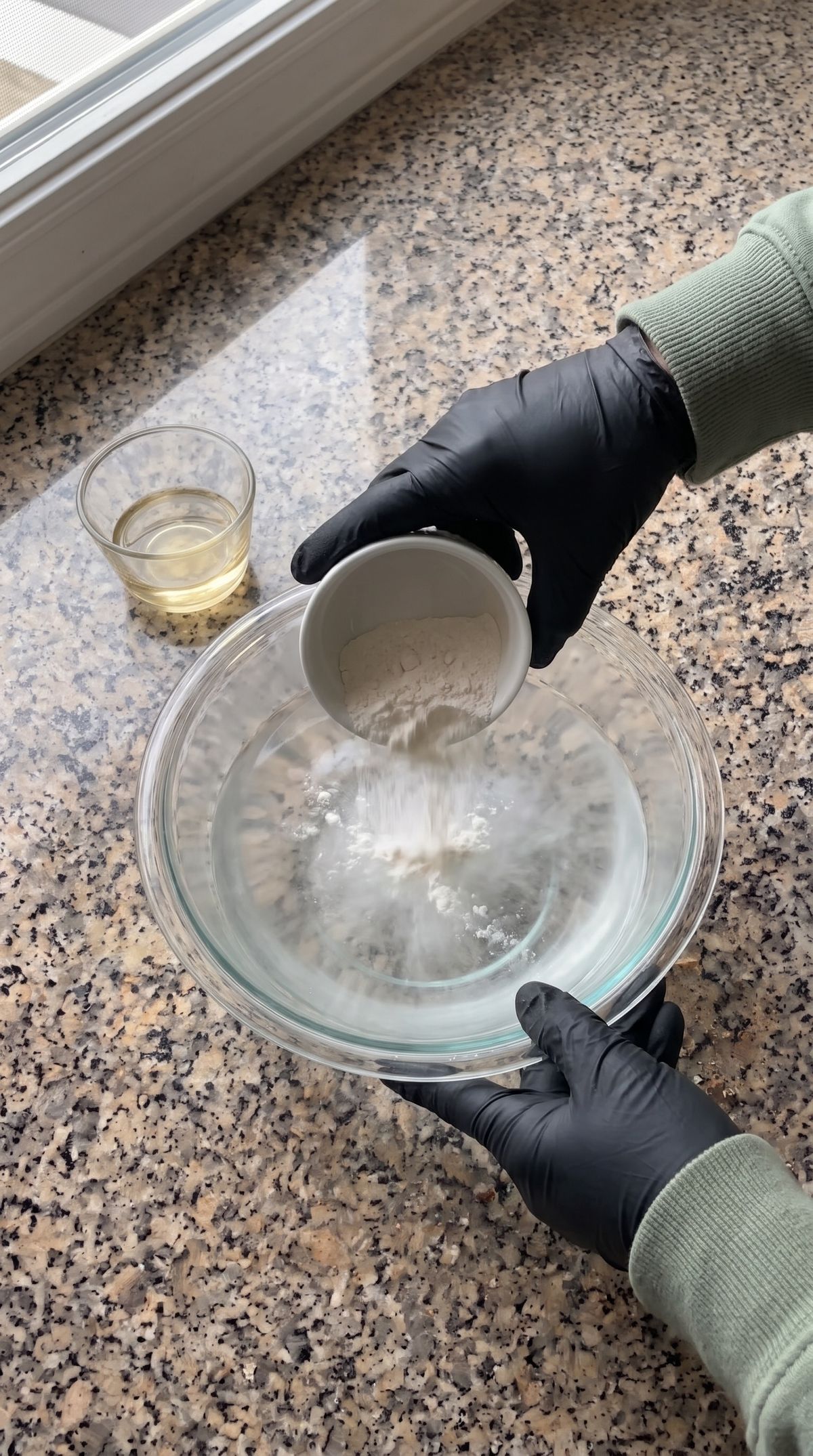
    In a small glass or plastic bowl, stir together 4 tablespoons of washing soda and 2 tablespoons of warm water. That is the 2 to 1 paste Arm & Hammer gives for tough pot and pan stains. For a big pan with a lot of crust, double both amounts.

  3. Spread it on and wait 30 minutes

    Spoon the paste onto the brown and black areas and spread it into an even layer with the back of the spoon. Set a timer for 30 minutes. That is the maker’s stand time, so do not cut it short.

  4. Scrub with a non-scratch sponge

    Scrub the crust in small circles with the scrubby side of a non-scratch sponge. All-Clad says its stainless bakeware should get a gentle nylon scouring pad, never an abrasive pad, so let the paste do the work instead of your elbow.

  5. Rinse it very well

    Rinse the pan under warm running water, then wash it with dish soap and rinse again. The label says washing soda is harmful if swallowed, so get every bit of it off before the pan goes back in the oven.

  6. Check it, and go again if you need to

    Dry the pan and look at it in good light. Thick crust that has been baking on for years may need a second round of Steps 2 to 5. That is normal, and it does not mean you did anything wrong.

Aluminum sheet pans (the gentle way)

Nordic Ware says its natural aluminum pans will develop a patina, a darker color that comes with time and use, so the goal is to lift stuck food and brighten the pan, not to make it look new.

  1. Soak it overnight

    Fill the pan with warm water and a squirt of dish soap and leave it overnight. Nordic Ware says stubborn food on its aluminum pans can be soaked overnight.

  2. Scrub with baking soda

    Pour out the water. Sprinkle baking soda over the stuck spots and scrub with a damp non-scratch sponge. Nordic Ware lists baking soda, along with lemon juice, vinegar and cream of tartar, as ways to brighten its aluminum pans.

  3. Wash, rinse and dry

    Wash the pan with warm, soapy water, rinse it and dry it. Keep it out of the dishwasher, because Nordic Ware says dishwasher detergent will discolor these pans or leave them rough.

When it will not work, and what to do instead

Sheet pans take a beating, so not every pan comes back shiny.

  • The crust is still there after two rounds on stainless. Some people make the paste with 3% hydrogen peroxide in place of the water. That pair is what oxygen bleach powder is made of, so follow the safety box: mix it fresh, use it right away and never seal it in a jar.
  • Your aluminum pan is dark all over. That is the patina Nordic Ware says these pans develop with time and use.

Be safe

  • Never on aluminum. Arm & Hammer says not to use washing soda on aluminum cookware, and the label says not to use it on aluminum at all. That also means no aluminum bowls or spoons for mixing.
  • Gloves on, eyes protected. The label says washing soda is an eye irritant and harmful if swallowed, and to wear gloves. If it gets in your eyes, rinse them with water for 15 minutes and call a doctor.
  • Never mix the paste with vinegar or bleach. Vinegar cancels out washing soda. If you used peroxide, the New Jersey Department of Health says peroxide and vinegar together make peracetic acid, which can irritate the eyes, skin and lungs. Washington’s health department says bleach reacts with hydrogen peroxide. See the full never-mix chart.
  • Mix it fresh and never seal it. Solvay, which makes oxygen bleach powder, says the washing soda and peroxide pair slowly gives off oxygen, and the OxiClean label warns that a sealed container can build pressure and burst.
  • Rinse the pan very well before it touches food again.
  • Keep the powder and the paste away from kids and pets. Poison Help line, 1-800-222-1222. It is free and confidential, 24 hours a day, 7 days a week.

What to buy

We may earn a small fee from these links. It never changes the picks or your price.

More picks: rubber gloves are on the never-mix page.

Why it works

That brown crust is not only burnt food. A lot of it is cooking oil heated over and over until it hardened. Lodge, the cast iron maker, explains that heated oil changes from a wet liquid into a slick, hardened surface, which chemists call polymerization. That is why dish soap barely touches it: soap is great at loose, fresh grease, and this layer is not loose anymore.

Washing soda is a fairly strong alkali (the opposite of an acid, like vinegar), and the American Cleaning Institute explains that an alkali can turn fat into soap. Give the paste its 30 minutes and it softens that hard layer enough for a sponge to lift it, the way a dried egg pan wipes clean after a long soak.

Baking soda is a much milder alkali, and it is one of the things Nordic Ware lists for brightening its aluminum pans. That is why it gets the aluminum job.

A word from Denise

Most of us have a sheet pan with a brown corner we stopped seeing years ago, and there is no shame in that. Just flip it over and check what it is made of before you go at it, because that one look keeps a good aluminum pan from getting ruined.

Questions people ask

How do you get the brown stuff off sheet pans?

On stainless steel, use a 2 to 1 washing soda paste for 30 minutes, then scrub and rinse well. On aluminum, soak overnight in soapy water and scrub with baking soda instead.

Can you use washing soda on aluminum pans?

No. Arm & Hammer says not to use washing soda on aluminum cookware. Use baking soda and a non-scratch sponge.

Can you put aluminum sheet pans in the dishwasher?

Nordic Ware says no for its natural aluminum pans, because the detergent can discolor them and leave them rough. Hand wash with warm, soapy water.

More help like this

Next tipHow to clean an oven without oven cleaner
Denise laughing in her kitchen

About Denise

I’m Denise, and I explain home fixes the way a friend would at your kitchen table. Every tip I share is written from the sources listed on its page and checked against them before it goes up.

How my tips are checked

Sources

Sources opened and checked on November 7, 2026.

  1. Arm & Hammer, Super Washing Soda for laundry and around the house (2 to 1 paste for pots and pans, 30 minutes, gloves, not on aluminum cookware) armandhammer.com
  2. Arm & Hammer Super Washing Soda, 55 oz, label text (eye irritant, harmful if swallowed, avoid prolonged skin contact and wear gloves, eyes 15 minutes and call a physician, do not use on aluminum), Giant Food Stores product listing giantfoodstores.com
  3. Nordic Ware Naturals aluminum sheet pan care text (patina, brighten with lemon juice, vinegar, cream of tartar or baking soda, hand wash, soak overnight, no dishwasher), Costco product listing costco.com
  4. All-Clad, Care and Use (stainless bakeware: gentle nylon scouring pad, no abrasive pads) all-clad.com
  5. Lodge Cast Iron, The Science of Cast Iron Seasoning (heated oil changes from a wet liquid into a slick, hardened surface; polymerization) lodgecastiron.com
  6. Review of heated cooking oil chemistry, PubMed Central, 2025 (heating time and temperature raise polymerization) pmc.ncbi.nlm.nih.gov
  7. American Cleaning Institute, Glossary of Cleaning Product Terminology (sodium carbonate is a fairly strong alkaline salt; sodium bicarbonate is a mild alkali; saponification) cleaninginstitute.org
  8. Wayne Breslyn, University of Maryland, Is Stainless Steel Magnetic? (austenitic stainless steel is not magnetic; aluminum is a non-magnetic metal) terpconnect.umd.edu
  9. Solvay, Sodium Percarbonate Safety and Handling (PDF) (an addition salt of hydrogen peroxide and sodium carbonate; decomposes to release oxygen; pressure burst if confined in an unvented container) solvay.com
  10. OxiClean Versatile Stain Remover Powder, label text (do not mix with ammonia, chlorine bleach or other household chemicals; do not mix or store solutions in a sealed container, pressure can build up and the container may rupture), Giant Food Stores product listing giantfoodstores.com
  11. New Jersey Department of Health, Hazard Alert: Mixing bleach with other cleaning products can be deadly (PDF) nj.gov
  12. Washington State Department of Health, Bleach mixing dangers doh.wa.gov
  13. HRSA Poison Help, Calling Poison Help (1-800-222-1222; free and confidential help 24 hours a day, 7 days a week) poisonhelp.hrsa.gov
  14. Target.com search results (prices) target.com target.com target.com
Fact log: how each claim on this page was checked (19 claims)

Every claim on this page, the source behind it and what the check found. Kept open for anyone who wants to look under the hood.

ClaimSourceWhat the check found
Do not use washing soda on aluminum cookware (maker, in capitals); label: do not use on aluminumSources 1 and 2 (rechecked November 7)Matches the source.
Paste: 2 parts washing soda to 1 part water; let stand 30 minutes; wear glovesSource 1 (rechecked November 7)Matches the source (maker).
4 Tbsp to 2 Tbsp as one batch; double both for a big panThe maker’s 2 to 1 ratio (Source 1) at a set batch sizeMatches the source (ratio unchanged).
Old buildup may need 2 roundsSource 1 (paste for tough pot and pan stains); no source promises it all comes off in one roundStated as guidance, not a promise
Label: eye irritant, harmful if swallowed, avoid prolonged skin contact (wear gloves); eyes 15 minutes, call a physicianSource 2 (rechecked November 7)Matches the source (label via retailer).
Aluminum is not magnetic; pure austenitic stainless steel (a nickel kind) is not magneticSource 8 (opened November 7)Matches the source (university-hosted page).
No maker found saying washing soda is safe on nonstickWe searched maker pages and found noneStated as “we could not find”
All-Clad stainless bakeware: gentle nylon scouring pad, avoid harsh products and abrasive padsSource 4 (rechecked November 7)Matches the source.
Natural aluminum develops a patina with time and use; brighten with lemon juice, vinegar, cream of tartar or baking soda; hand wash in warm soapy water; soak stubborn residue overnight; dishwasher detergent causes discoloration or a rough textureSource 3 (rechecked November 7; Nordic Ware text on a Costco listing)Matches the source (maker text via retailer).
Oil heated in a pan changes from a wet liquid into a slick, hardened surface (polymerization)Source 5 (rechecked November 7)Matches the source.
Much of the brown crust is cooking oil heated over and over until it hardenedSources 5 and 6Matches the source.
Soap barely touches the hardened layerReasoning from Sources 5 and 6 (heated oil hardens into a solid layer that is no longer loose grease)Stated as “barely touches”, not “does nothing”
Sodium carbonate is a fairly strong alkaline salt; baking soda is a mild alkali; saponification is fat to soap with an alkaliSource 7 (rechecked November 7)Matches the source.
Washing soda plus hydrogen peroxide are the two parts of oxygen bleach powder (sodium percarbonate); it gives off oxygen as it breaks downSource 9 (opened November 7)Matches the source.
Do not mix or store a solution in a sealed container; pressure can build upSource 10 (opened November 7); Source 9Matches the source (label).
Peroxide plus vinegar makes peracetic acid (eyes, skin, lungs); bleach reacts with hydrogen peroxideSources 11 and 12 (rechecked November 7)Matches the source (official).
Vinegar cancels out washing sodaNever-mix.html (washing soda and vinegar cancel); Source 7 (alkali vs acid)Matches the source.
Prices: Good & Gather baking soda 16 oz $0.99 (11/6); Arm & Hammer Super Washing Soda 55 oz $5.49 (11/7); Scotch-Brite Delicate Clean Non-Scratch Scrub Sponges 3 ct $3.49 (11/6)Source 14, readMatches the source (dated, Target.com online). Walmart prices not read, so none shown
Poison Help line, 1-800-222-1222; free and confidential, 24 hours a day, 7 days a weekSource 13Matches the source (HRSA Calling Poison Help page; one wording site-wide, November 7).