Why Shower Mold Keeps Coming Back (and the Habits That Stop It)

Every tip here is checked against the sources listed at the bottom.

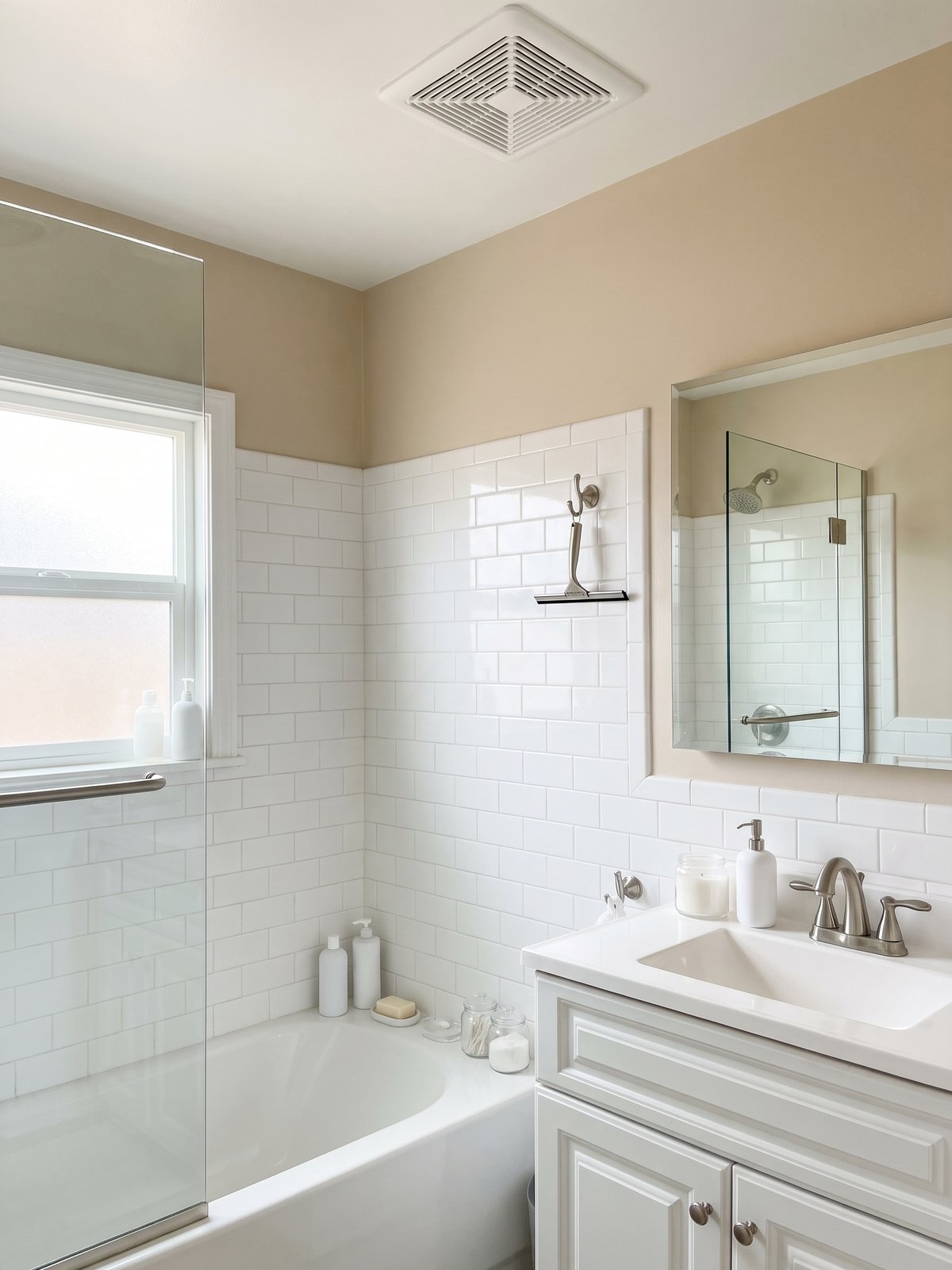
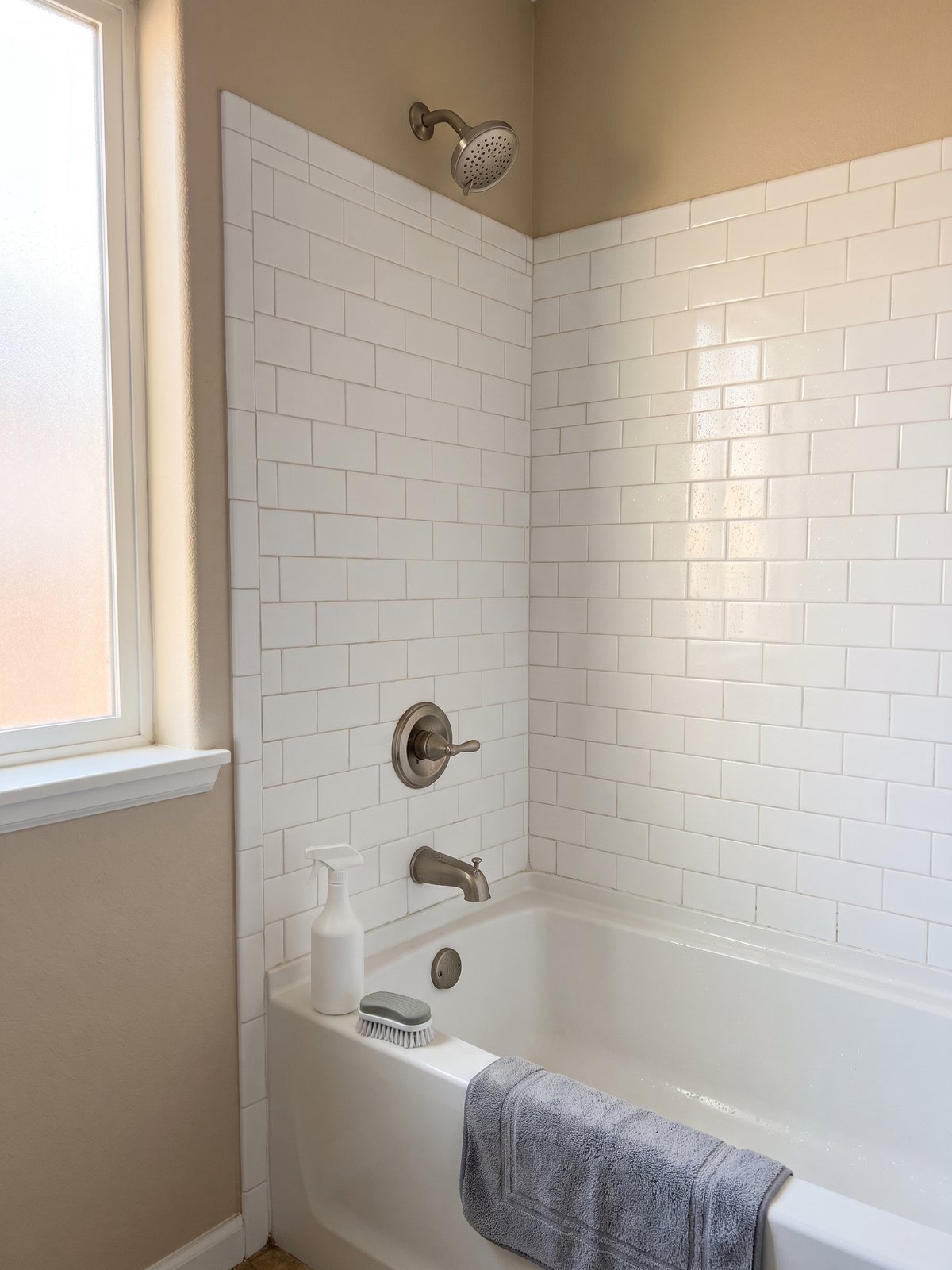
A clean white tile shower with a squeegee hanging on a hook and the bathroom fan switch in view, light coming through a cracked window

The short answer

What works Mold comes back because a shower stays wet, and the EPA says the key to mold control is moisture control. Scrub the spots off with dish soap and water. Then run the fan during and at least 20 minutes after your shower, squeegee the walls, fix drips, and keep humidity below 60 percent.

How long
One cleanup session, then a squeegee pass and the fan running at least 20 minutes after each shower.
What it costs
An up&up shower squeegee was $5.49 and a TempPro TP50W humidity meter was $9.99 at Target.com on November 7, 2026. The cleanup uses dish soap you likely already have.
What you need
Dish soap, a bucket of warm water, a grout brush or non-scratch sponge, an old towel, gloves, goggles and an N-95 mask, plus a squeegee for every day after.
Jump to the steps
From your cabinet
  • Dish soap

Before you start: is this a job for you?

Most shower mold is a small cleanup you can handle, but a few signs mean it is time to call for help.

  1. Size: The EPA says you can usually handle an area smaller than about 10 square feet, roughly a 3 by 3 foot patch. If it covers more than that, or there was a lot of water damage, the EPA points you to its professional cleanup guidance.
  2. A musty smell with no mold you can see: the EPA says that can mean hidden mold, such as inside a wall around a leaking pipe. It suggests considering an experienced professional rather than tearing into the wall yourself.
  3. Health worries: if you have health concerns, the EPA says to talk to a health professional before you start.

The one-time cleanup

  1. Get air moving and gear up

    Turn on the bathroom fan and open a window if you have one. Put on rubber gloves, goggles without vent holes and an N-95 mask, which is the gear the EPA lists for mold cleanup.

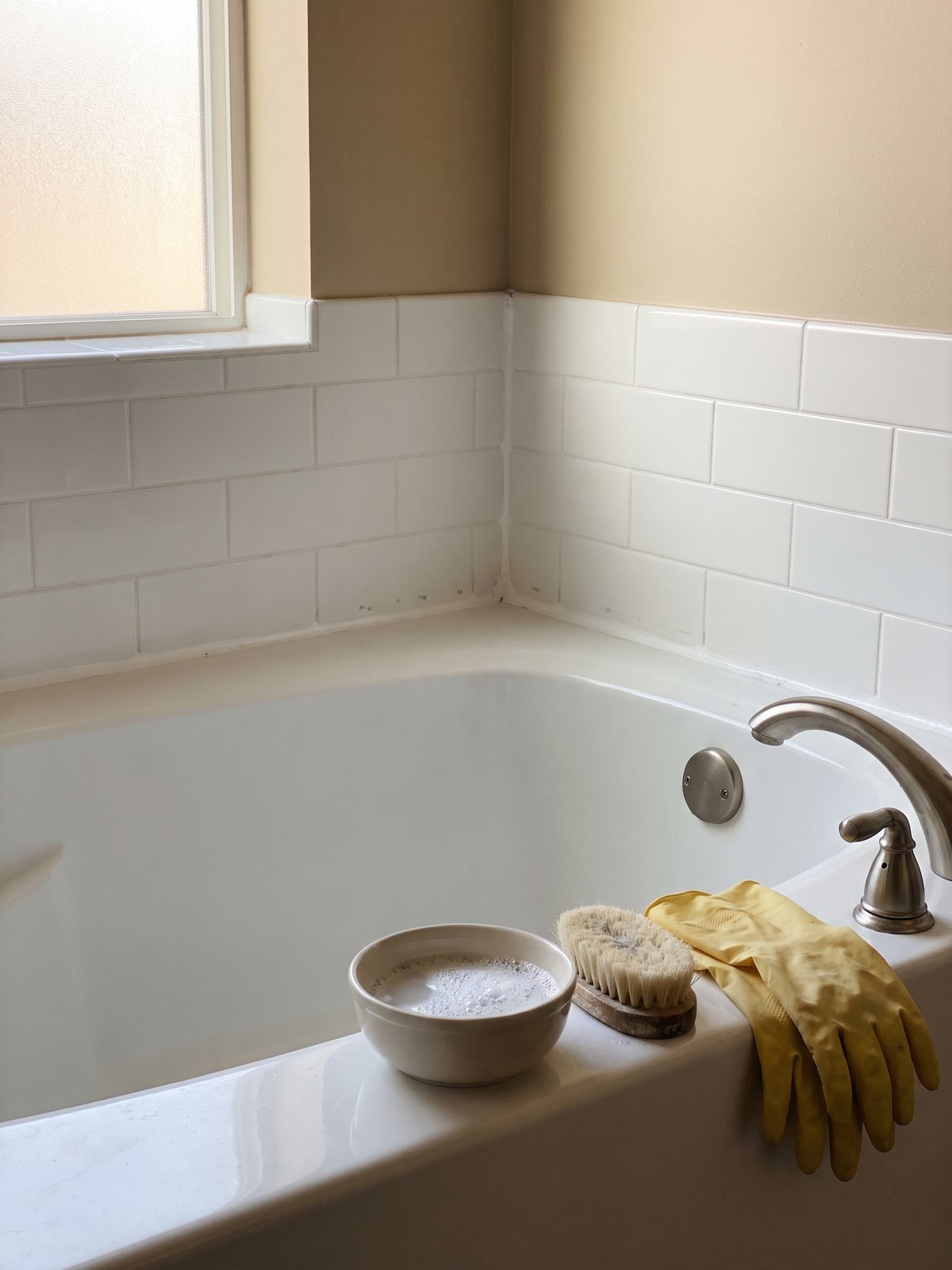
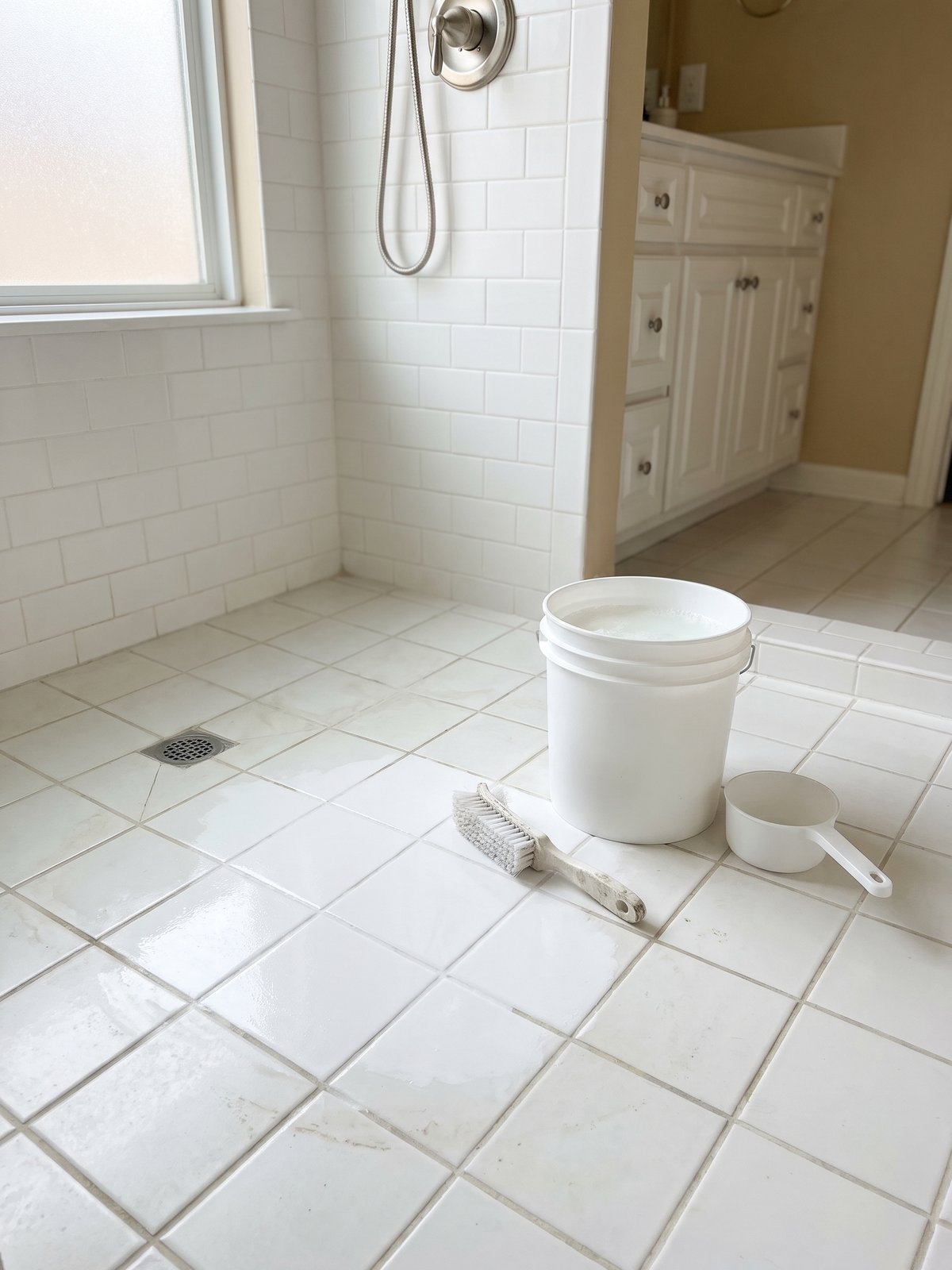
  2. Mix soapy water

    Squeeze a little dish soap into a bucket of warm water and swish it around. The EPA’s advice for mold on hard surfaces is plain detergent and water, so you do not need anything stronger.

  3. Scrub the spots

    Dip a grout brush or the soft side of a non-scratch sponge in the soapy water and scrub each spot in short strokes. Work from the top of the wall down, so the dirty water runs over parts you have not done yet. Dump the water and mix fresh if it gets murky.

  4. Rinse with plain water

    Rinse the walls with plain water from the shower head or a cup, and keep going until no more suds run down the tile.

  5. Dry it completely

    This step is the whole point. The EPA’s direction is to scrub mold off hard surfaces and dry them completely. Squeegee the walls, wipe the corners and ledges with an old towel, and leave the fan running.

    What it looks like when it is done: no standing drops on the ledges or in the corners.

  6. Look at what is left

    Check the grout and the caulk in good light. If the grout still looks dark, see How to clean grout without ruining it.

    A dark mark inside the soft caulk is a different problem. The EPA says not to caulk over moldy surfaces, so see How to get mold stains off shower caulk.

The habits that keep it from coming back

The cleanup takes the mold off. These habits take away the water it needs to grow back.

  1. Run the fan during your shower and at least 20 minutes after. Fan maker Broan-NuTone cites the Home Ventilating Institute for that 20 minutes. The Department of Energy’s building guide recommends one hour, with a timer switch so the fan shuts off by itself. Have an electrician put the switch in.
  2. Make sure the fan really vents outside. The Department of Energy’s guide says a bathroom fan should vent outdoors, not into the attic, a crawlspace or the space between floors.
  3. Squeegee or wipe after every shower. DreamLine, a shower door maker, tells owners to wipe glass and acrylic walls after each use. On tile, a squeegee or towel does the same job.
  4. Leave the door open. For damp surfaces, the EPA suggests more air movement by opening doors and windows when you can.
  5. Watch the humidity. The EPA says to keep indoor humidity below 60 percent, ideally 30 to 50 percent, and that an inexpensive meter can measure it.
  6. Fix drips fast. The EPA says to fix plumbing leaks as soon as possible and to dry wet areas within 24 to 48 hours.
  7. Clean more often. For mold that keeps reappearing in a shower, the EPA says more ventilation and more frequent cleaning will usually stop it, or at least keep it to a minimum.

When it will not work, and what to do instead

Sometimes the spots come back even after you change your habits. Here is what to check.

  • It comes back in the same spot within days. That spot is staying wet. Look for a drip, a leaky door seal or a ledge where water pools, and fix the water first.
  • You want to use bleach so it never comes back. It makes sense to reach for the strongest bottle under the sink. But the EPA says bleach is not recommended as a routine part of mold cleanup. Drying the shower is what stops the regrowth.

Be safe

  • Wear the gear. The EPA lists an N-95 mask, gloves and goggles without vent holes for mold cleanup.
  • Get the air moving. Run the fan and open a window while you work.
  • Never mix bleach with other cleaners. The EPA says never to mix chlorine bleach with ammonia cleaners. The Washington State health department says not to mix bleach with acids like vinegar or toilet bowl cleaners either. The New Jersey health department says mildew stain removers mixed with bleach can release chlorine gas. See the full never-mix chart.
  • Health concerns come first. If you have any, the EPA says to talk to a health professional before you clean.
  • Big or hidden mold is a job for a pro. More than about 10 square feet, a lot of water damage, or a musty smell with no visible source all point to an experienced professional.
  • Poison Help line, 1-800-222-1222. It is free and confidential, 24 hours a day, 7 days a week.

What to buy

We may earn a small fee from these links. It never changes the picks or your price.

  • up&up Shower Squeegee with Hanging Hook

    The daily habit that does the most, and it hangs right in the shower. $5.49 at Target.com on 11/7/2026.

  • TempPro TP50W Digital Hygrometer

    A small meter that shows the room’s humidity, so you know if the fan is doing its job. $9.99 at Target.com on 11/7/2026.

  • up&up Tile and Grout Scrub Brush

    For the one-time scrub and the touch-ups after. $2.69 at Target.com on 11/7/2026.

Why it works

Mold spores float through the air indoors and out, and the EPA says it is impossible to get rid of all of them. That sounds worse than it is, because spores are only half the story.

The other half is water. The EPA says no type of mold will grow without water or moisture, and that mold is usually not a problem indoors unless spores land on a wet or damp spot.

If the shower walls stay damp for hours, the spores that land there get what they need, day after day. Think of them like seeds: you cannot keep every seed out of a garden, but nothing sprouts in dry dirt.

A word from Denise

The spots come back a week after you scrubbed, and it feels like you cleaned it wrong. You did not. The shower is just staying wet, so the fix is the minute after you turn off the water. Flip on the fan, pull the squeegee down the walls and leave the door open.

Questions people ask

Why does mold keep coming back in my shower?

Because the shower stays damp long enough for it to grow. The EPA says mold will not grow without moisture, and that more ventilation and more frequent cleaning usually stop shower mold from coming back.

How long should I run the bathroom fan after a shower?

At least 20 minutes, which is the Home Ventilating Institute figure cited by fan maker Broan-NuTone. The Department of Energy’s building guide recommends one hour.

Should I use bleach on shower mold?

The EPA says to scrub mold off hard surfaces with detergent and water, and that a mold-killing product such as bleach is not recommended as a routine practice. If you use a bleach product, never mix it with ammonia, vinegar or other cleaners.

More help like this

Denise laughing in her kitchen

About Denise

I’m Denise, and I explain home fixes the way a friend would at your kitchen table. Every tip I share is written from the sources listed on its page and checked against them before it goes up.

How my tips are checked

Sources

Sources opened and checked on November 7, 2026.

  1. U.S. Environmental Protection Agency, A Brief Guide to Mold, Moisture and Your Home (moisture control; spores float through indoor and outdoor air; humidity below 60 percent, ideally 30 to 50, inexpensive meter; recurring shower mold; detergent and water, dry completely; about 10 square feet and a lot of water damage; hidden mold inside walls around pipes, consider an experienced professional; N-95, gloves, goggles without ventilation holes; fix leaks, dry within 24 to 48 hours; open doors and windows for air movement; bleach not routine; never mix bleach with ammonia; impossible to remove all spores; no mold grows without water) epa.gov
  2. U.S. Environmental Protection Agency, Mold Cleanup in Your Home (detergent and water; do not paint or caulk moldy surfaces; less than about 10 square feet; health concerns) epa.gov
  3. U.S. Department of Energy, Building America Solution Center (Pacific Northwest National Laboratory), Bathroom Exhaust Fans (one hour after a shower; timer switch rather than a standard wall switch; vent outdoors, not into an attic, crawlspace or space between floors) basc.pnnl.gov
  4. Broan-NuTone Help Center, How long should a bath fan run after a shower is used? (20 minutes more, per the Home Ventilating Institute) help.broan-nutone.com
  5. DreamLine, Harmony Shower and Tub Door Installation Instructions, Product Maintenance (wipe acrylic walls and glass after each use; rinse and squeegee glass) pdf.lowes.com
  6. Washington State Department of Health, Bleach mixing dangers (no bleach with acids such as vinegar and toilet bowl cleaners) doh.wa.gov
  7. New Jersey Department of Health, Hazard Alert: Mixing bleach with other cleaning products can be deadly (mildew stain removers with bleach) (PDF) nj.gov
  8. HRSA Poison Help, Calling Poison Help (1-800-222-1222; free and confidential help 24 hours a day, 7 days a week) poisonhelp.hrsa.gov
  9. Target.com search results (prices, checked 11/7/2026) target.com target.com target.com
Fact log: how each claim on this page was checked (23 claims)

Every claim on this page, the source behind it and what the check found. Kept open for anyone who wants to look under the hood.

ClaimSourceWhat the check found
“The key to mold control is moisture control”Source 1 (rechecked November 7)Matches the source.
No mold grows without water or moisture; spores are usually not a problem unless they land on a wet or damp spotSource 1 (rechecked November 7)Matches the source.
Spores float through indoor and outdoor air; impossible to get rid of all mold and spores indoorsSource 1 (rechecked November 7)Matches the source.
Recurring shower mold: more ventilation and more frequent cleaning usually stop it or keep it to a minimumSource 1 (rechecked November 7)Matches the source.
Scrub mold off hard surfaces with detergent and water, dry completelySources 1, 2 (rechecked November 7)Matches the source.
Under about 10 square feet you can usually do it; more than 10, or a lot of water damage, see EPA guidanceSources 1, 2 (rechecked November 7)Matches the source. “Roughly a 3 by 3 foot patch” is EPA’s own example
Hidden mold: smells moldy but no visible source; inside walls around leaking pipes; consider an experienced professionalSource 1 (rechecked November 7)Matches the source.
Health concerns: consult a health professional firstSources 1, 2 (rechecked November 7)Matches the source.
N-95, gloves, goggles without ventilation holesSource 1 (rechecked November 7)Matches the source.
Do not caulk moldy surfacesSource 2 (rechecked November 7)Matches the source.
Humidity below 60 percent, ideally 30 to 50; inexpensive meterSource 1 (rechecked November 7)Matches the source.
Fix leaks as soon as possible; dry within 24 to 48 hoursSource 1 (rechecked November 7)Matches the source.
More air movement by opening doors and windowsSource 1 (rechecked November 7)Matches the source.
Biocide such as chlorine bleach not recommended as routine practiceSource 1 (rechecked November 7)Matches the source.
Never mix chlorine bleach with ammonia cleanersSource 1 (rechecked November 7)Matches the source.
Fan 20 minutes after a shower (HVI, via Broan-NuTone)Source 4 (rechecked November 7)Matches the source.
DOE guide: one hour after a shower; timer switch rather than a standard wall switch; vent outdoors, not attic, crawlspace or between floorsSource 3 (rechecked November 7)Matches the source. Electrician line follows house rule TS-05 for wiring work
DreamLine: wipe glass and acrylic walls after each useSource 5 (rechecked November 7)Matches the source.
Bleach plus acids (vinegar, toilet bowl cleaners) is dangerousSource 6Matches the source.
Mildew stain removers are on NJ’s never-with-bleach listSource 7Matches the source.
Poison Help line, 1-800-222-1222; free and confidential, 24 hours a day, 7 days a weekSource 8Matches the source (HRSA Calling Poison Help page; one wording site-wide, November 7).
Prices: up&up squeegee $5.49; TempPro TP50W $9.99; up&up grout brush $2.69Source 9, read November 7, 2026Matches the source (dated, Target.com online).
No health claims; no “kills mold”Site rule (no health claims)Applied