A word from Denise
All it takes is two baskets instead of one. Give each its own spot, keep the potatoes in the dark, and look through both every week.
Every tip here is checked against the sources listed at the bottom.
 By Denise. Checked on November 7, 2026 against the sources at the bottom of this page.
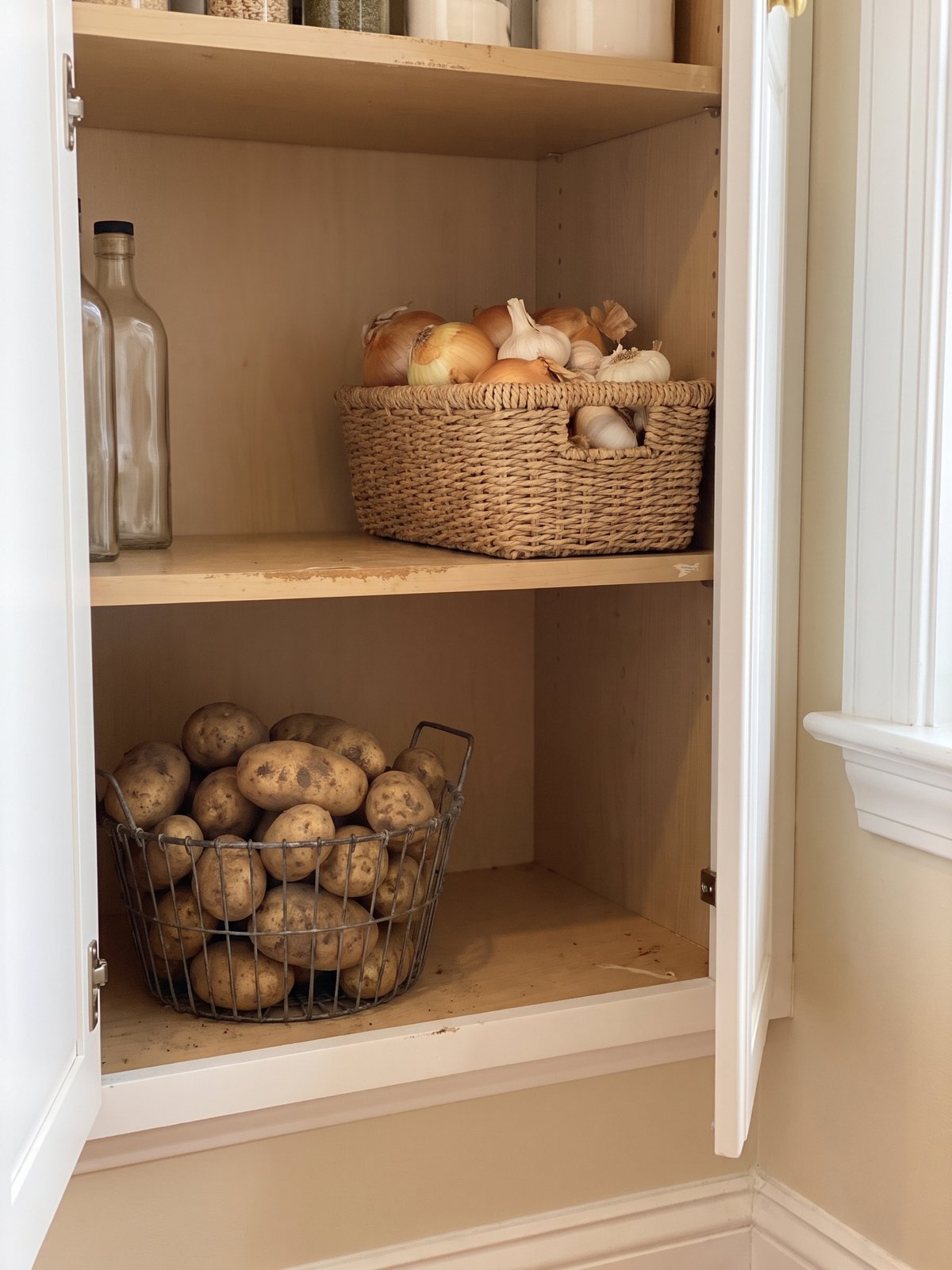
What works Keep potatoes in a cool, dark, airy cabinet, unwashed and out of the fridge. Keep onions and whole garlic bulbs in a dry, airy spot in their own basket or mesh bag. Do not store the onions and potatoes in the same bin.
Illinois Extension says onions and potatoes do not play well together, so keep them apart. One clear reason is that they want opposite air.
Potatoes keep best in damp air, so they do not shrivel. Onions want drier air, and damp air makes them grow roots and rot. USDA’s storage handbook gives potatoes far damper air than onions, so in one bin, one of them is always unhappy.
Look for a pantry shelf or cabinet that stays cool and has some air moving through it. Potatoes USA says to skip the spot under the sink, next to appliances like the stove, and any sunny counter.
Set the potatoes in an open bin, basket or bag that lets air in but keeps light out. Do not wash them until you are ready to cook, because Potatoes USA says dampness makes them spoil early.
Cold turns some of a potato’s starch into sugar. That gives it a sweet taste, and it can make the potato darken when you cook it. A cool cabinet is the sweet spot, not the fridge.
Keep regular yellow, white and red onions in a separate basket or mesh bag, in a dry spot with air around them. Keep them away from the potatoes.
What it looks like: firm, dry onions sitting loose with room around them.
Sweet onions are the mild ones sold in late summer and early fall. Purdue Extension says to store them loose in the fridge, where they keep for a few weeks.
Leave the garlic bulb whole and set it in a dry, airy spot at room temperature. Break off cloves only as you need them. Garlic’s smell moves easily to other food, so give it its own little bowl.
What it looks like: a firm bulb with dry, papery skin. Once a bulb feels soft or light, it is past its best.
Pull out anything that has gone soft, moldy, shriveled or wet. Cut small sprouts off firm potatoes, and use sprouting onions soon, because Purdue says they go downhill fast once they sprout.
If your onions or potatoes still go bad early, one of these is usually why.
We may earn a small fee from these links. It never changes the picks or your price.
They let air reach onions and garlic, and you can hang them in a pantry. A 5-pack ran $9.89, and a 6-pack of cotton mesh bags was $10.99, at Walmart.com on 11/7/2026.
They give each one its own bin in a single stack. Sets ran $23.98 to $39.98 at Walmart.com on 11/7/2026.
Two baskets you already own will do the job. If you need something:
The free Kitchen and Laundry Rescue Guide has a fridge card with our checked food storage tips, ready to print and keep where you cook.
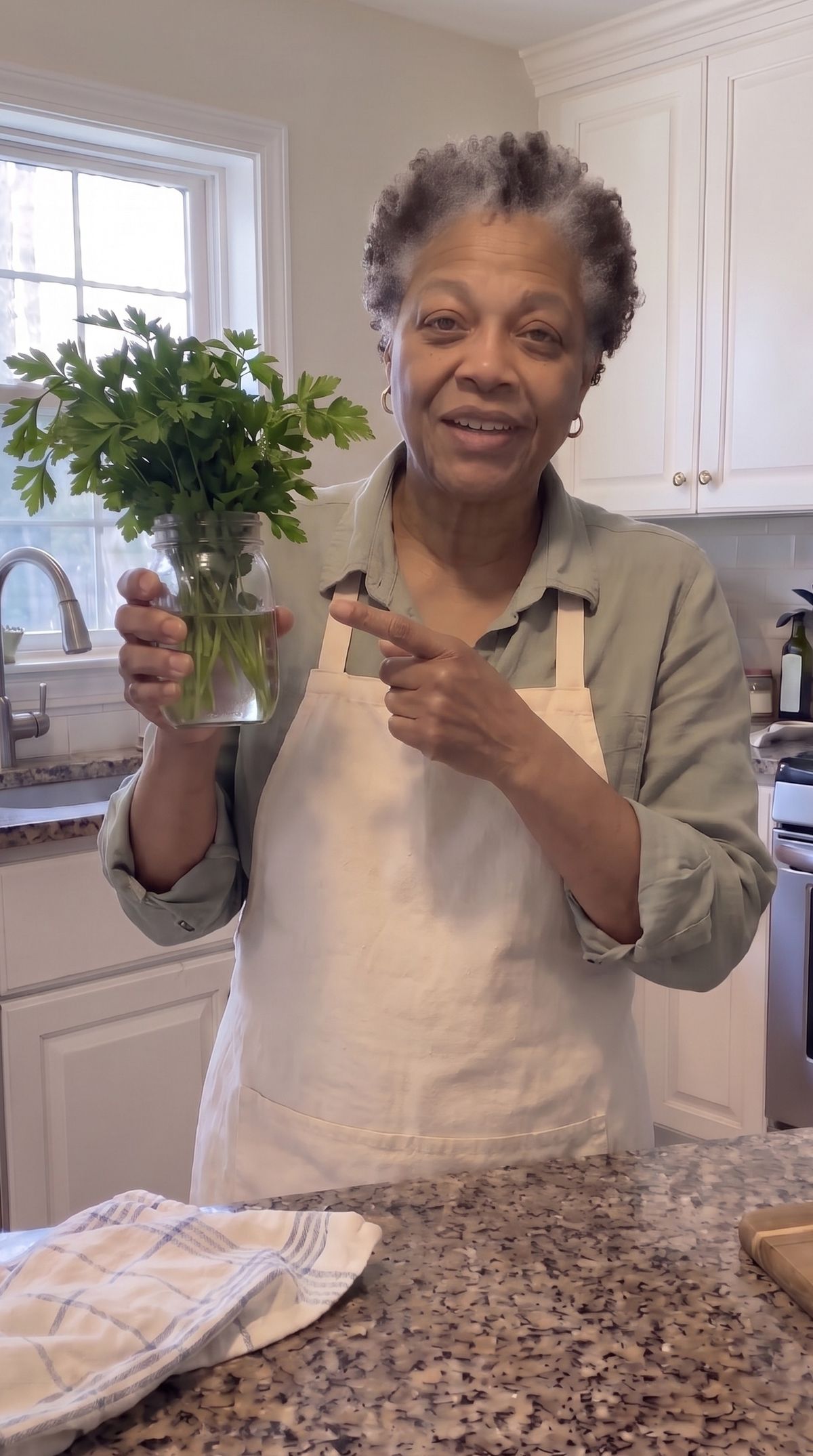
Here is what is going on. Potatoes, onions and garlic are all still alive in your pantry, resting until they get a signal to grow. Your job is to keep them resting.
Potatoes react to three things. Light turns them green, warmth makes them sprout, and cold turns their starch into sugar. A cool, dark cabinet keeps all three away.
Onions and garlic rest best when the air is dry. Damp air wakes them up, so they grow roots and can start to mold. Think of a sleeve of crackers left open on a humid day. It goes soft, while the same crackers stay crisp in dry air.
So many of us keep onions and potatoes together in one bag, because that is how a lot of us were taught. Then one day you reach in and find a soft, sprouted onion and a potato that has turned green.
A word from Denise
All it takes is two baskets instead of one. Give each its own spot, keep the potatoes in the dark, and look through both every week.
No. Illinois Extension says to keep them apart. Potatoes keep best in damp air, and onions want dry air, so storing them together makes the onions more likely to root and rot.
If the potato is still firm and the sprouts are small, Iowa State Extension says you can cut away the sprouts and any green parts and use the rest. If it has shriveled and the sprouts are long, throw it out.
No. Cold turns starch into sugar, so they taste sweet and can darken when you cook them. USDA’s FoodKeeper notes the same thing. Keep them in a cool, dark cabinet instead.
A whole bulb keeps about a month in the pantry, USDA’s FoodKeeper says. Once you break cloves off the bulb, FoodKeeper gives them 3 to 14 days in the fridge.
I’m Denise, and I explain home fixes the way a friend would at your kitchen table. Every tip I share is written from the sources listed on its page and checked against them before it goes up.
Sources opened and checked on November 7, 2026.
Every claim on this page, the source behind it and what the check found. Kept open for anyone who wants to look under the hood.
| Claim | Source | What the check found |
|---|---|---|
| Potatoes: cool, dark, dry, well ventilated; not in the fridge | Sources 5, 6, 8 | Matches the source. |
| Avoid under the sink, next to appliances and countertop sun | Source 6 | Matches the source. |
| Do not wash potatoes until ready to cook (dampness leads to early spoilage) | Source 6 | Matches the source. |
| Cold turns starch to sugar: sweet taste, darkening when cooked | Sources 4, 5, 6 | Matches the source. |
| Light causes greening; solanine tastes bitter | Sources 2, 6, 8 | Matches the source. |
| Glycoalkaloids (solanine) are toxic, also form with bruising and sprouting, heat stable, barely broken down by cooking | Source 2 | Matches the source. |
| Cut away slight green; cut away sprouts | Sources 6, 11 | Matches the source. |
| Toss a potato if green goes deeper into it, or if sprouts are 1 inch or more and it has shriveled | Source 11 | Matches the source. |
| Warm potatoes sprout and shrivel | Source 5 (above 45°F) | Matches the source. |
| Potatoes keep best in damp air (95 to 99%) so they do not shrivel | Source 2 | Matches the source (commercial storage figure). |
| Onions want drier air (65 to 75%); high humidity makes roots; high humidity with heat increases rot | Source 1 | Matches the source (commercial storage figures). |
| Keep onions and potatoes apart | Source 10 | Matches the source. |
| Pantry times: potatoes 1 to 2 months, onions 1 month, garlic bulbs 1 month; cloves 3 to 14 days in the fridge | Source 4 | Matches the source. |
| Sweet onions sold in late summer and early fall; loose in the fridge for a few weeks | Source 7 | Matches the source. |
| Onions go downhill quickly after sprouting | Source 7 | Matches the source. |
| Garlic at room temperature with low humidity, good airflow; soft and spongy after 1 to 2 months | Sources 3, 8 | Matches the source. |
| Keep bulbs whole; break off cloves as needed | Source 4 (store unbroken bulbs in the pantry, cloves in the fridge) | Matches the source. |
| Garlic odor transfers; store separately | Source 3 | Matches the source. |
| Damp air makes garlic mold and root | Source 3 | Matches the source. |
| Firm bulb with dry, papery skin; soft or light means past its best | Source 3 (soft, spongy; decayed bulbs light in weight) | Matches the source. |
| Garlic in oil: botulism risk; low-oxygen conditions; refrigerate, use within 4 days or freeze; not at room temperature | Source 9 | Matches the source. |
| Lemon juice and vinegar not tested as acidifiers for garlic oil | Source 9 | Matches the source. |
| Mold spreads quickly in fruits and vegetables; check nearby items | Source 12 | Matches the source. |
| Crackers comparison | Everyday picture for Sources 1 and 3 (damp air brings roots and mold) | Matches the source (comparison for a sourced fact). |
| Prices: hanging mesh bags 5-pack $9.89, cotton mesh 6-pack $10.99; stackable potato and onion bins $23.98 to $39.98 | Source 13, read on November 7, 2026 | Matches the source. Dated Walmart.com online. Target prices cut (Target pages would not load); Target links kept with no price |