A word from Denise
It does not take any special gadget to fix it. Look at your fruit once a day, give the avocados a gentle squeeze, and move whatever is ripe into the fridge.
Every tip here is checked against the sources listed at the bottom.
 By Denise. Checked on November 7, 2026 against the sources at the bottom of this page.
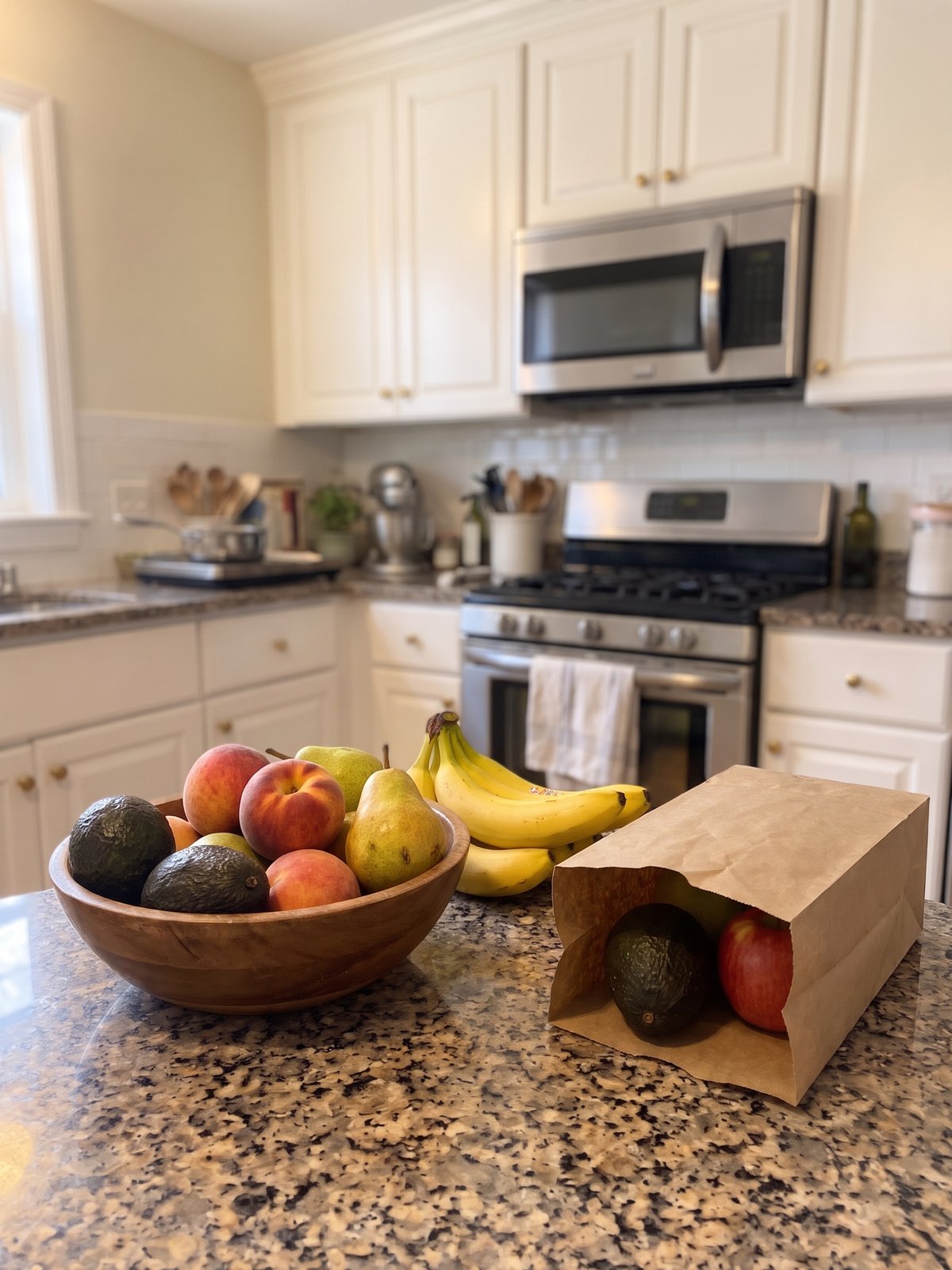
What works Ripen bananas, avocados, peaches, nectarines, plums and pears on the counter, out of direct sun. Once everything but the bananas is ripe, move it to the fridge to buy a few more days. Keep fruit away from lettuce, and use a paper bag with an apple to ripen avocados faster.
This list comes from a University of California guide to storing fruit at home.
| Where it goes | Fruit |
|---|---|
| Counter only | Bananas, mangoes, tomatoes, citrus |
| Counter until ripe, then the fridge | Avocados, peaches, nectarines, plums, pears, kiwifruit |
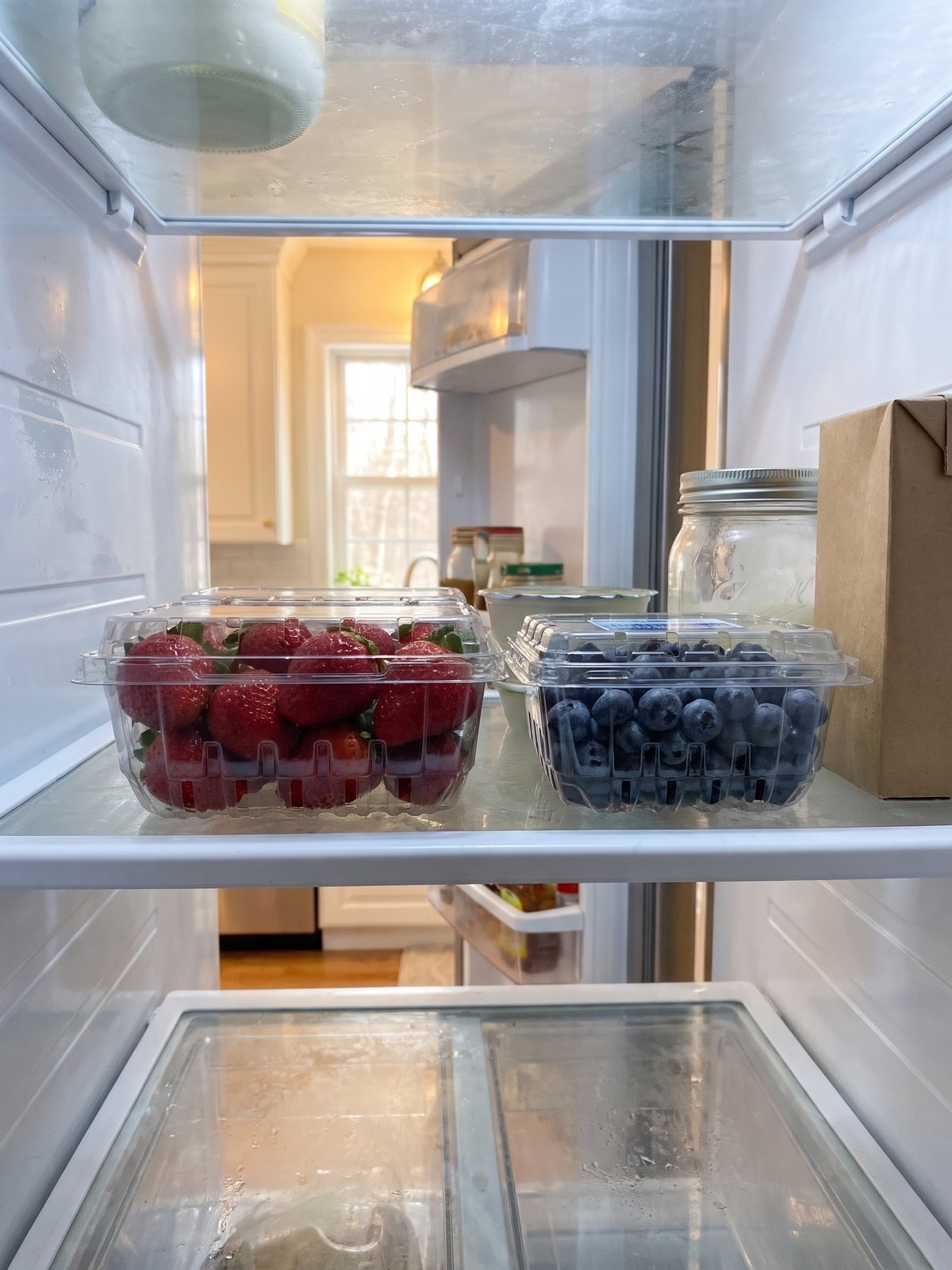
| Fridge right away | Berries, cherries, grapes |
Pick a spot where the sun does not hit the fruit, so it does not get too warm. Use an open bowl or basket, not a sealed plastic bag. The University of California says a sealed bag on the counter slows ripening and can bring on off smells and rot.
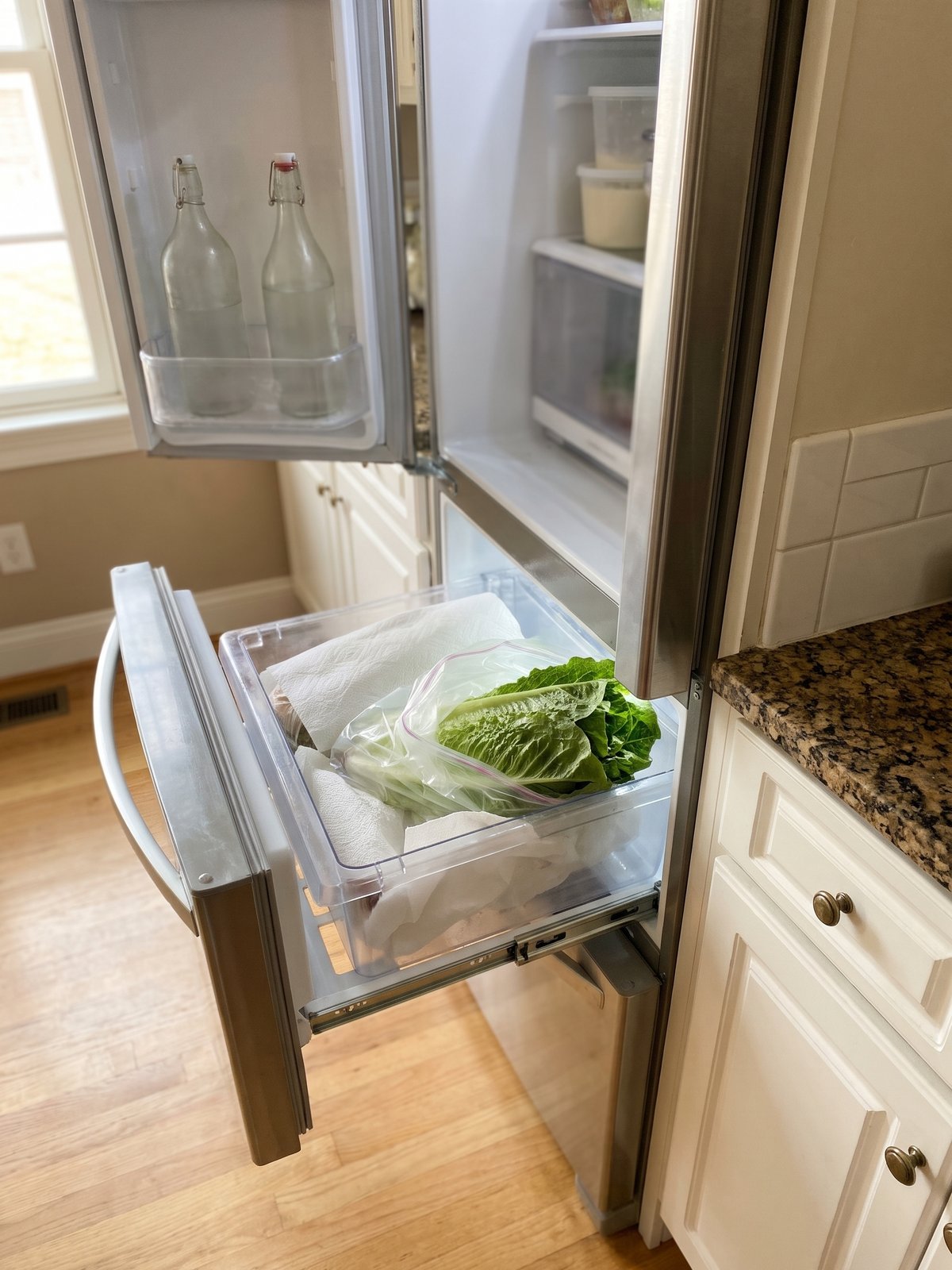
Ripening fruit gives off a gas called ethylene, and it can spoil vegetables that are sensitive to it. Penn State says lettuce gets rust colored spots, and carrots can turn bitter. Keep the fruit bowl away from the greens, and use separate fridge drawers for fruit and vegetables.
Apples and pears are big ethylene makers. Keep them a little apart from the bananas and avocados, unless you want those to ripen faster.
Hold the avocado in your palm and press gently. A ripe one feels firm but gives a little. Do not go by color alone, because the California Avocado Commission says some kinds stay light green even when ripe.
What it looks like: a slight give under your fingers. Hard as a rock means it needs more days.
Once avocados, peaches, nectarines, plums or pears are ripe, put them in the fridge. That buys you a few more days to eat them.
Bananas do best on the counter. The University of California says bananas kept in the fridge get black skin and never get properly sweet. Once they are ripe, USDA says you can move them to the fridge for about 3 more days.
What it looks like: in the fridge, the peel turns black. That is expected.
When you need an avocado in a few days, put it in a brown paper bag with an apple and leave it on the counter. The California Avocado Commission says a paper bag at room temperature ripens avocados in about 2 to 5 days, and an apple speeds it up.
What it looks like: a closed paper bag sitting on the counter. Check it once a day with a gentle squeeze.
If you only use half, sprinkle the cut side with lemon juice, lime juice or white vinegar. Wrap it tightly in plastic wrap or put it in an airtight container, and refrigerate it.
What it looks like: the cut side wrapped snugly, with the plastic pressed right against it.
If your fruit still goes too fast or too slow, one of these is the likely reason.
We may earn a small fee from these links. It never changes the picks or your price.
It gives bananas their own spot on the counter. They ran $3.98 to $12.95 at Walmart.com on 11/7/2026.
They keep ripe fruit in one place, with a lid and an inner basket. Sets of 3 to 5 ran $13.39 to $18.99 at Walmart.com on 11/7/2026.
You do not need anything new for this. If you want a little help:
The free Kitchen and Laundry Rescue Guide has a fridge card with our checked food storage tips, ready to print and stick on the fridge door.

Here is what is going on. Many fruits keep ripening after they are picked. As they ripen, they give off ethylene, a gas you cannot see or smell, and ethylene helps nearby fruit ripen too.
That is why one ripe fruit in a bowl can hurry along the rest. It is a little like one person yawning in a room, until everybody is yawning. Apples and pears are big ethylene makers, and avocados and peaches make plenty too.
You can use that on purpose. A paper bag keeps the gas around an avocado, and an apple adds more, so it ripens faster. When you want things to slow down, the fridge buys you a few more days on ripe fruit.
Bananas are the exception people argue about. The grain of truth in “never refrigerate bananas” is that the fridge keeps them from getting sweet. Once they are ripe, the fridge buys about 3 more days, and the peel turns black.
So many of us buy a beautiful bunch of bananas on Sunday and find a sad brown pile by Thursday. The avocados are either rock hard or past saving, never ready on the night you need them.
A word from Denise
It does not take any special gadget to fix it. Look at your fruit once a day, give the avocados a gentle squeeze, and move whatever is ripe into the fridge.
Only once they are ripe. The University of California says bananas in the fridge get black skin and do not get properly sweet. Ripe bananas keep about 3 more days in the fridge, but the skin will turn black.
Put it in a brown paper bag with an apple and leave it on the counter. The California Avocado Commission says that takes about 2 to 5 days at room temperature, and it does not recommend the microwave.
The California Avocado Commission says a whole ripe avocado keeps about 2 to 3 days in the fridge. USDA’s FoodKeeper gives 3 to 4 days.
USDA’s FoodKeeper does not recommend freezing whole avocados. Bananas freeze well, for about 2 to 3 months.

I’m Denise, and I explain home fixes the way a friend would at your kitchen table. Every tip I share is written from the sources listed on its page and checked against them before it goes up.
Sources opened and checked on November 7, 2026.
Every claim on this page, the source behind it and what the check found. Kept open for anyone who wants to look under the hood.
| Claim | Source | What the check found |
|---|---|---|
| Counter only: bananas, mangoes, tomatoes, citrus | Source 1 | Matches the source. |
| Ripen on the counter, then fridge: avocados, kiwifruit, nectarines, peaches, pears, plums | Source 1 | Matches the source. |
| Fridge right away: berries, cherries, grapes | Source 1 | Matches the source. |
| Out of direct sun so produce does not get too warm; sealed plastic bags on the counter slow ripening and can increase off odors and decay | Source 1 | Matches the source. |
| Ethylene is an odorless, colorless gas; rust-colored spots on lettuce; bitter carrots; keep sensitive produce apart | Source 2 | Matches the source. |
| Apples and pears are big producers; avocados, nectarines, peaches also produce a lot | Source 2 | Matches the source. |
| Ethylene promotes ripening; an apple speeds ripening | Sources 1, 4 | Matches the source. |
| Separate fridge drawers for fruit and vegetables | Sources 1, 2 | Matches the source. |
| Ripe avocado is firm but yields to gentle pressure; color alone can mislead, some kinds stay light green | Source 4 | Matches the source. |
| Ripe fruit moved to the fridge gets a few more days | Source 1 (ripen, then refrigerate); Source 3 times | Matches the source. |
| Fridge times: ripe avocados 3 to 4 days; peaches, nectarines, plums, pears 3 to 5; ripe bananas 3 days, skin blackens | Source 3 | Matches the source. |
| Ripe uncut avocado 2 to 3 days in the fridge | Source 4 | Matches the source. Differs slightly from Source 3, both shown in the FAQ |
| Bananas in the fridge get black skin and do not gain good sweetness | Source 1 | Matches the source. |
| Paper bag at room temperature (65 to 75°F) ripens avocados in about 2 to 5 days; apple or kiwi speeds it | Source 4 | Matches the source. |
| Microwave ripening not recommended | Source 4 | Matches the source. |
| Cut avocado: lemon juice, lime juice or white vinegar; wrap tightly or airtight container; refrigerate | Source 4 | Matches the source. |
| Freezer: bananas 2 to 3 months; avocados freezing not recommended | Source 3 | Matches the source. |
| Wash under running water before eating; no soap, detergent or produce wash | Sources 1, 5 | Matches the source. |
| Soaking not recommended (cross-contamination) | Source 1 | Matches the source. |
| Moldy soft fruit (peaches, tomatoes): discard | Source 6 | Matches the source. |
| Cut away bruised or damaged areas | Source 5 | Matches the source. |
| Refrigerate cut fruit promptly; leftovers within 2 hours | Source 1 | Matches the source. |
| Yawning comparison | Everyday picture for Sources 2 and 4 (ethylene from one fruit speeds ripening in others) | Matches the source (comparison for a sourced fact). |
| Prices: banana holders $3.98 to $12.95; produce containers $13.39 to $18.99 | Source 7, read on November 7, 2026 | Matches the source. Dated Walmart.com online. Target prices cut (Target pages would not load); Target links kept with no price |