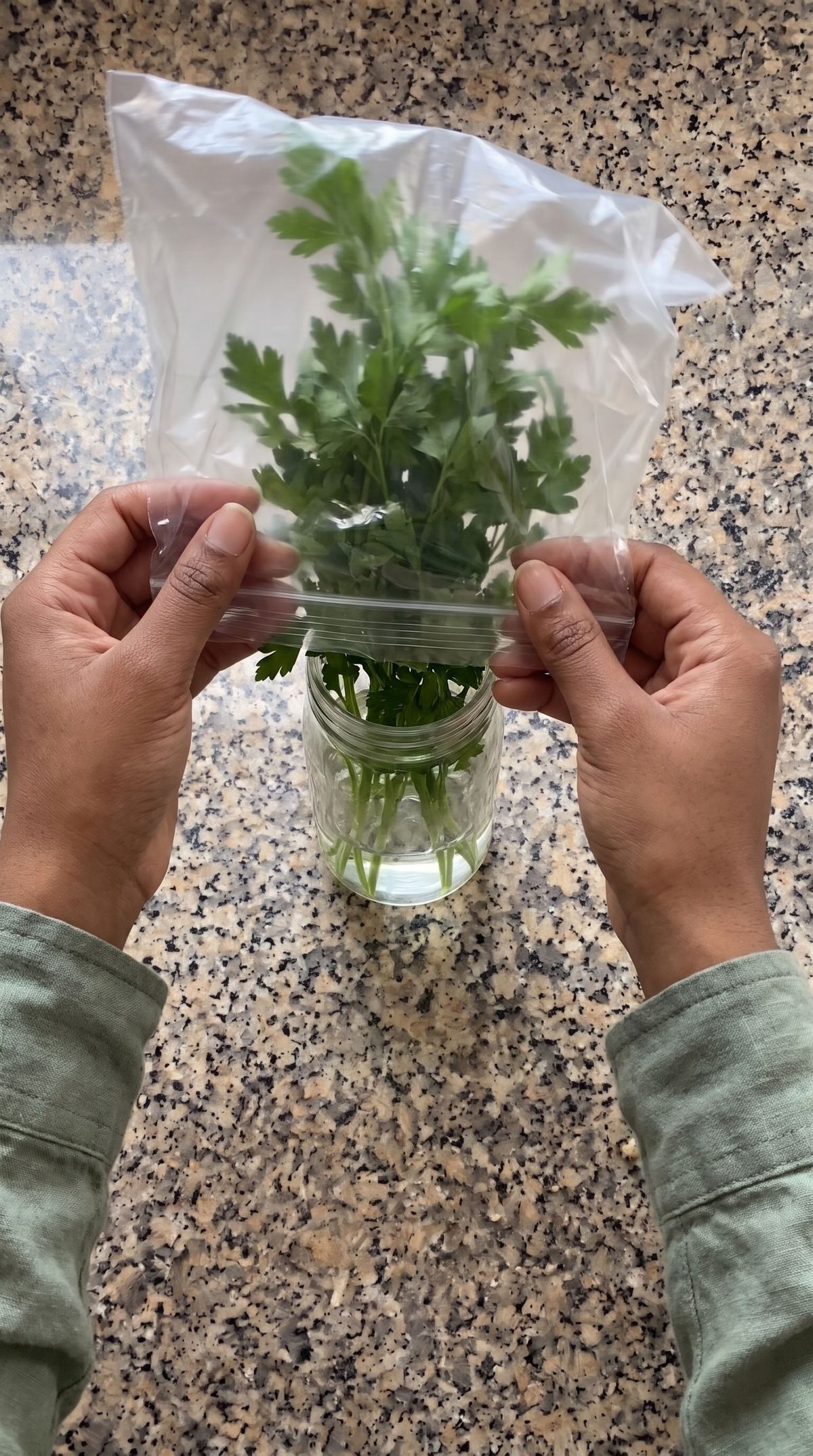
| Soft herbs and green onions: jar with 1 to 2 inches of water, bag over top, rubber band, change water daily | Source 1; Source 2 (trim stems, jar, bag) | Matches the source. |
| Jar goes in the fridge | Source 2 (“Store in the refrigerator or on the kitchen counter”); Source 4 (herbs other than basil stored as cold as possible) | Matches the source. UC Davis does not name a location |
| Tender herbs in water with leaves kept dry; parsley, cilantro, dill named | Source 3 | Matches the source. Mint is also on Arkansas’s tender list but is left out on purpose |
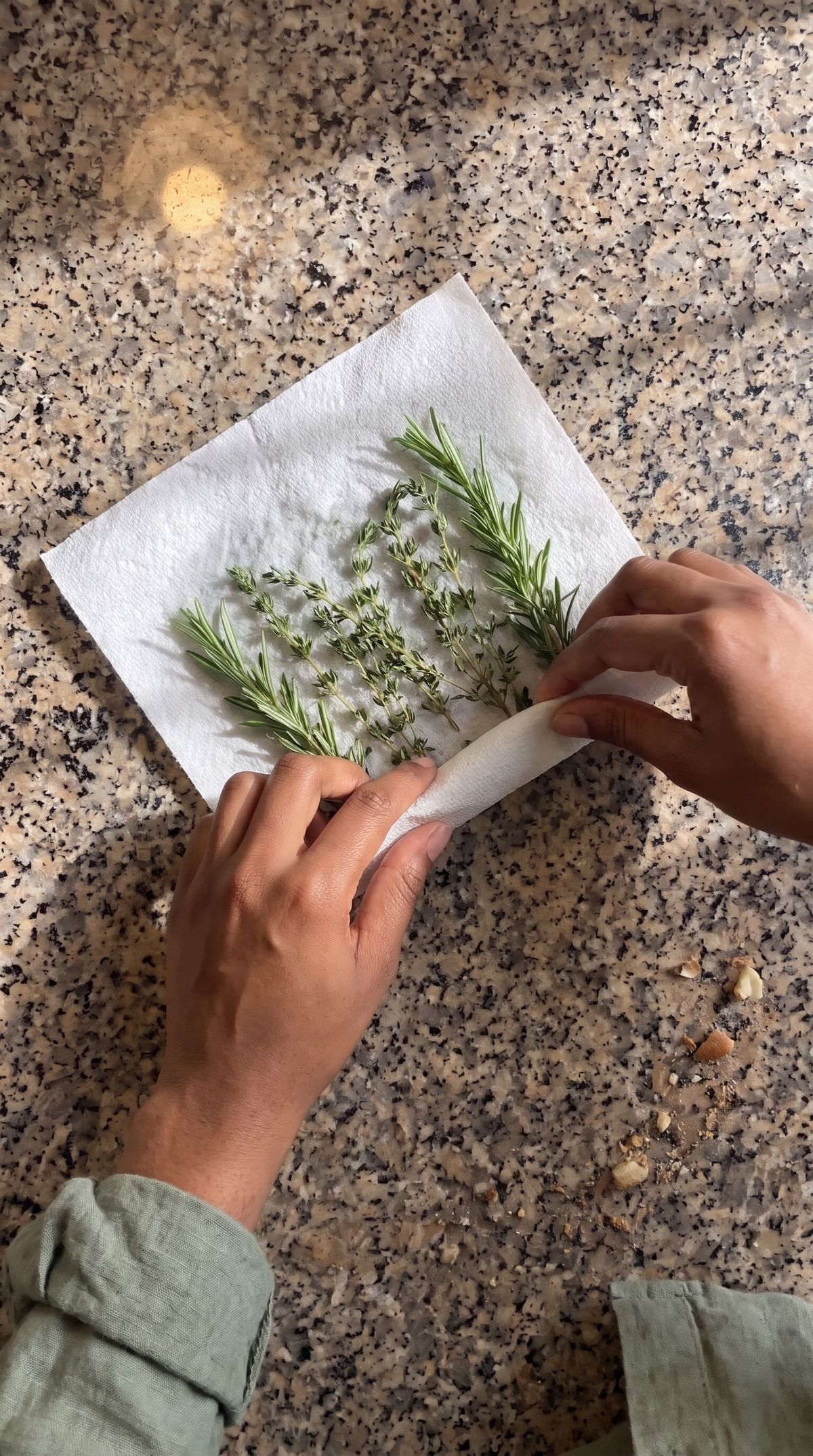
| Woody herbs (rosemary, thyme, oregano, sage) in a slightly damp, not soaking, paper towel in the fridge | Source 3; Source 2 (damp towel in zip bag) | Matches the source. |
| Whole sprigs, do not strip leaves | Source 4 (bruised leaves rot sooner); no source says to strip the leaves | Matches the source. |
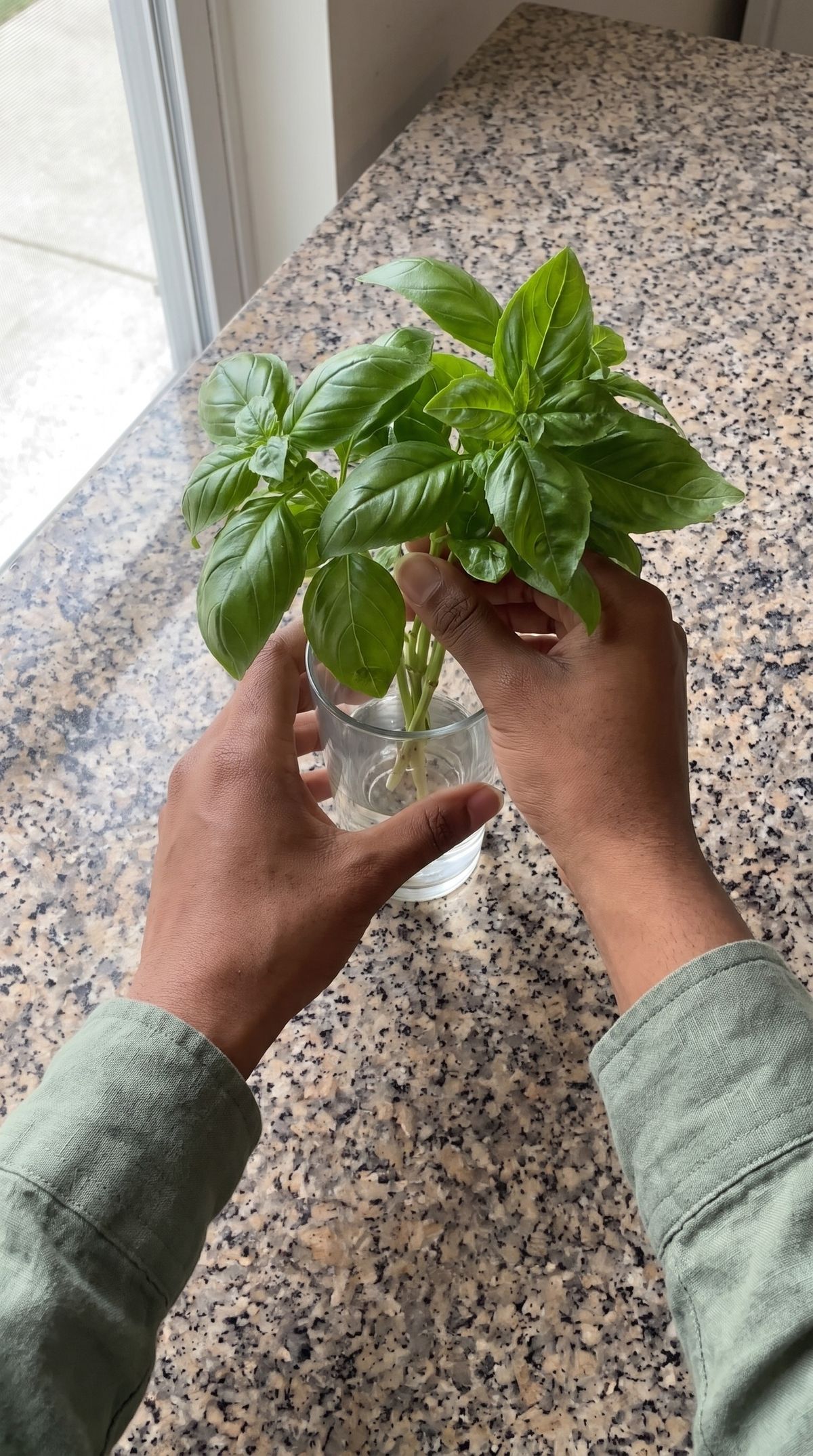
| Basil: jar of water on the counter like a bouquet; out of direct sun | Sources 1 and 3; Source 2 (“away from heat, moisture and direct sunlight”, general herb advice) | Matches the source. |
| Basil damaged below 54°F; leaves brown, then necrosis and blackening | Source 4 | Matches the source. |
| Basil from a refrigerated store case can stay in the fridge | Source 1 | Matches the source. |
| Other herbs should be stored as cold as possible without freezing | Source 4 (chervil, coriander, dill, savory “not sensitive to chilling”) | Matches the source. For those; extended to rosemary and thyme via Source 5 (stored at 32°F) |
| USDA ideal storage: coriander (cilantro) and dill 2 weeks at 32°F; rosemary, sage, thyme 2 to 3 weeks | Sources 4 and 5 | Matches the source. |
| Home fridge: about one to two weeks for soft herbs | Source 6 (up to a week, towel method); Source 4 (2 weeks at ideal 32°F) | Matches the source. As a range; “two weeks or more” in the title is the good-care best case |
| Basil up to ten days on the counter | Source 6 | Matches the source. |
| Rot starts at damaged leaves and cut stem ends | Sources 4 and 5 | Matches the source. |
| Remove discolored or wilted leaves | Source 1; Source 7 (cut away damaged areas) | Matches the source. |
| Wash with running water, rub gently, no soap, detergent, bleach or produce wash; pat dry | Sources 3 and 7 | Matches the source (official). |
| Vinegar rinses not needed and not a sanitizer | Source 3 | Matches the source. |
| Store dry, wash before use | Source 3 (keep leaves dry) | Matches the source. |
| Fridge at 40°F or below | Source 7 | Matches the source (official). |
| Good herbs are fresh green with no yellowing | Source 5 (quality criteria: fresh and green, no yellowing, decay or damage) | Matches the source. |
| Bag fogging = humid air; humidity keeps leaves from drying | Source 4 (95 to 100% relative humidity is the ideal) | Matches the source. For humidity; the fog cue is an observation, unsourced |
| Check and re-dampen the towel every few days | Practical step | Practical step, unsourced |
| Herbs that are limp or bruised at purchase will not last as long | Source 4 (decay at damaged leaves) | Matches the source. By inference |
| “When in doubt, throw them out” | Common USDA food safety phrase; not opened for herbs specifically | Phrase kept as advice, no source claim in copy |
| Mint left out entirely | Editorial choice (see | Applied |
| No “fridge burn” | Wording choice | Applied (“cold damage”) |
| Prices: up&up gallon bags 40 ct $1.99 to $3.99; Ball 16 oz wide mouth 12-pack $14.49; Kilner Fresh Herb Keeper $19.99 | Source 8, opened November 6, 2026 | Dated, Target.com online |
| Thrown-out herbs are money in the trash | Household savings framing only | No figure claimed |