A word from Denise
The fix is not a soak or a special gadget. It is two minutes at the counter the day you get home, picking out the bad ones before they ruin the good ones. Make that sort the first thing you do when the groceries come in.
Every tip here is checked against the sources listed at the bottom.
 By Denise. Checked on November 7, 2026 against the sources at the bottom of this page.
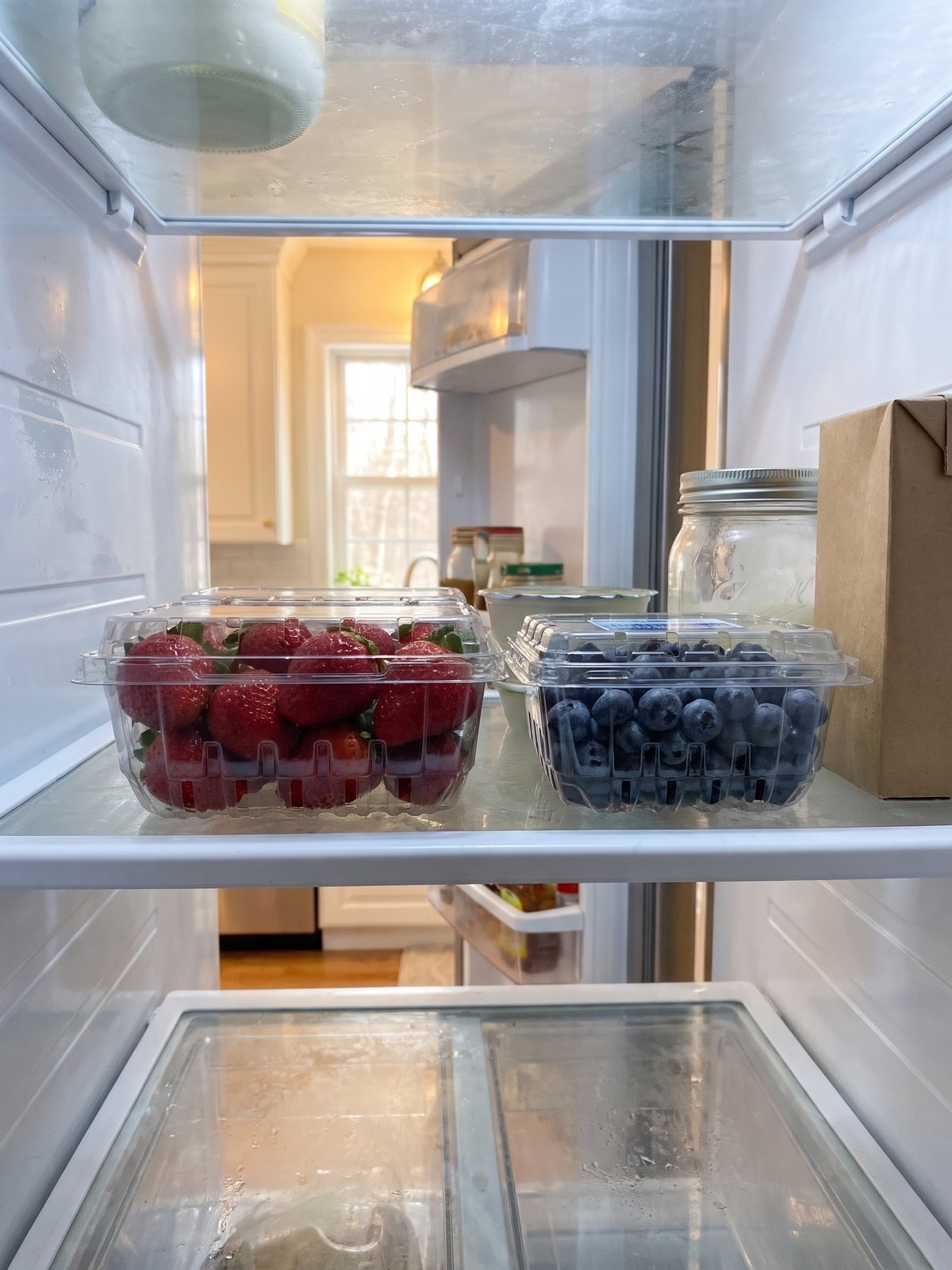
What works The day you bring berries home, pick out any that are moldy, crushed or spoiled. Put the rest back in their vented clamshell without washing them, and keep them in the coldest part of the fridge. Rinse them under cold running water right before you eat them.
You have probably seen people soak berries in vinegar water to make them last. The grain of truth is that washing does help: FDA says it can reduce the bacteria on produce, though it will not get rid of all of them. But the University of Arkansas Extension says a vinegar rinse is not needed for routine washing, and vinegar is not a sanitizer.
You may also have seen a hot water dip. We could not find USDA, FDA or a university extension service recommending it for home use, so it is not on this page. Plain cold running water, right before you eat, is the fix.
As soon as you get home, tip the berries onto a tray or plate lined with a paper towel. Spread them in one layer so you can see each one.
Take out any berry that is moldy, crushed or spoiled. The University of Arkansas says damaged berries make the rest of the box go bad faster, so this is the step that matters most. Moldy berries go straight into the trash, and do not sniff them.
What it looks like: the good berries look bright and whole. The bad ones look fuzzy, mushy or crushed.
Do not rinse the good berries yet. University extension guides from Arkansas and Illinois both say to wait until right before you eat them.
Return the good berries to their clamshell, or to a container with holes that let air move through. The University of Arkansas says clamshells protect the fruit and let some air flow. If you moved strawberries to a bowl, cover it loosely.
Set the container in the coldest part of your fridge, which should be at 40°F or below. Do not leave strawberries out at room temperature for more than a few hours.
Put the berries you plan to eat in a colander and rinse them under cold running water. Do not let them sit in a bowl of water, because Illinois Extension says soaked berries lose color and flavor.
Spread the rinsed berries on a clean paper towel or cloth and gently pat them dry.
Pull or cut off the green caps after you rinse strawberries, not before.
What it looks like: a rinsed, dried berry with its green cap just taken off.
If your berries still mold fast, one of these is the likely reason.
We may earn a small fee from these links. It never changes the picks or your price.
These are vented boxes with a basket inside. Sets of 3 to 5 ran $13.39 to $18.99 at Walmart.com on 11/7/2026.
It is a single vented box sized for berries. The Hutzler 2-pint Berry Keeper was $19.99 at Walmart.com on 11/7/2026.
The clamshell from the store works fine. If yours keep getting crushed, these are sturdier.
The free Kitchen and Laundry Rescue Guide has a fridge card with our checked food storage tips, ready to print and stick on the fridge door.

Here is what is going on. Berries are soft, thin-skinned fruit, and mold can grow on them even in the fridge. A crushed berry is where trouble gets started, and once one berry molds, the spores have most likely spread to its neighbors.
So the job is to give mold as few chances as you can. Pulling out the damaged berries takes away its easy start. Keeping them cold slows things down, and waiting to wash them keeps extra water off the fruit while it sits.
Think of it like one wet sheet of paper in a stack. Left alone, the sheets touching it get damp too. Take it out early, and the rest stay dry.
So many of us know this moment. You open the box two days after you bought it, and there is a gray fuzzy layer on the bottom berries.
A word from Denise
The fix is not a soak or a special gadget. It is two minutes at the counter the day you get home, picking out the bad ones before they ruin the good ones. Make that sort the first thing you do when the groceries come in.
No. Store them dry and unwashed, and rinse them under cold running water right before you eat them. Illinois Extension says to take the caps off after washing.
The University of Arkansas Extension says a vinegar rinse is not needed for routine washing, and vinegar is not a sanitizer. We did not find a USDA, FDA or extension page saying vinegar makes berries last longer.
Throw out the moldy berry and any that look soft or fuzzy. Illinois Extension says spores from one moldy berry can spread through the box, so check the rest closely and use them as soon as you can.
Not for long. Illinois Extension says not to leave strawberries at room temperature for more than a few hours, and the University of California lists all berries as fruit to refrigerate.

I’m Denise, and I explain home fixes the way a friend would at your kitchen table. Every tip I share is written from the sources listed on its page and checked against them before it goes up.
Sources opened and checked on November 7, 2026.
Every claim on this page, the source behind it and what the check found. Kept open for anyone who wants to look under the hood.
| Claim | Source | What the check found |
|---|---|---|
| Remove spoiled, moldy or crushed berries before storing; damaged berries make the rest go faster | Source 1 | Matches the source. |
| Do not wash until ready to eat | Sources 1, 2 | Matches the source. |
| Clamshells protect the fruit and allow some airflow | Source 1 | Matches the source. |
| Strawberries: loosely covered, coldest part of the fridge, 2 to 3 days at most | Source 2 | Matches the source. |
| Strawberries not at room temperature more than a few hours | Source 2 | Matches the source. |
| Fridge at 40°F or below | Source 4 | Matches the source. |
| Rinse in a colander under cold running water; do not let berries sit in water (they lose color and flavor) | Source 2 | Matches the source. |
| Pat dry with a clean cloth or paper towel | Source 4 | Matches the source. |
| Remove strawberry caps after washing | Source 2 | Matches the source. |
| Fridge times: strawberries, raspberries 2 to 3 days; blackberries 3 to 6; blueberries 1 to 2 weeks | Source 3 | Matches the source. |
| Frozen strawberries 8 to 12 months | Source 3 | Matches the source. |
| Vinegar rinse not needed for routine washing; not a sanitizer | Source 1 | Matches the source. |
| Washing can reduce bacteria but will not eliminate them | Source 4 | Matches the source. |
| Hot water dip: not recommended by any USDA, FDA or extension page found | Our search of USDA, FDA and extension pages, 11/6 to 11/7 | Matches the source. As “we could not find”; method left out |
| No soap, detergent, bleach or produce wash | Sources 1, 4 | Matches the source. |
| No soaking in the sink | Sources 1, 6 | Matches the source. |
| Moldy soft fruit: discard; do not sniff (respiratory trouble); check nearby items; mold spreads quickly | Source 5 | Matches the source. |
| One moldy berry can spread spores through the box | Source 2 | Matches the source. |
| Mold can grow in the fridge | Source 5 | Matches the source. |
| Choose bright red strawberries with fresh green caps; avoid packages with mold | Source 2 | Matches the source. |
| All berries go in the fridge | Source 6 | Matches the source. |
| Good berries bright and whole; bad ones fuzzy, mushy or crushed | Sources 1, 2 (moldy, crushed, spoiled; bright red) | Matches the source. |
| Wet sheet of paper comparison | Everyday picture for Sources 2 and 5 (spores spread from one berry to its neighbors) | Matches the source (comparison for a sourced fact). |
| Prices: produce containers $13.39 to $18.99; Hutzler Berry Keeper 2-pint $19.99 | Source 7, read on November 7, 2026 | Matches the source. Dated Walmart.com online. Target prices cut (Target pages would not load); Target links kept with no price |