A word from Denise
You catch a jar full, and three days later there they are again. You are not doing anything wrong. They are just hatching somewhere you have not looked yet.
Every tip here is checked against the sources listed at the bottom.
 By Denise. Checked on November 7, 2026 against the sources at the bottom of this page.
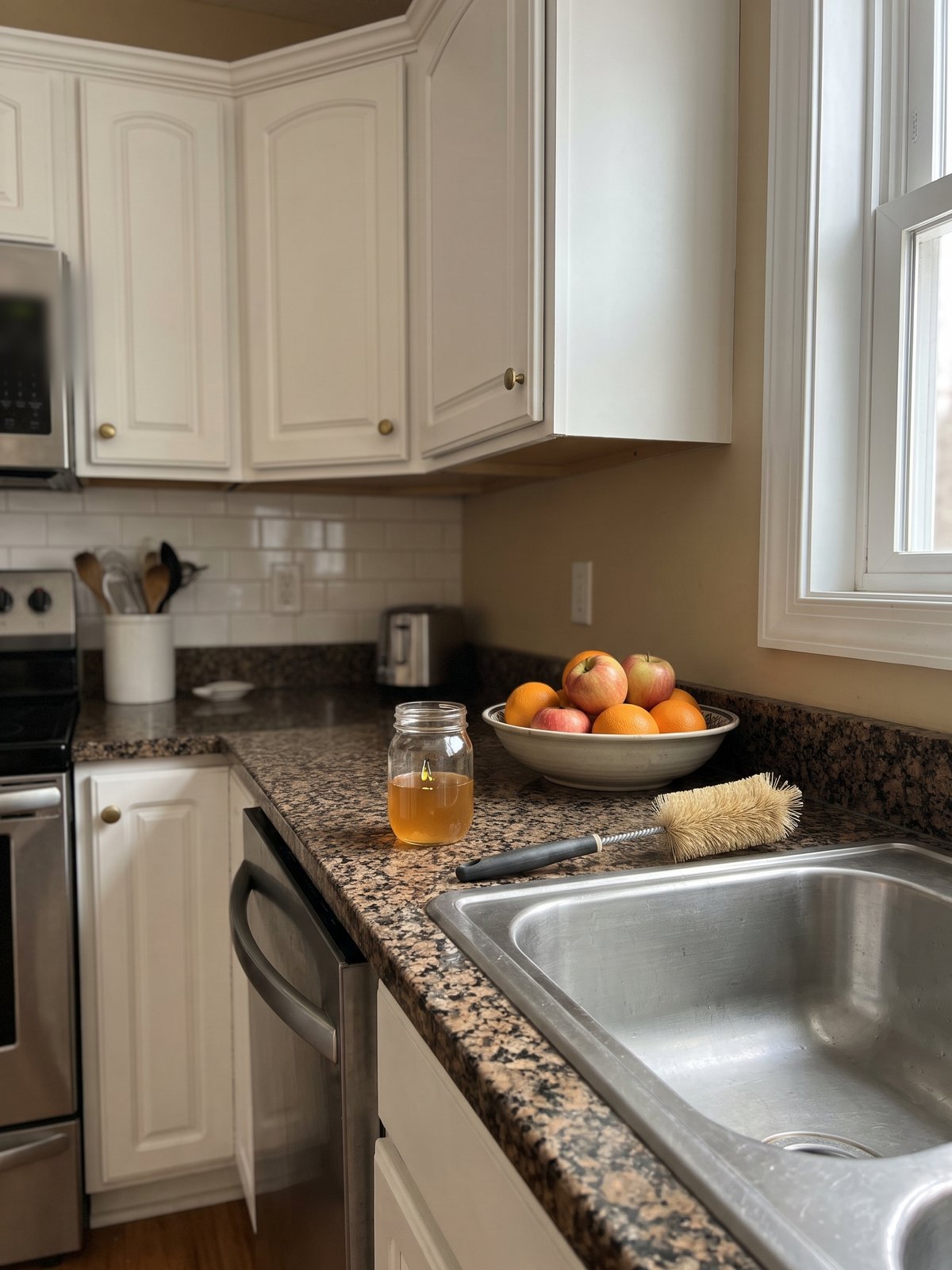
What works Set a cider vinegar trap with a few drops of dish soap to catch the grown flies. Then clear where they breed: ripe fruit, the trash can bottom, unrinsed recycling, sour rags and sometimes a drain. Scrub a breeding drain with a stiff brush and flush it with hot water.
Texas A&M AgriLife Extension says fruit flies are about 1/8 inch long and usually have reddish eyes. If the little flies at your bathroom sink are fuzzy, grayish and shaped like tiny moths, those are drain flies, which breed in the film that grows inside drains. The drain steps below go after that same film.
Pour a few ounces of apple cider vinegar (about 1/4 cup) into a small jar or bowl, and add a few drops of dish soap. Cover the top with plastic wrap and poke a few small holes in it with the tip of a pen. Set it wherever the flies gather.
Texas A&M says traps alone rarely control flies, but they catch adults while you clean and help you pinpoint where they come from. Keep the holes small, because Cornell says a trap opening should be under a quarter inch.
What it looks like: tiny flies floating in the vinegar. The soap breaks the surface of the liquid, so flies that land sink instead of standing on it. Cornell says to check the trap daily.
Eat ripe fruit, put it in the fridge, or throw it out. Cut away any cracked or bruised parts and toss them. Then look for produce stored out of sight, because the University of Kentucky says a single rotting potato or onion can raise a lot of flies.
Overripe fruit goes in an outside trash can, not the kitchen one.
Pull the bag out of the kitchen trash can and look at the bottom. Texas A&M says the wet bottom of a can, where a liner leaked, is a common breeding spot. Wash it with soap and water and let it dry before you put a new bag in.
Rinse bottles and cans before they go in the recycling, and empty kitchen compost often.
Wring out dish rags and sponges, let them dry all the way, and swap them out often. Hang the mop up off the floor to dry. Cornell says fruit flies can breed in mop heads and dish rags soaked with food or drink, and a sour, damp sponge is the same kind of spot.
Put a strip of clear packing tape across each drain you suspect, without covering the whole opening. Texas A&M says to leave some air space, because flies may not come up through a fully sealed drain. Check the tape the next morning.
What it looks like: if tiny flies are stuck to the tape, you have found a breeding drain.
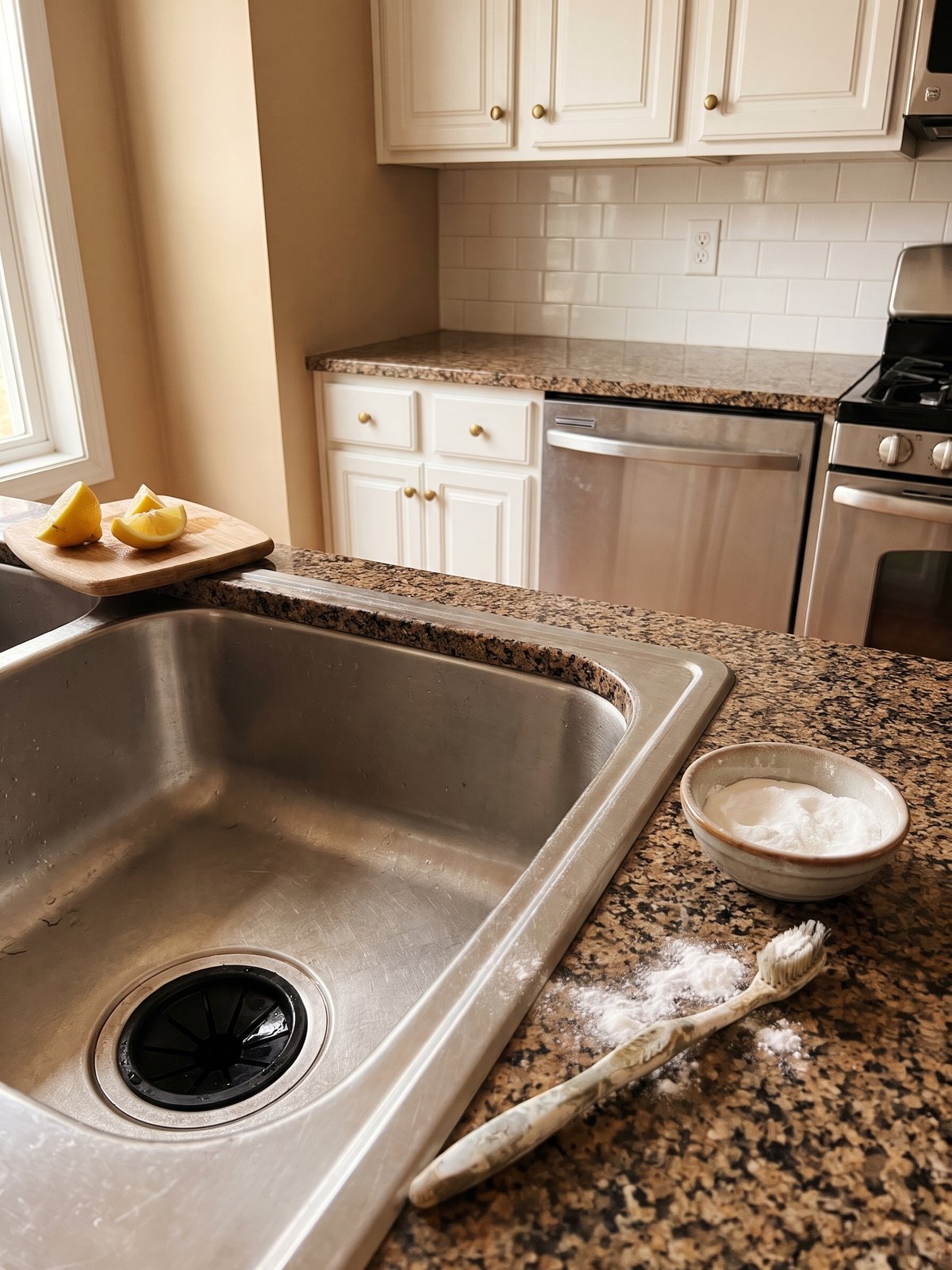
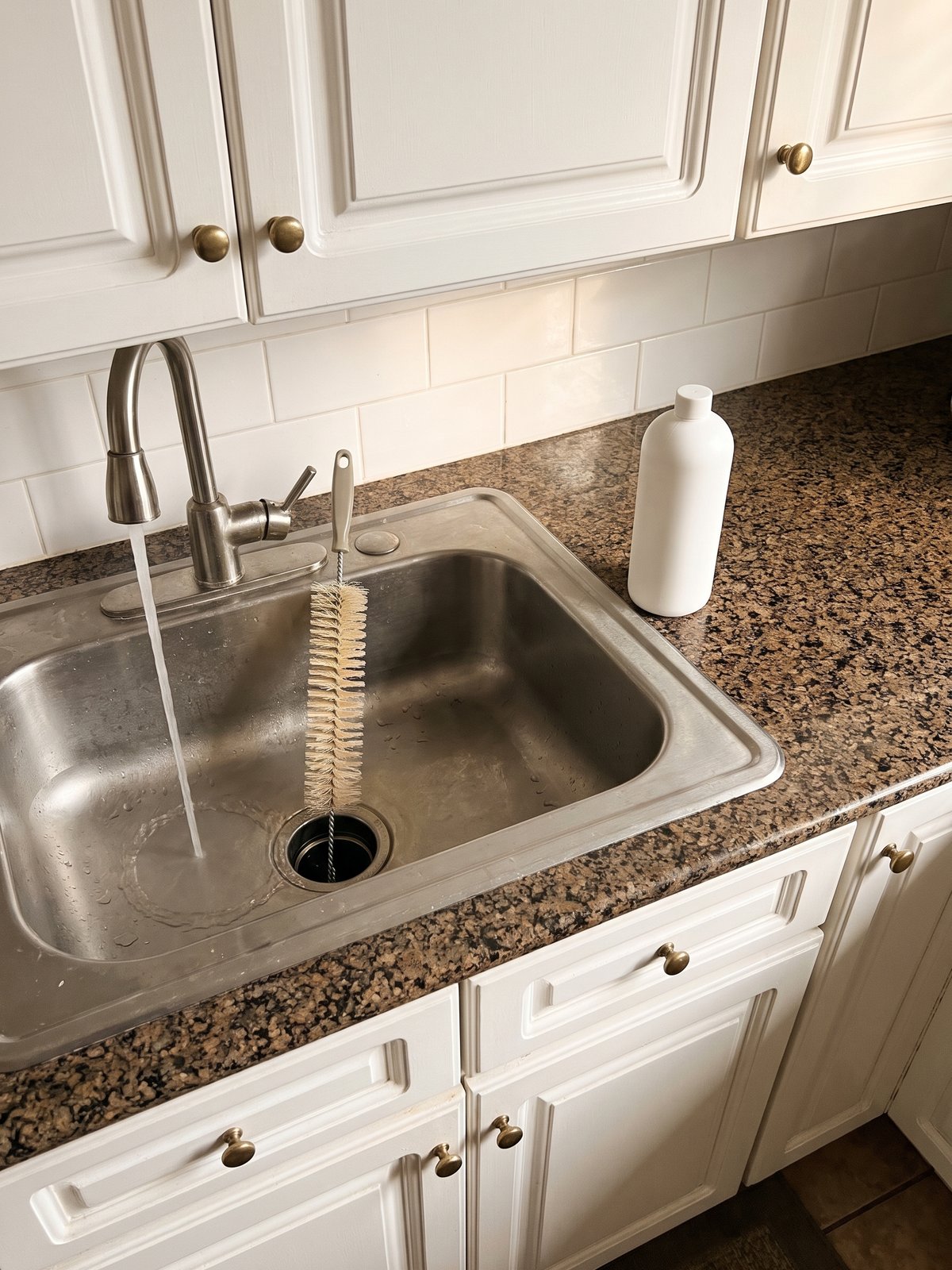
Put on gloves. Take out the drain stopper or strainer if it lifts out. Push a stiff, narrow brush down the drain and scrub the inside of the pipe as far as it reaches, which breaks up the film where the flies breed. Then flush the drain with hot water.
If you cannot reach the film with a brush, use a drain product made to break down that buildup. Use it exactly as its label says. Texas A&M says these products usually need repeat treatments over several weeks, so one dose is not the end of it.
If your home has a septic tank, make sure the label says the product works with septic systems.
Sometimes the flies keep coming even after a good cleanup. Here is what that usually means.
We may earn a small fee from these links. It never changes the picks or your price.
The bait for the trap. $1.29 at Target.com on 11/7/2026.
It fits down a sink drain to scrub the film. up&up Bristled Bottle Brush was $3.99 at Target.com on 11/7/2026.
Drano FlowGuard Enzymatic Build-Up Remover, 30 oz, was $12.34 (regular $12.99) at Target.com on 11/7/2026. Read its label for the dose, the wait time and septic use before you buy.
The free Kitchen and Laundry Rescue Guide has this fruit fly fix, the never-mix chart and nine more checked kitchen and laundry fixes, ready to print.
Fruit flies are not really after your fruit. Their young feed on the yeast that grows on food as it ferments (slowly breaks down and turns sour). Cornell says the larvae need that yeast. So anything sweet and going sour, from a soft banana to the slime in a drain, can be a nursery.
The numbers are why they seem to come out of nowhere. One female can lay about 500 eggs, and the University of Kentucky says the whole trip from egg to adult can take about a week.
That is why a trap alone never finishes the job. It is a little like mopping under a leaky faucet without turning off the water. The University of Wisconsin says the only way to stop them completely is to find and get rid of where they breed.
A word from Denise
You catch a jar full, and three days later there they are again. You are not doing anything wrong. They are just hatching somewhere you have not looked yet.
They can. The University of Kentucky lists drains and garbage disposals among their breeding sites. Tape a strip across part of the drain overnight; if flies are stuck to it in the morning, that drain needs a scrub.
No. UC Integrated Pest Management says bleach and boiling water do not remove the film where they breed, and Texas A&M says bleach is largely ineffective there. Scrub the drain with a stiff brush instead.
Texas A&M lists apple cider vinegar, wine, beer and bananas among good baits. Add a few drops of dish soap so the flies sink, and replace the bait every few days.

I’m Denise, and I explain home fixes the way a friend would at your kitchen table. Every tip I share is written from the sources listed on its page and checked against them before it goes up.
Sources opened and checked on November 7, 2026.
Every claim on this page, the source behind it and what the check found. Kept open for anyone who wants to look under the hood.
| Claim | Source | What the check found |
|---|---|---|
| Larvae feed on yeast from fermenting food | Sources 1, 3, 4 (rechecked November 7) | Matches the source. |
| About 500 eggs per female | Sources 2, 4, 5 (2 and 4 rechecked November 7) | Matches the source. |
| Egg to adult in about a week (UK, WSU); 8 to 10 days (UW) | Sources 2, 3, 5 | Matches the source. Hatch time left out on purpose |
| Eggs already laid can still become flies over about a week, so keep the trap out that long | Arithmetic from; Cornell (Source 4) says to keep checking and replacing bait | Matches the source. As reasoning from sourced facts |
| Cider vinegar plus a few drops of soap; soap breaks surface tension so landing flies drown | Source 1 (rechecked November 7) | Matches the source. |
| A few ounces of cider vinegar | Source 2 (rechecked November 7) | Matches the source. “About 1/4 cup” is a plain conversion (2 oz) |
| Plastic wrap with small pen holes | Source 1 (small entry ports make escape difficult) | Matches the source. As a form of the same trap |
| Opening under a quarter inch; check daily; replace bait every few days | Sources 4 and 1 (rechecked November 7) | Matches the source. |
| Traps help pinpoint the source; bait traps alone rarely provide adequate control | Source 1 (rechecked November 7) | Matches the source. |
| Eat, discard or refrigerate ripe produce; cut away damaged parts | Source 2 (rechecked November 7) | Matches the source. |
| A single rotting potato or onion can breed many flies | Source 2 (rechecked November 7) | Matches the source. |
| Overripe fruit in the outside trash | Source 1 (take out the trash, remove overripe fruit) | Matches the source. |
| Wet bottoms of trash cans where liners leaked; check under liners, soap and water | Source 1 (rechecked November 7) | Matches the source. |
| Recycling with unrinsed containers | Sources 1 and 2 (rechecked November 7) | Matches the source. |
| Mop heads and dish rags soaked with food or drink; hang mops off the floor | Sources 4 and 1 (rechecked November 7) | Matches the source. |
| Sour, damp sponge is the same kind of spot | Reasoning from Sources 1 and 4 (damp rags and dish rags soaked with food or drink); no source names sponges | Stated as the same kind of spot, not as a source finding |
| Tape across part of the drain, not fully covered; flies stuck = source | Source 1 (rechecked November 7) | Matches the source. |
| Clean pipes with a stiff brush, then flush with hot water | Source 1 | Matches the source. The page says hot water, not boiling, to stay on the safe side |
| Drain products usually need repeat applications over several weeks | Source 1 (rechecked November 7) | Matches the source. |
| Septic: make sure the product is compatible | Source 1 (rechecked November 7) | Matches the source. |
| Bleach and boiling water do not remove the film; short-term at best; bleach largely ineffective | Sources 6 and 1 (rechecked November 7) | Matches the source. |
| Fruit flies often arrive on produce as eggs or larvae | Source 4 (rechecked November 7) | Matches the source. |
| Good detective; food swept under appliances; refrigerator drain pans; loose lids on vinegar, wine, beer or cider | Sources 3 and 1 (rechecked November 7) | Matches the source. |
| Drain flies are fuzzy, moth-like, grayish; breed in drain films | Source 1 (rechecked November 7) | Matches the source. |
| Fruit fly about 1/8 inch, usually reddish eyes | Source 1 (rechecked November 7) | Matches the source. |
| Bleach plus drain cleaner can create toxic chlorine gas; different drain cleaners react; bleach plus vinegar gives harmful vapors including chlorine | Source 7 (rechecked November 7) | Matches the source (official). |
| Do not chase an enzyme product with bleach or another drain product | Source 7 (bleach plus drain cleaner can make toxic gas; different drain cleaners react); follow the product label | Matches the source. |
| Prices: Good & Gather ACV 16 oz $1.29; up&up Bristled Bottle Brush $3.99; Drano FlowGuard Enzymatic 30 oz $12.34 (reg $12.99) | Source 9, opened November 7, 2026 | Matches the source (dated, Target.com; Walmart links carry no price). |
| Poison Help line, 1-800-222-1222; free and confidential, 24 hours a day, 7 days a week | Source 8 | Matches the source (HRSA Calling Poison Help page; one wording site-wide, November 7). |
| Dropped: banana-rubbed plastic wrap; “hatch in a week”; “biggest source is drains”; “enzyme cleaner has bacteria that eat the gunk”; Drano FlowGuard dose, wait time and septic claims (drano.com blocked our reader; the page says only to follow the label); and, at the 11/7 check, the visual cues no source gives and a “tan” color | No source we opened backs them | Left out on purpose |