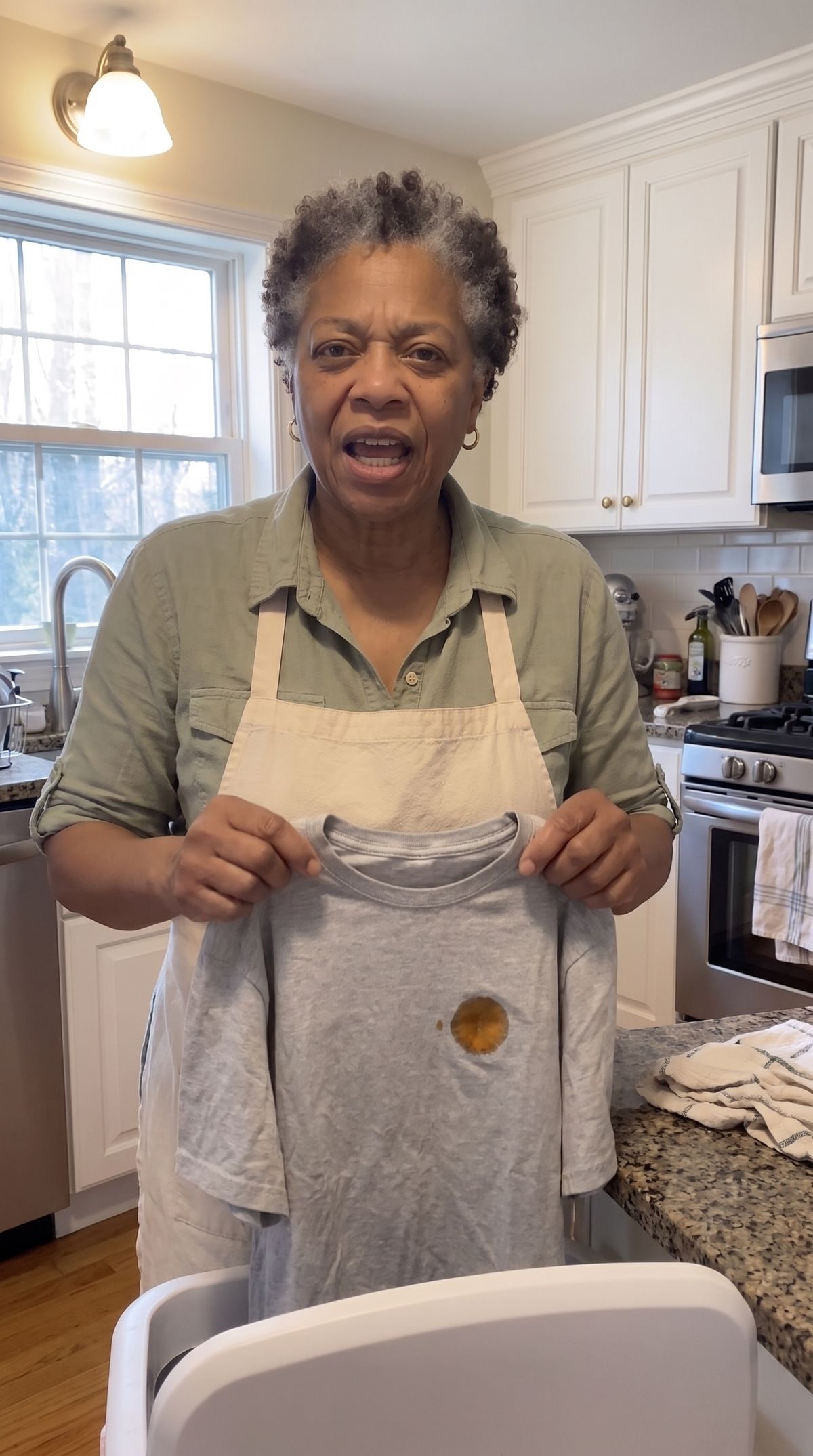
A word from Denise
I know that little sinking feeling. Take a breath, rinse it in cool water, and find the row in the chart. Keep it away from heat until the stain is gone, and you give it the best chance.
Every tip here is checked against the sources listed at the bottom.
 By Denise. Checked on November 7, 2026 against the sources at the bottom of this page.
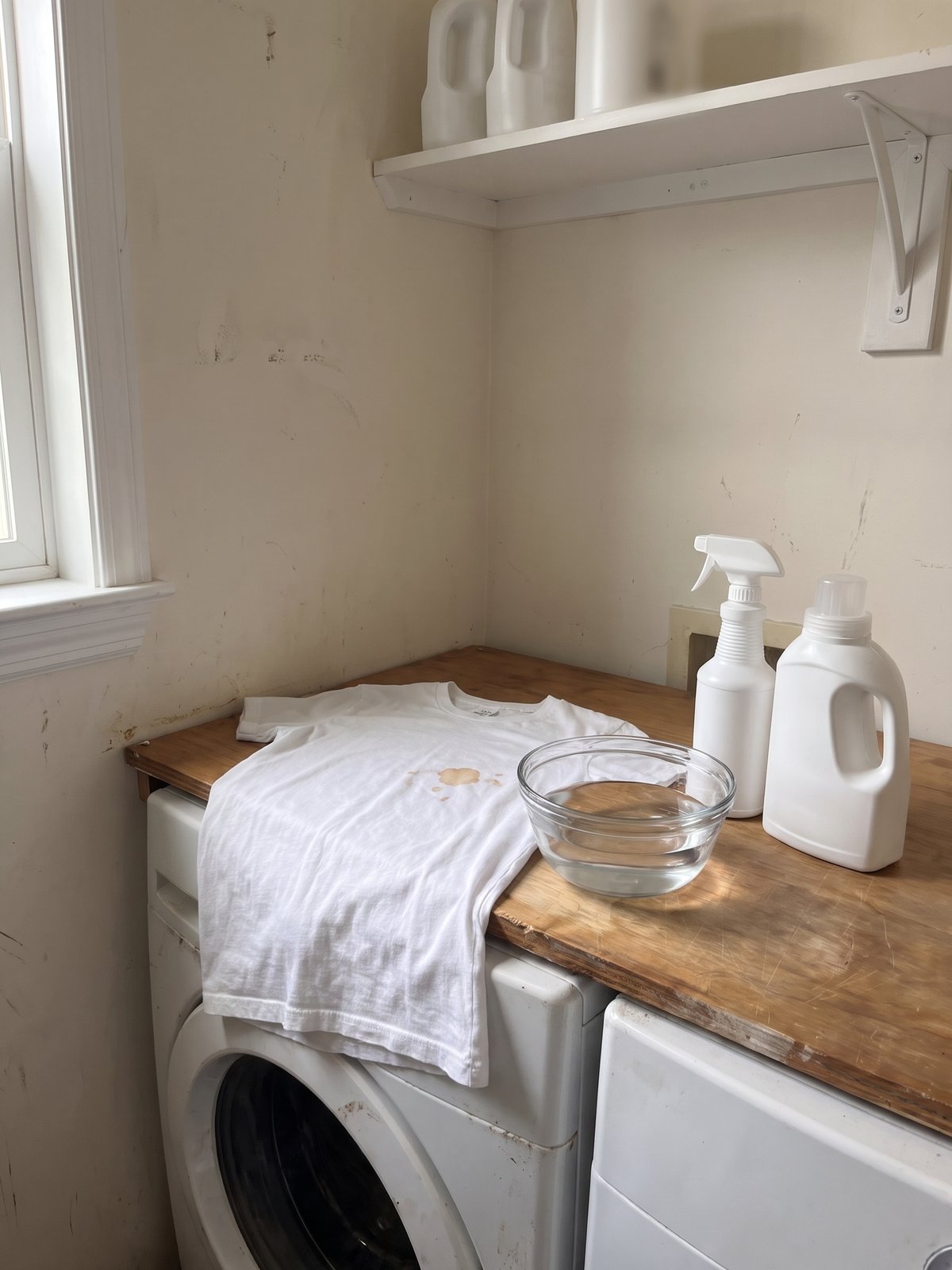
What works Treat the stain fast, before it ever sees the dryer, and match it to the chart below. Blood, coffee and fruit start in cool water, and grease washes in hot water if the care label allows. Most of the rest need a stain remover or liquid detergent rubbed in first.
The American Cleaning Institute puts it simply: the sooner you treat a spot, the easier it comes out.
Scrape off anything thick with a spoon, and blot liquid with a clean white cloth. Press and lift so you do not spread it wider.
Find your stain in the chart below and follow its row.
What it looks like: the stain looks lighter or smaller, and the edge looks softer.
Wash with your usual detergent at the temperature the chart row gives, as long as the care label allows it.
Pull the piece out and look at the spot in good light. The American Cleaning Institute says drying can set a stain for good, so if you still see it, treat it again and wash again instead of drying.
What it looks like when it worked: even color all over, with no ring or shadow where the stain was.
| Stain | What to do | Water | The mistake to avoid |
|---|---|---|---|
| Coffee or tea | Rinse in cool water, then rub in liquid detergent or pretreat with an enzyme detergent. If it is still there, soak 15 minutes in 1 quart warm water with 1/2 teaspoon dish soap and 1 tablespoon white vinegar, then rinse and wash. | Cool rinse, warm soak | Letting it dry in. |
| Red wine | Sprinkle table salt on a fresh spill, then sponge with cool water or club soda and blot. Soak 15 minutes in 1 quart warm water with 1/2 teaspoon detergent and 1 tablespoon white vinegar. If it is still there, sponge with rubbing alcohol, rinse and wash. | Cool, then warm soak | Rubbing alcohol can lift dye, so test it on a seam first. |
| Grass | Spray a stain remover on both sides and wait 2 minutes, then wash with a bleach that is safe for the fabric. If it is still there, dab on a few drops of hydrogen peroxide or sponge with rubbing alcohol. | Label temperature | On acetate, cut the alcohol with an equal amount of water. |
| Blood | Rinse under cold running water and rub with bar soap or liquid detergent. Soak in cool water for 30 minutes, then 30 minutes in lukewarm water with an enzyme presoak. For what is left, dab 3% hydrogen peroxide for 1 to 3 minutes, rinse and wash. | Cold, then lukewarm | Heat, because it sets the stain. |
| Ink (marker or felt tip) | Sponge with rubbing alcohol or a stain remover until no more color bleeds out, let it dry, and repeat. Then wash. | Label temperature | Washing it first, which can set it. |
| Makeup or lipstick | Rub in a stain remover and blot until the color stops coming off. Rub in liquid detergent until the outline is gone, then wash, and repeat if needed. | Label temperature | Stopping before all the color is out. |
| Cooking grease or butter | Rub in a stain remover or liquid detergent, then wash with plenty of detergent. Our grease page has the full method. | Hot, if the label allows | Using the dryer before the spot is gone. |
| Chocolate | Rub in a stain remover and liquid detergent, then soak in warm water with an enzyme detergent. Wash in hot water if the label allows. | Warm soak, then hot | Drying it before the spot is gone. |
| Ketchup or tomato sauce | Treat with a stain remover, following its directions, then wash with liquid detergent. Repeat before drying if any orange is left. | Label temperature | Drying it with a shadow still there. |
| Deodorant | Dab white vinegar on an old buildup, then rub in plain hand dishwashing liquid and wash. | Label temperature | Ironing or heat, which can ruin the fabric. |
| Mustard | Scrape it off, treat with a stain remover and rinse. Rub in liquid detergent with a few drops of vinegar and rinse well, then dab on 3% hydrogen peroxide, rinse again and wash. | Label temperature | Waiting, because it needs treating right away. |
| Berries, fruit or jam | Rinse right away in cool water. Soak 15 to 30 minutes in warm water with an oxygen bleach, then wash with a heavy-duty detergent. | Cool rinse, warm soak | Soap, which can set a fruit stain. |
Some stains need a second round, and a few need help. Here is how to tell which.
We may earn a small fee from these links. It never changes the picks or your price.
For ink, grass and stubborn spots. $1.69 at Target.com on 11/6/2026.
The stain remover most rows call for. $3.49 at Target.com on 11/6/2026.
For fruit and for stains that went through the dryer. $9.29 at Target.com on 11/6/2026.
More picks: Best cheap stain removers for clothes
The free Kitchen and Laundry Rescue Guide has the never-mix chart, a towel reset card and ten checked fixes, ready to print.
Stains are not all the same, so one product cannot fix them all. That is why every row in the chart is different.
Heat is the big divider. Blood sets with heat, which is why it starts in cold water, a little like an egg that turns solid the moment it hits a hot pan. Grease goes the other way and washes out in hot water with plenty of detergent.
The real enemy is the dryer. The American Cleaning Institute says drying can set a stain for good, so check every spot while the piece is still wet.
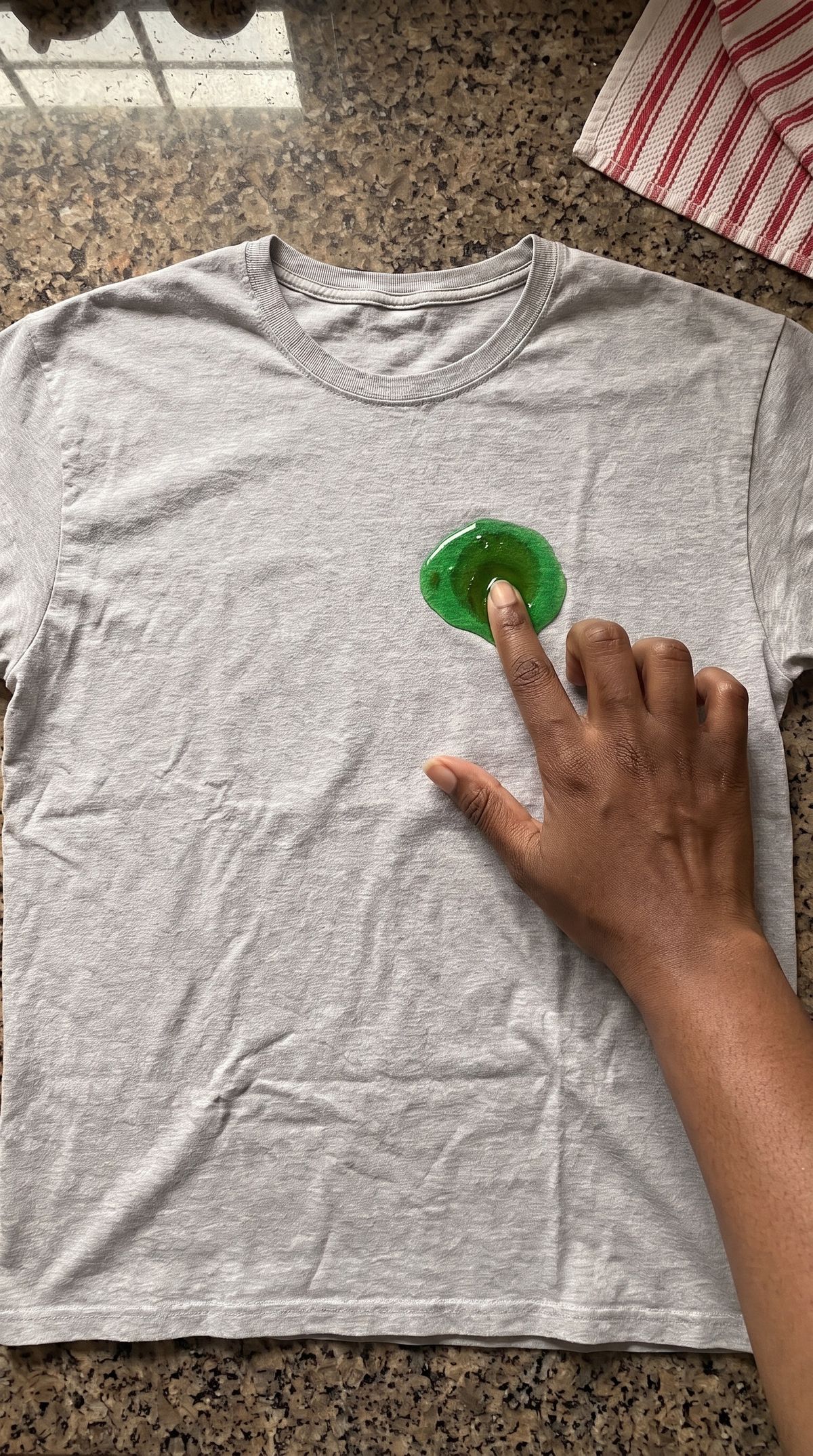
Maybe it is the first day of school and juice just went down the front of a brand new shirt. Or it is your good blouse, and somebody bumped your coffee on the way out the door.
A word from Denise
I know that little sinking feeling. Take a breath, rinse it in cool water, and find the row in the chart. Keep it away from heat until the stain is gone, and you give it the best chance.
It depends on the stain. Blood needs cold water, because heat sets it. Grease washes in hot water if the care label allows, and coffee and fruit start with a cool rinse.
Sometimes. Treat it again with the chart row, then soak washable fabric in oxygen bleach for 1 to 6 hours as the OxiClean label says. Plan on a few rounds.
On a fresh spill, the University of Georgia Extension says to sprinkle on table salt, then sponge with cool water or club soda and blot. It is a first step, not the whole fix.
The University of Georgia Extension says soap can set a fruit stain. Rinse in cool water and use an oxygen bleach soak instead.
I’m Denise, and I explain home fixes the way a friend would at your kitchen table. Every tip I share is written from the sources listed on its page and checked against them before it goes up.
Sources opened and checked on November 7, 2026.
Every claim on this page, the source behind it and what the check found. Kept open for anyone who wants to look under the hood.
| Claim | Source | What the check found |
|---|---|---|
| Read the care label first; test colorfastness by pretreating a seam or hidden area | Sources 2 and 14 (rechecked November 7) | Matches the source. |
| The sooner you attack the spot, the easier it is to remove; check wet clothes and re-treat instead of drying; drying can permanently set stains | Source 14 (rechecked November 7) | Matches the source. |
| Coffee or tea: cool rinse; enzyme detergent pretreat or liquid detergent rub; 15 minute soak in 1 qt warm water, 1/2 tsp dishwashing liquid, 1 Tbsp white vinegar | Source 2 (rechecked November 7) | Matches the source. |
| Wine: salt on fresh stain, sponge cool water or club soda, blot; 15 minute soak in 1 qt warm water, 1/2 tsp detergent, 1 Tbsp white vinegar; then rubbing alcohol if it remains; alcohol may remove fabric dye | Source 3 (rechecked November 7) | Matches the source. |
| Grass: stain remover both sides, wait 2 minutes; fabric-safe bleach; a few drops of hydrogen peroxide or rubbing alcohol; acetate 1 part alcohol to 1 part water | Source 4 (rechecked November 7) | Matches the source. |
| Blood: cold running water, bar soap or detergent; cool soak 30 minutes; lukewarm enzyme presoak 30 minutes; 3% peroxide 1 to 3 minutes; heat sets it | Source 5 (rechecked November 7) | Matches the source (the page’s ammonia step left out on purpose). |
| Felt tip ink: sponge with rubbing alcohol or stain remover until bleeding stops, dry, repeat, wash; laundering may set the stain | Source 6 (rechecked November 7) | Matches the source (felt tip method uses no ammonia; red ballpoint method left out because it does). |
| Makeup and lipstick: stain remover, blot, continue until pigment is removed, rub liquid detergent until outline is gone, wash, repeat | Source 7 (rechecked November 7) | Matches the source. |
| Grease and butter: pretreat, hot water with plenty of detergent, if safe for the fabric | Source 8 (rechecked November 7) | Matches the source. |
| Chocolate: stain remover plus heavy-duty liquid detergent; warm enzyme soak; hot wash if safe | Source 9 (rechecked November 7) | Matches the source. |
| Ketchup: stain remover per directions; wash with heavy-duty liquid detergent | Source 10 (rechecked November 7) | Matches the source (the sauce method with ammonia and petroleum cleaners left out). |
| Deodorant: white vinegar on old stains; undiluted hand dishwashing liquid; never iron or heat, which can ruin most fabrics | Source 11 (rechecked November 7) | Matches the source (the page’s ammonia step left out). |
| Mustard: treat immediately, scrape, stain remover, rinse, light-duty detergent with a few drops of vinegar, rinse, 3% peroxide, rinse, wash | Source 12 (rechecked November 7) | Matches the source. |
| Fruit: cool rinse; soap sets fruit stains; soak 15 to 30 minutes in warm water with sodium perborate (an oxygen bleach); heavy-duty detergent | Source 13 (rechecked November 7) | Matches the source. |
| Water column “Label temperature” where a UGA page gives no temperature | Sources 4, 6, 7, 10, 11, 12 give none | Matches the source (we chose not to add one). |
| OxiClean: line 3 per gallon, soak 1 to 6 hours; not on wool, silk, leather or dry clean only; avoid eye and prolonged skin contact, wear gloves; do not mix with ammonia or chlorine bleach; no sealed container | Source 15 (rechecked November 7) | Matches the source. |
| Bleach plus vinegar makes chlorine gas | Source 16 | Matches the source (matches the never-mix page). |
| Bleach plus rubbing alcohol forms chloroform; peroxide plus vinegar makes peracetic acid | Source 17 | Matches the source (matches the never-mix page). |
| Rubbing alcohol is flammable; keep away from fire, heat and sparks | Source 18 | Matches the source. |
| Why: heat sets blood; grease washes in hot water; egg stains never get hot water; drying sets stains | Sources 5, 8 and 14 | Matches the source (the egg in a pan is the everyday comparison only). |
| 2 to 30 minutes of soaking or waiting for most rows | The chart rows (Sources 2 to 13) | Matches the source. |
| Poison Help line, 1-800-222-1222; free and confidential, 24 hours a day, 7 days a week | Source 19 | Matches the source (HRSA Calling Poison Help page; one wording site-wide, November 7). |
| Prices: up&up 70% isopropyl 16 oz $1.69; Shout Triple-Acting 22 oz $3.49; OxiClean Versatile Free 3 lb $9.29 | Source 20, opened November 6, 2026 | Matches the source (Target.com, dated). |