How to Get Yellow Sweat Stains Out of White Shirts

Every tip here is checked against the sources listed at the bottom.

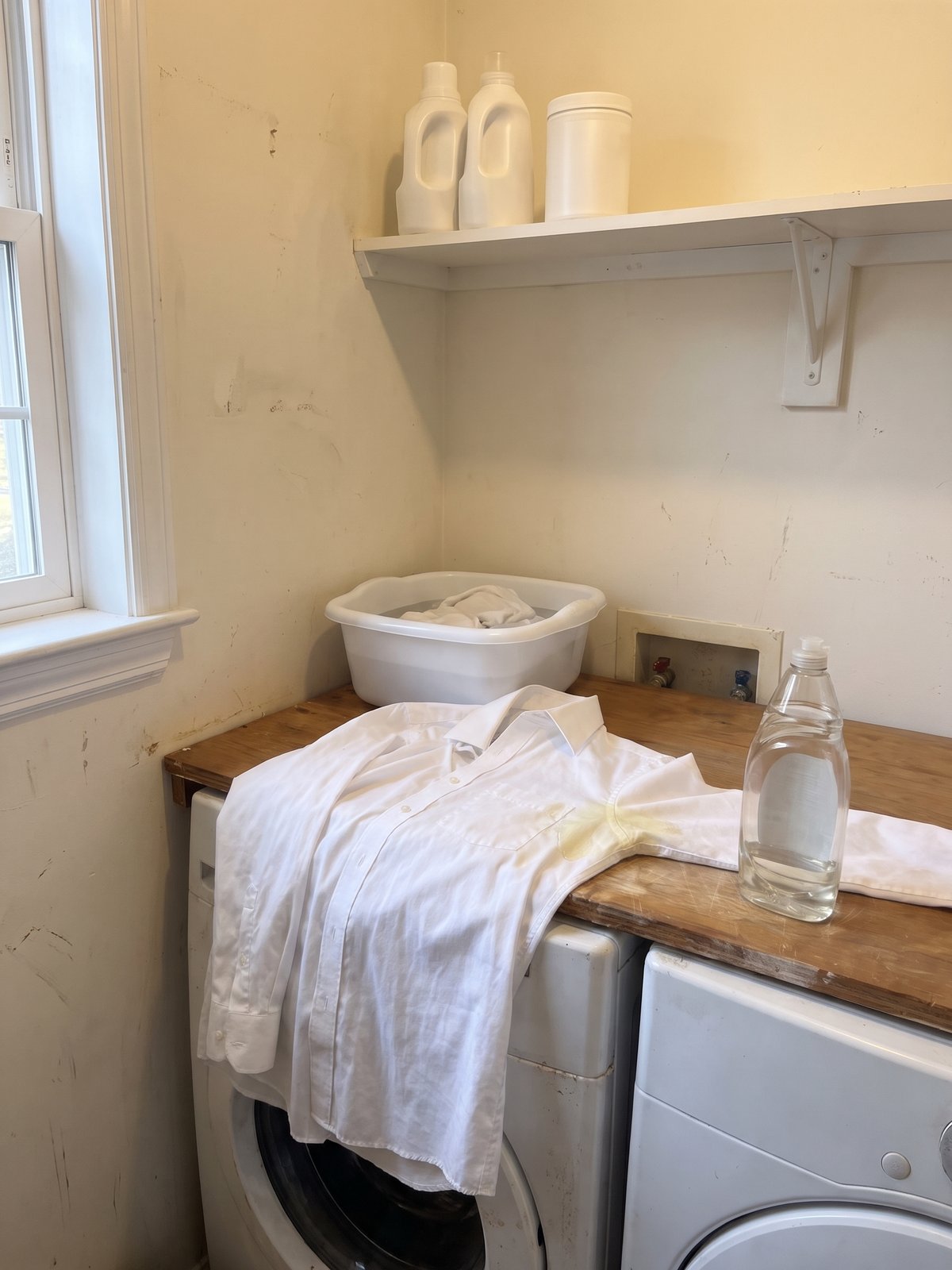
A white button-up shirt laid flat with one underarm turned out, a small bottle of dish soap and an old toothbrush beside it, and a tub of water in the background

The short answer

What works Rub plain dish soap into the yellow underarm patch, then soak the shirt in oxygen bleach powder for 1 to 6 hours. Wash it in the hottest water the care label allows, and air dry it. Keep the dryer and iron away until the yellow is gone, because heat on a deodorant stain can ruin the fabric.

How long
A 1 to 6 hour soak, then a normal wash and time to air dry.
What it costs
A 3 lb tub of OxiClean Versatile Stain Remover Powder was $9.29 at Target.com on November 7, 2026. A soak for a few shirts uses a few scoops, plus a squirt of the dish soap you already have.
What you need
Dish soap, oxygen bleach powder, rubber gloves, an old soft toothbrush, and a sink, tub or bucket.
Jump to the steps

Before you start: check two things

  1. Read the care label. The OxiClean label says not to use it on wool, silk, leather or anything labeled dry clean only. Those shirts go to a dry cleaner, and you tell them it is a sweat stain.
  2. Colored shirt? This works on colorfast fabric, meaning fabric whose color does not run. Test the soak on an inside seam first, as the label says.

Step by step

  1. Wet the underarms

    Turn the shirt inside out. Run cool or warm water over the yellow areas until the fabric is damp all the way through.

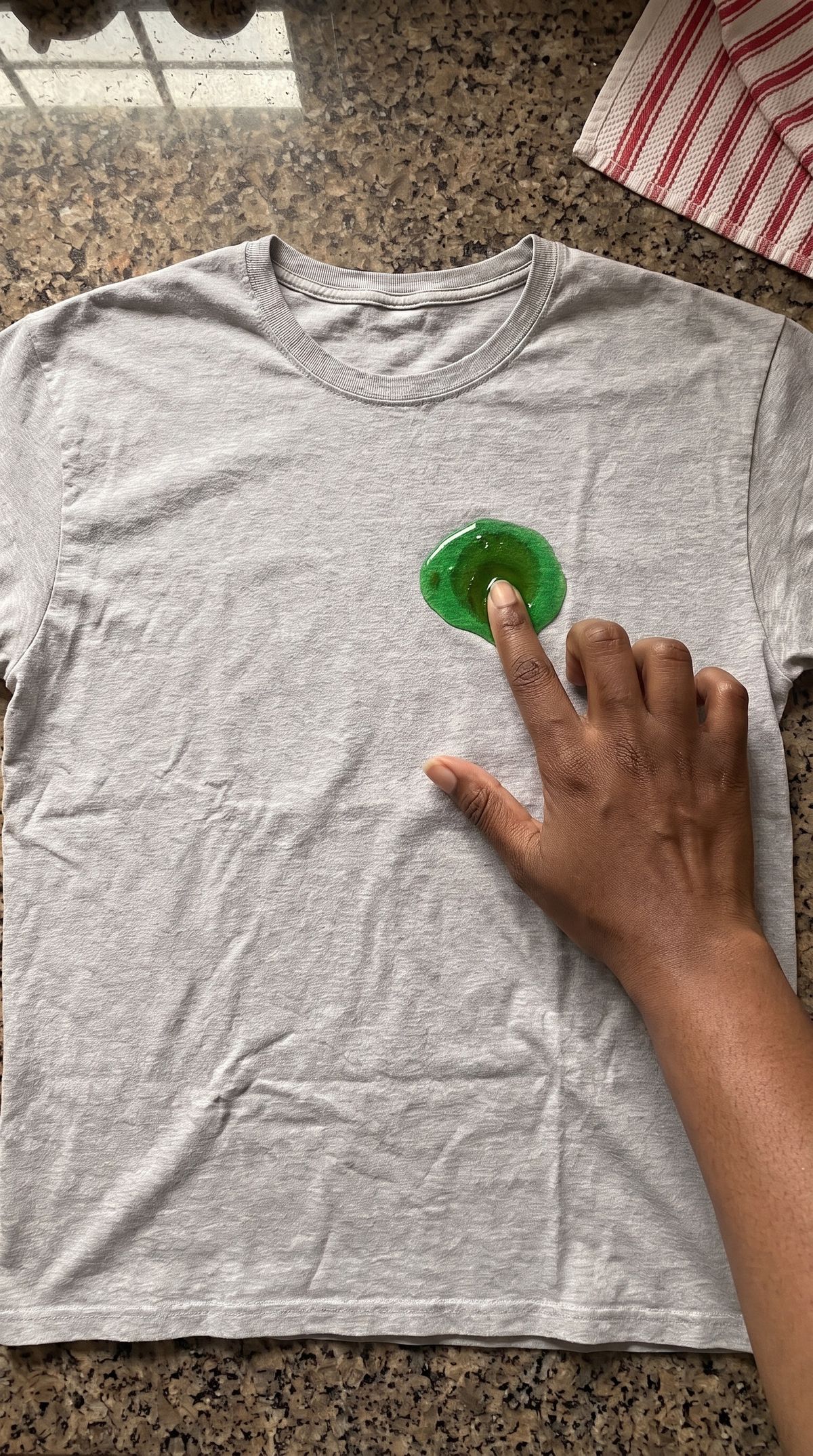
  2. Rub in dish soap

    Squeeze a little plain dish soap straight onto each yellow patch, without water mixed in. Rub it in with your fingers, then work it gently with a soft old toothbrush.

    The University of Georgia (UGA) Extension’s first method for deodorant stains is exactly this: undiluted hand dishwashing liquid, rubbed in, then laundered.

    What it looks like: the soap covers every bit of the yellow. Scrub gently, because you are working the soap in, not sanding the fabric.

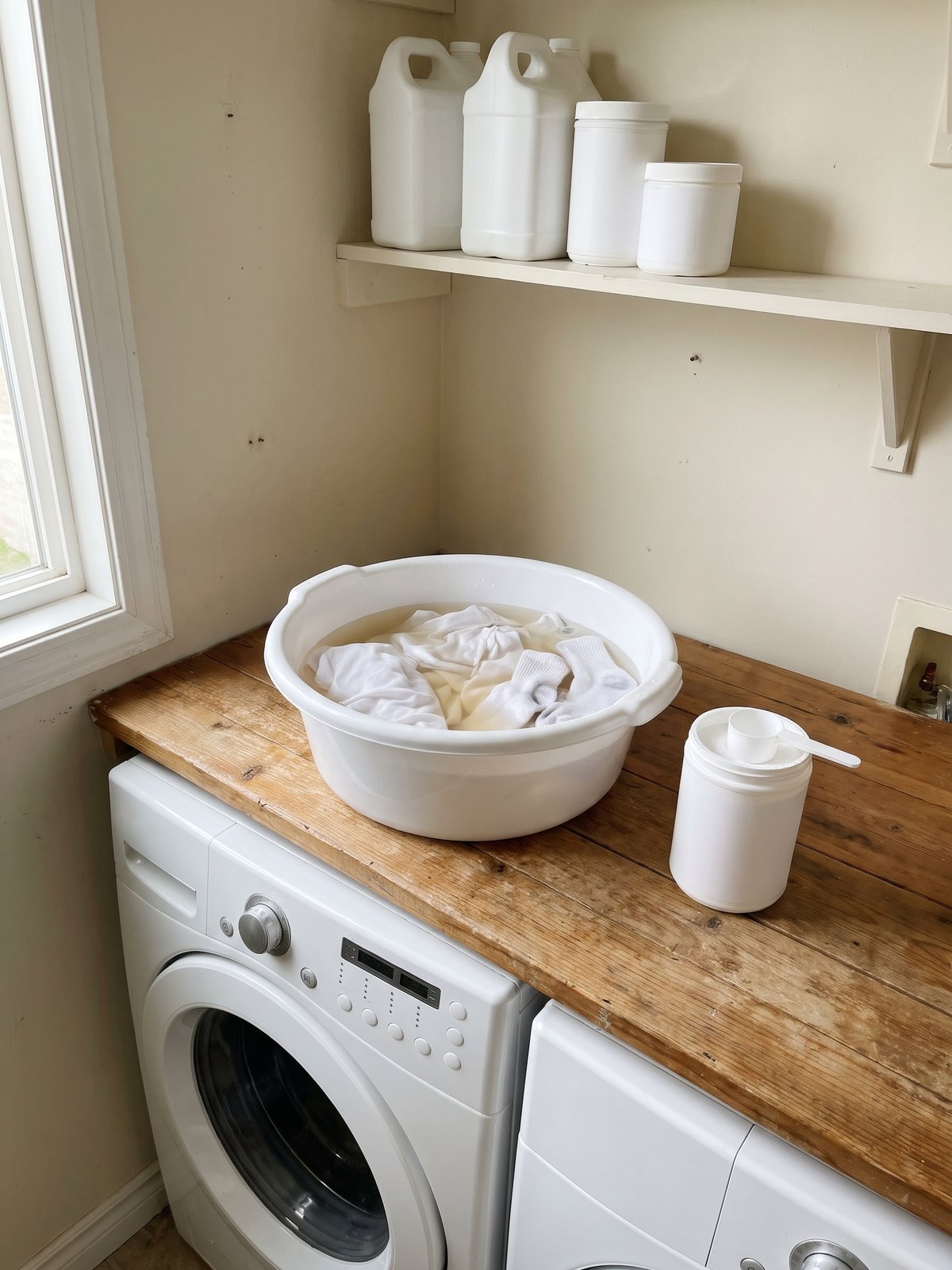
  3. Mix the soak

    Put on gloves. Fill a sink, tub or bucket with the warmest water the care label allows, but never boiling, because the OxiClean label says not to heat or boil it. Fill the scoop to line 3 for each gallon of water and stir until it is fully dissolved.

  1. Soak 1 to 6 hours

    Push the shirt under, soap and all, so it is wet all the way through. Leave it at least 1 hour, and up to 6 for an old or dark stain. That is the soak range on the OxiClean Versatile label.

  2. Wash it hot

    Move the shirt to the washer without rinsing. Add oxygen bleach powder to the drum before the clothes (the label says fill to the bottom of line B for a regular load).

    Then wash with your usual detergent in the hottest water the care label allows. UGA’s guide for sweat stains also says to launder in the hottest water, with a bleach that is safe for the garment.

  3. Air dry and check it

    Hang the shirt to dry instead of using the dryer. Look at the underarms in daylight once it is dry. If you can still see yellow, repeat Steps 1 to 5.

    Do not iron it or put it in the dryer until the stain is gone. UGA says never to iron or heat a deodorant stain, and that heat on top of the chemicals can ruin most fabrics.

    What it looks like when it worked: the underarm fabric matches the rest of the shirt, with no yellow ring left in daylight.

When it will not work, and what to do instead

Old sweat stains can be stubborn. Here is what to try when the first round falls short.

  • The stain is old. UGA says prompt treatment of sweat stains is necessary, because they can weaken most fibers. Repeat the soak and wash for an old stain, and handle the fabric gently while you do.
  • You are tempted to use chlorine bleach. The American Cleaning Institute (ACI) says chlorine bleach turns silk, wool and spandex yellow for good, and many stretchy shirts have spandex. That is why this page sticks with oxygen bleach.
  • Silk, wool or dry clean only. Skip this method entirely and take it to a dry cleaner.
  • The whole shirt is dingy, not just the underarms. That is a different problem. See How to whiten yellowed white clothes without bleach.

How to keep new stains from forming

Arm & Hammer, which makes deodorant and laundry products, gives the first four tips. The last one comes from UGA. Every one costs nothing.

  1. Use less. Two or three swipes, rolls or sprays per underarm is enough.
  2. Let it dry. Wait until your deodorant is dry before you put your shirt on.
  3. Try it at night. Arm & Hammer says antiperspirant is generally recommended at night, when your skin is dry.
  4. Skip fabric softener on these shirts. The maker says softener can trap residue in the fibers and make stains harder to remove.
  5. Wash sweaty shirts soon. UGA says prompt treatment of sweat stains is necessary.

Be safe

  • Gloves on, eyes protected. The OxiClean label says it can injure eyes, is harmful if swallowed and should not stay on your skin a long time. If it gets in your eyes, flush them with water for 15 minutes and get medical help right away.
  • Never seal the soak water. The label says not to mix or store the solution in a closed container, because pressure can build up.
  • Never mix chlorine bleach with ammonia. Some stain guides, UGA’s among them, suggest a few drops of ammonia on new sweat stains, which is one more reason to keep bleach away. The OxiClean label also says not to mix oxygen bleach with ammonia, chlorine bleach or other household chemicals.
  • Keep vinegar out of the soak. The New Jersey Department of Health says peroxide and vinegar together make peracetic acid, which can harm the eyes, skin and lungs. See the full never-mix chart.
  • No heat on the stain. No dryer and no iron until it is gone.
  • Keep the soak away from kids and pets. If someone swallows the powder or the soak water, call the Poison Help line, 1-800-222-1222. It is free and confidential, 24 hours a day, 7 days a week.

What to buy

We may earn a small fee from these links. It never changes the picks or your price.

More picks: Best cheap stain removers for clothes

Why it works

That yellow ring is not just sweat. Arm & Hammer explains that the yellow comes from a reaction between sweat, deodorant ingredients and the fabric itself. UGA adds that antiperspirants made with aluminum chloride are acidic and may change the color of some dyes.

So you are dealing with a sticky mix that has soaked into the fibers. Dish soap is made to grab onto grease and oily residue, so it loosens that mix first.

Then oxygen bleach does the brightening. The OxiClean label lists sodium carbonate peroxide, and the ACI calls this kind of ingredient a non-chlorine bleach that releases oxygen in water.

Heat is the enemy until the very end, the same way a hot pan sets an egg to the bottom. That is why the shirt air dries until you are sure.

A word from Denise

Maybe there is a white shirt in your closet you quietly stopped wearing, because the underarms turned that sad shade of yellow. Bodies sweat and deodorant does its job, so there is no shame in that ring. Give the shirt a soak before you give up on it, and let it air dry.

Questions people ask

What causes yellow armpit stains?

Arm & Hammer says the yellow comes from a reaction between sweat, deodorant ingredients and the fabric. Antiperspirants made with aluminum chloride are acidic, UGA says, and may change the color of some dyes.

Does chlorine bleach remove yellow sweat stains?

It is not the pick here. The ACI says chlorine bleach yellows silk, wool and spandex for good. Oxygen bleach is the gentler choice, and its label says it is safe on washable, colorfast fabric.

Does aluminum-free deodorant stop yellow stains?

It can help. Arm & Hammer says aluminum-free products are less likely to stain, though they can still stain if they are misused.

Can I get sweat stains out of colored shirts?

Often, yes, if the shirt is colorfast. UGA says to pretest every cleaning product on a hidden spot first, so try the soak on an inside seam.

More help like this

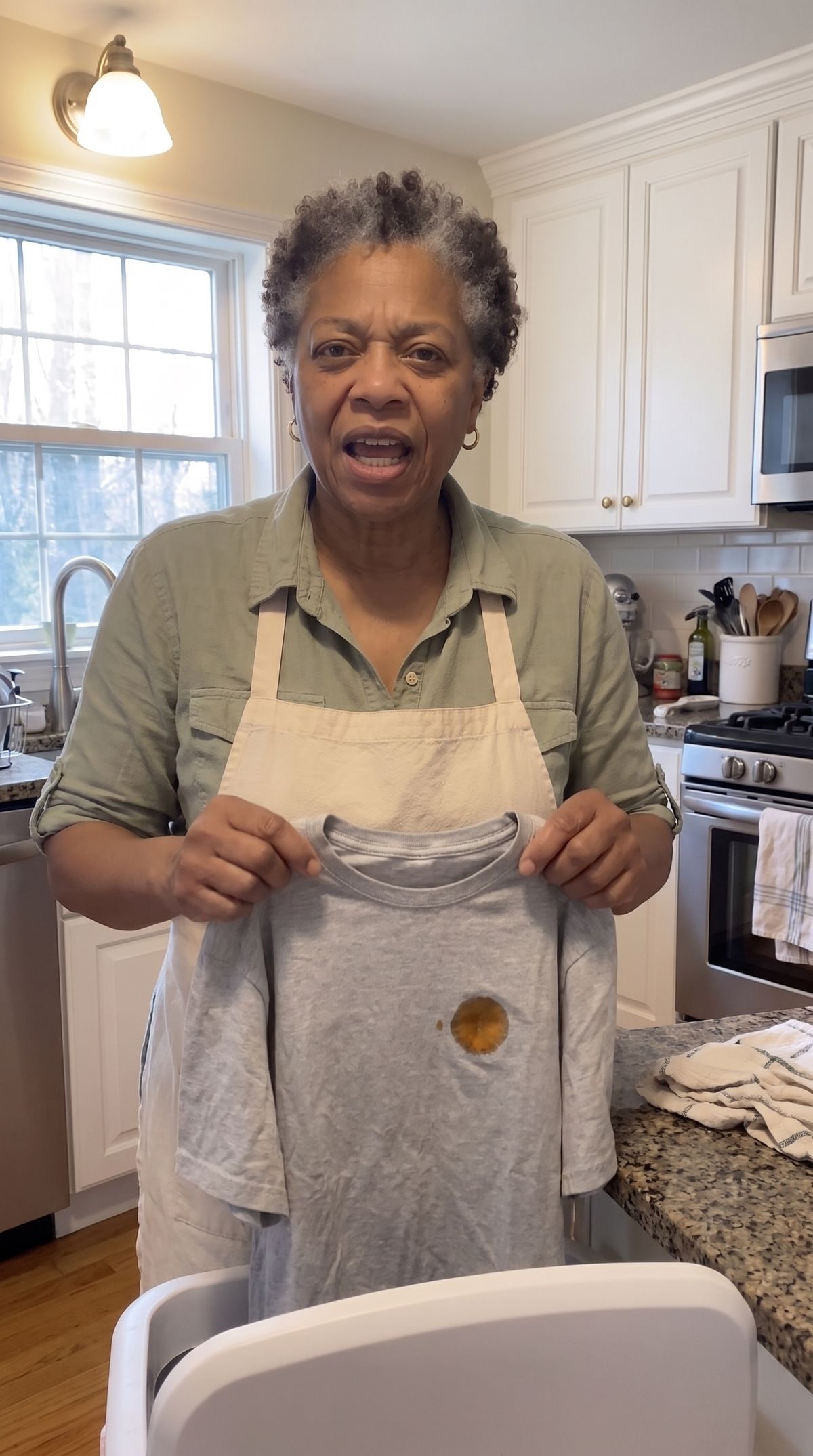
Denise laughing in her kitchen

About Denise

I’m Denise, and I explain home fixes the way a friend would at your kitchen table. Every tip I share is written from the sources listed on its page and checked against them before it goes up.

How my tips are checked

Sources

Sources opened and checked on November 7, 2026.

  1. University of Georgia Extension, Remove stains from antiperspirant and deodorant (undiluted hand dishwashing liquid, launder; aluminum chloride is acidic and may change some dye colors; never iron or apply heat; heat plus chemicals can ruin most fabrics; pretest) site.extension.uga.edu
  2. University of Georgia Extension, Remove stains from perspiration (sodium perborate bleach soak, launder in hottest water with a bleach safe for the garment, a few drops of ammonia on new stains, prompt treatment is necessary) site.extension.uga.edu
  3. Arm & Hammer, The ultimate guide for stopping deodorant and antiperspirant stains (cause of yellow, skip fabric softener, 2 to 3 swipes, let it dry, apply at night, aluminum-free less likely to stain) armandhammer.com
  4. OxiClean Versatile Stain Remover Powder, 48 oz, label text and ingredients (soak line 3 per gallon, 1 to 6 hours, line B per load, do not heat or boil, test first, colorfast only, fabrics, warnings, never mix, never sealed), Giant Food Stores product listing giantfoodstores.com
  5. American Cleaning Institute, Laundering Problems and Solutions (chlorine bleach yellows silk, wool and spandex; cannot be removed) cleaninginstitute.org
  6. American Cleaning Institute, Glossary of Cleaning Product Terminology (non-chlorine bleach releases active oxygen) cleaninginstitute.org
  7. American Cleaning Institute, The Chemistry of Cleaning (surfactants: one end loves water, the other loves oil and grease, and they loosen soil) cleaninginstitute.org
  8. New Jersey Department of Health, Hazard Alert: Mixing bleach with other cleaning products can be deadly (PDF; bleach and ammonia make chloramine gases; peroxide and vinegar make peracetic acid) nj.gov
  9. HRSA Poison Help, Calling Poison Help (1-800-222-1222; free and confidential help 24 hours a day, 7 days a week) poisonhelp.hrsa.gov
  10. Target.com search results (prices, checked 11/7/2026) target.com target.com
Fact log: how each claim on this page was checked (15 claims)

Every claim on this page, the source behind it and what the check found. Kept open for anyone who wants to look under the hood.

ClaimSourceWhat the check found
Rub undiluted hand dishwashing liquid into the stain and launderSource 1 (Method 1)Matches the source (university).
Never iron or apply heat to a deodorant stain; heat plus chemicals can ruin most fabricsSource 1Matches the source (university).
Antiperspirants with aluminum chloride are acidic and may change the color of some dyesSource 1Matches the source (university).
Sweat stains: bleach soak, then launder in hottest water with a bleach safe for the garment; prompt treatment is necessary, as these stains can weaken most fibersSource 2 (UGA names sodium perborate, 15 to 30 minutes; the prompt treatment line is in its upholstery section)Matches the source. The page uses OxiClean Versatile (sodium carbonate peroxide, also an oxygen bleach) at its label’s 1 to 6 hours
OxiClean label: line 3 per gallon, dissolve, soak 1 to 6 hours; line B per load; do not heat or boil; test first; colorfast only; not wool, silk, leather, dry clean onlySource 4 (label via retailer)Matches the source (label).
Yellow comes from a reaction between sweat, deodorant ingredients and fabricSource 3 (Arm & Hammer, which also sells deodorant)Matches the source (maker view).
Prevention: 2 to 3 swipes, let it dry, antiperspirant at night when skin is dry, skip fabric softener (traps residue), aluminum-free less likely to stain but can still stain if misusedSource 3Matches the source (maker).
Chlorine bleach yellows silk, wool, spandex permanentlySource 5Matches the source (industry group).
Non-chlorine bleach releases active oxygen; OxiClean contains sodium carbonate peroxideSources 6 and 4Matches the source.
Dish soap grabs onto grease and oily residueSource 7Matches the source (industry group).
Some stain guides suggest a few drops of ammonia on new sweat stainsSource 2Matches the source. Used only as a safety warning, not a step
Bleach plus ammonia makes chloramine gases; peroxide plus vinegar makes peracetic acidSource 8Matches the source (official).
Pretest every product on a hidden spotSources 1 and 4Matches the source.
Poison Help line, 1-800-222-1222; free and confidential, 24 hours a day, 7 days a weekSource 9Matches the source (HRSA Calling Poison Help page; one wording site-wide, November 7).
Prices: OxiClean Versatile 3 lb $9.29; up&up gloves $3.39, latex free $3.89Source 10, opened November 7, 2026Matches the source (dated, Target.com online).