A word from Denise
I love a good jar saved from the recycling bin. Give it a long soak, let the alcohol pad sit its full 15 minutes, and that jar is ready for its new life.
Every tip here is checked against the sources listed at the bottom.
 By Denise. Checked on November 7, 2026 against the sources at the bottom of this page.
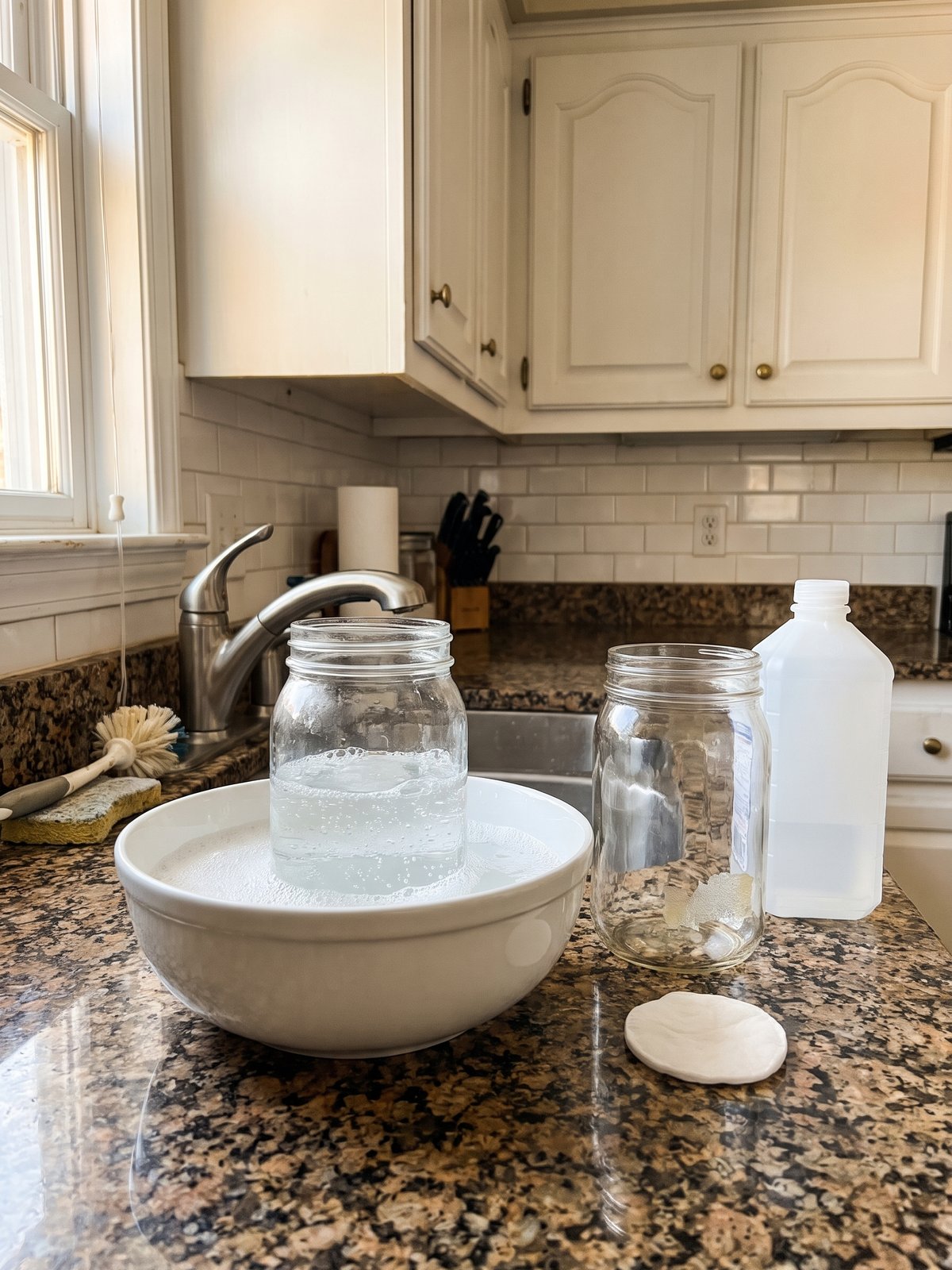
What works Peel off all the paper you can. Soak glass and other water-safe things in hot soapy water for at least an hour, then scrub the glue away. For what is left, press on a pad soaked in rubbing alcohol for at least 15 minutes and wipe it off. Goo Gone works too, on surfaces its label allows.
Lift a corner with your fingernail and pull the label back slowly. Get every bit of paper you can, because the glue under the paper is what you will treat next.
What it looks like: a dull, tacky patch with little white bits of paper stuck in it.
For glass, ceramic and metal, fill a sink or tub with hot water and a squirt of dish soap. Let the item soak for at least 1 hour, or overnight for a tough label.
What it looks like: the paper bits turn soft and white, and the glue looks cloudy instead of shiny.
Peel off what is left and scrub the spot with a soapy sponge until the glue rolls off. Rinse and dry the item, then feel the spot with your fingertip.
What it looks like when it worked: the surface feels smooth, not grabby, when you drag your finger across it.
Soak a cotton pad or a folded paper towel in 70% rubbing alcohol. Press it flat over the sticky patch and leave it there for at least 15 minutes, which is the wait Avery gives.
Lift the pad away and rub the spot with a sponge dipped in rubbing alcohol, as Avery suggests. Rinse the sponge as you go.
What it looks like: the glue comes off in soft, gummy bits instead of smearing.
On a surface its label allows, apply Goo Gone to the spot. For a very gooey mess, Goo Gone says to let it sit 5 to 10 minutes on hard surfaces, then wipe it away.
Wash the area with hot water and dish soap, which is Goo Gone’s last step too. That takes off the oily remover and the last of the glue. Dry it with a clean towel.
What it looks like when it worked: a clean, dry surface with no oily shine and no tack.
Most glue gives up after a soak or an alcohol pad, but a few labels fight back. Here is what to try next.
We may earn a small fee from these links. It never changes the picks or your price.
The alcohol pad in Step 4. $1.69 at Target.com on 11/6/2026.
For glue the alcohol will not move. Check its label for the surfaces it allows. $6.29 at Target.com on 11/6/2026.
The free Kitchen and Laundry Rescue Guide has the never-mix chart and ten checked fixes for around the house, ready to print.
Time does more here than muscle. A long soak in hot soapy water softens the paper, and Avery’s alcohol method waits until the adhesive softens enough to peel and wipe away.
Think of it like soaking a pan with dried-on food: wait a little, and it wipes right off. Scrubbing hard with a blade is how surfaces get hurt, which is why Avery keeps razors off plastic and tin.
You found the perfect jar for your sugar or your buttons, and now that gummy square is catching every crumb and bit of lint in the kitchen. It is such a small thing, but it can bother you every time you reach for it.
A word from Denise
I love a good jar saved from the recycling bin. Give it a long soak, let the alcohol pad sit its full 15 minutes, and that jar is ready for its new life.
Press a pad soaked in 70% rubbing alcohol on it for at least 15 minutes, then wipe and wash. If you have time, an hour in hot soapy water is the gentlest start.
Goo Gone Original’s label lists plastics as safe and says to test a hidden spot first. Clear acrylic is the exception to watch, so for that, stay with mild soap and lukewarm water.
On finished wood, use an adhesive remover whose label lists finished wood, test a hidden spot, and wash after. Goo Gone says not to use it on unfinished wood.
On a glass jar, yes. Avery says not to use heat on plastic, because it can warp or melt.
I’m Denise, and I explain home fixes the way a friend would at your kitchen table. Every tip I share is written from the sources listed on its page and checked against them before it goes up.
Sources opened and checked on November 7, 2026.
Every claim on this page, the source behind it and what the check found. Kept open for anyone who wants to look under the hood.
| Claim | Source | What the check found |
|---|---|---|
| Hot soapy water soak at least an hour, or overnight for tough labels, for glass and water-safe items; then peel and scrub | Source 1 (rechecked November 7) | Matches the source. |
| Rubbing alcohol pressed on at least 15 minutes; alcohol-dipped sponge for leftover residue; alcohol is gentler than nail polish remover | Source 1 (rechecked November 7) | Matches the source. |
| Nail polish remover is a more aggressive solvent | Source 2 (rechecked November 7) | Matches the source. |
| Hair dryer on high 30 seconds, repeat in 30 second rounds, best on glass jars; not on plastic (warp or melt) | Source 1 (rechecked November 7) | Matches the source. |
| Avoid razor blades on scratch-prone surfaces like plastic or tin | Source 1 (rechecked November 7) | Matches the source. |
| No razor blades on Renewal by Andersen window glass | Source 8 (rechecked November 7) | Matches the source. |
| Test a hidden spot; several tries may be needed | Sources 1, 2, 4 (rechecked November 7) | Matches the source. |
| Goo Gone Original safe surfaces include finished wood, painted surfaces, glass, fabric, metals, plastics; not on silk, leather, suede, rubber, faux stainless, drywall, unfinished wood, unsealed stone | Source 4 (rechecked November 7) | Matches the source (list is for Original; the Spray Gel listing tells readers to check its own label). |
| Goo Gone: 5 to 10 minutes for extra gooey messes on hard surfaces, wipe, wash with hot soapy water | Source 4 (rechecked November 7) | Matches the source. |
| Goo Gone label: harmful or fatal if swallowed | Source 4 (Spanish label text on the maker page, rechecked November 7) | Matches the source. |
| Rubbing alcohol label: flammable, keep away from fire, heat, sparks; do not get into eyes | Source 5 (rechecked November 7) | Matches the source. |
| Acrylic: mild soap and lukewarm water; do not use window cleaning sprays, acetone or alcohol; these cause crazing | Source 6 (rechecked November 7, “alcohol” is in the DO NOT USE list); Source 7 | Matches the source. |
| Bleach plus rubbing alcohol forms chloroform: dizziness, nausea, headaches, loss of consciousness | Source 9 | Matches the source (matches the never-mix page). |
| Soak softens paper; alcohol method waits for the adhesive to soften; Avery keeps razors off plastic and tin | Source 1 | Matches the source (attributed to Avery). |
| Some glue takes more than one round | Source 2 | Matches the source. |
| Poison Help line, 1-800-222-1222; free and confidential, 24 hours a day, 7 days a week | Source 10 | Matches the source (HRSA Calling Poison Help page; one wording site-wide, November 7). |
| Prices: up&up 70% isopropyl 16 oz $1.69; Goo Gone Spray Gel 12 oz $6.29 | Source 11, opened November 6, 2026 | Matches the source (Target.com, dated). |