A word from Denise
I promise you that it is not your elbow grease. It is the timing and that blade, so pick a gray day, keep a dry cloth in your back pocket, and let the squeegee do the work.
Every tip here is checked against the sources listed at the bottom.
 By Denise. Checked on November 7, 2026 against the sources at the bottom of this page.
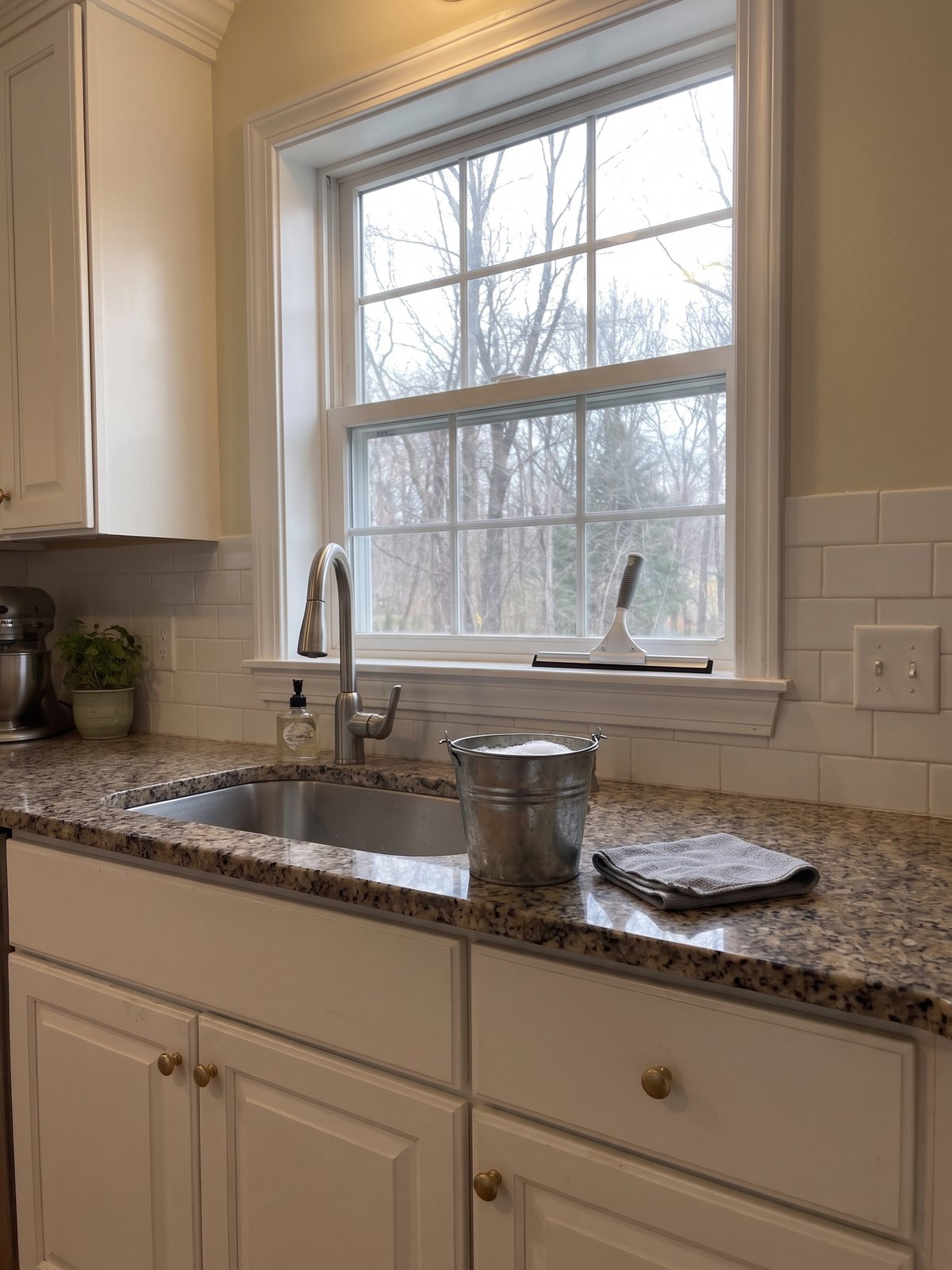
What works Dust the glass first. Wash it with 1 tablespoon of dish soap in a gallon of water, then pull the water off with a squeegee, wiping the blade dry after every pass. Clean on a cloudy day or when the glass is in shade, so nothing dries before you get to it.
Wipe the glass, the frame and the sill with a soft, dry cloth or duster. Getting the loose dirt off first means you are not turning it into mud in the next step.
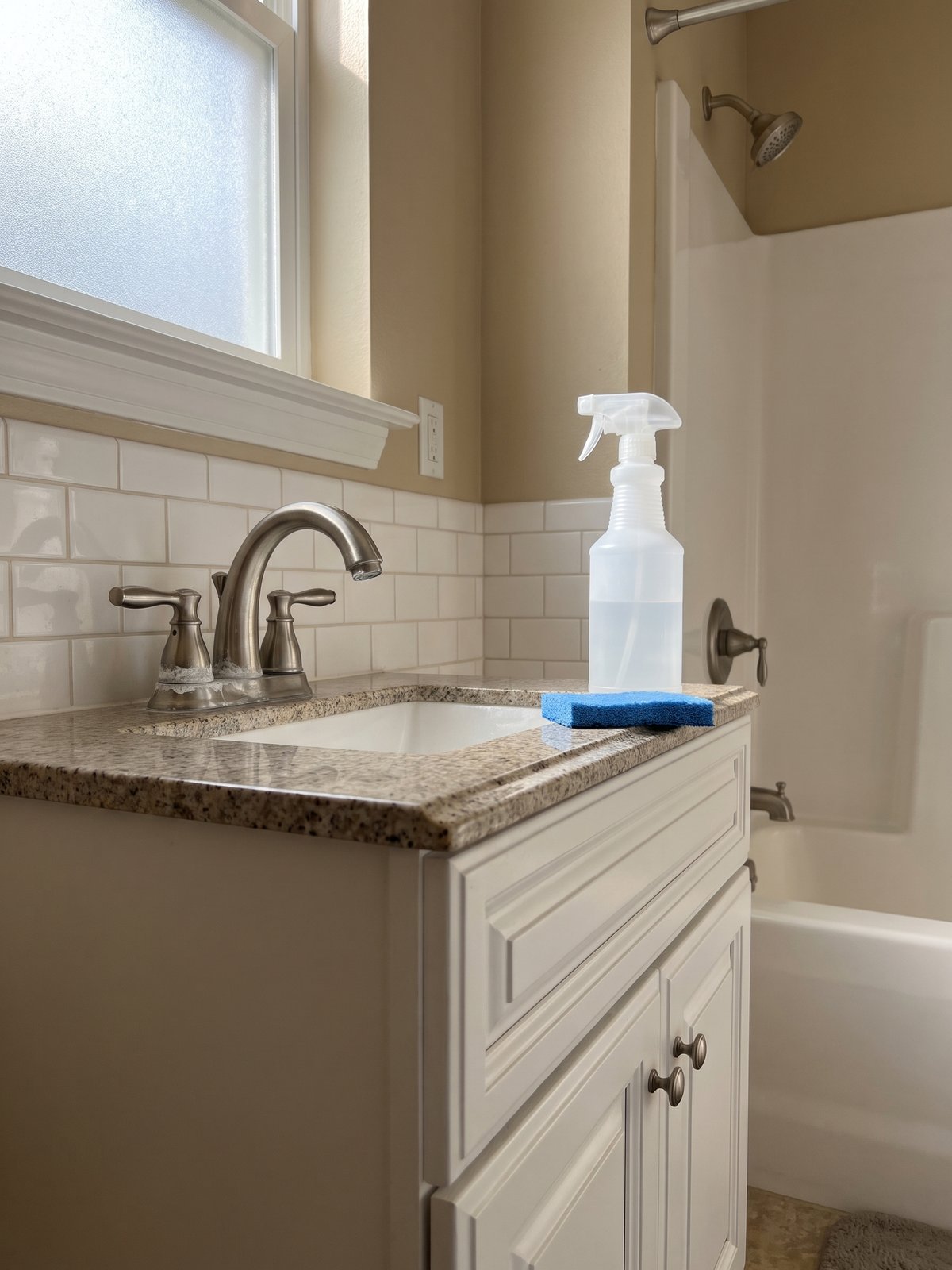
Stir 1 tablespoon of liquid dish soap into 1 gallon of water in a bucket. For a single small window, use a spray bottle instead, with 1/2 teaspoon of dish soap in 2 cups of water.
If you would rather use vinegar, mix 1/4 cup of white vinegar with 2 cups of water. Use the soap mix or the vinegar mix, not both together.
Dip your sponge or cloth, squeeze out the drips, and wipe the wash water over the entire pane. Cover the corners and edges too, so the squeegee has wet glass to glide on everywhere.
What it looks like: a thin, even layer of soapy water over all of the glass, with no dry spots.
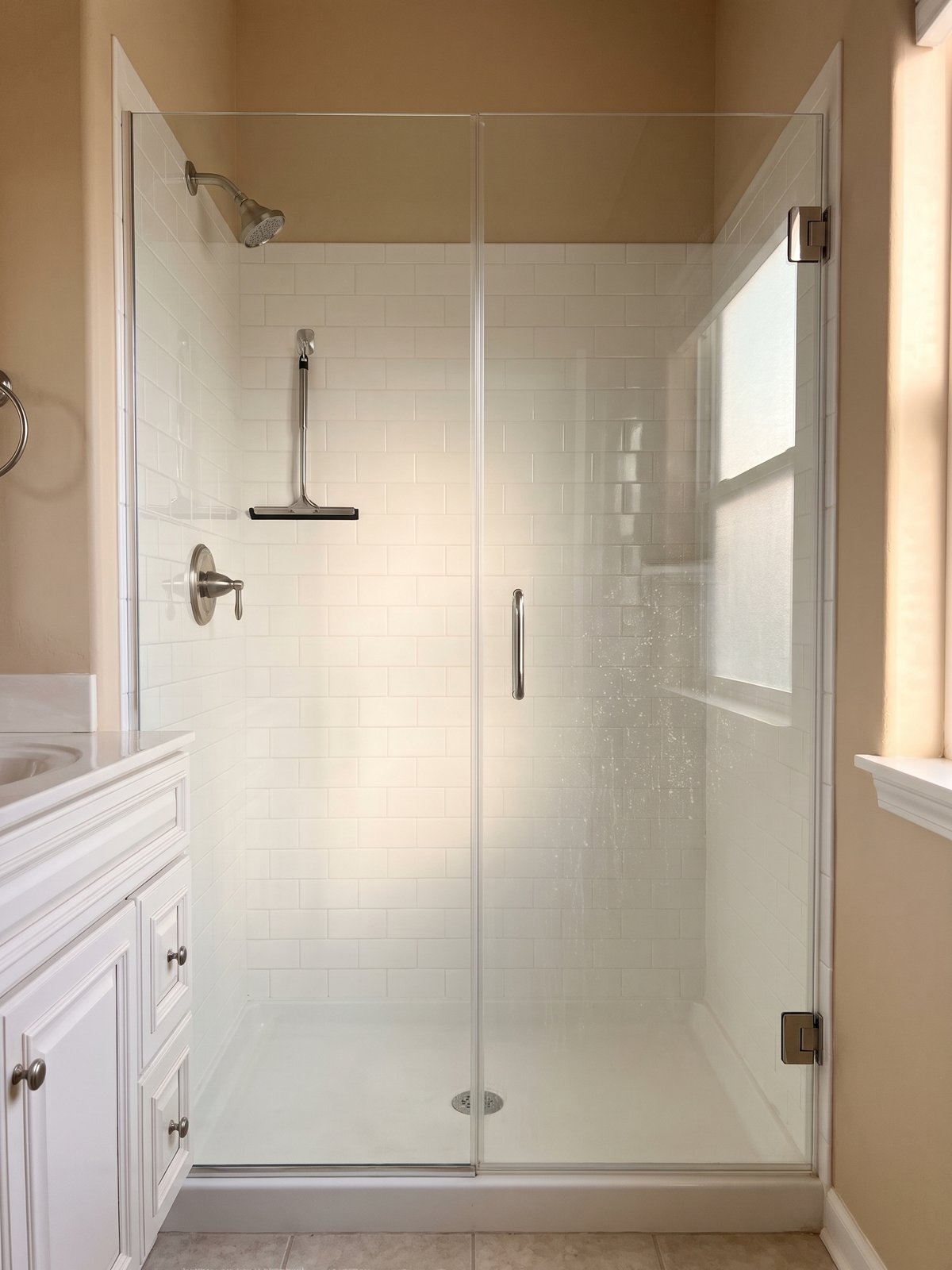
Set the squeegee in a top corner, tilt it at a slight angle, and pull it straight down with steady, even pressure. Start the next pass right beside the first.
What it looks like: a clean, clear stripe of glass behind the blade, with the water rolling down ahead of it.
After each stroke, wipe the rubber blade with a dry microfiber cloth. A wet, dirty blade is what draws lines across glass you just cleaned.
Wipe around the edges of the glass and along the bottom with a clean, dry microfiber cloth. This catches the drips the squeegee could not reach before they dry into spots.
What it looks like when it worked: clear glass edge to edge, with no water line along the bottom.
When you clean the second side, wipe and squeegee across instead of up and down. If a streak shows up later, its direction tells you which side it is on.
Clear glass usually comes down to a dry blade and a cool window. If yours is still streaky, here is where to look.
We may earn a small fee from these links. It never changes the picks or your price.
The 1 tablespoon per gallon wash. $2.89 to $3.99 at Target.com on 11/6/2026, depending on size.
A basic squeegee is the tool that stops streaks. $5.49 at Target.com on 11/6/2026.
For dusting, drying the blade and wiping the edges. $5.99 at Target.com on 11/6/2026.
The free Kitchen and Laundry Rescue Guide has the never-mix chart and ten checked fixes for around the house, ready to print.
A streak is just something left behind when water dries on the glass. It might be extra soap, smeared dirt, or the minerals that hard water carries, like calcium and magnesium.
The squeegee pulls the water off before it can dry, so whatever is in that water leaves with it. It works the same way your windshield wipers do in the rain. A dirty blade, though, just drags the mess back across.
That is also why sun is the enemy. Warm glass dries the wash water in place before you get to it, and everything in that water stays put.
You finish the windows, step back feeling proud, and then the afternoon sun comes through and shows you every single line. It is enough to make anybody want to draw the curtains.
A word from Denise
I promise you that it is not your elbow grease. It is the timing and that blade, so pick a gray day, keep a dry cloth in your back pocket, and let the squeegee do the work.
Dish soap and water is hard to beat. Use 1 tablespoon of dish soap per gallon for a bucket, or 1/2 teaspoon per 2 cups for a spray bottle. A mix of 1/4 cup white vinegar and 2 cups of water works too.
Usually it is soap left on the glass, a dirty squeegee blade, or glass that dried too fast in the sun. Wipe the blade after every pass and clean in the shade.
Yes. P&G’s Dawn directions say to dry and polish any drips with a paper towel if you do not have a squeegee. For dusting, P&G likes microfiber better, because paper towels can leave lint.
We would skip it. P&G says newspaper ink can leave a film and does not do a great job on streaks, so reach for a clean microfiber cloth.

I’m Denise, and I explain home fixes the way a friend would at your kitchen table. Every tip I share is written from the sources listed on its page and checked against them before it goes up.
Sources opened and checked on November 7, 2026.
Every claim on this page, the source behind it and what the check found. Kept open for anyone who wants to look under the hood.
| Claim | Source | What the check found |
|---|---|---|
| Wipe loose dirt off first with a soft dry cloth or duster | Source 1 (rechecked November 7) | Matches the source. |
| Cloudy days are best; on a sunny day heat dries the glass too quickly and causes smears | Sources 1 and 3 (rechecked November 7) | Matches the source. |
| 1 tablespoon Dawn per gallon of water; wipe on, squeegee off; paper towel for drips if no squeegee | Source 2 (rechecked November 7) | Matches the source. |
| 1/2 teaspoon dish soap per 2 cups water; or 1/4 cup vinegar per 2 cups water | Source 3 (rechecked November 7) | Matches the source. |
| Start at the top corner, slight angle, pull straight down with even pressure | Source 4 (rechecked November 7) | Matches the source. |
| Wipe the squeegee blade dry after each swipe | Sources 1 and 4 (rechecked November 7) | Matches the source. |
| Wipe the edges and corners to remove excess water | Source 4 (rechecked November 7) | Matches the source. |
| Wipe each side in a different direction to find which side a streak is on | Source 3 (rechecked November 7) | Matches the source. |
| Rinse soap residue with clean water | Source 3 | Matches the source. |
| Newspaper ink can leave a film and does not remove streaks well; paper towels can leave lint, microfiber does not | Source 3 (rechecked November 7) | Matches the source. |
| Avoid solvents, abrasive solutions and razor blades (Renewal by Andersen glass); TruScene screens get no hose or water | Source 1 (rechecked November 7) | Matches the source (Andersen’s own windows; readers told to check their maker). |
| Hard water is high in calcium and magnesium; a common cause of cloudy glassware, spots and film | Source 5 (rechecked November 7) | Matches the source. |
| Some glass and window cleaners contain ammonia; bleach plus ammonia makes chloramines; bleach plus acids such as vinegar and some glass cleaners makes chlorine gas | Source 6 | Matches the source (matches the never-mix page). |
| Ladder: stable, level surface; 3-point contact; face the ladder; body near the middle of the step; no top step unless designed for it; look for overhead power lines | Source 7 (rechecked November 7) | Matches the source. |
| Poison Help line, 1-800-222-1222; free and confidential, 24 hours a day, 7 days a week | Source 8 | Matches the source (HRSA Calling Poison Help page; one wording site-wide, November 7). |
| Prices: Dawn Ultra EZ-Squeeze $2.89 to $3.99 by size; up&up squeegee $5.49; Turtle Wax 3 pack microfiber glass towels $5.99 | Source 9, opened November 6, 2026 | Matches the source (Target.com, dated). |