A word from Denise
That moment can make anybody want to grab the old wire brush and go to town. I would love for you to reach for the foil instead, because a quick scrub after each cook means the next cookout starts clean.
Every tip here is checked against the sources listed at the bottom.
 By Denise. Checked on November 7, 2026 against the sources at the bottom of this page.
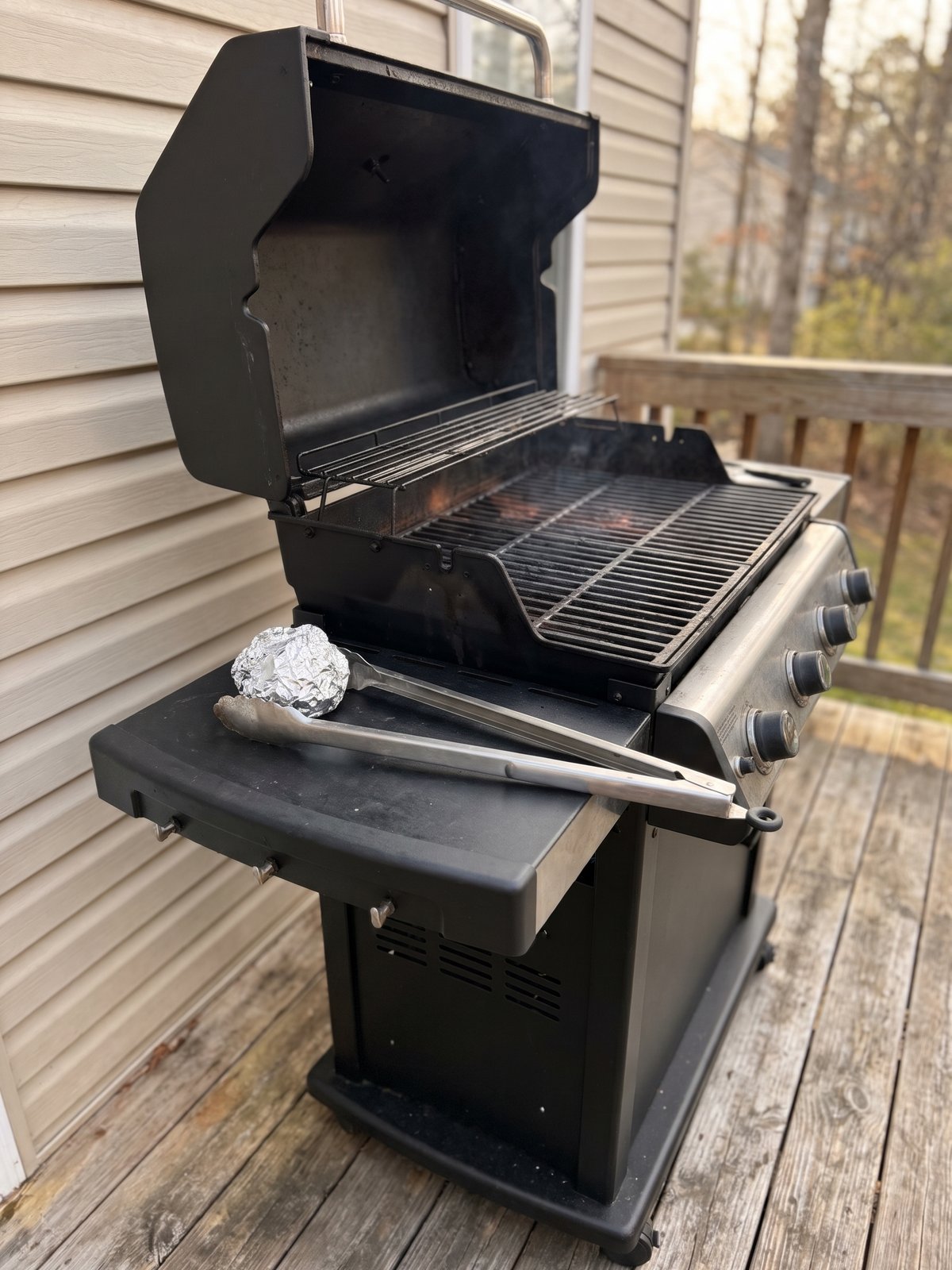
What works Right after you cook, while the grill is still hot, scrub the grates with a loose ball of aluminum foil held in long tongs. Every so often, take the cool grates out and wash them the way their metal needs, then dry them all the way.
Do this right after you take the food off, while the grill is still hot. If you are starting cold, heat it on high for 15 minutes with the lid closed, which is how Weber says to get ready to brush.
Tear off a sheet of aluminum foil and crumple it loosely into a ball. Lodge says loosely crumpled, so it still has plenty of folds and edges to scrape with.
Grab the foil ball with long tongs, never your fingers, and rub it back and forth along each bar of the grate. Work from one side of the grill to the other, and turn the ball when one side gets black.
What it looks like: the foil turns dark and greasy, and burnt crumbs drop down through the grates.
Skip this step for stainless steel and porcelain-coated grates. For bare cast iron, lightly coat a folded paper towel with cooking oil and rub it over the warm grate, holding the towel with your tongs.
What it looks like: a thin, even sheen on the bars, with no drips or puddles.
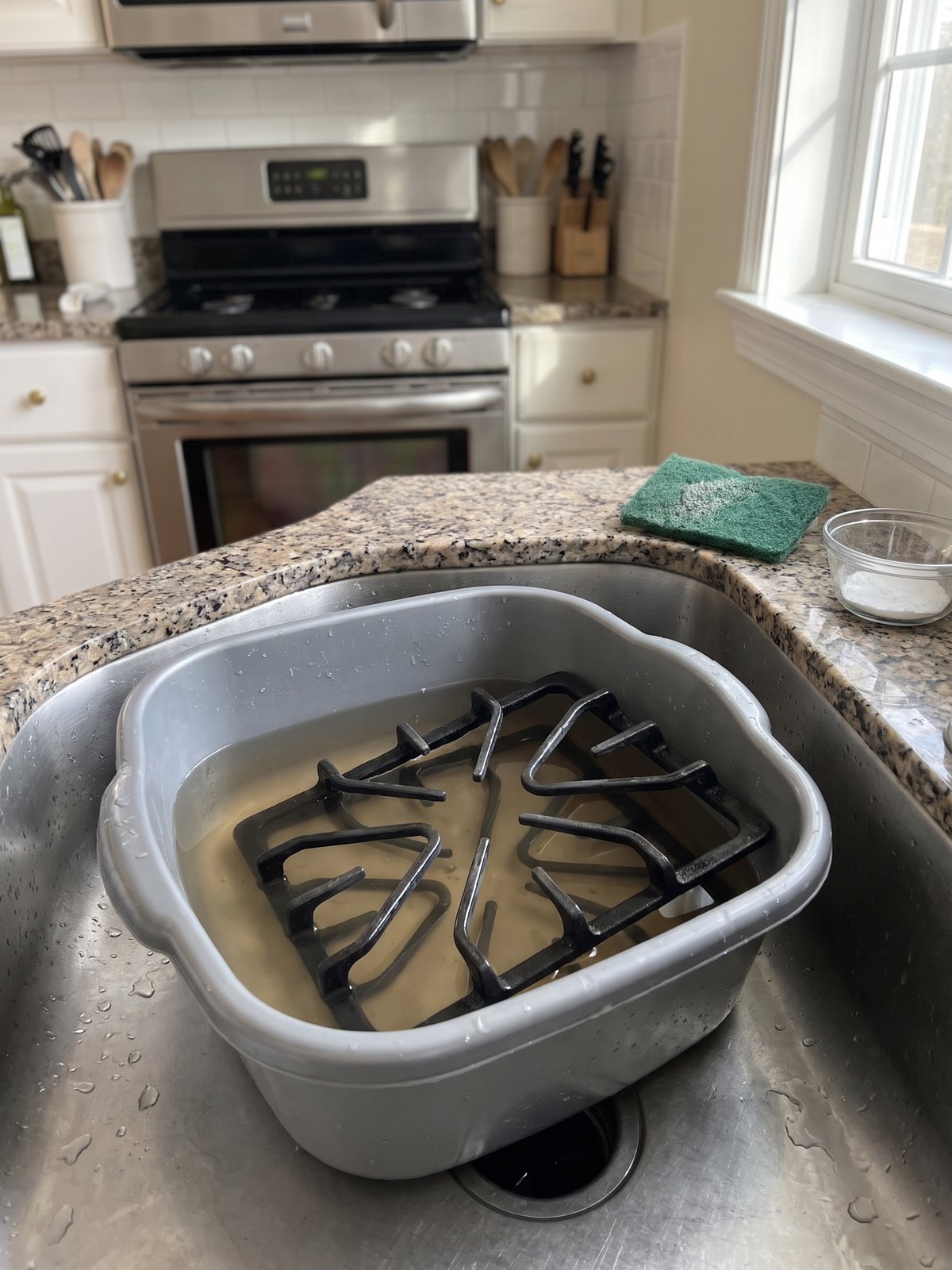
When the foil stops making a difference, turn the grill off and let the grates cool all the way. Lift them out and set them in a plastic tub, a large bucket or a utility sink.
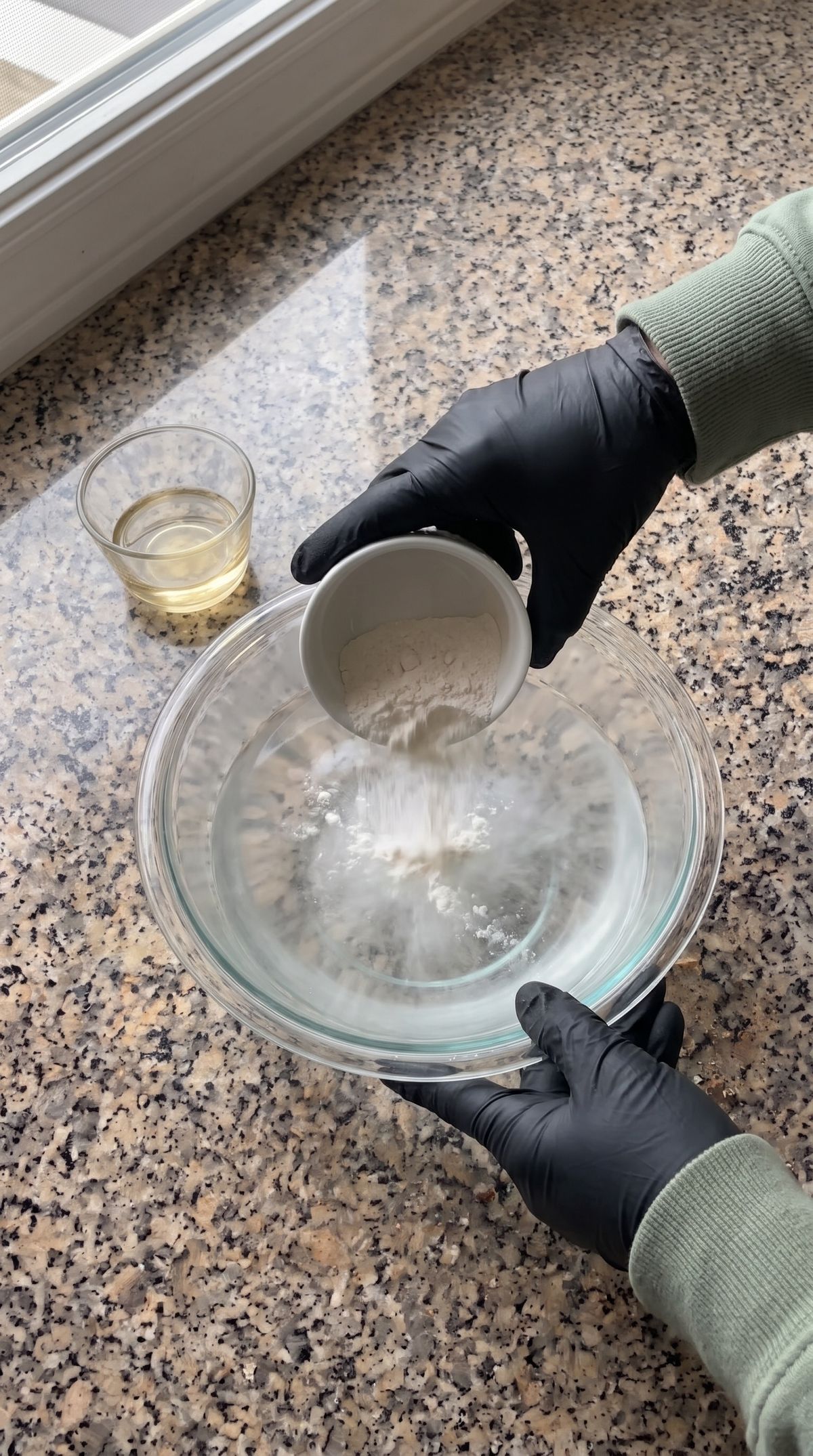
Put on rubber gloves. Stir 1/2 cup of washing soda into each gallon of warm water, using enough water to cover the grates. Let them soak, then scrub with a stiff nylon brush and rinse well with plain water.
What it looks like: stuck-on grease goes soft and comes off when you brush.
Soak porcelain-coated cast iron in hot water to loosen stubborn bits, then scrub gently with a little mild dish soap and a nylon brush or soft pad. Bare cast iron does not soak at all. Wash it with warm soapy water and a stiff brush, then rinse.
What it looks like: the black or glossy surface shows through again, with no gray film of old grease.
Wipe each grate completely dry with a soft cloth or paper towels, and do not leave it to air dry. Bare cast iron then gets the thin coat of oil from Step 4 before it goes back on the grill.
What it looks like: no beads of water in the corners or along the bottoms of the bars.
Foil and a good wash handle most grills, but a few situations need a different move.
We may earn a small fee from these links. It never changes the picks or your price.
The foil ball does the after-cook scrub. $3.86 at Target.com on 11/6/2026 (regular price $4.29).
For the stainless steel soak. $5.49 at Target.com on 11/6/2026.
A bristle brush with no wire, sold for cold cleaning, so it is for the deep clean on cool grates. $24.99 at Target.com on 11/6/2026.
The free Kitchen and Laundry Rescue Guide has the never-mix chart and ten checked fixes for around the house, ready to print.
Heat does a lot of the work for you. That is why Weber has you heat the grill on high before you brush, and why Lodge runs its foil scrub while the grill is still hot.
A loosely crumpled ball of foil has lots of folds and edges to scrape with. You throw it away when you finish, so there are no wire bristles left to break off into your food.
Arm & Hammer lists washing soda for hardened grease on grills. Cast iron is the exception to soaking, because Lodge says soaking cast iron is a recipe for rust. That is why it gets a quick wash, a full dry and a thin coat of oil instead.
Picture the first warm Saturday of the year. The burgers are ready, the family is hungry, and you lift the lid to find last fall’s dinner still stuck to the grates.
A word from Denise
That moment can make anybody want to grab the old wire brush and go to town. I would love for you to reach for the foil instead, because a quick scrub after each cook means the next cookout starts clean.
Wire bristles can break off, stick to the grates and end up in food. A CDC report described 6 people hurt that way, so the CDC says other cleaning methods might be considered. If you keep yours, check the brush and the grates before every cook.
Yes. Reynolds and Lodge both describe balling up foil and scrubbing the grates while you hold it with tongs. Lodge does it while the grill is still hot.
Not bare cast iron, because Lodge says soaking it is a recipe for rust. Porcelain-coated cast iron can soak in hot water before a gentle scrub, which is what Weber says to do.
We could not find one number that every maker agrees on. Use the foil after each cook, and do the deep clean whenever buildup stays put after the foil.

I’m Denise, and I explain home fixes the way a friend would at your kitchen table. Every tip I share is written from the sources listed on its page and checked against them before it goes up.
Sources opened and checked on November 7, 2026.
Every claim on this page, the source behind it and what the check found. Kept open for anyone who wants to look under the hood.
| Claim | Source | What the check found |
|---|---|---|
| CDC report: 6 people swallowed wire bristles; injuries from a neck puncture to a gut perforation needing emergency surgery | Source 1 (rechecked November 7) | Matches the source. |
| CDC: check the grill surface for bristles before cooking; alternative cleaning methods might be considered | Source 1 (rechecked November 7) | Matches the source. |
| Examine the brush before each use, discard loose or dangling bristles, inspect grates before cooking and food after | Source 2 (rechecked November 7) | Matches the source. |
| Balled-up foil scrubbed on the grates with tongs | Sources 7 and 8 (rechecked November 7); Source 2 lists balled-up foil | Matches the source. |
| Lodge: loosely crumple foil, scrub while the grill is still hot, then a lightly oiled paper towel held the same way | Source 7 (rechecked November 7) | Matches the source. |
| Preheat on high 15 minutes, lid closed, before brushing | Source 5 (rechecked November 7) | Matches the source. |
| Let parts cool before handling | Source 7 | Matches the source. |
| 1/2 cup washing soda per gallon of warm water as a soak; or on a moist stiff brush; rinse and dry | Source 3 (rechecked November 7; no soak time given, so none is stated) | Matches the source. |
| Washing soda not on aluminum | Sources 3 and 4 (rechecked November 7) | Matches the source. |
| Label: eye irritant, harmful if swallowed, avoid prolonged skin contact, gloves; rinse eyes with water 15 minutes | Source 4 (rechecked November 7) | Matches the source. |
| Porcelain-coated cast iron: soak in hot water to loosen stubborn bits, scrub gently with mild dish liquid and a nylon or soft pad or brush | Source 5 (rechecked November 7) | Matches the source. |
| Citrus soaps can promote corrosion | Source 5 (rechecked November 7) | Matches the source. |
| Dry completely with a soft cloth or paper towel; air drying can promote corrosion | Source 5; Source 6 (dry completely) | Matches the source. |
| Metal tools can damage porcelain | Source 5 (rechecked November 7) | Matches the source. |
| Bare cast iron: warm soapy water and a stiff brush, dry, thin layer of oil; soaking is a recipe for rust | Source 6 (rechecked November 7) | Matches the source. |
| The OXO brush is sold for cold cleaning | Product name “For Cold Cleaning” on the Target listing (Source 10) | Matches the source (product name). |
| Arm & Hammer lists washing soda for hardened grease on grills | Source 3 | Matches the source. |
| Why heat helps: Weber preheats before brushing; Lodge scrubs while hot | Sources 5 and 7 | Matches the source (attributed to the makers). |
| No one deep-clean schedule agreed by makers | None found across Sources 5 to 7 | Matches the source (absence in the pages opened). |
| Poison Help line, 1-800-222-1222; free and confidential, 24 hours a day, 7 days a week | Source 9 | Matches the source (HRSA Calling Poison Help page; one wording site-wide, November 7). |
| Prices: Reynolds 50 sq ft $3.86 (reg $4.29); washing soda 55 oz $5.49; OXO nylon brush $24.99 | Source 10, opened November 6, 2026 | Matches the source (Target.com, dated). |