A word from Denise
The label’s own trick is to get the water out of the way first, so the cleaner sits right on the ring. So drop the water, give the cleaner its 15 minutes, and let it do the heavy lifting.
Every tip here is checked against the sources listed at the bottom.
 By Denise. Checked on November 7, 2026 against the sources at the bottom of this page.
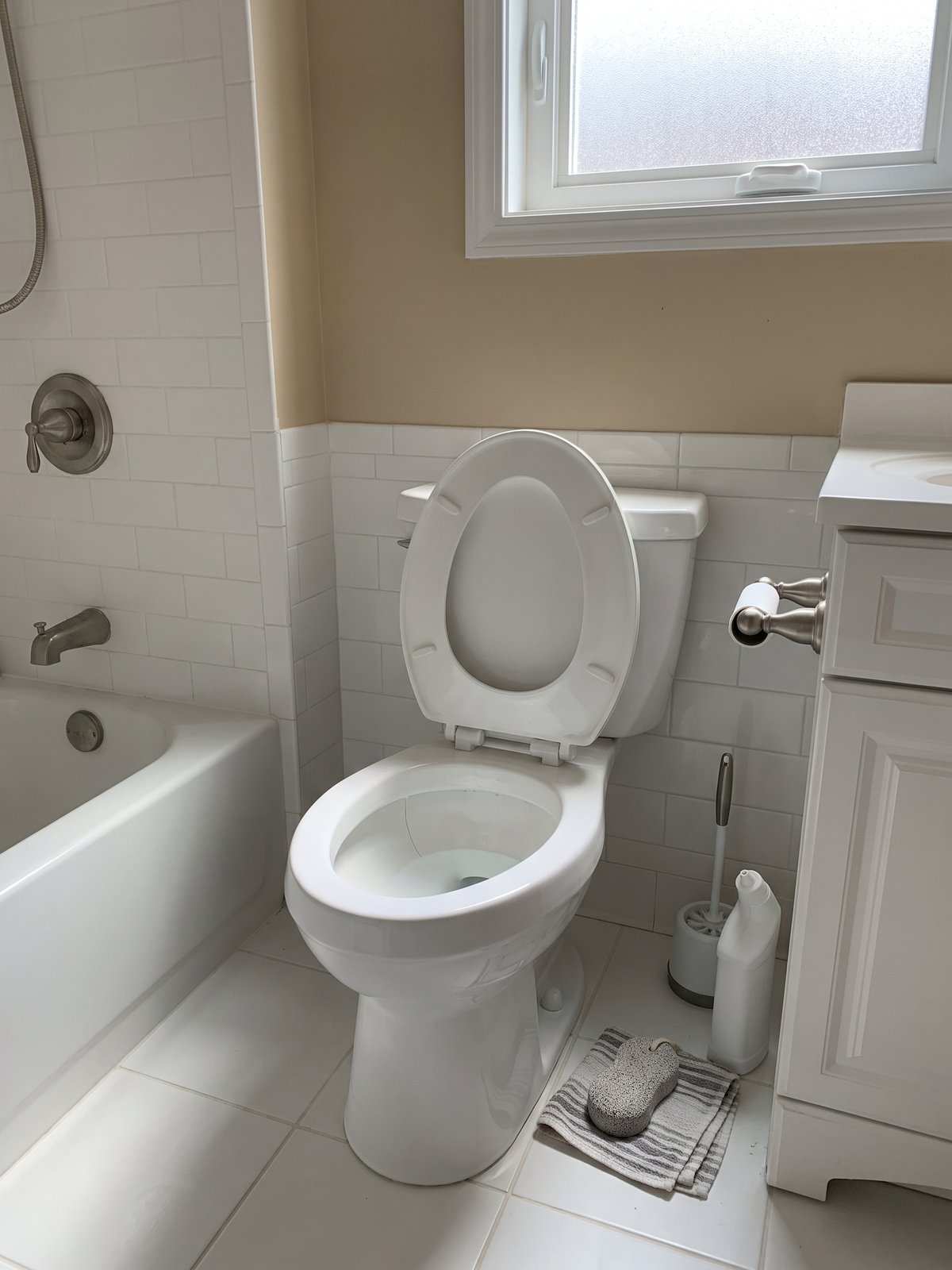
What works Get the water down below the ring, coat the ring with a lime and rust toilet bowl cleaner, let it sit 15 minutes, then scrub and flush. If a thin line is still there, rub it with a wet pumice stone made for toilets.
Put on rubber gloves and safety glasses, and turn on the bathroom fan or open a window. The Lysol Lime & Rust label calls for protective eyewear and gloves and says not to breathe the vapor.
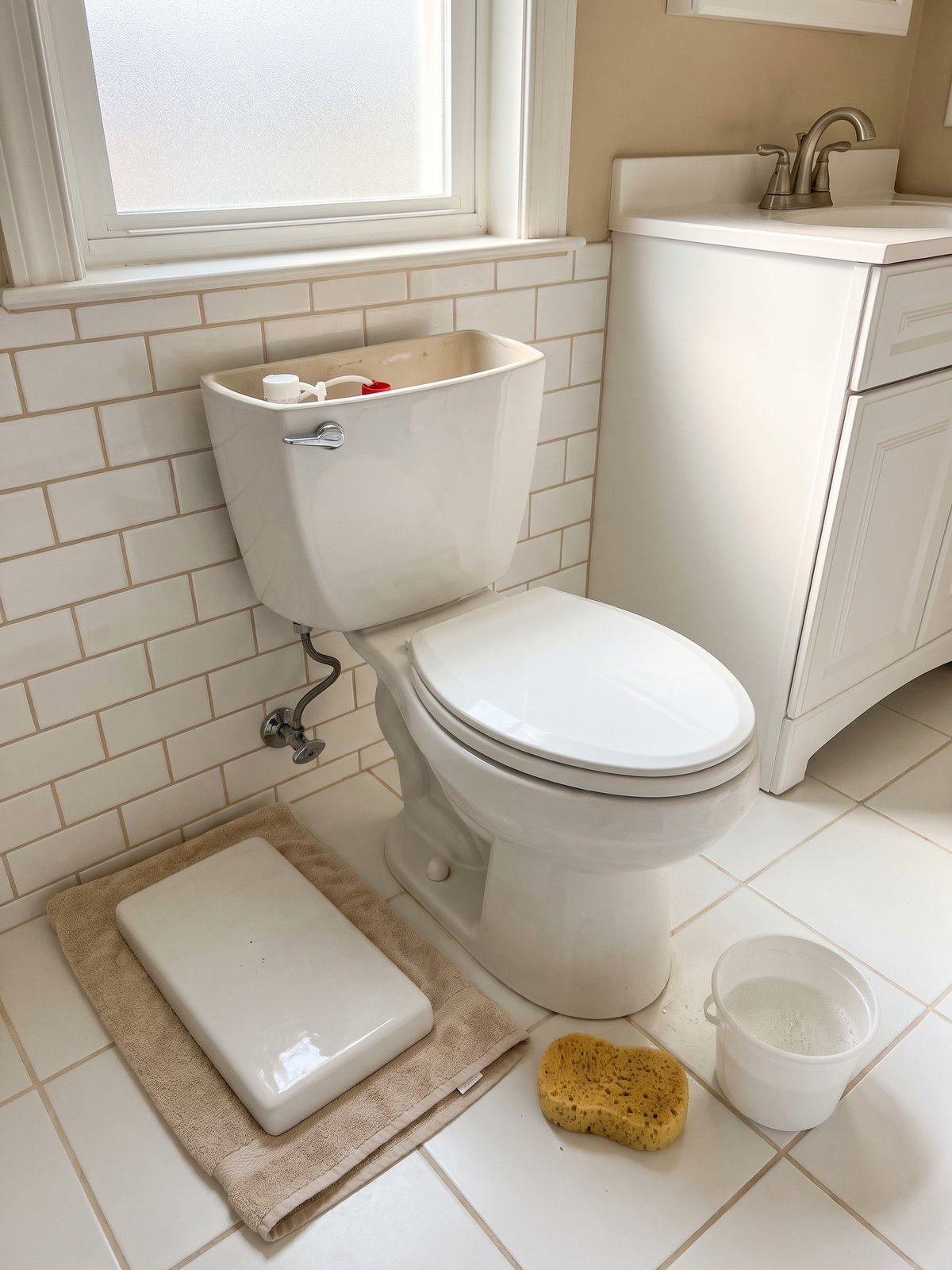
Turn off the water supply valve behind the toilet, then flush. Kohler’s service guides use those same two steps to empty the tank. The label’s directions for heavy rust stains say to remove the water from the bowl first if you can.
What it looks like: the bowl does not refill, and more of the ring is out in the open.
Squeeze the cleaner right onto the ring, slowly, all the way around the bowl. The label says to apply a generous amount right onto tough stains, and not to close the lid.
What it looks like: a slow, even sheet of cleaner sliding down over the ring and pooling in the bottom.
Set a timer for 15 minutes and leave the lid up. The label gives that soak for heavy rust stains, and the cleaner is made for hard water stains too. Keep the cleaner inside the bowl, and wipe any drips off the seat or floor right away.
Scrub the ring hard with the toilet brush, working all the way around. Turn the water supply back on so the tank refills, then flush to rinse.
What it looks like: most of the ring comes away with the brush. Look closely at the old waterline in good light.
If a thin line is still there, lower the water again (Step 2). Wet the pumice stone first, because Pumie’s directions say to wet the bar before you use it.
Rub it back and forth over the ring only, as the directions say, then flush to rinse. Stop as soon as the ring is gone.
What it looks like: a little gray paste builds up as the stone works, which Pumie says helps it clean, and the line fades.
We may earn a small fee from these links. It never changes the picks or your price.
The acid cleaner that does the main work in Steps 3 to 5. $4.99 at Target.com on 11/7/2026.
The label asks for gloves. up&up Reusable Heavy Duty Latex Gloves were $3.39 and up&up Latex-Free Reusable Gloves were $3.89 at Target.com on 11/7/2026.
Only for the last thin line in Step 6.
More picks: Cleaning products you should never mix
The free Kitchen and Laundry Rescue Guide has the never-mix chart and the Poison Help number in big print, ready to tape inside your cabinet door.
That ring is mostly rock. Hard water carries dissolved calcium and magnesium, and Virginia Cooperative Extension says those minerals leave scale on plumbing fixtures.
The ring forms right at the waterline for a simple reason. Delta, the faucet maker, explains that mineral deposits form when water evaporates from a surface. The edge of the water in your bowl is where that happens, flush after flush, so the scale stacks up in one neat line.
Acid dissolves that kind of scale. It is the same idea as the white crust inside a tea kettle, which vinegar can clean. A lime and rust bowl cleaner uses hydrochloric acid instead, and its label calls it corrosive, which is why the gloves and glasses matter.
Pumice is the backup. Pumie calls it a block of mild abrasive pumice, and Kohler draws the line at strong abrasives, which scratch and dull the bowl.
If you scrub that toilet every week and the ring just sits there like it pays rent, that does not mean you are not scrubbing hard enough.
A word from Denise
The label’s own trick is to get the water out of the way first, so the cleaner sits right on the ring. So drop the water, give the cleaner its 15 minutes, and let it do the heavy lifting.
Kohler says soft abrasive cleaners are fine when necessary, but strong abrasives scratch and dull the surface. Wet the stone, rub only the ring, stop when it is gone, and skip the stone if your toilet manual says no abrasives.
Vinegar does dissolve limescale, but we could not find a toilet maker or label that gives an amount or a time for it. A lime and rust bowl cleaner comes with label directions, so this page uses that. Never mix vinegar with bleach.
Hard water leaves new mineral scale where the water dries. Kohler’s manual says to use a toilet bowl cleaner at least once a week, which keeps it from building up.
No. Toilet bowl cleaners are acids, and the Washington State Department of Health says never to mix bleach with acids. The Lysol Lime & Rust label says not to use it with bleach or any other chemical product.

I’m Denise, and I explain home fixes the way a friend would at your kitchen table. Every tip I share is written from the sources listed on its page and checked against them before it goes up.
Sources opened and checked on November 7, 2026.
Every claim on this page, the source behind it and what the check found. Kept open for anyone who wants to look under the hood.
| Claim | Source | What the check found |
|---|---|---|
| Label: protective eyewear and gloves; do not breathe vapor or fumes | Source 1 (rechecked November 7) | Matches the source (label via retailer). |
| Label: for heavy rust stains, remove water from bowl first if possible; soak 15 minutes; repeat if necessary | Source 1 (rechecked November 7) | Matches the source. The page says plainly that the 15 minute soak is the label’s heavy stain step |
| Label: destroys hard water and rust stains; dissolves mineral deposits | Source 1 (rechecked November 7) | Matches the source. |
| Label: generous amount directly on tough stains; do not close lid | Source 1 (rechecked November 7) | Matches the source. |
| Label: hydrochloric acid 9.50% | Source 1 (rechecked November 7) | Matches the source. |
| Label: “Corrosive. Causes irreversible eye damage and skin burns. Harmful if swallowed.” | Source 1 (rechecked November 7) | Matches the source (quoted). |
| Label: “Do not use with chlorine bleach or any other chemical products.” | Source 1 (rechecked November 7) | Matches the source (quoted). |
| Label: not on toilet bowl lids, vanities, sinks, bathtubs, cabinets, countertops, rugs; may rust wire brushes | Source 1 (rechecked November 7) | Matches the source. |
| Label first aid: hold eye open, rinse slowly and gently 15 to 20 minutes | Source 1 (rechecked November 7) | Matches the source. |
| Turn off the water supply, flush; turn it back on after | Source 4 (opened November 7; Kohler uses these steps to drain the tank) | Matches the source. |
| Kohler: most toilet bowl cleaners safe, inside the bowl only; soft abrasive cleaners when necessary; strong abrasives scratch and dull | Source 2 (rechecked November 7) | Matches the source. |
| Some Kohler manuals: do not use abrasive cleansers | Source 3 (rechecked November 7) | Matches the source. |
| Kohler: do not use in-tank cleaners (damage flush valve or working parts) | Sources 2 and 3 (rechecked November 7) | Matches the source. |
| Kohler: use toilet bowl cleaners at least once a week | Source 3 (rechecked November 7) | Matches the source. |
| Kohler: hard water deposits can clog rim holes; use a commercial hard water cleaner per package | Source 2 (rechecked November 7) | Matches the source. |
| Kohler: wipe splashes off plastic or plated surfaces immediately | Source 2 (rechecked November 7) | Matches the source. |
| Pumie: mild abrasive pumice; removes toilet bowl rings; wet the bar; rub back and forth; paste buildup helps clean; not for highly polished metals, glass, fiberglass, unbaked enamel | Source 5 (rechecked November 7) | Matches the source (maker listing). |
| Hard water has calcium and magnesium; scale on plumbing fixtures; lab test; qualified water treatment professional | Source 6 (rechecked November 7) | Matches the source. |
| Mineral deposits form when water evaporates from a surface | Source 7 (said of shower heads) | Matches the source. By close analogy |
| Vinegar dissolves limescale (kettle example) | Sources 7 and 8 | Matches the source. |
| Toilet bowl cleaners contain acids; never mix bleach with acids | Source 9 | Matches the source (official). |
| Poison Help line, 1-800-222-1222; free and confidential, 24 hours a day, 7 days a week | Source 10 | Matches the source (HRSA Calling Poison Help page; one wording site-wide, November 7). |
| Prices: Lysol Lime & Rust 2pk $4.99; up&up latex gloves $3.39, latex-free $3.89 | Source 11, read November 7, 2026 | Matches the source (dated, Target.com online). No pumice price shown (none listed) |
| Left out: a total time estimate; a brush test that tells grime from scale; “much stronger acid than vinegar”; keeping the stone wet the whole time and light pressure; vinegar or citric acid amounts | No label, maker or official source found | Left out on purpose |