How to Clean a Toilet Tank (the Part Nobody Cleans)
Every tip here is checked against the sources listed at the bottom.
By Denise. Checked on November 7, 2026 against the sources at the bottom of this page.
The short answer
What works Turn off the water valve behind the toilet, flush to empty the tank, and sponge out the last of the water. Scrub the tank with warm water and a little dish soap, then turn the water back on and flush twice. Skip bleach tablets, because Kohler and Fluidmaster both warn they damage the parts inside.
How long
One short session. Nothing has to soak, and the tank refills by itself when you turn the water back on.
What it costs
Rubber gloves were $3.39 and a scrub brush was $3.19 at Target.com on November 7, 2026. You likely have dish soap and a sponge already.
What you need
Rubber gloves, a sponge, a scrub brush with a handle, dish soap, an old towel and a bucket of warm water.
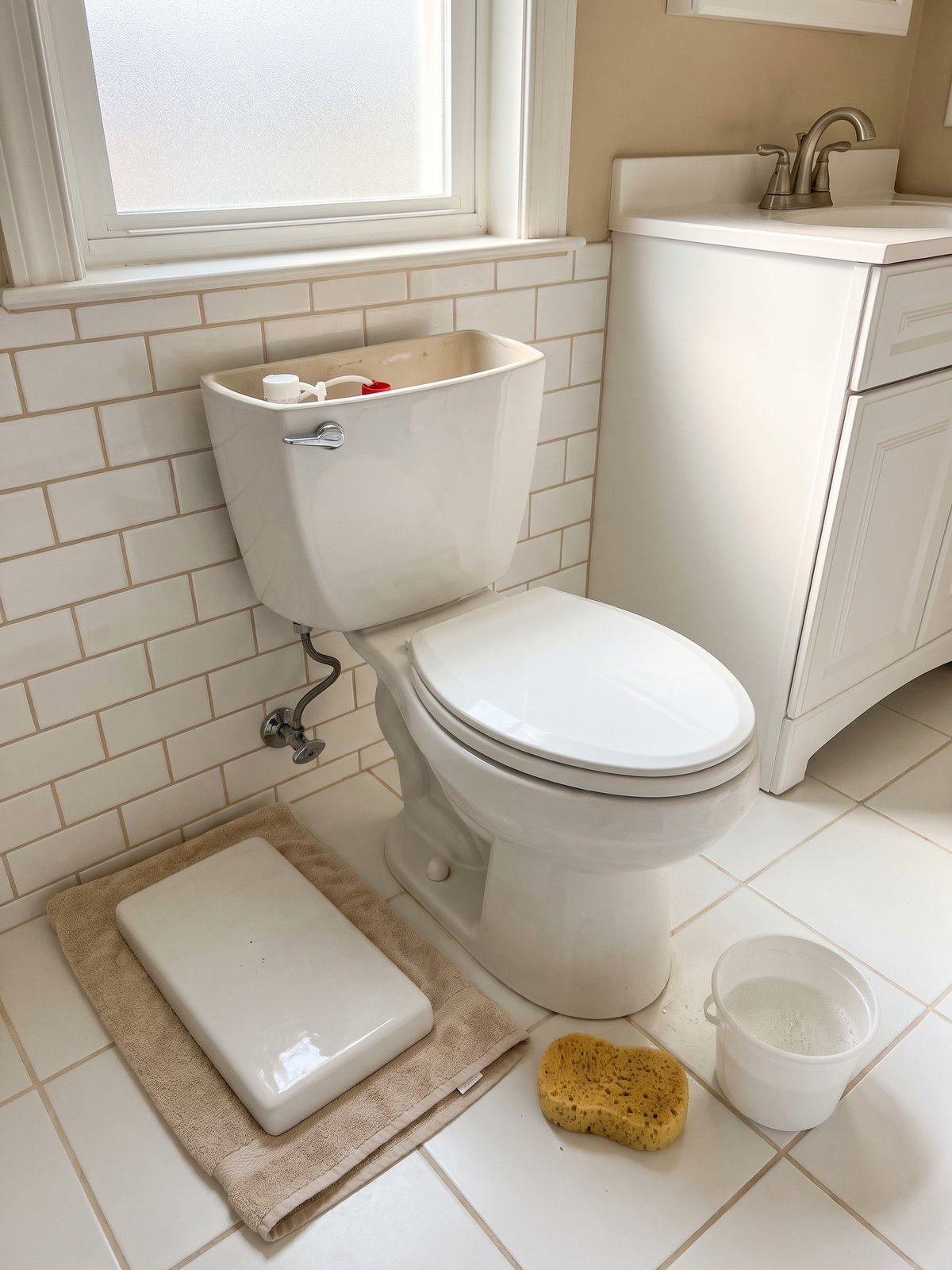
Lift the lid and take a look before you touch anything. You will see the fill valve (the tall post that refills the tank), the flush valve in the middle, and the rubber seal, often called the flapper, that closes the hole at the bottom.
Fluidmaster, a maker of these parts, sells fill valves with plastic or brass bases, and the seal is rubber. That is why this job needs a gentle hand. The cleaners that work on the bowl are not always safe in here.
Step by step
1
Set the lid down safely
Lay an old towel on the floor and set the tank lid on it, flat side down, out of the way of your feet.
2
Turn off the water
Find the small valve on the wall behind the toilet, near the floor. Turn it clockwise until it stops, which is the direction Fluidmaster gives for shutting the water off.
3
Flush and sponge it dry
Flush the toilet and hold the handle down so most of the water drains out. A little water stays in the bottom, so soak it up with a sponge and wring it into a bucket. Fluidmaster’s own repair steps start the same way: flush out the tank and sponge it dry.
What it looks like: an empty tank with a bare floor, so you can see any crust, rust-colored stains or slime.
4
Scrub with dish soap and warm water
Put on your gloves. Add a squirt of dish soap to a bucket of warm water, dip your brush, and scrub the tank walls and floor. Work gently around the valves and the seal rather than scrubbing hard on them.
What it looks like when it is working: the slimy film comes away on the brush and the porcelain underneath looks clean.
5
Wipe the seal and look at it
Wipe the rubber seal gently with a soapy sponge, and take a good look at it while you are there. Fluidmaster says a seal that is damaged or dirty lets water dribble from the tank into the bowl, and that is what keeps a toilet running.
6
Turn the water on and flush twice
Turn the valve counterclockwise to turn the water back on, and let the tank fill. Flush twice to rinse away the soap, then set the lid back on carefully.
What it looks like when it worked: clear water sitting in a clean tank.
When it will not work, and what to do instead
Sometimes the tank gets dirty again fast, or the toilet acts up after cleaning. Here is what that usually means.
You heard the blue drop-in tablets keep the tank clean for you. A tablet you drop in and forget sounds like less work. But Kohler’s toilet manual says not to use in-tank cleaners, because products containing chlorine can seriously damage the fittings and cause leaks. Fluidmaster says the same, and both say tablets void the warranty.
There is hard white crust on the walls. Soap and a brush will lift slime, but not mineral crust. We could not find a toilet or parts maker that gives a safe way to dissolve crust inside the tank, and the CLR label rules out plastics and brass. So scrub off what comes loose and leave the rest.
The slime is orange, reddish brown or dark and comes back fast. On a private well, that can be iron bacteria, which Penn State Extension calls more a nuisance than a health hazard. The University of Nebraska says to test your water, and warns chlorine may make the staining worse.
The toilet keeps running after you clean. The seal may be worn. Fluidmaster calls replacing the seal a simple job that can often fix a running toilet.
No bleach tablets in the tank. Kohler and Fluidmaster both warn that chlorine or bleach in-tank cleaners can damage tank parts and lead to leaks or flooding.
No CLR or other lime remover in the tank. The CLR label lists plastics and brass among the surfaces not to use it on, and tank parts can be made of both.
Never mix toilet cleaners. The New Jersey Department of Health lists toilet bowl cleaners and vinegar among the products never to mix with bleach. Do not pour bowl cleaner into a tank that has a tablet in it. See the full never-mix chart.
Wear gloves and open a window or run the fan.
Poison Help line, 1-800-222-1222. It is free and confidential, 24 hours a day, 7 days a week.
What to buy
We may earn a small fee from these links. It never changes the picks or your price.
up&up Utility Iron Handle Scrub Brush
A handle keeps your hand out of the tank. $3.19 at Target.com on 11/7/2026.
The free Kitchen and Laundry Rescue Guide includes the never-mix chart as a one-page printable, so bowl cleaner and bleach never meet in the same toilet.
Why it works
A toilet tank holds the same water that comes out of your pipes, and it sits still between flushes. Well water with iron in it can feed the bacteria that make orange or dark slime, and that slime settles right on the tank walls.
Soap and a brush lift that film off. Think of a flower vase you never empty. The water looks fine from the top, but tip it out and the bottom tells the truth.
The tablets look like a shortcut, but Kohler says chlorine products can seriously damage the fittings inside the tank. A soap and brush scrub does the job without putting those parts at risk.
A word from Denise
The toilet starts running in the middle of the night, you lift the lid to jiggle the handle, and there it is. That is not your fault, because nobody tells you the tank needs cleaning too. So whenever you lift that lid and see slime, give it a gentle scrub and keep the tablets out.
Questions people ask
Can I put bleach in my toilet tank?
Toilet makers say no. Kohler warns that products with chlorine can seriously damage the fittings in the tank and cause leaks, and Fluidmaster says bleach tablets can damage tank parts and cause flooding. Both say it voids the warranty.
Can I use vinegar or CLR in a toilet tank?
Not CLR, because its label rules out plastics and brass, and tank parts can be made of both. We could not find a toilet or parts maker that says vinegar is safe for the rubber seal, so this page sticks to dish soap and water.
Why is there orange or dark slime in my toilet tank?
If you have a private well, it can be iron bacteria. Penn State Extension says these are more of a nuisance than a health hazard, and the University of Nebraska recommends testing your water when you see the slime.
Why does my toilet keep running after I cleaned the tank?
The seal may not be closing. Fluidmaster says a damaged or dirty seal lets water dribble from the tank into the bowl, and that replacing it is a simple job.
I’m Denise, and I explain home fixes the way a friend would at your kitchen table. Every tip I share is written from the sources listed on its page and checked against them before it goes up.