A word from Denise
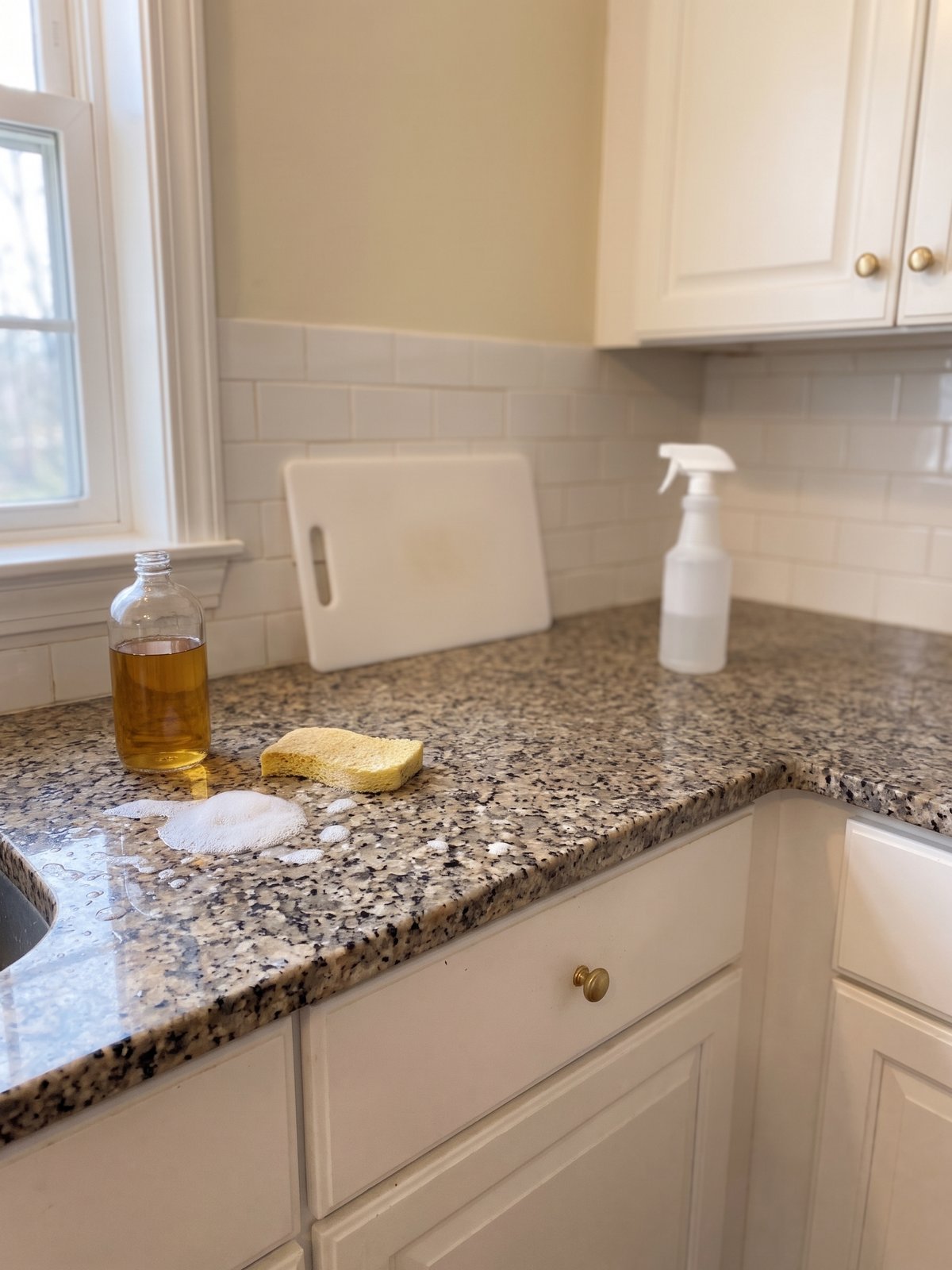
That lemon and salt scrub is a pretty ritual, and nobody is wrong for liking it. It just was never built for grease or raw chicken, so let soap and the sanitizer do that part.
Every tip here is checked against the sources listed at the bottom.
 By Denise. Checked on November 7, 2026 against the sources at the bottom of this page.
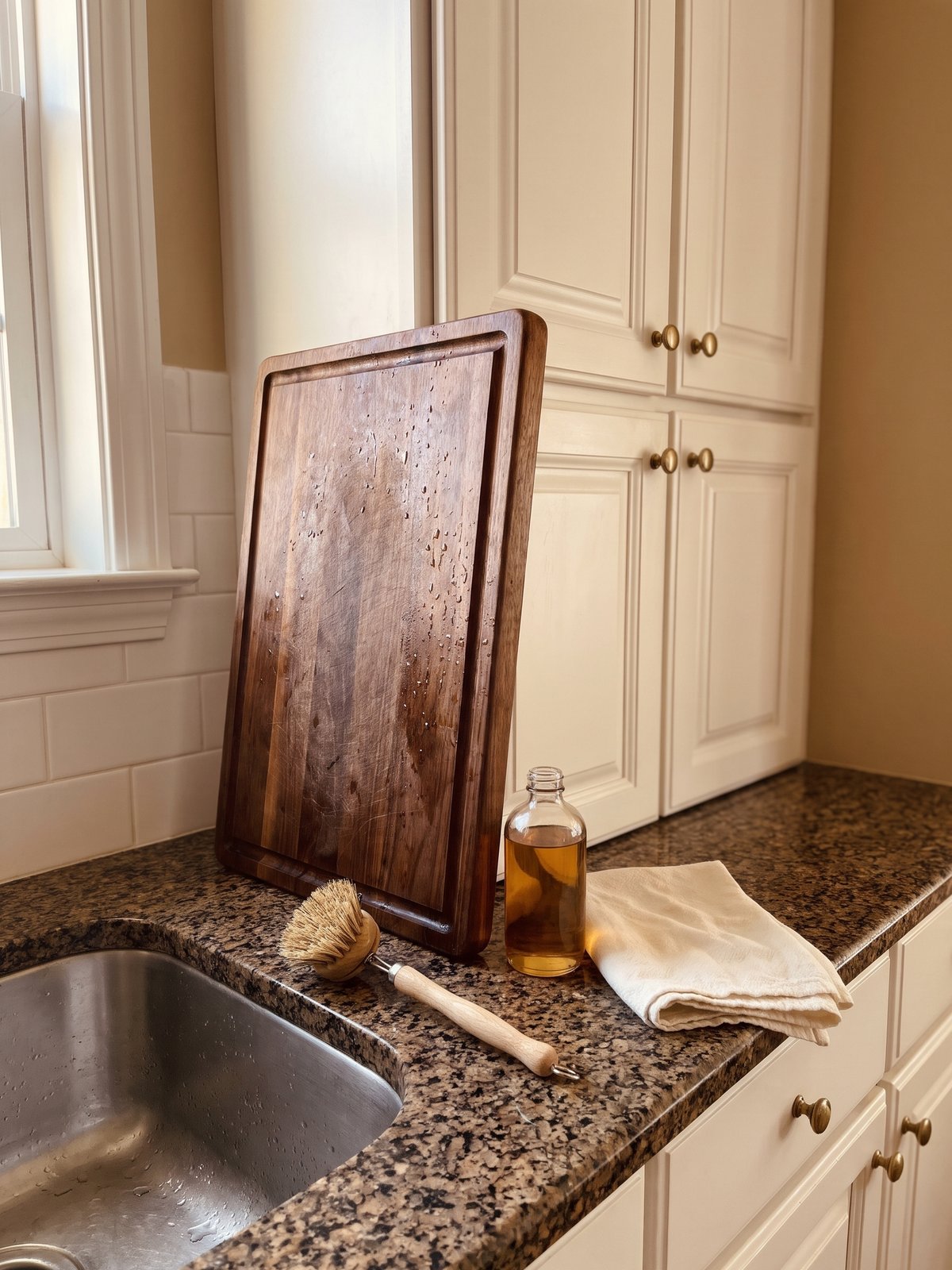
What works Scrub the board with hot, soapy water after every use, rinse it and stand it up to air dry. After raw meat, poultry or seafood, wash it first, then sanitize it with 1 tablespoon of unscented bleach in a gallon of water for at least 1 minute, and rinse. Rub in food-safe mineral oil about once a month.
You have probably seen someone scrub a board with half a lemon and a pile of salt. It smells wonderful, so it makes sense that people trust it. But none of the food safety and extension pages we checked list salt and lemon as a way to clean or sanitize a board. Neither one is a soap, so neither one lifts grease.
Salt and lemon can freshen a board and help with a stain, but you cannot count on them to deal with germs. For that, you need soap every time, and a sanitizer after raw meat.
Scrape off any food bits. Then scrub the whole board, front, back and edges, with hot water, dish soap and a sponge or soft brush. The USDA tip quoted by Wisconsin’s extension says to do this after every use.
Rinse the soap off under running water. Do not leave the board sitting in a sink of water, because Maine’s extension says soaking can make wood warp or crack over time.
Do this only after the board is washed and rinsed. Ohio State’s extension says to wash the board in hot, soapy water and then sanitize it as a separate step.
Mix 1 tablespoon of unscented regular chlorine bleach into 1 gallon of water. Pour it over the board and let it sit for at least 1 minute. That is the USDA mix, as quoted by Wisconsin’s extension.
Rinse the bleach water off with clean water. The USDA tip says to rinse well and then let the board air dry.
Stand the board on its edge or set it on a rack so air reaches both sides. Maine’s extension says not to stack wet boards or leave them lying flat for long. Let it dry all the way before you put it away.
When the board is clean and fully dry, rub a thin coat of food-safe mineral oil into it with a paper towel. Let it soak in for several hours or overnight, then wipe off the extra. Maine’s extension says to do this about once a month.
Skip olive oil and vegetable oil. Maine’s extension says they can turn sticky and rancid over time.
Not everyone wants bleach in the kitchen. Maine’s extension also lists plain 3% hydrogen peroxide (the brown drugstore bottle) or undiluted 5% white vinegar as sanitizers for a washed board.
Sometimes a board needs more than a wash.
We may earn a small fee from these links. It never changes the picks or your price.
For the monthly oiling. up&up Mineral Oil was $2.69 at Target.com on 11/6/2026. It is sold in the pharmacy aisle as a laxative (USP), so it is made to be swallowed.
For the bleach-free sanitizer step. $0.99 at Target.com on 11/7/2026.
For the bleach mix. up&up Reusable Heavy Duty Latex Gloves were $3.39 at Target.com on 11/7/2026.
The free Kitchen and Laundry Rescue Guide has this wash, sanitize and oil routine, the never-mix chart and the Poison Help number, ready to print.
Here is why soap does what salt and lemon cannot. The American Cleaning Institute explains that every soap molecule has two ends: one wants to be in water, and the other gathers up the grime and holds it in the water until the rinse carries it away.
A sanitizer does a different job. The American Cleaning Institute defines it as something that reduces germs on a surface, though not always all of them, which is why every extension page here puts soap first.
Drying is the last piece. A wet board left flat is like a damp towel balled up in a hamper, so stand it up and let the air reach both sides.
A word from Denise
That lemon and salt scrub is a pretty ritual, and nobody is wrong for liking it. It just was never built for grease or raw chicken, so let soap and the sanitizer do that part.
It can freshen a board and help lift a stain. But neither one is a soap, so it will not cut grease, and none of the food safety pages we checked list it as a sanitizer. Wash with soap first.
Wash it with hot, soapy water and rinse it. Then pour on 1 tablespoon of unscented bleach mixed into a gallon of water, let it sit at least 1 minute, rinse well and air dry. That is the USDA mix.
The USDA tip says either one can work if you clean it right. Maine’s extension says wood suits lower-risk foods like bread, fruit and vegetables, because it is harder to sanitize after raw meat or seafood. So a plastic board for raw meat is a smart pairing.
A 1993 University of Wisconsin study found most bacteria put on wood could not be recovered within minutes. But the researchers were not sure the bacteria had died, and the USDA tip still says to wash and sanitize wood, so it is no reason to skip the soap.

I’m Denise, and I explain home fixes the way a friend would at your kitchen table. Every tip I share is written from the sources listed on its page and checked against them before it goes up.
Sources opened and checked on November 7, 2026.
Every claim on this page, the source behind it and what the check found. Kept open for anyone who wants to look under the hood.
| Claim | Source | What the check found |
|---|---|---|
| No agency or extension page we checked lists salt and lemon as a cleaning or sanitizing method | Sources 1 to 4 (none mention it; rechecked November 7) | Matches the source (absence in the pages checked). |
| Neither salt nor lemon is a soap or lifts grease; salt and lemon can freshen a board and help with a stain, but cannot be counted on for germs | Source 6 | Matches the source. |
| Hot, soapy water after each use, rinse, air dry | Source 2 (USDA quote; rechecked November 7) | Matches the source. |
| Sponge or soft-bristled brush; do not soak (warp or crack over time) | Source 1 (rechecked November 7) | Matches the source. |
| Wash first, sanitize as a separate step | Sources 2 and 3 (rechecked November 7) | Matches the source. |
| 1 Tbsp unscented regular bleach per gallon, at least 1 minute, rinse well, air dry | Source 2 (USDA Hotline tip; the same page also says “several minutes” elsewhere); Source 4 (rechecked November 7) | Matches the source. Maine gives a gentler routine mix for wood, 1/2 teaspoon per quart for 1 minute |
| Stand upright or on a rack; do not stack wet boards or leave them flat for long | Source 1 (rechecked November 7) | Matches the source. |
| Mineral oil about once a month; several hours or overnight; no olive or vegetable oil (sticky, rancid) | Source 1 (rechecked November 7) | Matches the source. |
| 3% peroxide or undiluted 5% white vinegar as sanitizers for wood | Source 1 (rechecked November 7) | Matches the source. |
| Never mix vinegar and peroxide; test peroxide in an unseen place (discolor or fade) | Source 3 (rechecked November 7) | Matches the source. |
| No sit time given for peroxide or vinegar | Source 1 (none given; rechecked November 7) | Matches the source (absence). |
| Baking soda and peroxide stain paste named as a home fix, with no ratio or time | Source 3 (spot test) | Matches the source (no numbers given). |
| Replace boards with cracks, chips or grooves; sand or replace boards with knife cuts | Sources 2 and 4 (rechecked November 7) | Matches the source. |
| Laminated boards may crack or peel in the dishwasher; solid wood may warp | Sources 3 and 1 (rechecked November 7) | Matches the source. |
| Wood or plastic both work; wood suits lower-risk foods | Sources 1 and 2 (rechecked November 7) | Matches the source. |
| Surfactants: one end wants water, the other does not; soil lifts off and is held in the water; the rinse carries it away | Source 6 (rechecked November 7) | Matches the source. |
| Sanitizer reduces, but does not necessarily eliminate, microorganisms | Source 7 (rechecked November 7) | Matches the source. |
| 1993 Cliver and Ak study: most bacteria unrecoverable from wood within minutes; researchers not sure they died | Source 5 (rechecked November 7; report on the study) | Matches the source. Via the university report |
| Bleach plus acid makes chlorine gas, plus ammonia makes chloramine; bleach reacts with hydrogen peroxide | Source 8 (rechecked November 7) | Matches the source (official). |
| Peroxide plus vinegar makes peracetic acid (eyes, skin, lungs) | Source 9 (rechecked November 7) | Matches the source (official). |
| up&up Mineral Oil 16 oz is labeled “Lubricant Laxative Mineral Oil USP” | Source 12 (product image text read on the Target listing, 11/7) | Matches the source. |
| Prices: up&up mineral oil $2.69 (11/6); up&up 3% peroxide 32 oz $0.99 (11/7); up&up latex gloves $3.39 (11/7) | Source 12, read | Matches the source (dated, Target.com online). Walmart prices not read, so none shown |
| Bleach label: safety glasses and rubber gloves; vacate poorly ventilated areas | Source 10 (opened November 7) | Matches the source (one EPA-registered label). |
| Poison Help line, 1-800-222-1222; free and confidential, 24 hours a day, 7 days a week | Source 11 | Matches the source (HRSA Calling Poison Help page; one wording site-wide, November 7). |