A word from Denise
So make it a soak-and-walk-away job. Fill the sink, drop them in, and go fold a load of laundry. In about half an hour, the grates are ready for an easy scrub.
Every tip here is checked against the sources listed at the bottom.
 By Denise. Checked on November 7, 2026 against the sources at the bottom of this page.
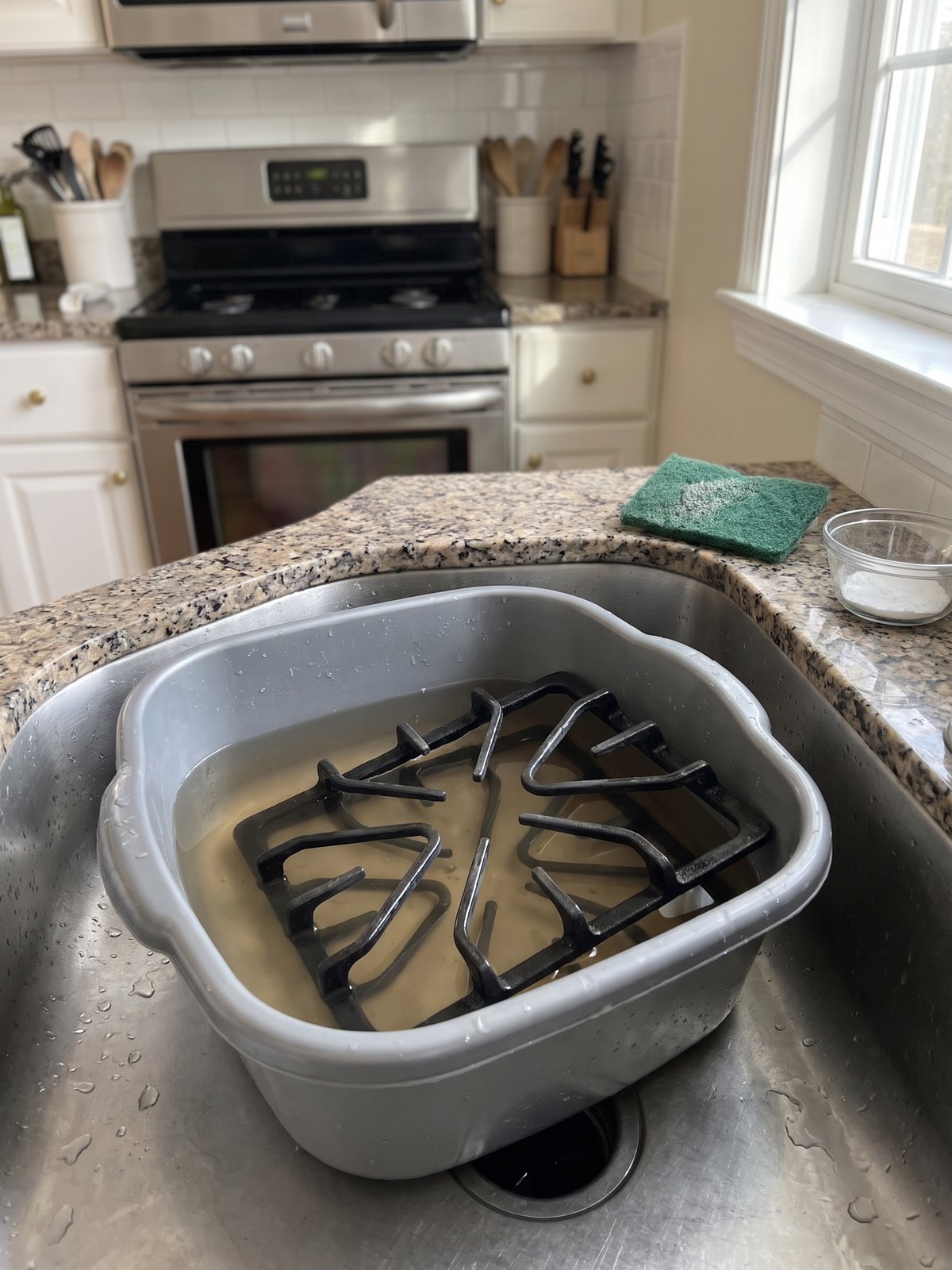
What works Soak porcelain-coated grates (the glassy or satin kind) for at least 30 minutes in warm water with half a cup of washing soda per gallon. Then scrub with a plastic pad, rinse well and dry. For bare cast iron, skip the soak: wash with soap and a stiff brush and dry right away.
Look in your stove’s manual or on the maker’s website before you start. The two common kinds need different care.
Turn every burner off and wait until the grates are cool to the touch. Whirlpool says to clean grates and caps only once they are cool.
Set the grates on a towel by the sink. Do not knock them against each other or against a cast iron pan, because Whirlpool warns that banging grates and caps together can chip them.
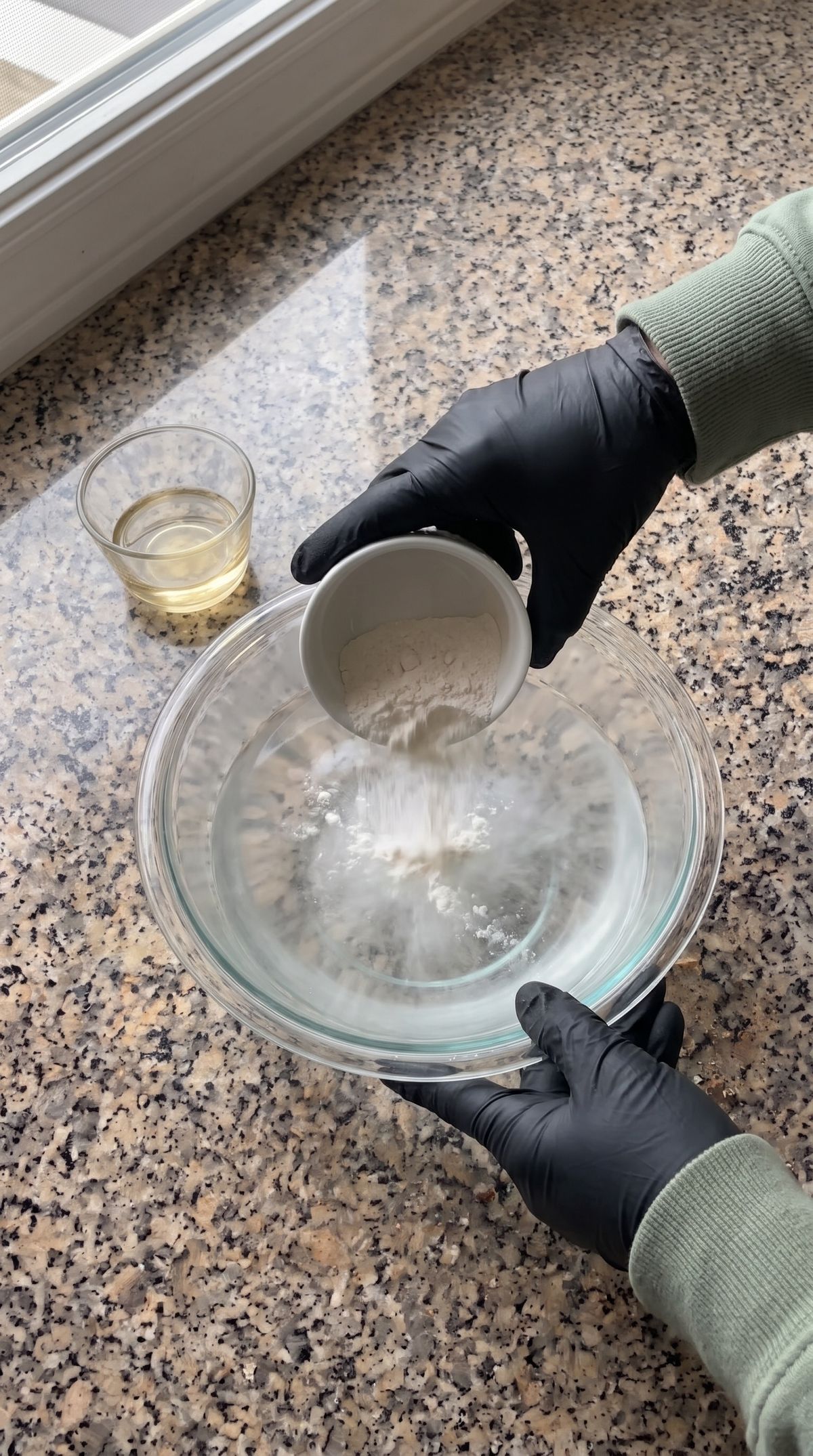
Put on your gloves. Fill the sink or a plastic tub with warm water and stir in half a cup of washing soda for every gallon, until it dissolves. That is Arm & Hammer’s own mix for range tops, and a sink with 2 gallons of water gets 1 cup.
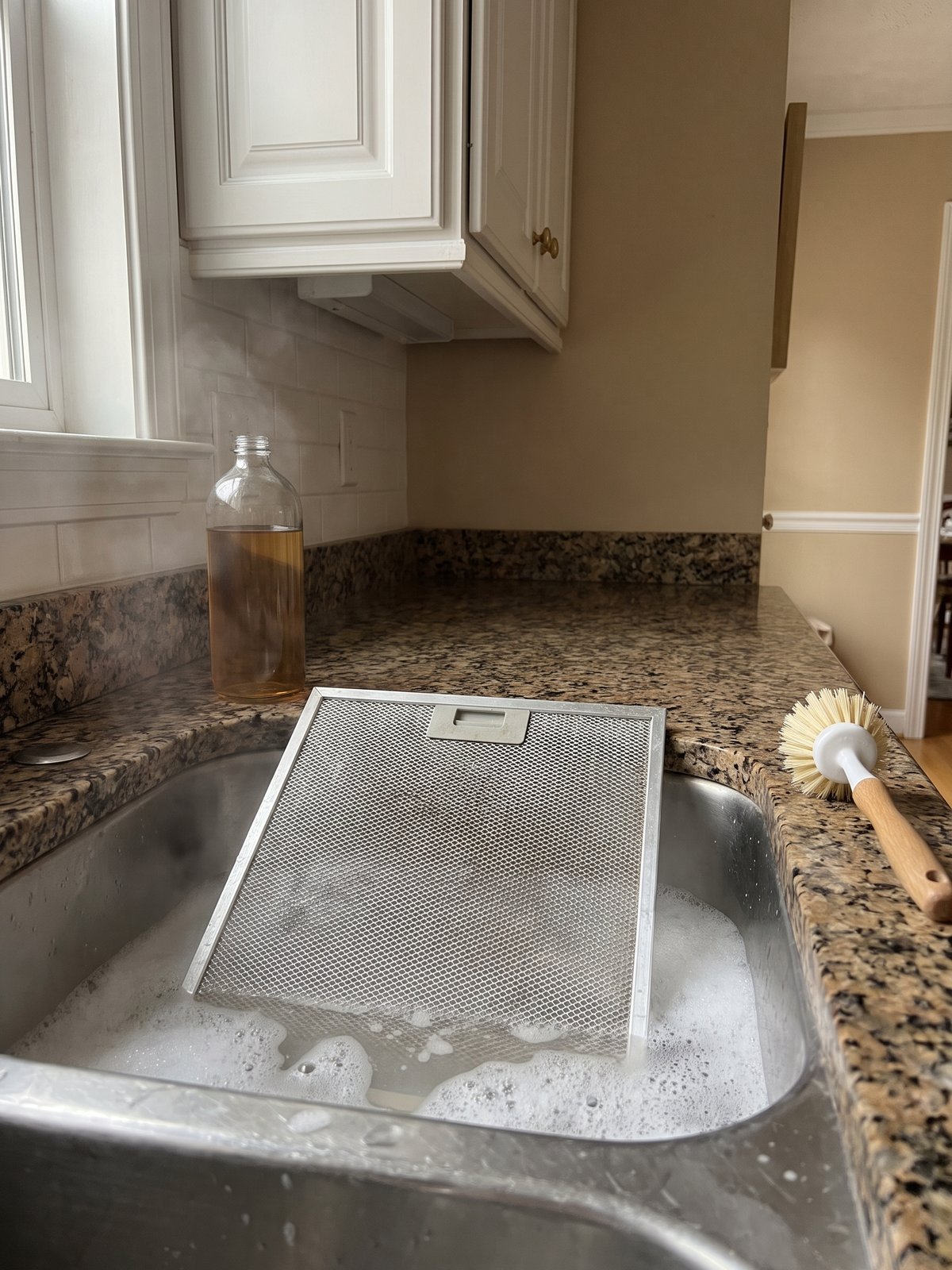
Lay the grates in the water so they are covered. Leave them for at least 30 minutes, which is the time Arm & Hammer gives for soaking greasy stove burners.
Keep your gloves on. Scrub each grate with a non-scratch plastic pad, paying attention to the feet and the spots right over the burners. Whirlpool’s cooktop page says to use a nonabrasive plastic scrubbing pad on the grates.
Rinse every grate under running water. Arm & Hammer says to rinse well and dry, so towel them off before they go back on the stove.
Bare cast iron can rust if it sits in water, so this wash is quick. Lodge, the cast iron maker, says soaking cast iron is “a recipe for rust.”
Some coated grates can go in the dishwasher, and some cannot, so check your manual first. Whirlpool says to use the most aggressive cycle, and to soak or scrub off heavily baked-on food first. Bare cast iron stays out, because Lodge says a dishwasher will remove the seasoning and likely cause rust.
Burner caps are a different story. Whirlpool says burner caps are not dishwasher safe, and not to put them back on while they are wet.
Grates that went years without a cleaning may need more than one try. Here is what to do.
We may earn a small fee from these links. It never changes the picks or your price.
The soak for coated grates. $5.49 at Target.com on 11/6/2026.
The maker says to wear them. up&up Reusable Heavy Duty Latex Gloves were $3.39 at Target.com on 11/6/2026 (latex-free pairs were $3.89).
For scrubbing coated grates without scratching. Scotch-Brite Zero Scratch Scour Pads, 4 count, were $3.99 at Target.com on 11/6/2026.
The free Kitchen and Laundry Rescue Guide has the washing soda mix, which metals it must never touch, and the never-mix chart, ready to print.
Here is what is happening on those grates. Every time grease spatters onto hot metal, it bakes on a little more. Lodge explains that oil heated hot enough changes from a wet liquid into a slick, hardened surface, and that hard layer is why dish soap alone barely touches it.
Washing soda is a fairly strong alkali (the opposite of an acid, like vinegar). That alkaline cleaning power loosens the baked-on grease so the plastic pad can wipe it away. The soak does the hard part while you do something else.
That same power is why it stays off bare cast iron. The seasoning on a bare grate is the very kind of baked-on oil the soak is made to loosen.
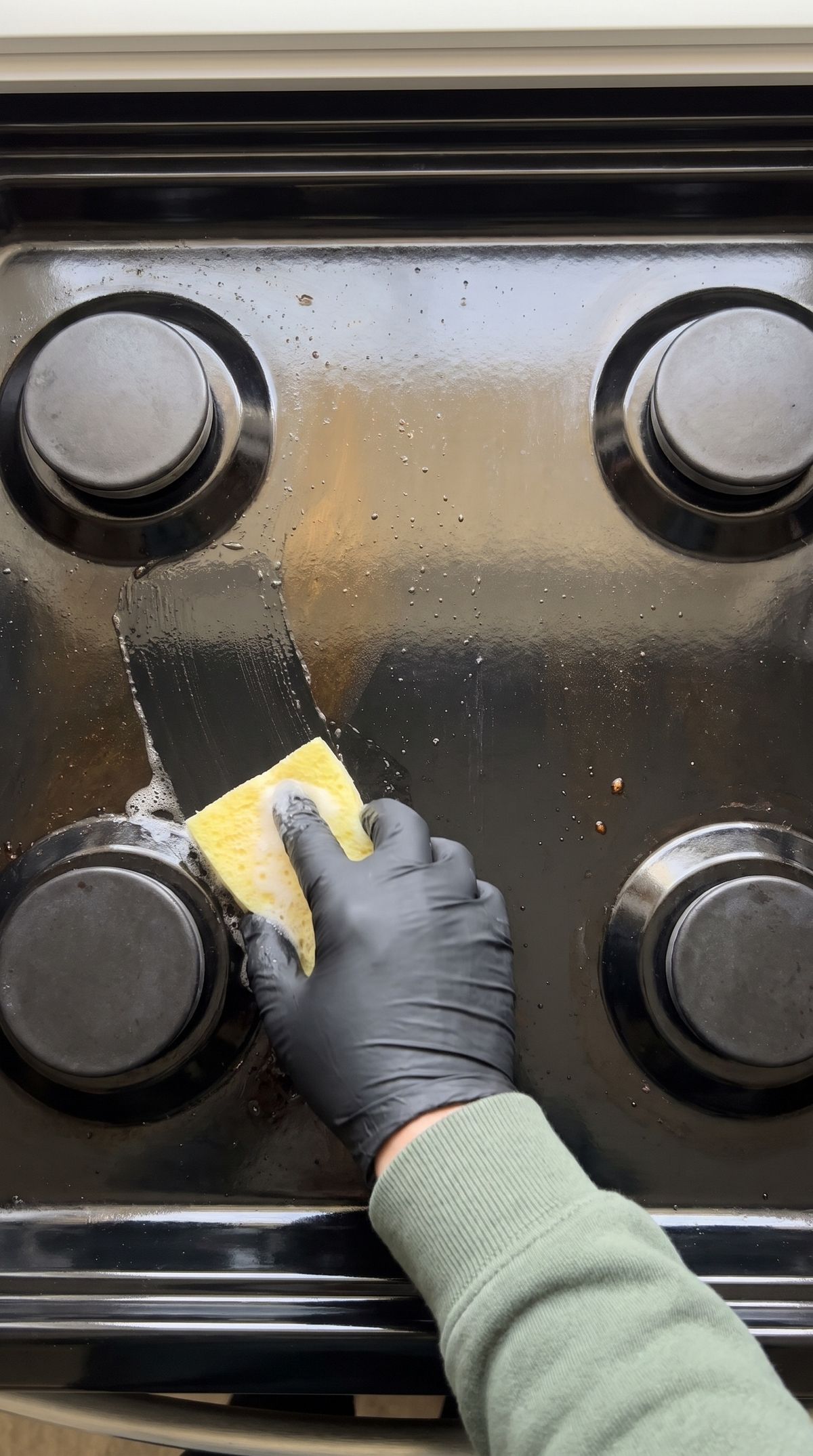
Grates are the part of the kitchen that gets cleaned around. You wipe the stovetop, lift a grate, wipe under it and set it right back down. Then one day you notice they have gone from black to brown.
A word from Denise
So make it a soak-and-walk-away job. Fill the sink, drop them in, and go fold a load of laundry. In about half an hour, the grates are ready for an easy scrub.
Some coated grates, yes, if your manual says so. Whirlpool says to use the most aggressive cycle and to soak or scrub baked-on food first. Bare cast iron and burner caps should not go in.
Only if they are porcelain coated. Bare cast iron should not soak, because Lodge says soaking cast iron is a recipe for rust. Wash it quickly with soap and a brush and dry it right away.
This page leaves it out. Ammonia makes toxic gases if it ever meets bleach, according to the Washington State Department of Health. A washing soda soak loosens baked-on grease without that risk.
Whirlpool says no. Stoves differ, so never try it unless your own manual says it is allowed.

I’m Denise, and I explain home fixes the way a friend would at your kitchen table. Every tip I share is written from the sources listed on its page and checked against them before it goes up.
Sources opened and checked on November 7, 2026.
Every claim on this page, the source behind it and what the check found. Kept open for anyone who wants to look under the hood.
| Claim | Source | What the check found |
|---|---|---|
| Clean grates and caps only when cool to the touch | Sources 1 and 2 | Matches the source (maker; rechecked November 7). |
| Do not bang grates and caps together or on cast iron cookware; it can chip them | Source 1 | Matches the source (maker; rechecked November 7). |
| Washing soda 1/2 cup per gallon of warm water for range tops; soak burners at least 30 minutes; rinse well and dry | Source 3 | Matches the source (maker; rechecked November 7). Applying it to porcelain-coated grates is by close analogy (range tops and burners); the maker does not name grates |
| 2 gallons of water gets 1 cup | Arithmetic from | Matches the source (arithmetic). |
| Use a nonabrasive plastic scrubbing pad; soap and water first | Source 2 | Matches the source (maker; rechecked November 7). |
| Some grates dishwasher safe; check manual; most aggressive cycle; soak or scrub heavily baked-on food first | Source 1 | Matches the source (maker; rechecked November 7). |
| Burner caps not dishwasher safe; do not reinstall wet | Sources 1 and 2 | Matches the source (maker; rechecked November 7). |
| Do not clean grates or caps in a self-cleaning cycle (Whirlpool); check your own manual | Sources 1 and 2 | Matches the source (maker; rechecked November 7). |
| Bare cast iron: soaking is a recipe for rust; soap is fine; stiff brush; dry completely; air drying may rust; dishwasher removes seasoning and likely causes rust | Source 4 | Matches the source (maker; rechecked November 7; written for cookware, applied to bare grates by analogy). |
| Seasoning is oil heated on until it hardens; keep washing soda off cast iron | Source 5; Source 6 (washing soda is a fairly strong alkali) | Matches the source. For seasoning; keeping washing soda off cast iron is a precaution |
| Dry washing soda on a damp sponge to scour stubborn soils | Source 3 | Matches the source (maker; rechecked November 7). |
| Washing soda not on aluminum | Source 3 | Matches the source (maker; rechecked November 7). |
| Washing soda: avoid eyes, limit prolonged skin contact, wear gloves, flush eyes; if swallowed rinse mouth, drink a full glass of water, call a physician | Source 3 | Matches the source (maker; rechecked November 7). |
| Washing soda is a fairly strong alkali | Source 6 | Matches the source (rechecked November 7). |
| Bleach plus ammonia makes toxic chloramine gases; vinegar is an acid | Source 7 | Matches the source (official; rechecked November 7). |
| Poison Help line, 1-800-222-1222; free and confidential, 24 hours a day, 7 days a week | Source 8 | Matches the source (HRSA Calling Poison Help page; one wording site-wide, November 7). |
| Prices: washing soda 55 oz $5.49; up&up latex gloves $3.39, latex-free $3.89; Scotch-Brite Zero Scratch Scour Pads 4 ct $3.99 | Source 9, opened November 6, 2026 | Matches the source (dated, Target.com online). |