How to Clean Greasy Kitchen Cabinets Without Ruining the Finish

Every tip here is checked against the sources listed at the bottom.

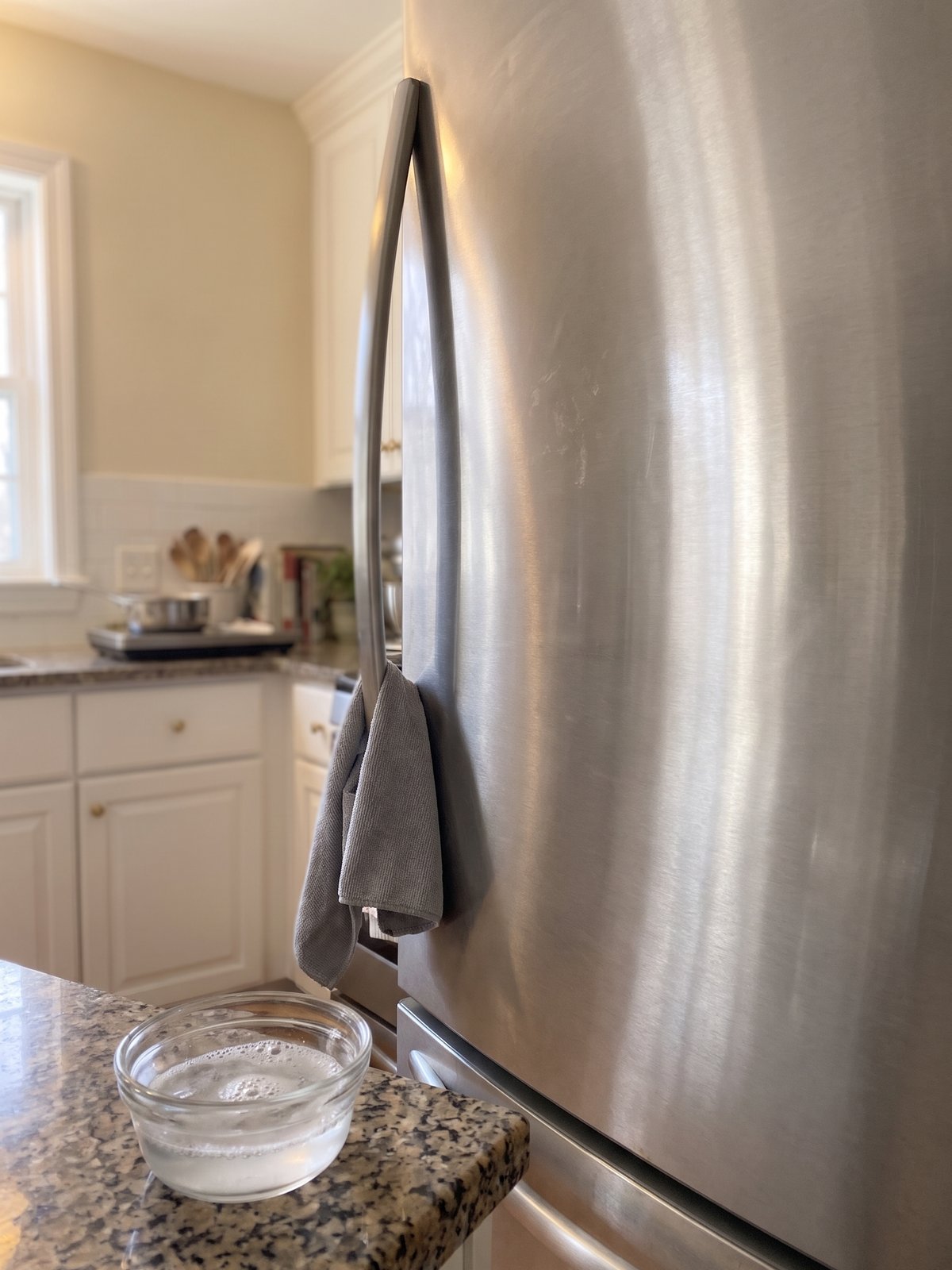
A wood cabinet door next to a range hood, half wiped clean, a soft cloth in hand and a small bowl of soapy water on the counter

The short answer

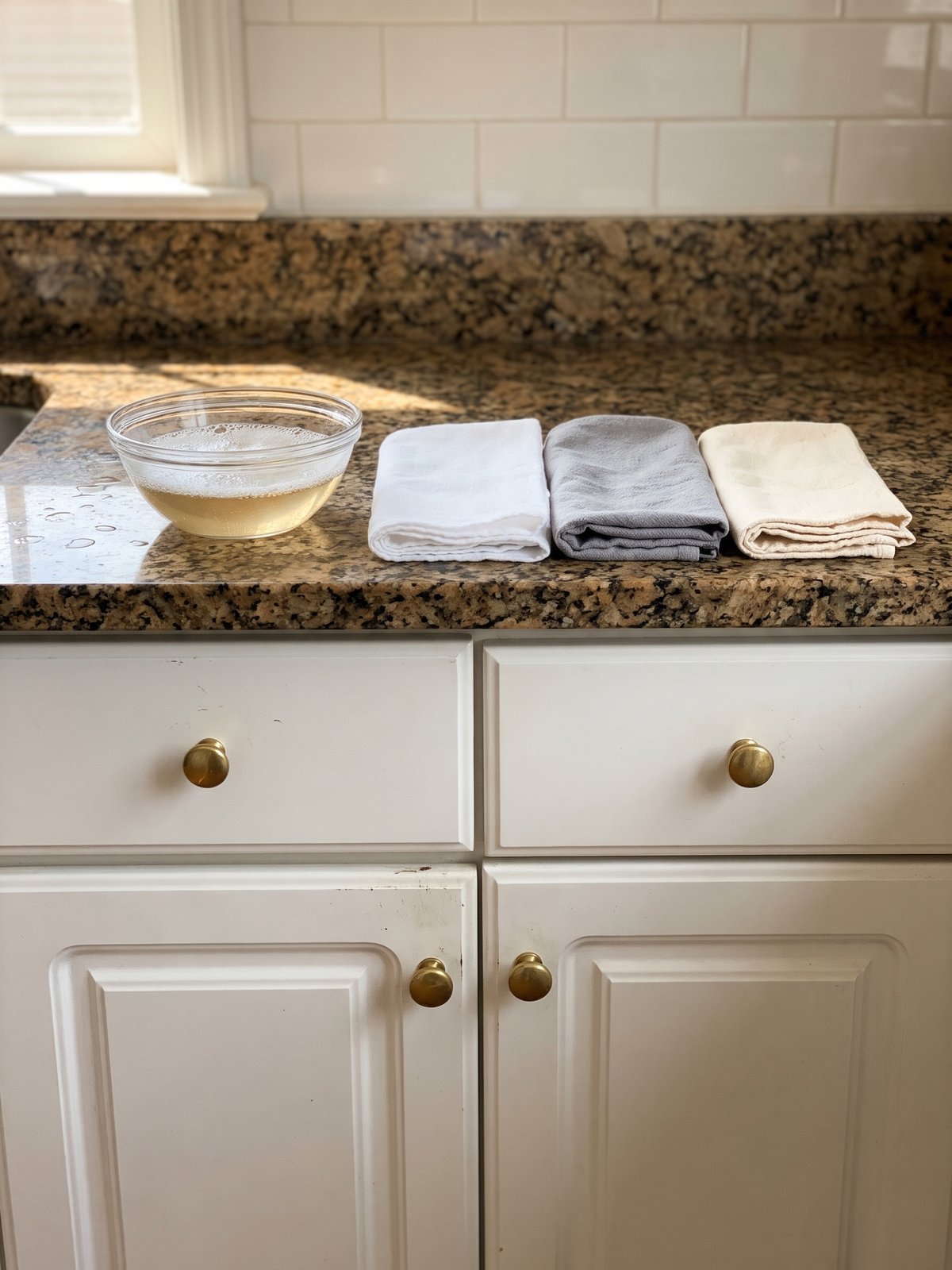
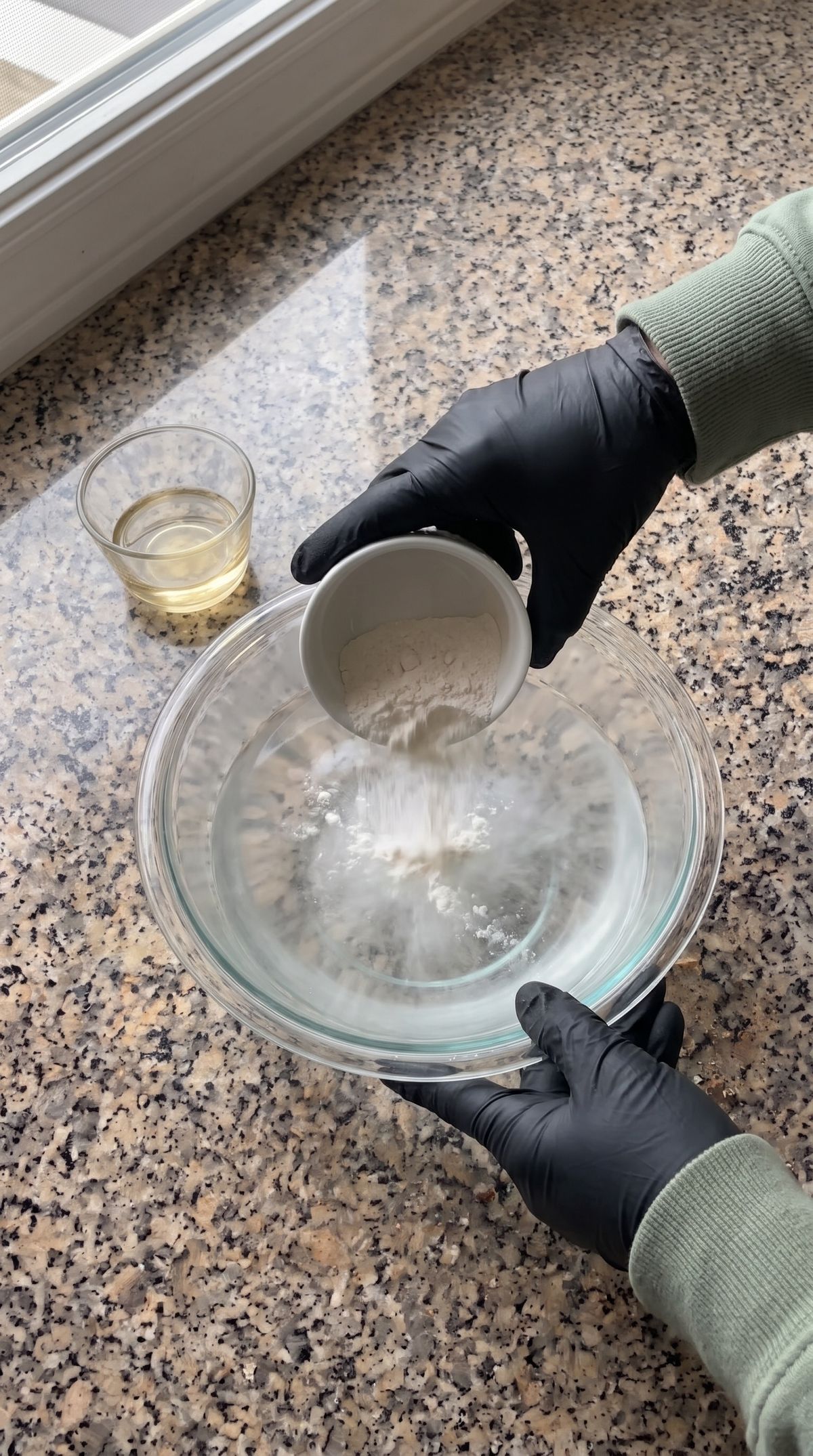
What works Mix about 3 tablespoons of dishwashing liquid into a quart of warm water. Wipe the greasy spots with a soft cloth wrung out until it is just damp. Then wipe again with a cloth dampened in plain water, and dry right away with a third, dry cloth.

How long
About 15 to 30 minutes for the cabinets around the stove. Thick, old buildup may take two or three passes.
What it costs
A few cents a cleaning. An 18 oz bottle of Dawn Platinum dish soap was $3.99 and a 3 pack of up&up microfiber cloths was $6.99 at Target.com on November 7, 2026.
What you need
Dishwashing liquid (not dishwasher detergent), warm water, a bowl, and three soft cotton or microfiber cloths.
Jump to the steps
From your cabinet
  • Dish soap

Before you start: what kind of cabinets do you have?

Look at the door in good light, because the cloth you use depends on the finish.

  • Stained or painted wood: use soft cotton or microfiber cloths.
  • Laminate or high gloss: MasterBrand, a big cabinet maker, says these must be dried with microfiber to avoid scratches, and to skip paper towels.
  • Not sure: use microfiber, since that is the cloth MasterBrand names for the finishes that scratch most easily.

Step by step

  1. Mix a mild soap solution

    Stir about 3 tablespoons of dishwashing liquid into 1 quart (4 cups) of warm water. MasterBrand gives the ratio as 5% dishwashing liquid to 95% water, and 3 tablespoons in a quart comes in just under that. Use the soap you wash dishes with by hand, never dishwasher detergent.

  2. Wipe the grease with a damp cloth

    Dip a clean cloth in the solution and wring it out hard, so it is damp and not dripping. Wipe one door at a time, starting with the doors closest to the stove. Do not use a sponge or the dishcloth from the sink. MasterBrand says those can hold grit that scratches, along with food and oil.

  3. Go over thick spots again

    Old grease near the stove often needs a second or third pass. Rinse the cloth, wring it out, and go over the spot again with fresh solution. Be patient instead of scrubbing harder, because KraftMaid, another cabinet maker, says there is no need for hard scrubbing or scouring pads.

  1. Wipe with plain water

    Rinse out a second cloth in clean, warm water and wring it out. Wipe each door again to take off any soap left behind. MasterBrand says to wipe the cabinets down with a clean, damp cloth after you clean.

  2. Dry it right away

    Dry every door and edge with a third, clean, dry cloth as soon as you finish it. MasterBrand says moisture can cause peeling and discoloration, and KraftMaid says a thorough drying is part of every cleaning.

    What it looks like when it worked: a door that feels smooth under your fingers, not tacky.

When it will not work, and what to do instead

Some grease has been sitting a long time. Here is what to do when it will not come off.

  • The grease is still tacky after three passes. Keep the mild solution and give it another round on another day. Do not jump to a stronger cleaner. MasterBrand lists harsh detergents, strong soaps, multi-purpose cleaners, scouring powders, steel wool and ammonia or bleach products as things to avoid.
  • You want to try washing soda or a degreaser. It makes sense, since washing soda is great on grease in the oven. But the washing soda label says not to use it on treated wood, and Arm & Hammer says it can remove the finish from wood decks. Keep it off your cabinets.
  • The doors look hazy, streaked or yellowed. That may be old polish, not grease. MasterBrand says wax and polish can build up into a hazy, streaked or yellowed look, so stop polishing and ask your cabinet maker how to remove it.
  • The finish is peeling. That is damage, not dirt, and cleaning will not fix it. Contact the cabinet maker or the store that sold them.

Be safe

  • Dish soap only on cabinets. No ammonia, no bleach and nothing that contains them. MasterBrand lists both as products to avoid, and the ammonia label we read says not to use it on varnished wood.
  • Never mix cleaners. Bleach and ammonia together make toxic chloramine gases, says the Washington State Department of Health. See the full never-mix chart.
  • No washing soda on wood. The label says not on treated wood surfaces.
  • No solvents. MasterBrand says to skip mineral spirits, nail polish remover, paint thinner and other petroleum-based products.
  • Keep cleaners away from little ones. Poison Help line, 1-800-222-1222. It is free and confidential, 24 hours a day, 7 days a week.

What to buy

We may earn a small fee from these links. It never changes the picks or your price.

  • Dawn Platinum dish soap, 18 fl oz

    A grease-cutting dishwashing liquid for the mild solution. Any hand dish soap works. $3.99 at Target.com on 11/7/2026.

  • Microfiber cloths, 3 pack

    You need three: one to wash, one to rinse and one to dry. MasterBrand says microfiber is a must for drying laminate and high gloss doors. The up&up 3 pack was $6.99 at Target.com on 11/7/2026.

Why it works

Grease and oil splatters land on the doors closest to the stove. MasterBrand says that when they sit there, they can cause permanent damage or discoloration to the finish, so those doors need the most care.

Dish soap is made to lift exactly that. The American Cleaning Institute explains that one end of each soap molecule is drawn to grease and the other end to water, so the grease lets go and rinses away in the cloth.

The finish on your cabinets is a thin protective coat. That is why the makers keep ammonia, bleach, strong soaps and scouring pads off it, and why water left sitting is a problem too. The gentle soap, the rinse and the quick dry all work together.

Every one of us has reached for a cabinet handle by the stove and felt that little stick on our fingers. It is tempting to grab the strongest bottle under the sink and go after it.

A word from Denise

Hold off on that. The mild soap does the job if you give it a couple of passes, and your finish stays safe. KraftMaid suggests a weekly wipe-down, especially for cabinets near the stove, and that one habit keeps the sticky layer from building up again.

Questions people ask

What is the best thing to clean greasy kitchen cabinets with?

A mild solution of hand dishwashing liquid in warm water. MasterBrand gives the ratio as 5% soap to 95% water, which is about 3 tablespoons in a quart. Wipe, rinse with plain water, and dry right away.

Will Dawn damage wood cabinets?

Not when you use a mild, watered-down solution and dry the doors right away. MasterBrand’s own care guide calls for dishwashing liquid in warm water.

How do you get sticky grease off cabinets without scrubbing?

Use a damp cloth with mild soap and give it two or three gentle passes instead of scrubbing harder. KraftMaid says there is no need for hard scrubbing or scouring pads.

Should I polish or wax my cabinets?

MasterBrand’s answer is neither. It says wax and polish build up into a hazy, yellowed look, and KraftMaid says not to use wax polishes, petroleum solvents or silicones.

More help like this

Next tipHow to clean a stinky kitchen drain
Denise laughing in her kitchen

About Denise

I’m Denise, and I explain home fixes the way a friend would at your kitchen table. Every tip I share is written from the sources listed on its page and checked against them before it goes up.

How my tips are checked

Sources

Sources opened and checked on November 7, 2026.

  1. MasterBrand Cabinets, Care and Cleaning guide (soft cotton cloth, microfiber for laminate and high gloss; 5% dishwashing liquid to 95% water, not dishwasher products; wipe with a clean damp cloth after; laminates and high gloss must be dried with microfiber; grease and oil splatters can cause permanent damage or discoloration; moisture can cause peeling and discoloration; no wax or polish, hazy, streaked or yellowed buildup; products to avoid, including sponges, dish cloths, paper towels on high gloss, solvents, ammonia and bleach) (PDF). Rechecked 11/7/2026 masterbrandcabinets.com
  2. KraftMaid, Do’s and Don’ts of Kitchen Cabinet Cleaning (weekly wipe-down; cabinets near the stove; damp cloth and a thorough drying; no need for intense scrubbing or scouring pads; no harsh detergents, abrasive formulas or powdered cleaners; no wax polishes, petroleum solvents or silicones). Rechecked 11/7/2026 kraftmaid.com
  3. Arm & Hammer Super Washing Soda, 55 oz, label text (do not use on treated wood surfaces), Giant Food Stores product listing. Rechecked 11/7/2026 giantfoodstores.com
  4. Arm & Hammer, Around the home (Super Washing Soda can remove the finish on wooden decks). Rechecked 11/7/2026 armandhammer.com
  5. Arm & Hammer, Super Washing Soda for laundry and home (ovens and range tops) armandhammer.com
  6. Giant Food Stores Our Brand Clear All Purpose Ammonia Cleaner, 64 oz, label text (do not use on varnished wood; do not use or mix with chlorine based bleaches). Rechecked 11/7/2026 giantfoodstores.com
  7. Washington State Department of Health, Bleach mixing dangers (bleach plus ammonia makes toxic chloramines). Rechecked 11/7/2026 doh.wa.gov
  8. American Cleaning Institute, The Chemistry of Cleaning (one end of a surfactant bonds with water, the other is drawn to oil and grease). Opened 11/7/2026 cleaninginstitute.org
  9. HRSA Poison Help, Calling Poison Help (1-800-222-1222; free and confidential help 24 hours a day, 7 days a week) poisonhelp.hrsa.gov
  10. Target.com search results (prices, checked 11/7/2026) target.com target.com
Fact log: how each claim on this page was checked (20 claims)

Every claim on this page, the source behind it and what the check found. Kept open for anyone who wants to look under the hood.

ClaimSourceWhat the check found
5% dishwashing liquid to 95% water; not dishwasher productsSource 1Matches the source (rechecked).
3 Tbsp in 1 quart is just under 5%Math: 1 quart = 64 Tbsp; 3 in 67 total is about 4.5%Matches the source (arithmetic).
Soft cotton cloth; microfiber for laminate and high gloss; laminate and high gloss must be dried with microfiber; no paper towels on high glossSource 1Matches the source (rechecked).
Avoid sponges and dish cloths (particles that scratch, food, oil residue)Source 1Matches the source (rechecked).
Wipe with a clean damp cloth after cleaning, then dry with another soft clothSource 1Matches the source (rechecked).
Moisture can cause peeling and discoloration; dry thoroughlySources 1 and 2Matches the source (rechecked).
No need for hard (intense) scrubbing or scouring padsSource 2Matches the source (rechecked).
Avoid harsh detergents, strong soaps, multi-purpose and abrasive cleaners, scouring powders and pads, steel wool, solvents, ammonia, bleachSource 1Matches the source (rechecked).
Wax and polish build up into a hazy, streaked or yellowed look; MasterBrand recommends neitherSource 1Matches the source (rechecked).
No wax polishes, petroleum solvents or siliconesSource 2Matches the source (rechecked).
Weekly wipe-down, with focus on cabinets near the stoveSource 2Matches the source (rechecked).
Grease and oil splatters can cause permanent damage or discoloration to the finishSource 1Matches the source (rechecked).
Washing soda: not on treated wood; can remove finish on wooden decksSources 3 and 4Matches the source (rechecked).
Washing soda is used on oven greaseSource 5Matches the source.
Ammonia label: do not use on varnished woodSource 6Matches the source (rechecked; one store-brand label).
Bleach plus ammonia makes toxic chloraminesSource 7Matches the source (rechecked).
Start with the doors nearest the stoveSource 2 (cabinets near the stove get the most grease); Source 1 (splatters)Matches the source.
Soap: one end drawn to grease, the other to waterSource 8Matches the source (opened November 7).
Prices: Dawn Platinum 18 fl oz $3.99; up&up microfiber 3 pack $6.99Source 10, opened November 7, 2026Matches the source (dated, Target.com online). Walmart prices dropped (none read)
Poison Help line, 1-800-222-1222; free and confidential, 24 hours a day, 7 days a weekSource 9Matches the source (HRSA Calling Poison Help page; one wording site-wide, November 7).